LACMA

ShopMembershipMyLACMATickets
LACMA
Los Angeles County Museum of Art
5905 Wilshire Blvd.
Los Angeles, CA 90036
info@lacma.org
(323) 857-6000
Sign up to receive emails
Subscribe
© Museum Associates 2025

Museum Hours

Monday

11 am–6 pm

Tuesday

11 am–6 pm

Wednesday

Closed

Thursday

11 am–6 pm

Friday

11 am–8 pm

Saturday

10 am–7 pm

Sunday

10 am–7 pm


  • About LACMA
  • Jobs
  • Building LACMA
  • Host An Event
  • Unframed
  • Press
  • FAQs
  • Log in to MyLACMA
  • Privacy Policy
© Museum Associates 2025
Collections

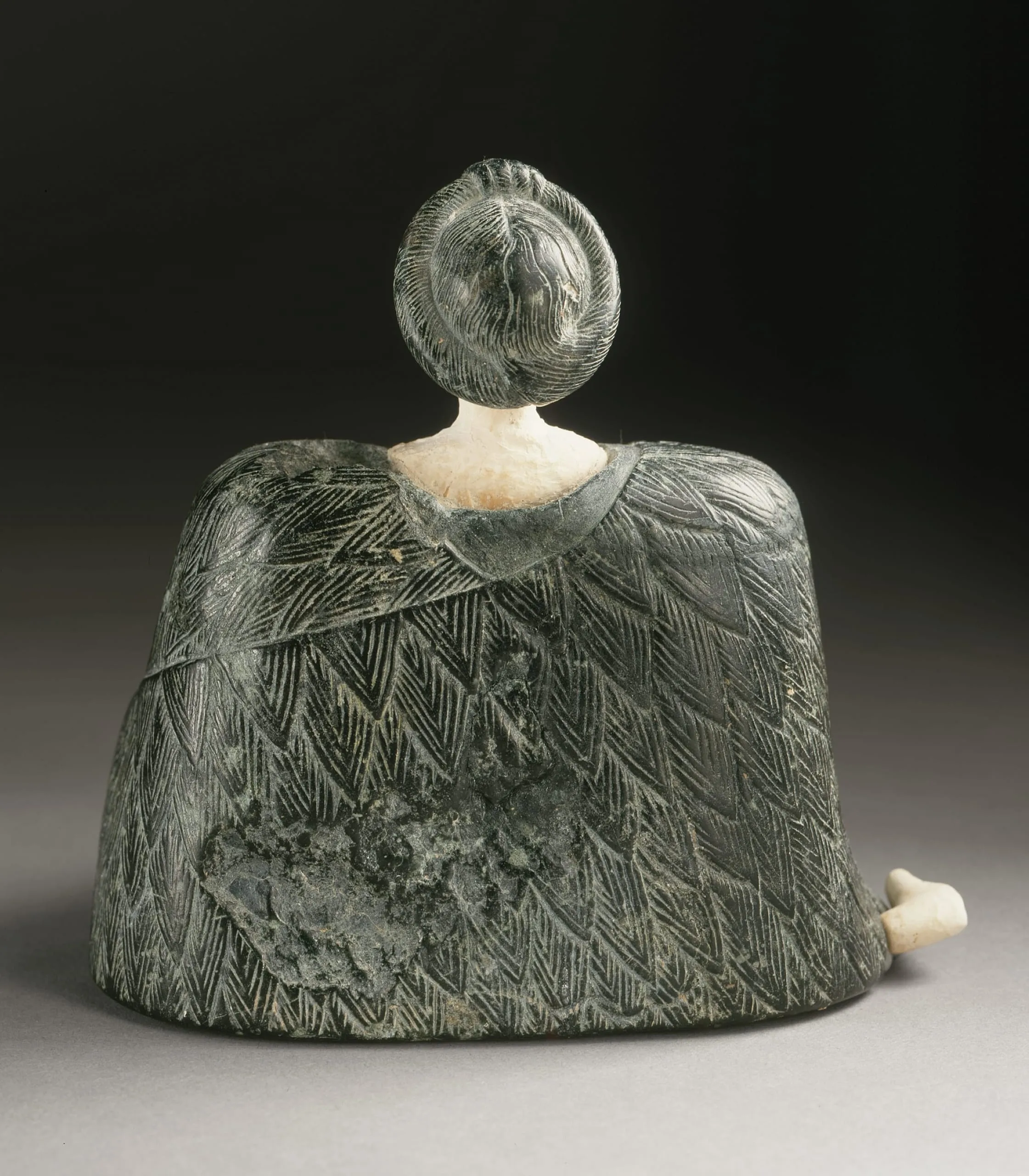
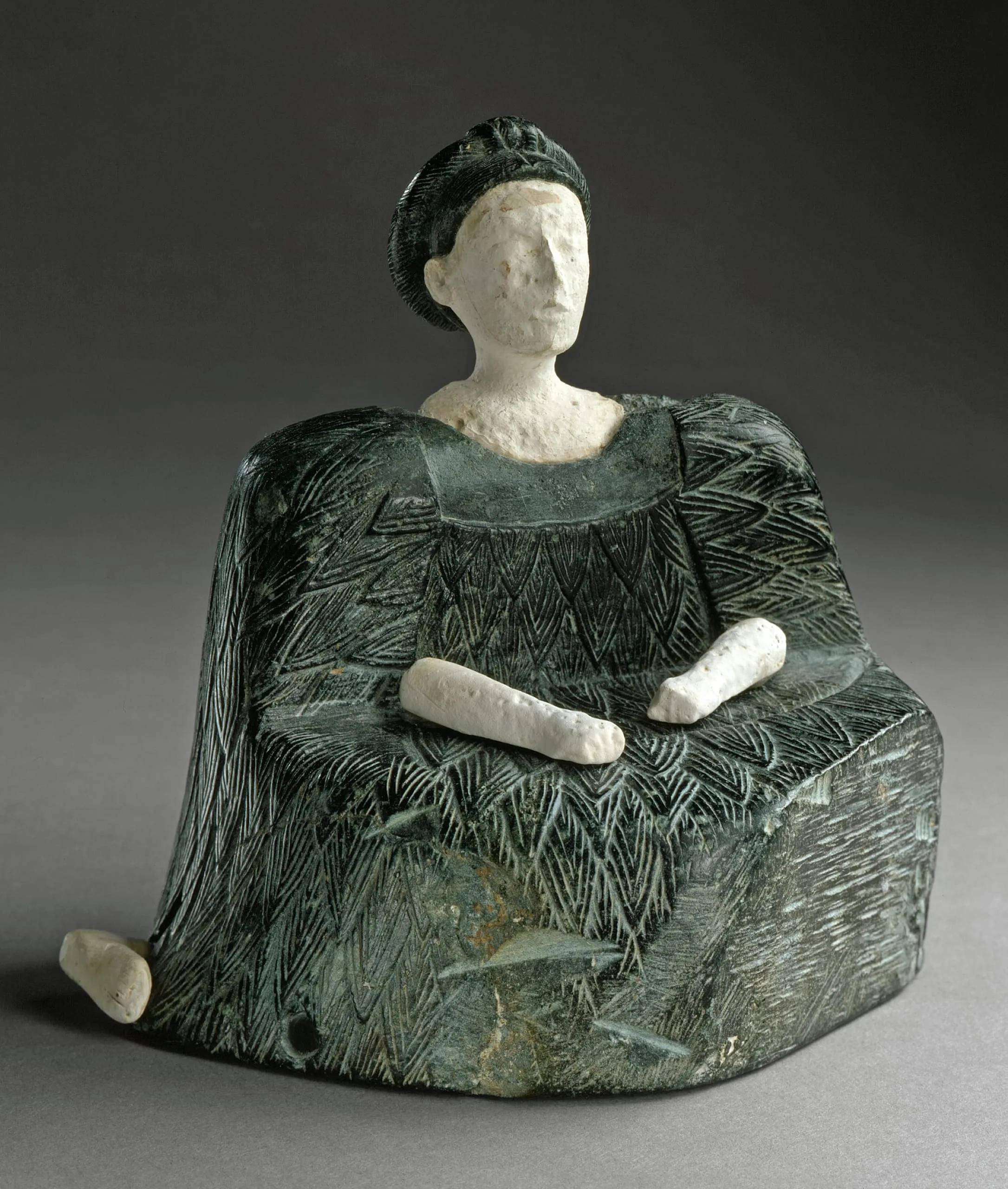
Seated Female Figurecirca 2500-1500 B.C.

Not on view
Small sculpture of a seated figure combining dark green carved stone for the garment and pale off-white stone or plaster for the head, arms, and foot, with an incised feather-pattern surface
Stone and ivory sculpture of a seated figure viewed from behind, dark green soapstone body densely incised with chevron and feather patterns suggesting a parka, with carved ivory neck and hand visible at lower right.
Title
Seated Female Figure
Culture
Ancient Bactria
Place Made
Northern Afghanistan
Date Made
circa 2500-1500 B.C.
Period
The Oxus Civilization (BMAC)
Medium
Chlorite and limestone
Dimensions
5 × 3 1/2 × 2 1/2 in. (12.7 × 8.89 × 6.35 cm)
Credit Line
Purchased with funds provided by Phil Berg
Accession Number
M.2000.1a-f
Classification
Sculpture
Collecting Area
Art of the Middle East: Ancient
Curatorial Notes
This statuette of a sitting woman, often called a "Bactrian" goddess or princess, is an outstanding example of stone carving and the only statuette of its type that still seems to preserve both arms and legs. In contrast to many similar statuettes, the faces of which have lost most of their original detail, this sculpture has fine facial features, including small eyes and ears and a linear nose. Also evident is the distinctive layered wool textile, known as kaunakes in southern Iran and Mesopotamia, which is commonly associated with the garment of deities and princesses in the ancient civilizations of Elam and Sumer. The figure shares its overall composition with a well-known group of figures associated with the Bactrian-Margiana civilization in central Asia in the third millennium BC; for this reason, such objects are frequently referred to as "Bactrian."
Selected Bibliography
  • Blondet, José Luis. Six Scripts for Not I: Throwing Voices (1500 BCE-2020 CE). Los Angeles: Los Angeles County Museum of Art, 2020.