- Title
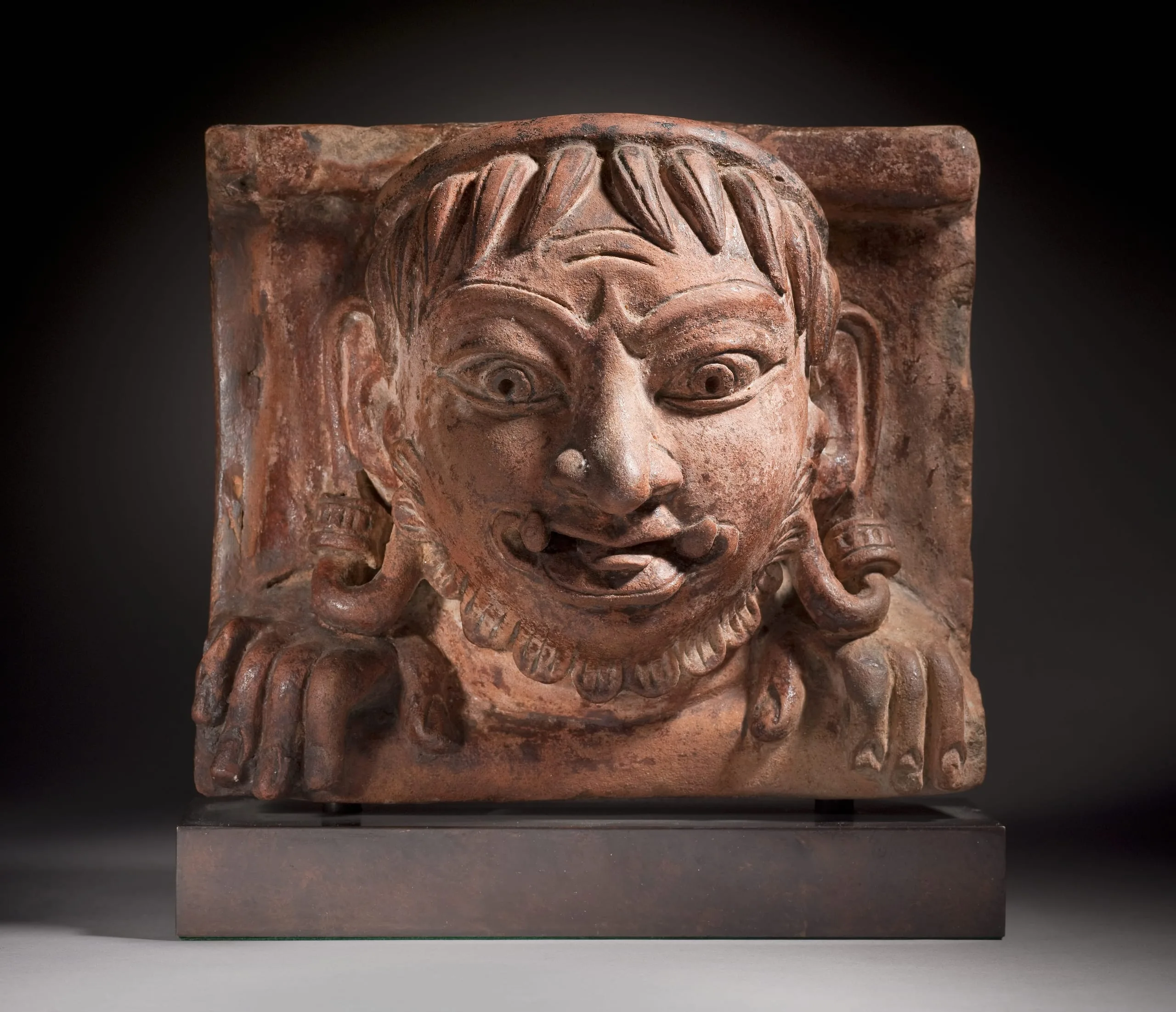
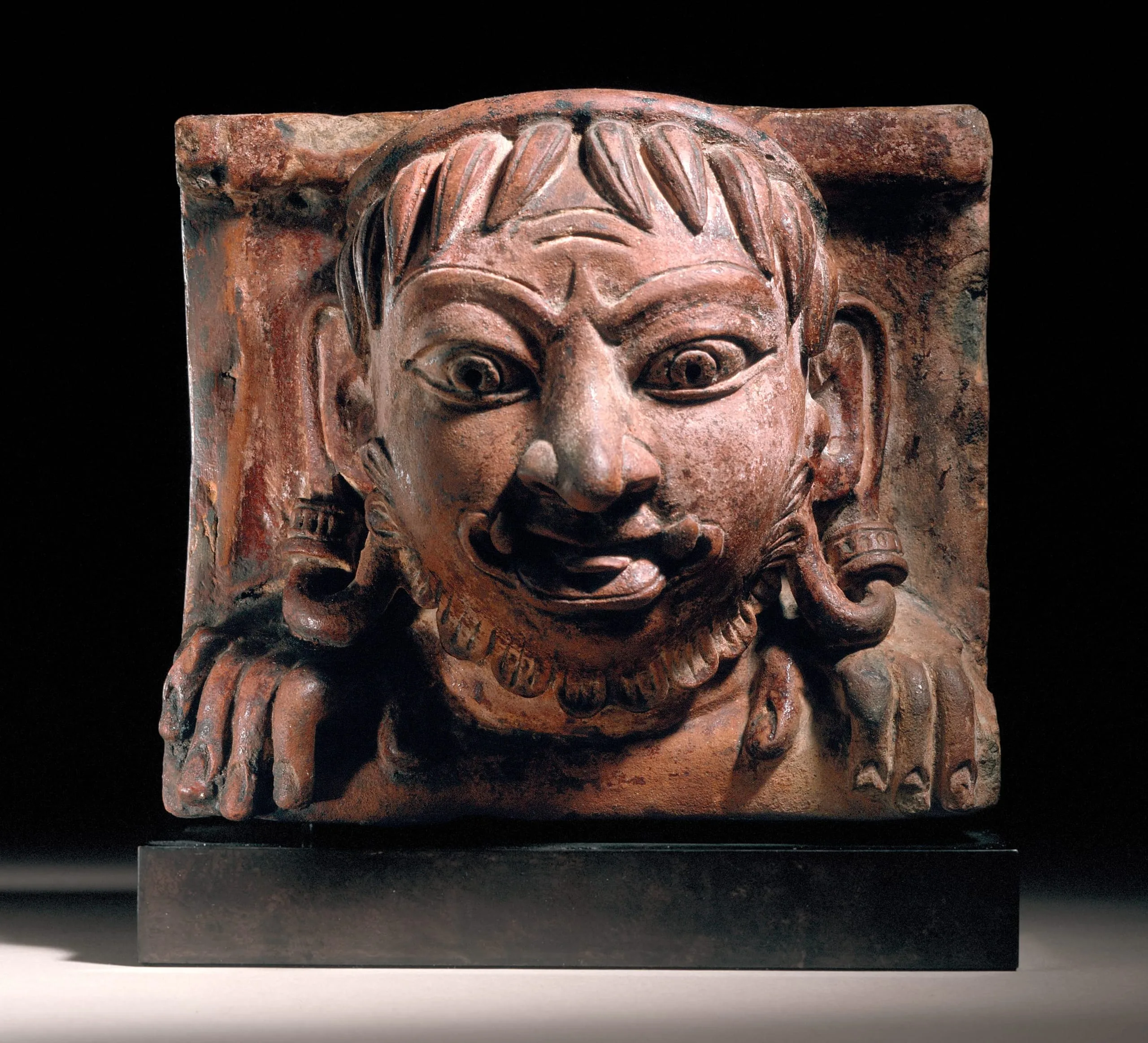
- Rahu, The Demon of Eclipses
- Date Made
- circa 500-550
- Medium
- Earthenware relief tile
- Dimensions
- 6 1/2 x 7 1/2 x 4 in. (16.51 x 19.05 x 10.16 cm)
- Accession Number
- M.83.221.1
- Curatorial Notes
Rahu is a member of the nine Indian planetary deities (navagraha). In his original Vedic theological conception, he was believed to be a disembodied demonic head that caused eclipses by devouring the Sun and the Moon. After the introduction of Western astronomical theory in the early Gupta period, Rahu was understood by Indian astronomers as the ascending node of the moon. With the influence of imported Middle Eastern astrological imagery in the early second millennium CE, Rahu was also imagined as the head and tail of an immense celestial serpents that caused eclipses. Rahu is typically depicted in early sculptures from central India with his palms cupped together as if to scoop up some of the elixir of immortality that he stole during the “Churning of the Ocean” myth. By the 11th century in eastern India, Rahu was also represented as clutching solar and lunar crescents.
Stylistically dating from circa 500-550 (corroborated by thermoluminescence testing), this rare earthenware image of Rahu from Uttar Pradesh may have once belonged to a set of apotropaic plaques of the planetary deities installed over the doorway of a brick temple to ward off evil influences. Rahu’s visage is demonic with bulging eyes and fangs. His hands are held in a grasping gesture as if about to seize the Sun and the Moon. The incised horizontal markings across his forehead indicate his shaiva affiliation, appropriate because Rahu was believed to be a son of Rudra, the older Vedic form of Shiva.