LACMA

ShopMembershipMyLACMATickets
LACMA
Los Angeles County Museum of Art
5905 Wilshire Blvd.
Los Angeles, CA 90036
info@lacma.org
(323) 857-6000
Sign up to receive emails
Subscribe
© Museum Associates 2025

Museum Hours

Monday

11 am–6 pm

Tuesday

11 am–6 pm

Wednesday

Closed

Thursday

11 am–6 pm

Friday

11 am–8 pm

Saturday

10 am–7 pm

Sunday

10 am–7 pm


  • About LACMA
  • Jobs
  • Building LACMA
  • Host An Event
  • Unframed
  • Press
  • FAQs
  • Log in to MyLACMA
  • Privacy Policy
© Museum Associates 2025
Collections

Unknown
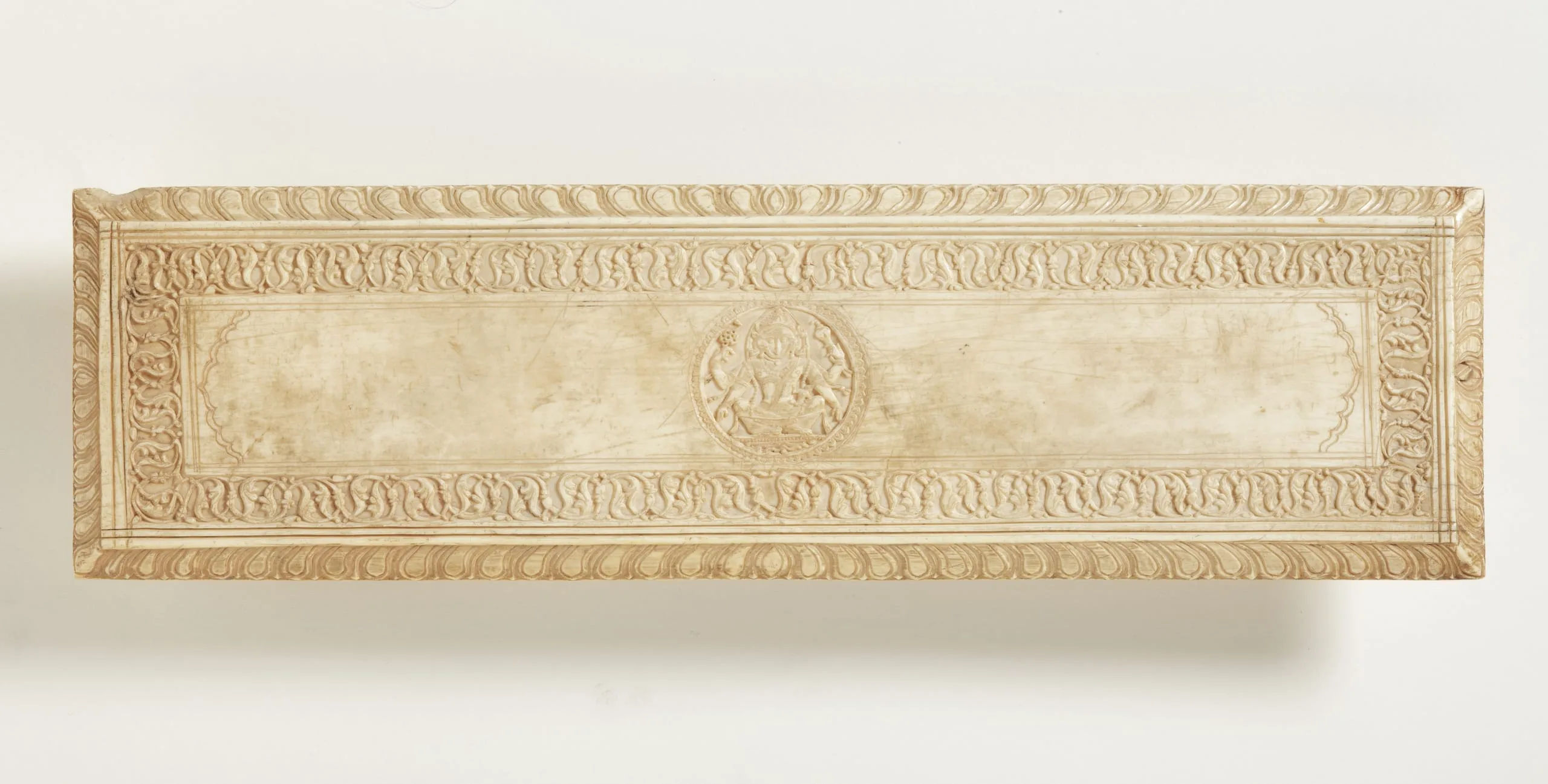
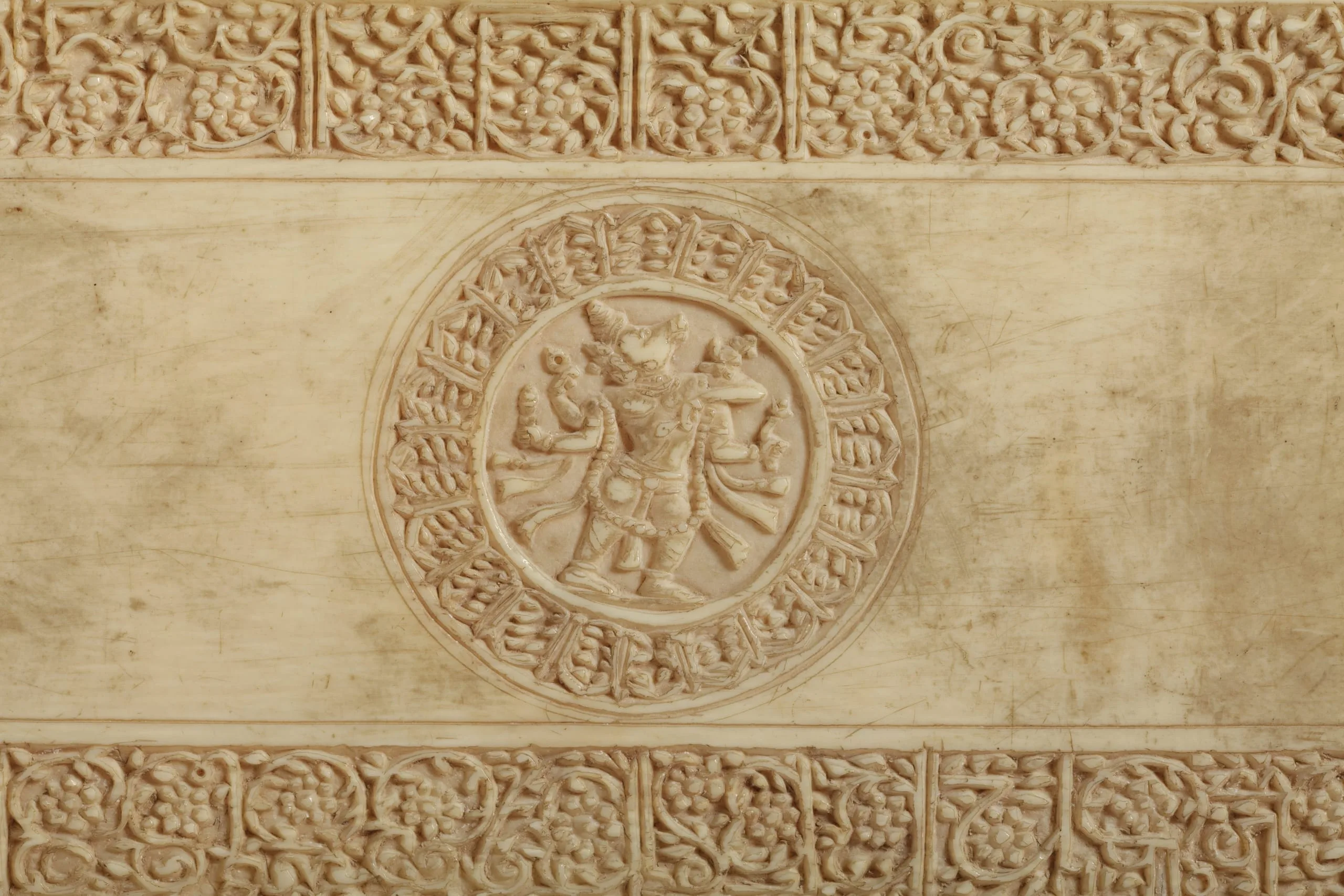
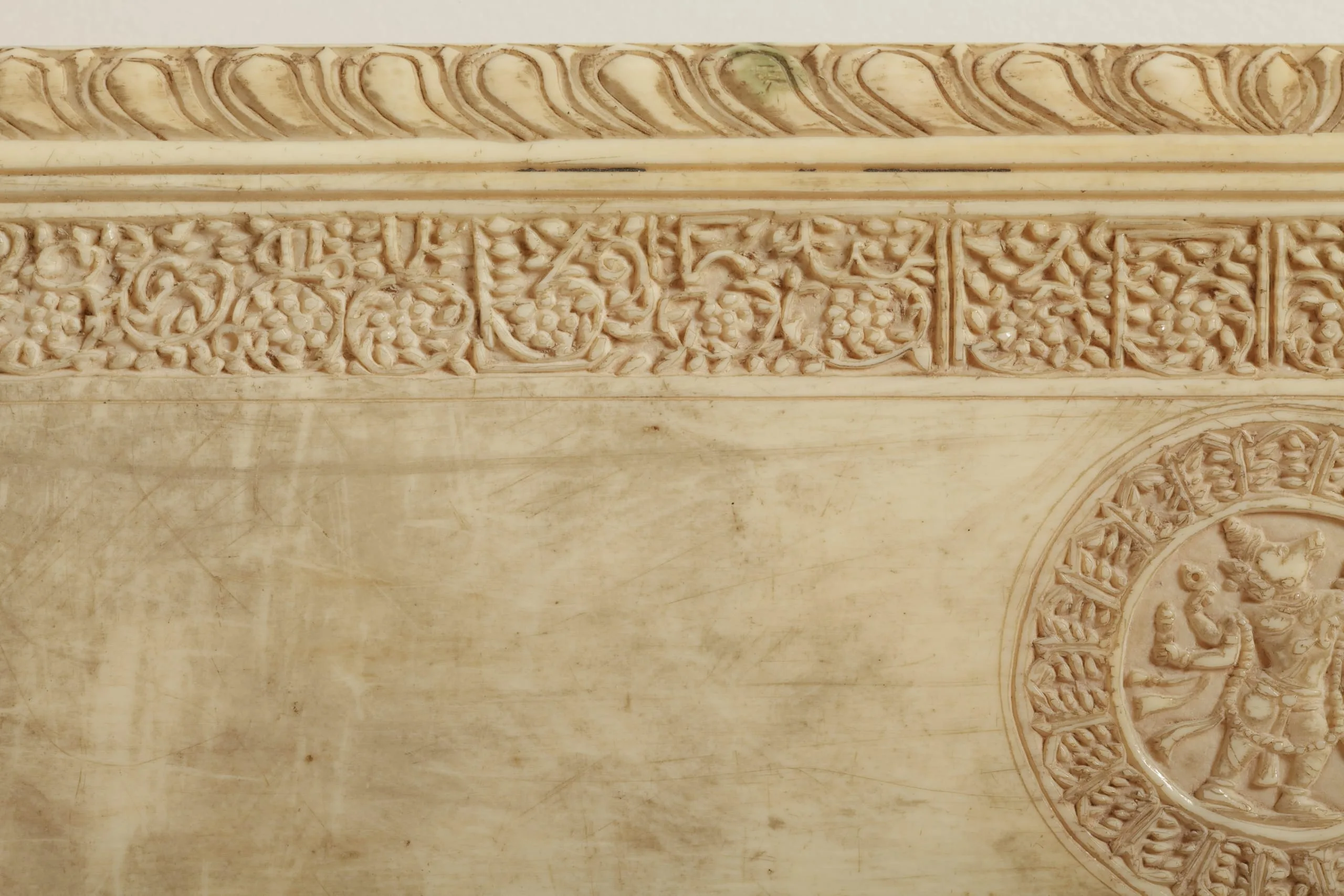
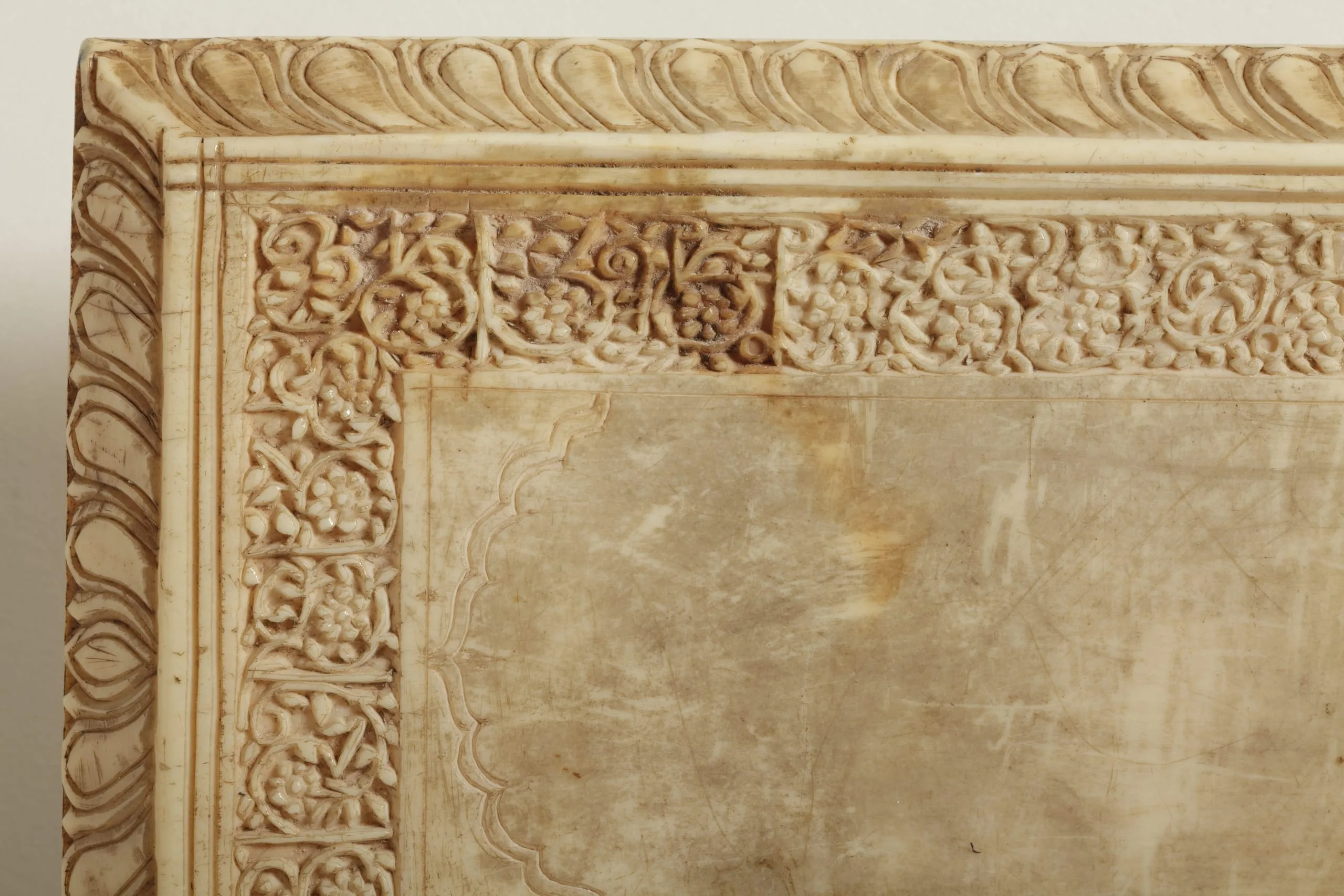
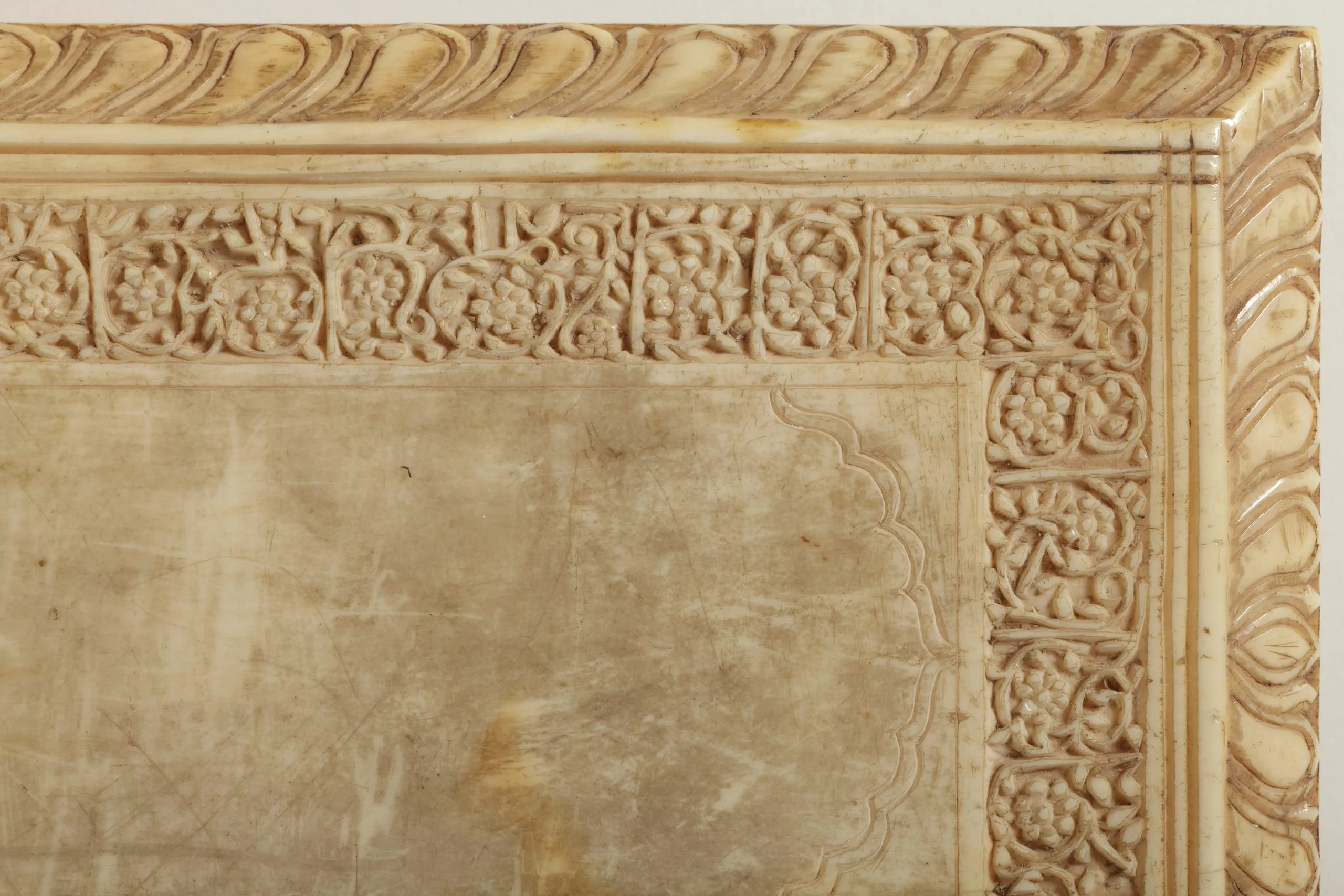
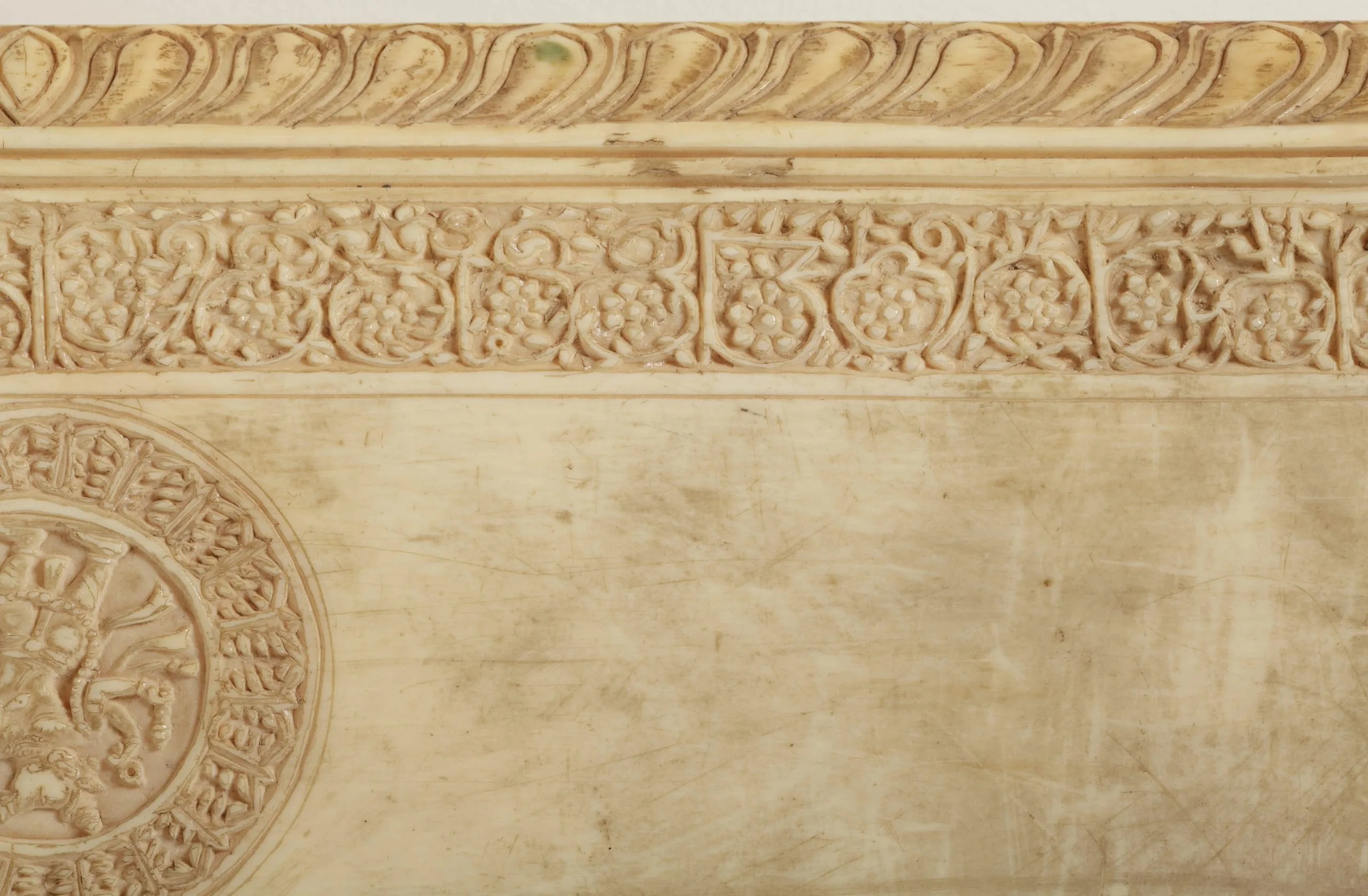
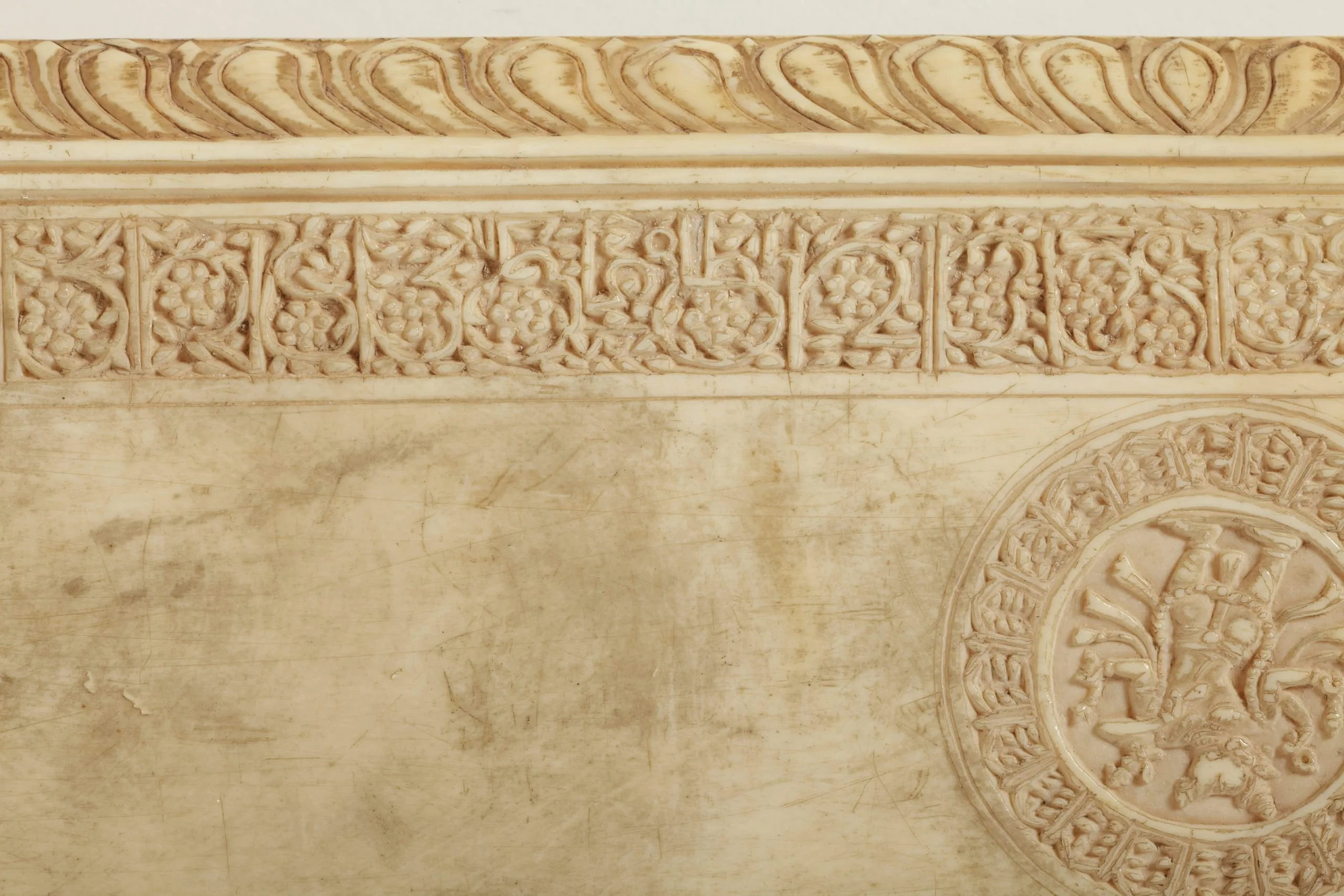
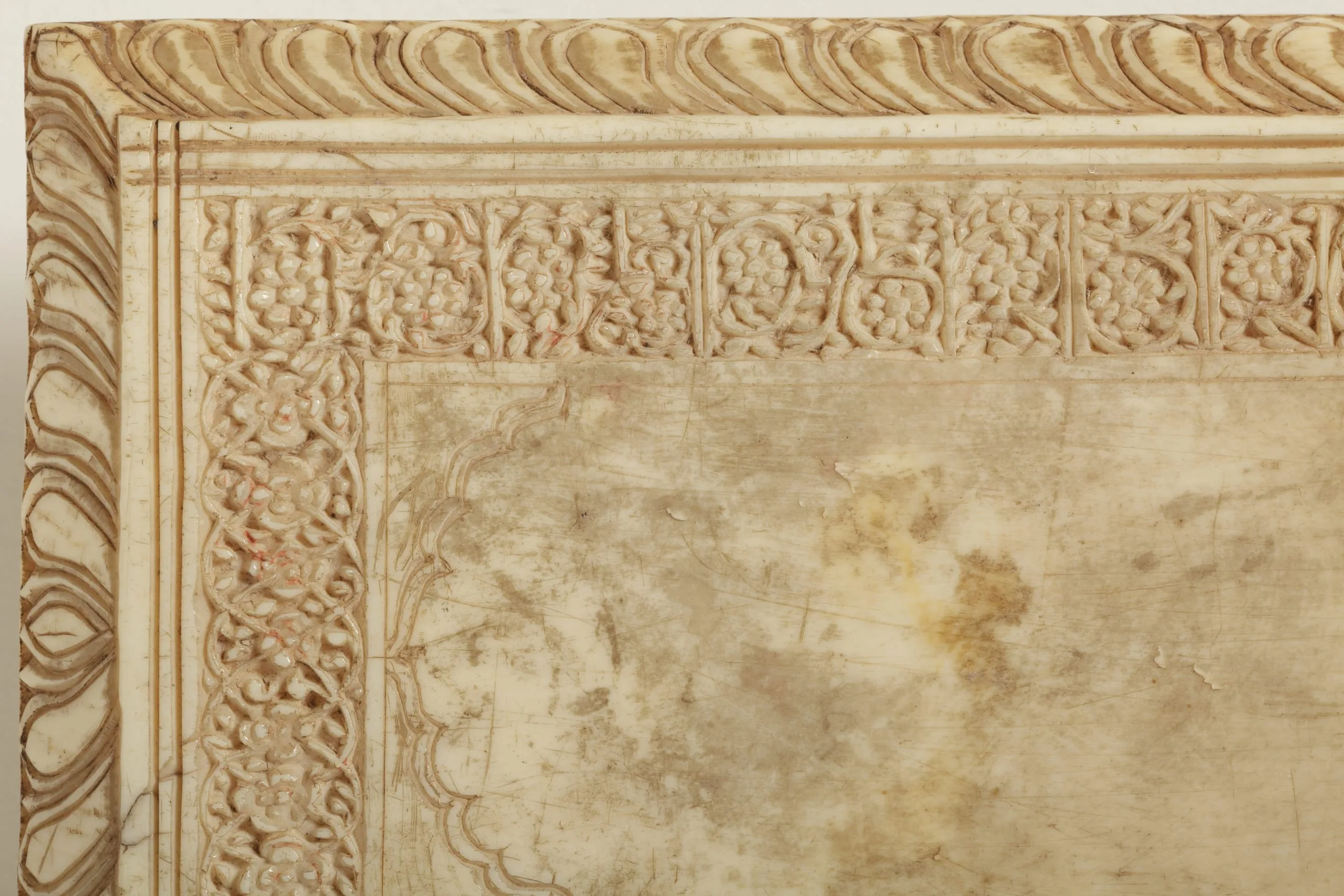
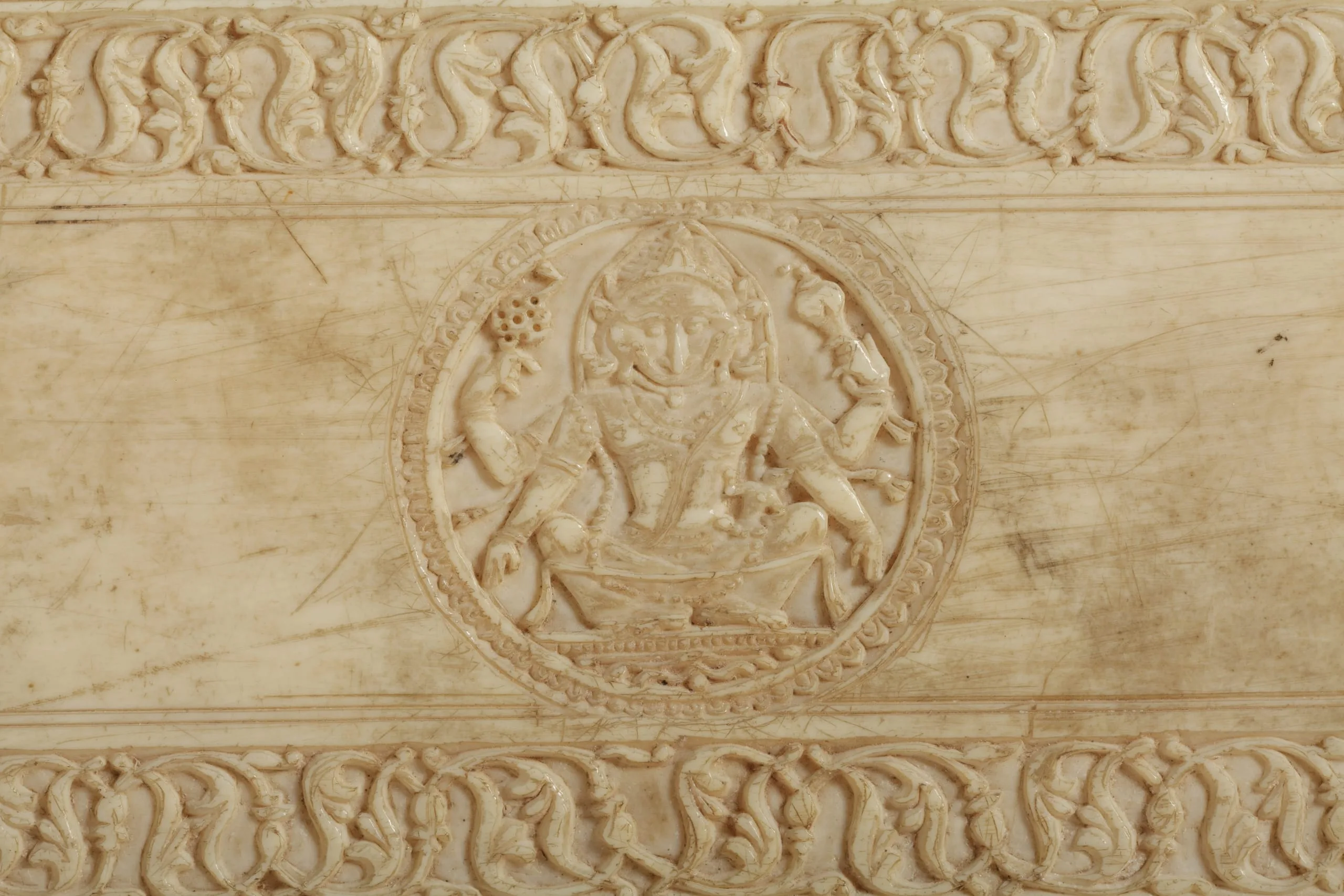
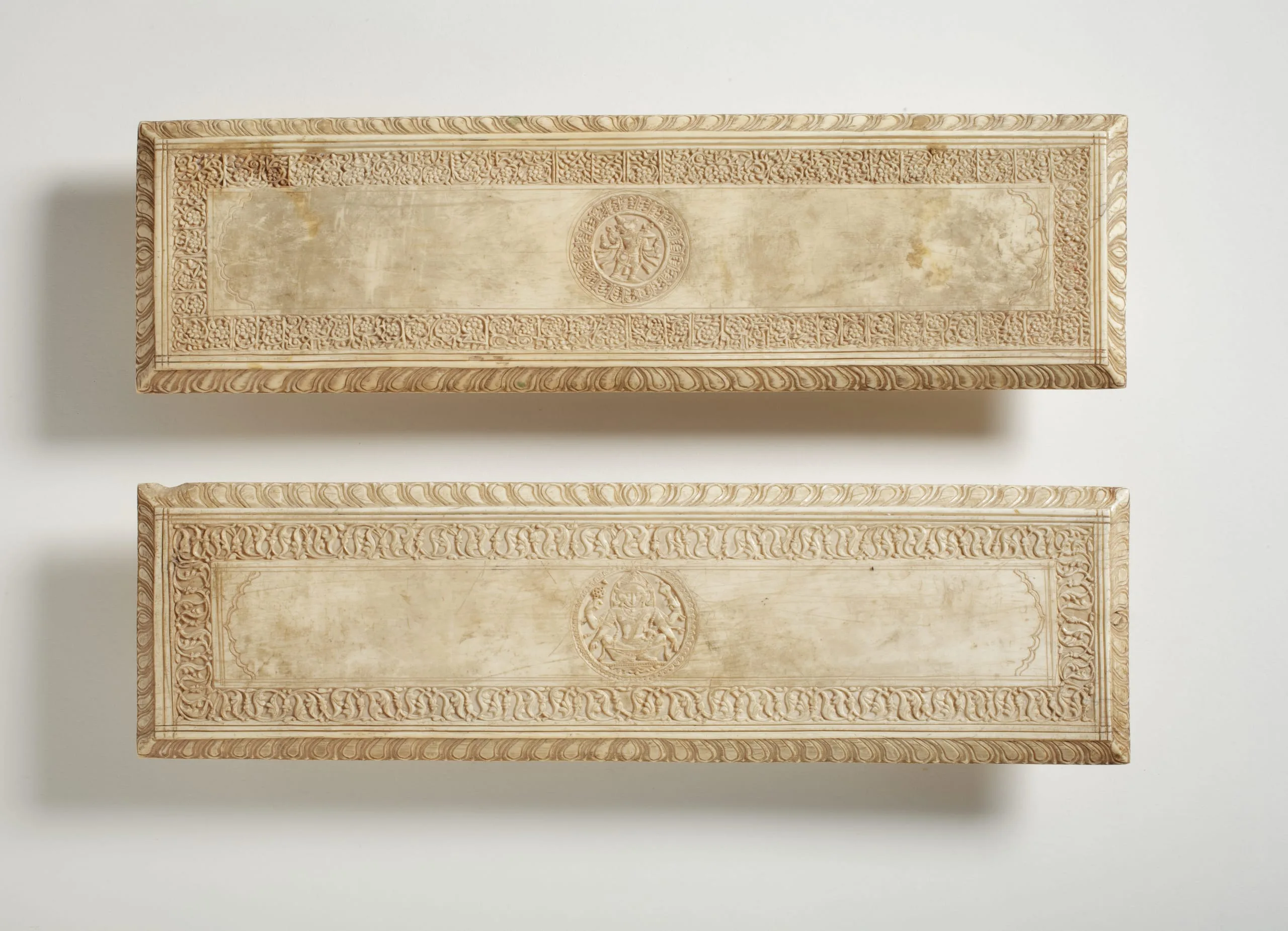
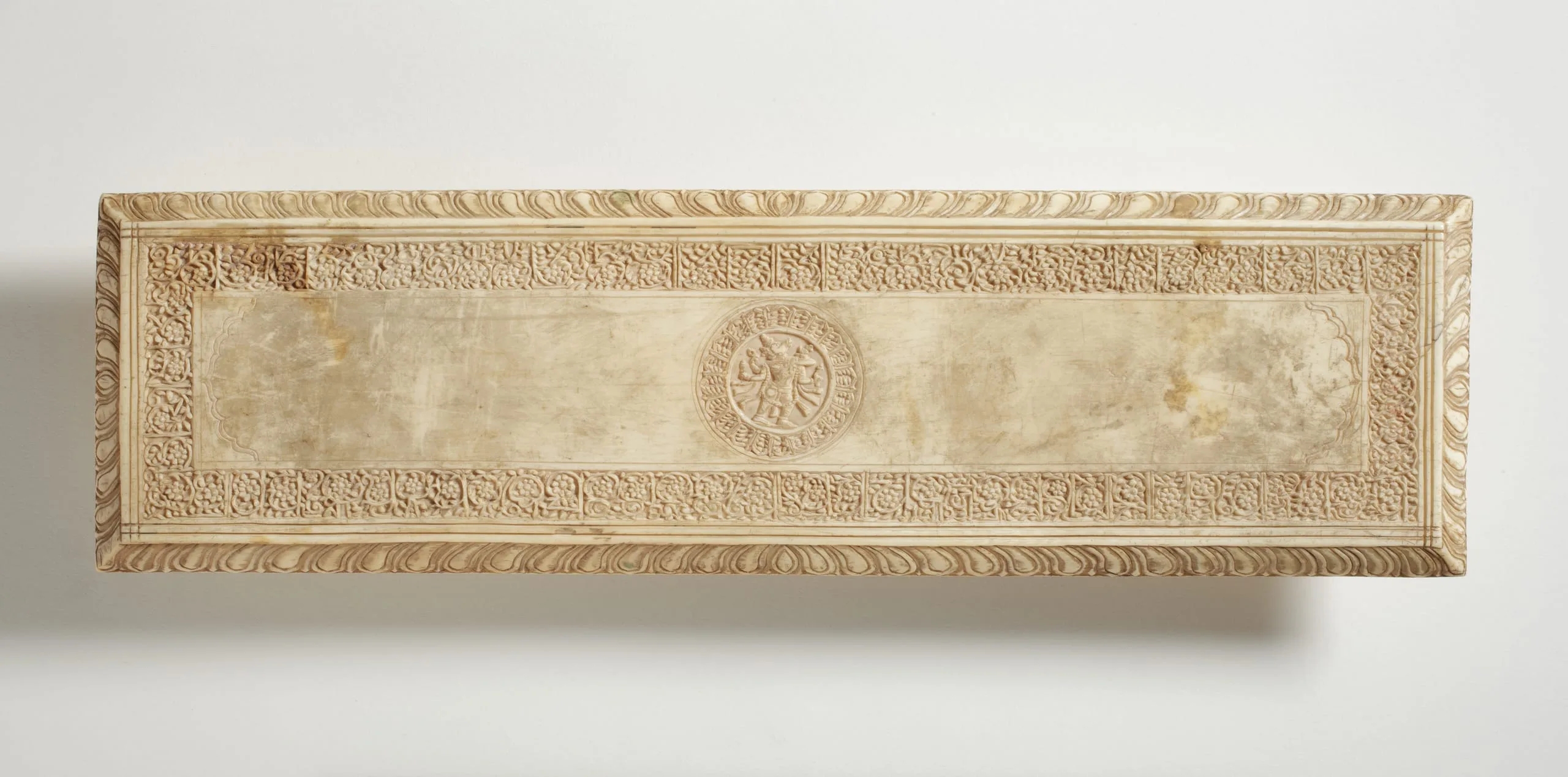
Pair of Manuscript Covers with Varaha and pseudo-inscription (A) and Yoga-Narasimha (B)mid-18th century

Not on view
Two carved ivory or bone rectangular panels photographed from above, each with concentric borders of scrolling vine relief carving and a central circular medallion with figural scene
Rectangular ivory or bone panel with densely carved borders of scrolling foliage and interlaced patterns framing a plain central field, with a circular medallion at center containing a carved figural scene.
Rectangular ivory or bone manuscript box, pale cream in tone, with carved scrolling foliate borders framing a central medallion depicting a figural scene in low relief.
Marble architectural panel with low-relief carving; a central medallion depicts a multi-armed deity figure surrounded by scrolling foliate bands, framed above and below by carved grapevine border friezes in cream-toned stone.
Carved marble architectural panel, close-up of a corner detail showing dense floral and arabesque relief borders framing a recessed cream-toned field with weathered surface.
Carved ivory or pale stone architectural panel with horizontal bands of relief decoration: an egg-and-dart molding at top, a dense scrolling vine frieze below, and a partial circular medallion at lower left enclosing a standing figure in profile.
Carved ivory or pale stone panel with two decorative borders along the top edge — an upper band of scrolling leaf forms and a lower band of dense interlacing floral and vine relief — above a smooth flat field bearing a circular medallion at lower right with a carved standing figure in low relief.
Carved marble architectural panel, corner detail showing layered decorative borders: an outer egg-and-dart molding, a dense band of interlaced floral and vine scrollwork in low relief, and a recessed inner field with faint incised geometric framing.
White marble architectural panel, corner detail showing deeply carved floral and vine scrollwork borders framing a smooth polished interior field with a scalloped inset outline.
Marble architectural relief fragment with two decorative friezes: an upper egg-and-dart molding and a lower band of carved scrolling vines with grape clusters; a circular medallion at lower left contains a figure in low relief.
Carved stucco architectural fragment in cream and tan tones, featuring a foliate scroll frieze at top, a band of interlaced floral arabesque panels below, and a partial carved roundel with figural and foliate relief at lower right.
White marble architectural panel, corner detail showing deeply carved arabesque and floral border bands with scrolling vine motifs, surrounding a recessed plain marble field with aged, mottled surface.
Ivory panel with low-relief carving depicting a multi-armed deity within a circular medallion at center, flanked by decorative borders of scrolling foliage and zoomorphic figures along top and bottom edges.
Artist or Maker
Unknown
Title
Pair of Manuscript Covers with Varaha and pseudo-inscription (A) and Yoga-Narasimha (B)
Place Made
India, Karnataka or Andhra Pradesh
Date Made
mid-18th century
Medium
Ivory
Dimensions
3 1/2 x 12 5/8 x 7/8 in. (8.89 x 32.07 x 2.22 cm)
Credit Line
Indian Art Special Purpose Fund
Accession Number
M.82.41.2a-b
Classification
Manuscripts
Collecting Area
South and Southeast Asian Art
Curatorial Notes

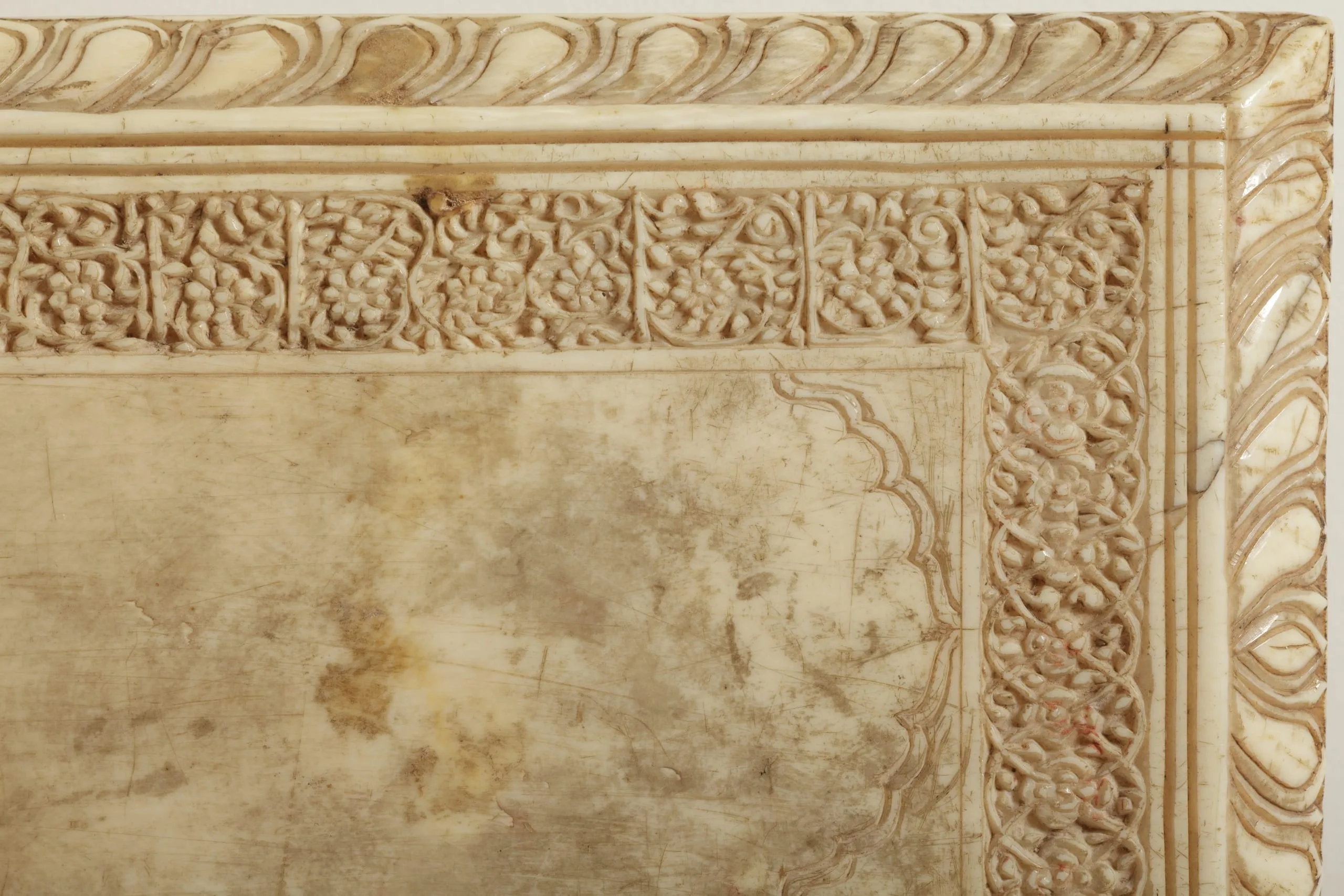
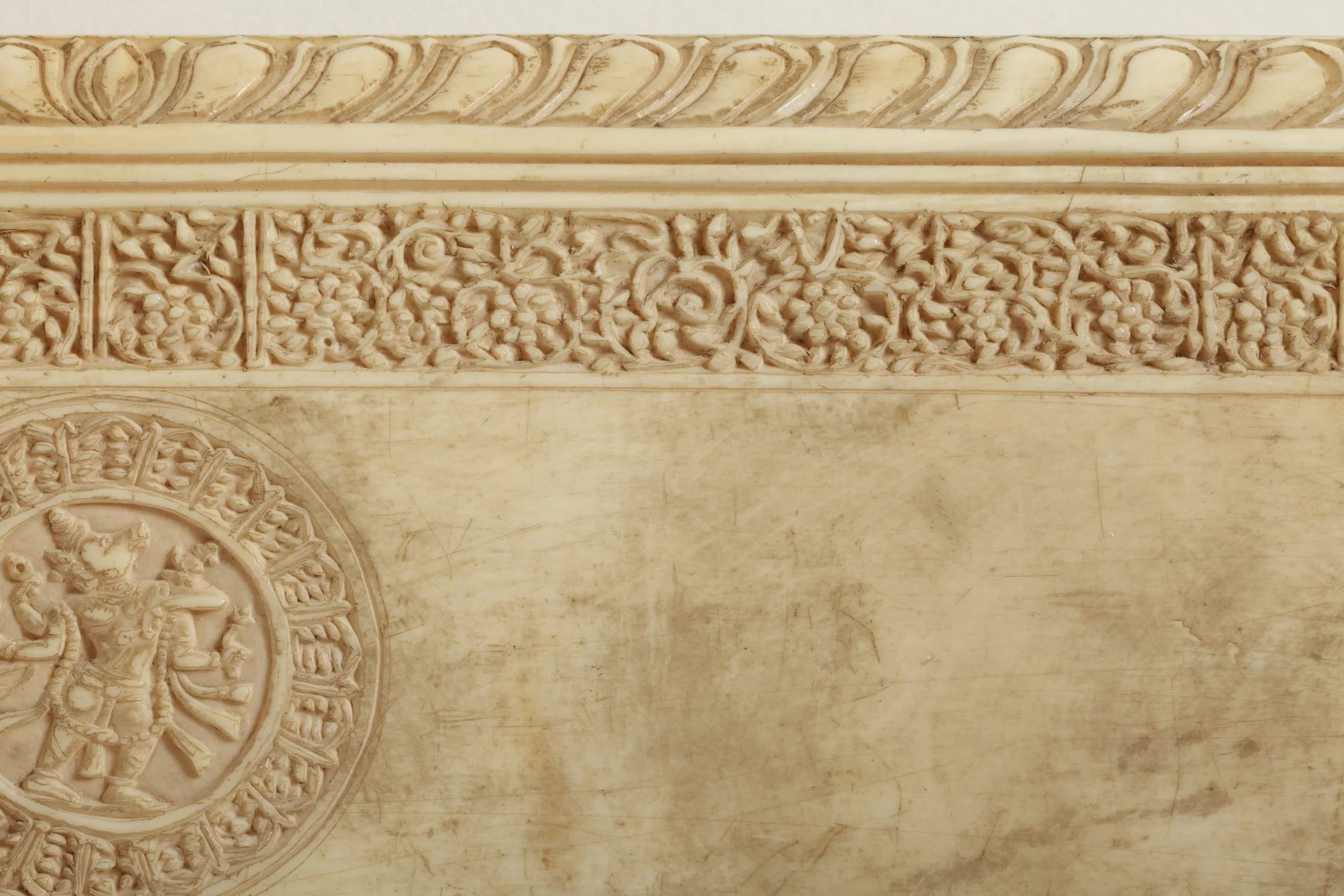
This pair of ivory manuscript covers were likely made originally for a Hindu religious text, as suggested by their central medallions depicting the south Indian iconographic forms of two Hindu deities, Varaha and Yoga-Narasimha (for comparative representations in metal sculpture, see M.87.160.2 and M.91.232.8). Although varying in thickness and stylistic detail, each medallion has a concentric border of crenellated leaf forms. Each cover has an intricately carved inner border and a chamfered outer border in the form of curved laplets. The inner border of cover B with Yoga-Narasimha is a foliated arabesque creeper, while the inner border of cover A with Varaha is a flowering vine that incorporates nonsensical letterforms in what is most likely intended to constitute a pseudo-Arabic inscription.

Pseudo-inscriptions are well known in the arts of Islam, being found particularly on amulets, textiles, ceramics, painting, and architecture. Although illegible or esoteric in meaning, pseudo-inscriptions were created for a number of overt reasons: to affirm symbolically the legitimacy or sanctity of a place or object, to evoke specific social or religious contexts or practices, to ascribe a certain cultural identity, to symbolize or abbreviate sacred and/or magical formulae, and for fraudulent purposes. The rationale here for the occurrence of a pseudo-Arabic inscription on a Hindu literary object is enigmatic.
Selected Bibliography
  • Markel, Stephen. "The Enigmatic Image: Curious Subjects in Indian Art." Asianart.com, July 28, 2015. http://asianart.com/articles/enigmatic.