- Title
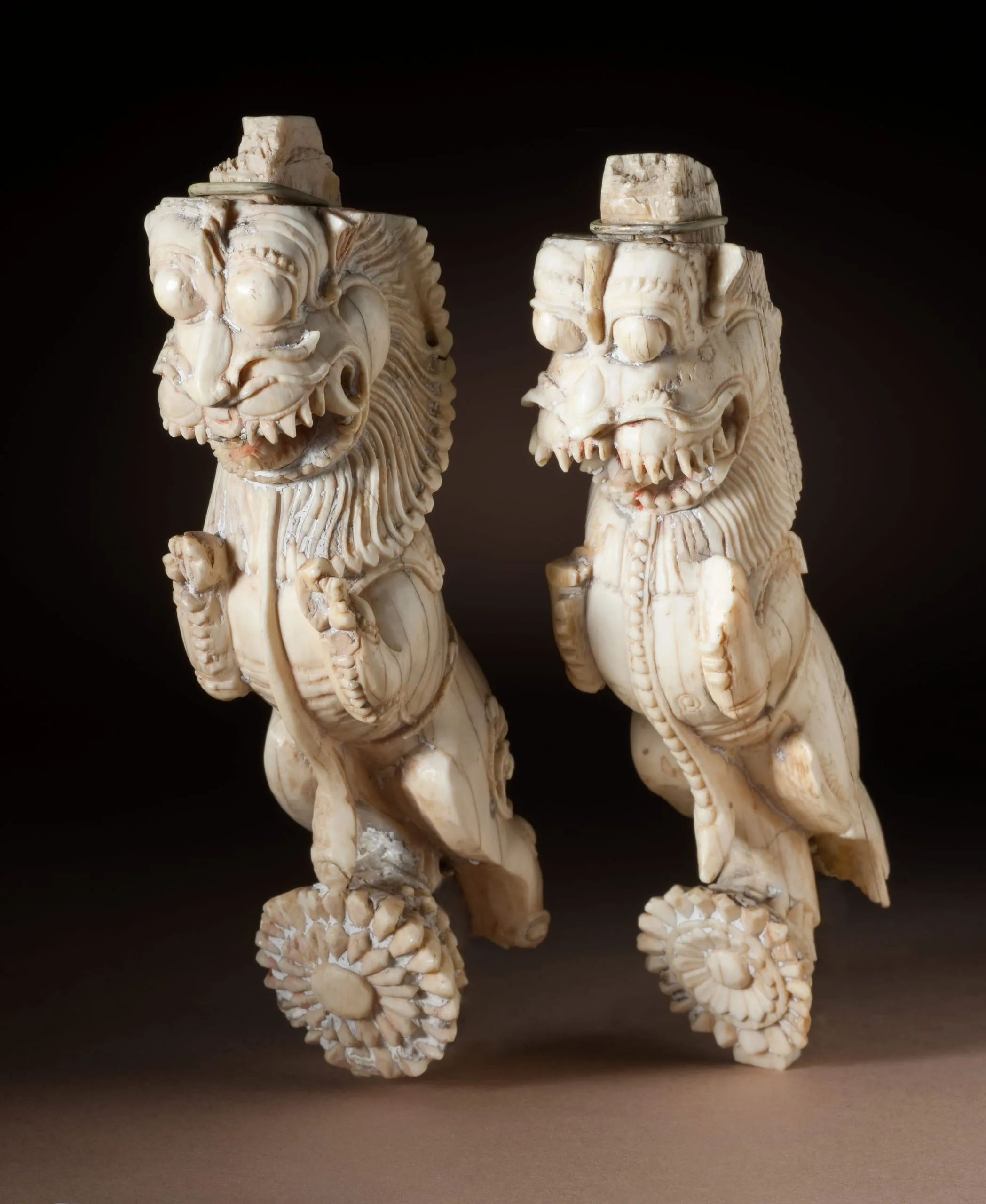
- Pair of Architectural Brackets in the Form of Rampant Leonine Creatures (yali or vyala), From a Processional Mandapa
- Date Made
- 17th century
- Medium
- Ivory with traces of paint
- Dimensions
- a: 5 3/4 x 1 1/4 x 1 3/4 in. (14.61 x 3.18 x 4.45 cm); b: 5 7/8 x 1 1/4 x 1 3/4 in. (14.92 x 3.18 x 4.45 cm)
- Accession Number
- M.80.232.7a-b
- Curatorial Notes
The Madurai region of Tamil Nadu during the Nāyak period (early 16th–early 18th century) was a prolific center of ivory carving. Among the noteworthy object types now dispersed in collections worldwide are figural brackets for ivory thrones and processional mandapas (pillared halls). Such brackets are often fashioned in the form of a rampant animal that is stylistically derived from earlier architectural and sculptural conventions. Most common is a mythical leonine creature (yāli or vyāla). It is depicted rearing on its hind legs, with its proportionally small forelegs and paws held upright and facing forward. The head has the long mane of a mature male lion, which is arranged as a radiant aura with the strands of hair resembling flames. Small ears point upward. The immense bulging eyes are rendered as protruding hemispheres. The mustachioed mouth is widely gaped with snarling upper lips, a prominent row of upper fangs with large curved canines in the rear, and a discrete row of lower teeth. A long plume or frond, either plain or adorned with pearls, extends from the lower lip to an open lotus flower in front of the feet at the base. The tail is that of a lion, long with articulated ends. Floral sprays adorn the hips.
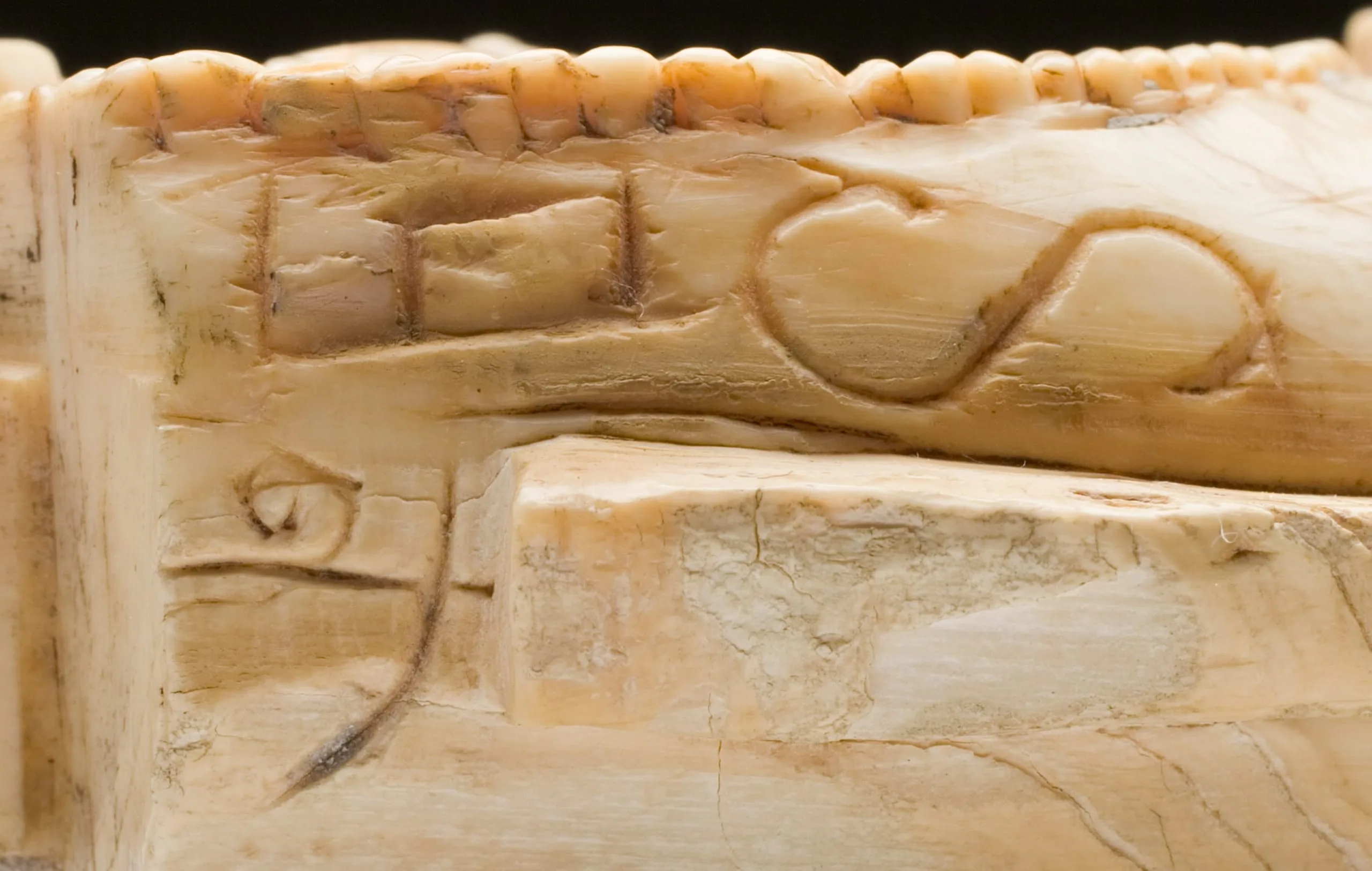
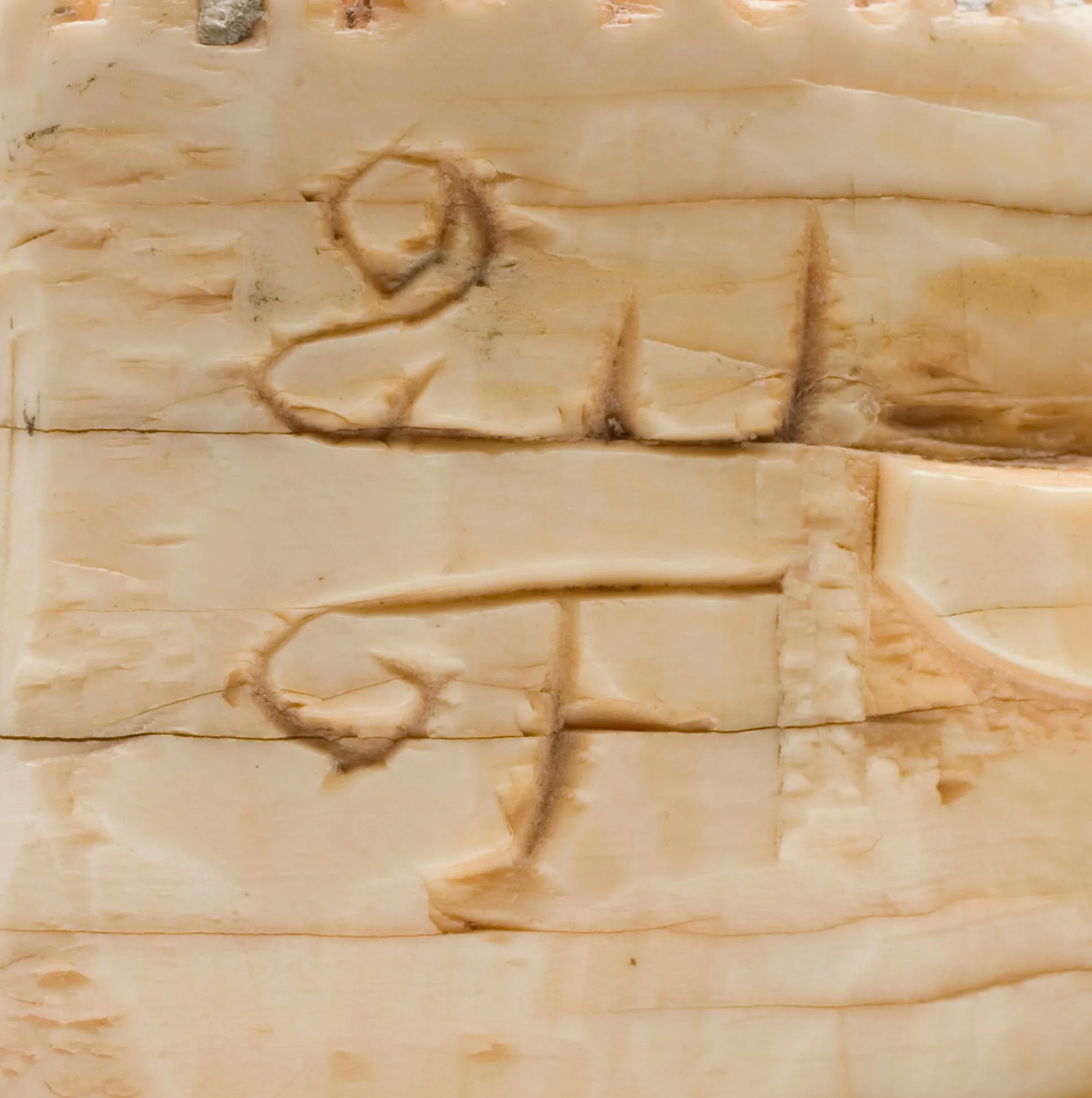
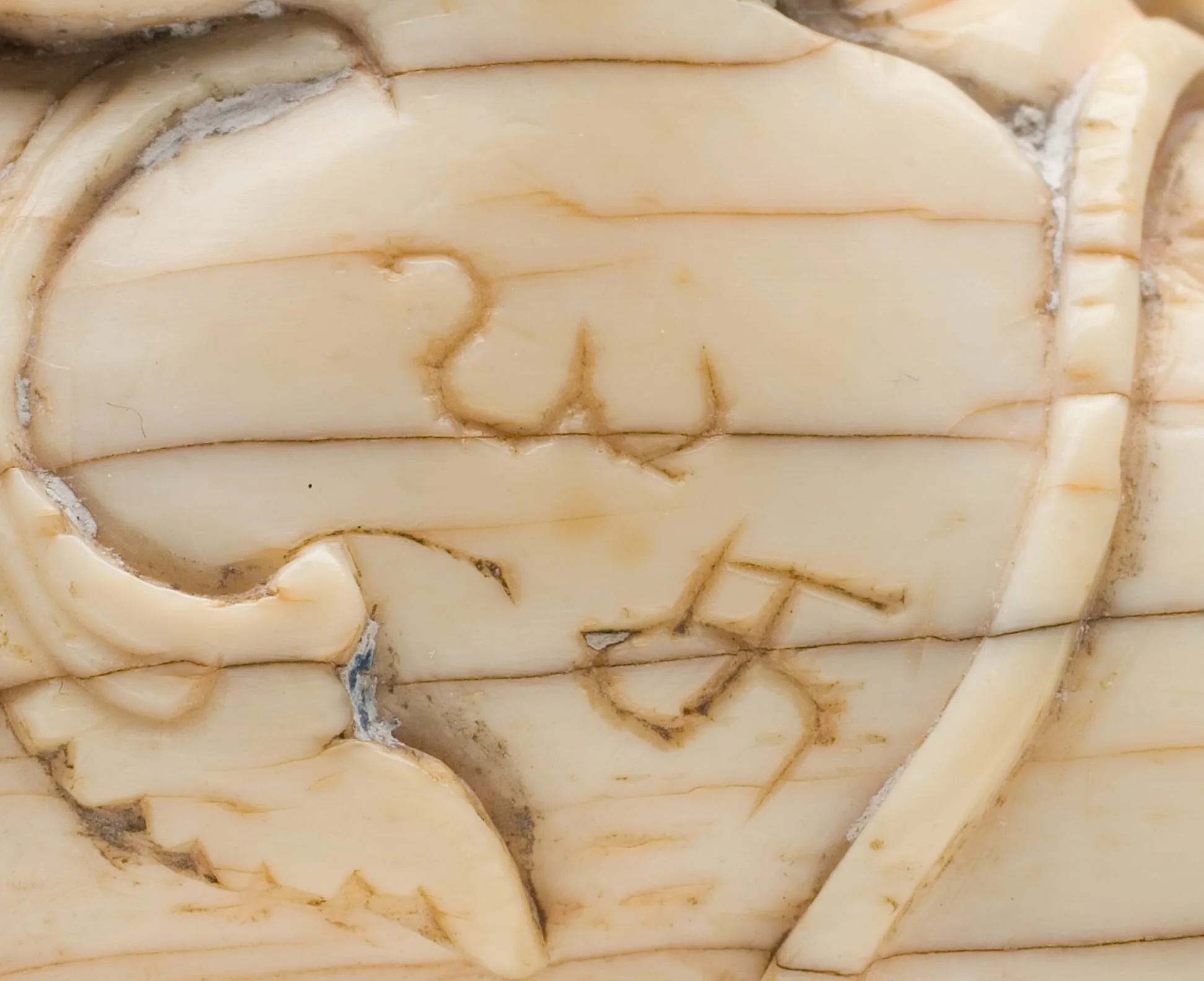
Inscribed on the flattened back of the head and the right flank of support (a) are the numerals 18, 21, and 27 written in Tamil script (Translation by R. Nagaswamy). They serve as instructions for assembling the components in the correct order.
- Selected Bibliography
- Pal, Pratapaditya. Elephants and Ivories in South Asia. Los Angeles: Los Angeles County Museum of Art, 1981.