LACMA

ShopMembershipMyLACMATickets
LACMA
Los Angeles County Museum of Art
5905 Wilshire Blvd.
Los Angeles, CA 90036
info@lacma.org
(323) 857-6000
Sign up to receive emails
Subscribe
© Museum Associates 2026
  • About LACMA
  • Jobs
  • Building LACMA
  • Host An Event
  • Unframed
  • Press
  • FAQs
  • Log in to MyLACMA
  • Privacy Policy
© Museum Associates 2026
Collections

Unknown
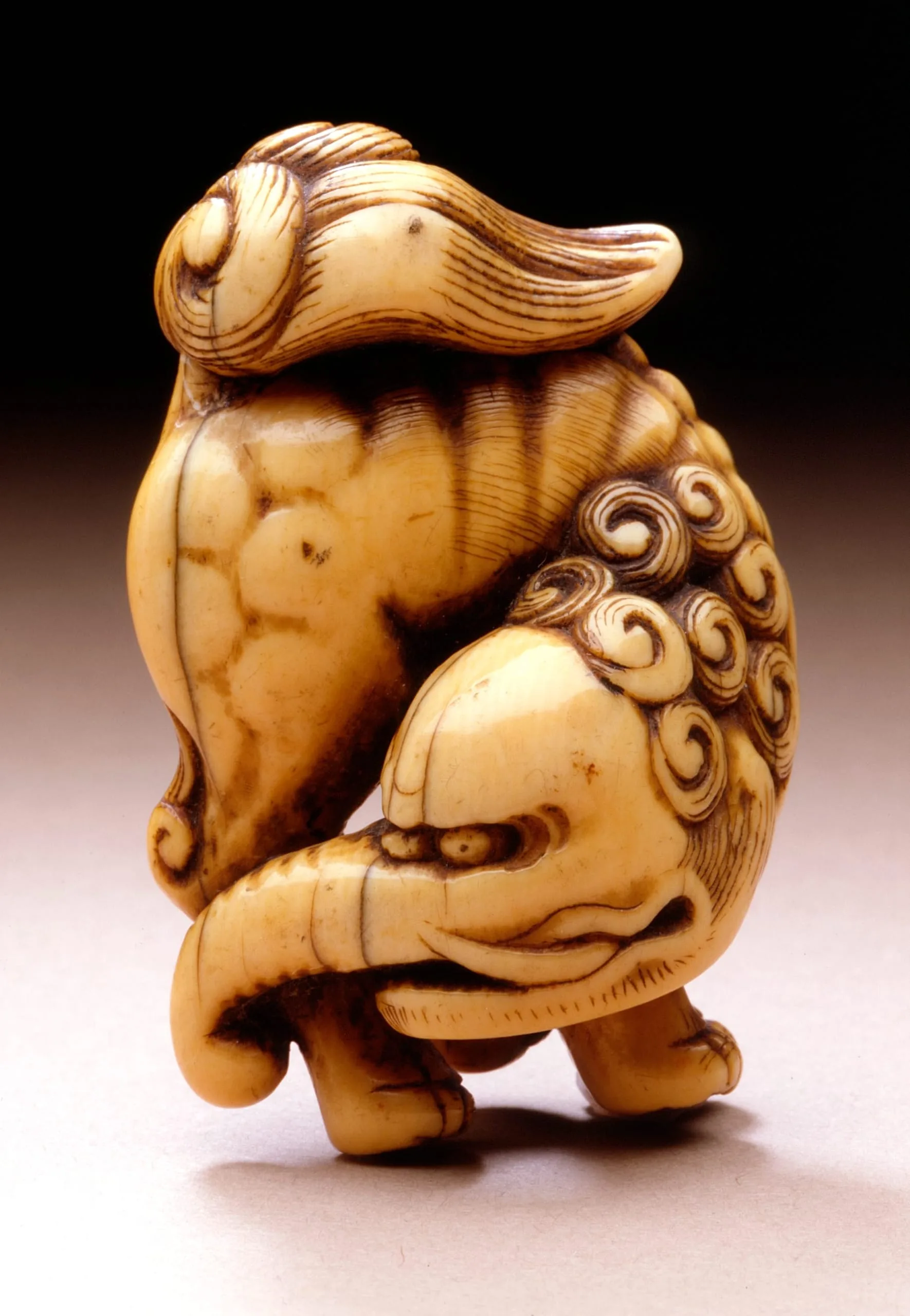
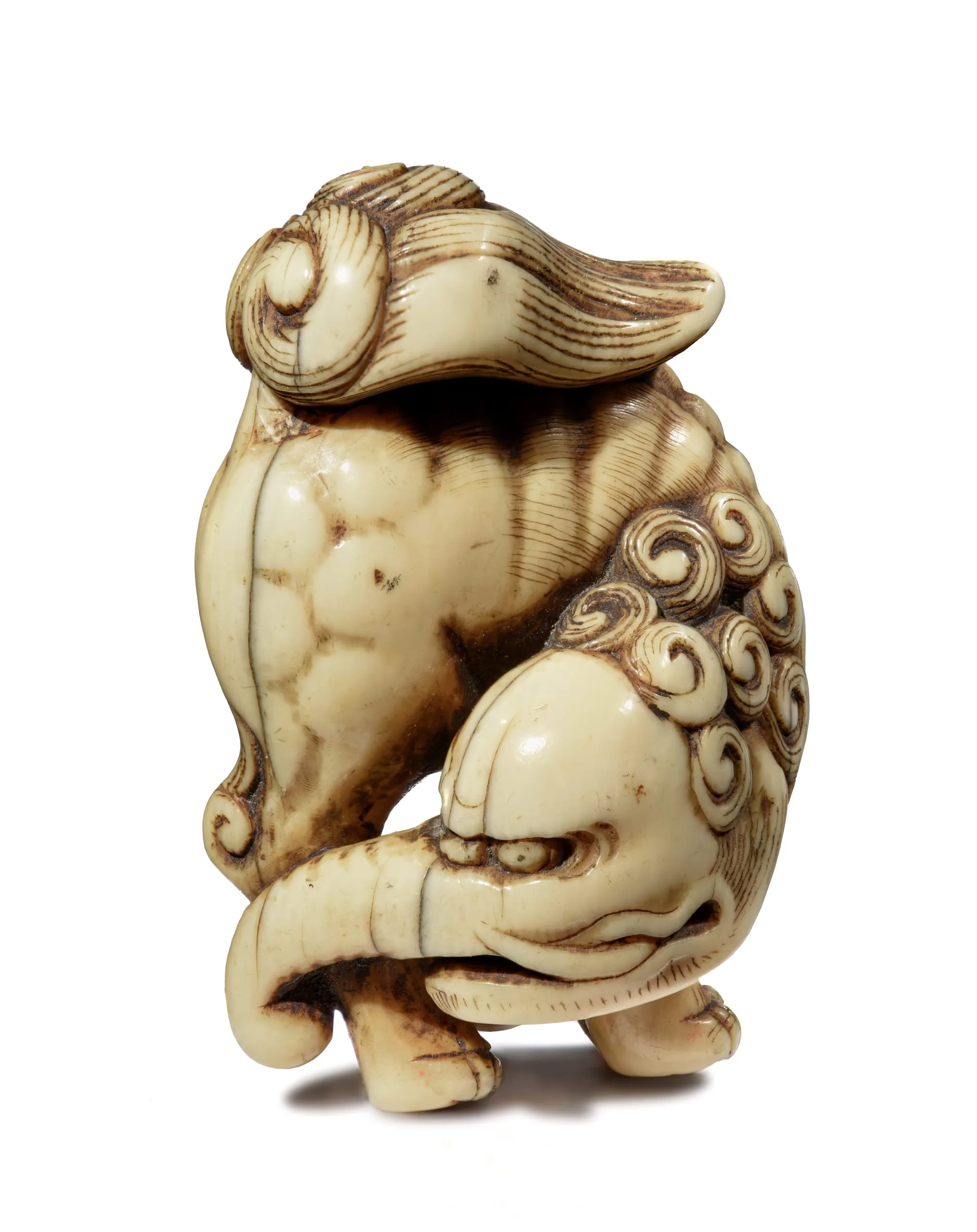
Baku: Monster that Eats Nightmares18th century

Not on view
Small ivory netsuke of a crouching shishi lion-dog with swirling curls and a shell-like form on its back, cream with dark brown patina in carved grooves
Ivory netsuke of a shishi (lion-dog) in a compact, crouching pose, with finely incised curling mane, open mouth, and detailed striations throughout, yellowed with age patina against a dark background.

Unknown, Baku: Monster that Eats Nightmares, 18th century, Los Angeles County Museum of Art, Raymond and Frances Bushell Collection, photo © Museum Associates/LACMA

Artist or Maker
Unknown
Title
Baku: Monster that Eats Nightmares
Place Made
Japan
Date Made
18th century
Period
Edo period (1603-1868)
Medium
Ivory with staining, sumi
Dimensions
2 1/8 x 1 7/16 x 1 in. (5.4 x 3.7 x 2.5 cm)
Credit Line
Raymond and Frances Bushell Collection
Accession Number
M.91.250.270
Classification
Costumes
Collecting Area
Japanese Art
Curatorial Notes

The baku was a common subject in netsuke. A mythical beast imported from Chinese folklore, the nightmare-eating baku was known in Japan by the fifteenth century. It is described in the early seventeenth-century Japanese illustrated book Sankai ibutsu (Mythical Creatures of the Mountains and Seas) and pictured in prints and books throughout the eighteenth century, with some or all of the following traits: an elephant’s trunk and tusks, rhinoceros eyes, an oxtail, and tiger paws (see M.2000.104.26). Despite its menacing appearance, the baku was revered as a powerful protector best known for devouring nightmares, and depictions of it were kept near the sleeper to ward off bad dreams, illness, and evil spirits (M.2013.19.1-.2).

It was in netsuke form that the creature appears most often in the history of Japanese art. This eighteenth-century example exhibits the telltale characteristics of the benevolent beast. The raised circular spots on its coat represent tufts of fur, and patches of hair grow at the back of its hind legs. Baku-form netsuke are found almost exclusively in ivory, and commonly carved in the round, or katabori style. For the carver, one of the challenges in designing a katabori-type netsuke was to create a composition that would be functional as well as attractive. The design needed to be compact with no protrusions that might be broken or catch the sleeve of a kimono. To ensure functionality, and to preserve as much of the expensive material as possible, carvers often distorted the subject, resulting in imaginative and abstract creations. Here, all the elements—head, tusk, trunk, tail—are twisted, curved, or curled to create an overall rounded form.

2024
Selected Bibliography
  • Bushell, Raymond. Collector's Netsuke. New York: Walker/Weatherhill, 1971.
  • Bushell, Raymond. An Exhibition of Netsuke from the Raymond Bushell Collection. Tokyo: Mikimoto World Jewelers, 1979.
  • Bushell, Raymond. Netsuke: Japanese Sculpture in Miniature from the Collection of Raymond and Frances Bushell, Part IV. Los Angeles: Los Angeles County Museum of Art, 1987.
  • Goodall, Hollis, Virginia G. Atchley, Neil K. Davey, Christine Drosse, Sebastian Izzard, Odile Madden, and Robert T. Singer. The Raymond and Frances Bushell Collection of Netsuke: A Legacy at the Los Angeles County Museum of Art. Chicago: Art Media Resources, Inc.; Los Angeles: Los Angeles County Museum of Art, 2003.
  • Takamado no Miya Hisako. Kogiroku. Heisei 24nendo. Kananmachi (Osakafu): Osaka geijutsu daigaku, 2013.