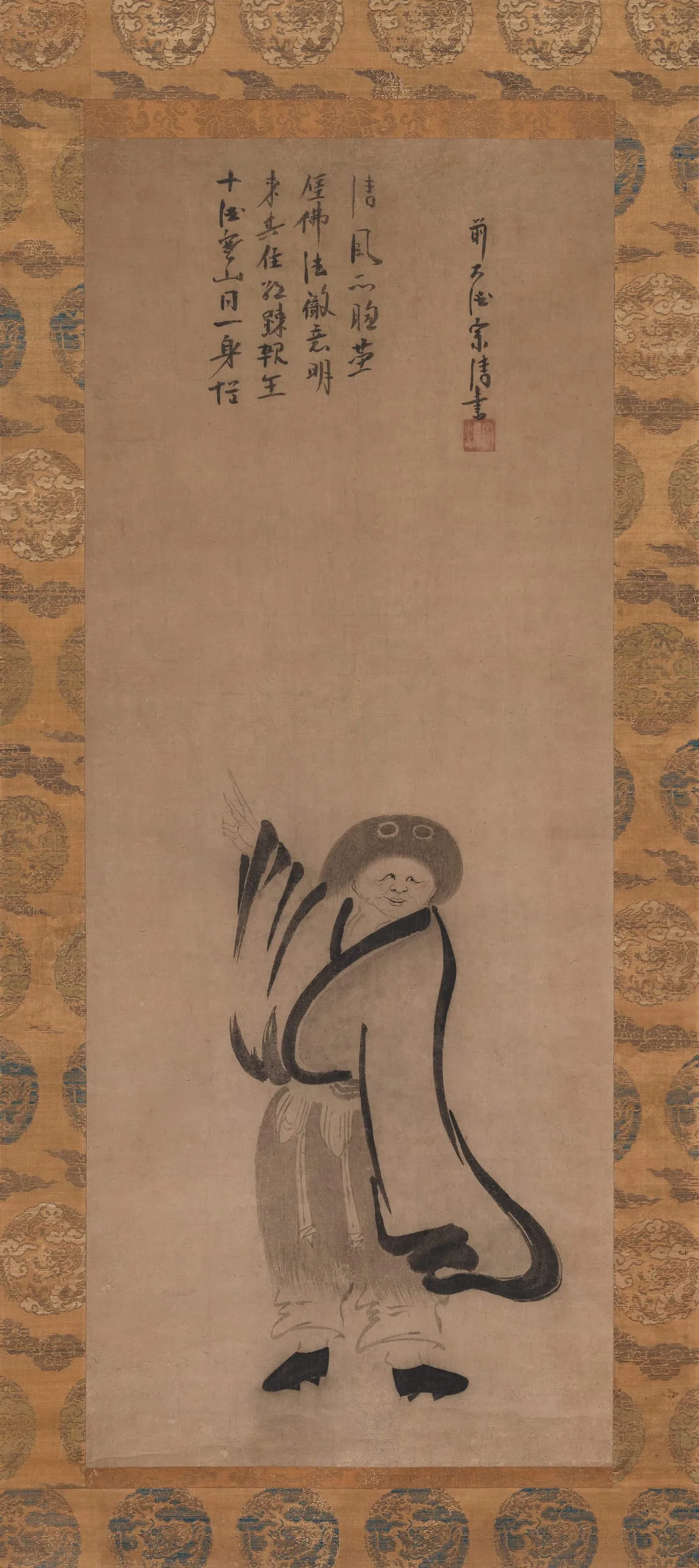
The eccentric pair Kanzan and Jittoku (see M.73.78.2) were a popular subject in Zen painting from the fourteenth century onward. According to legend, Jittoku (Ch. Shide) worked in the kitchen of a temple on Mount Tientai in Zhejiang Province, China, during the Tang dynasty (618−907). Kanzan (Ch. Hanshan), a poet-recluse, lived in a cave near the temple and often came by for leftover rice. The two became friends, and it was said that their conversations rivaled the most learned Buddhist discourse. Poems allegedly by Kanzan, collected under the title Hanshan shi (Cold Mountain Poems), were treasured by Zen Buddhists. Kanzan and Jittoku symbolize creative, enlightened living, untroubled by petty concerns and unfettered by social conventions. They were considered to be incarnations of the two Bodhisattvas of Wisdom Monju and Fugen. Often shown in rags, evocative of their reclusion and lack of worldly attachments, the pair are sometimes seen laughing with abandon, signaling their dismissal of normal social interaction.
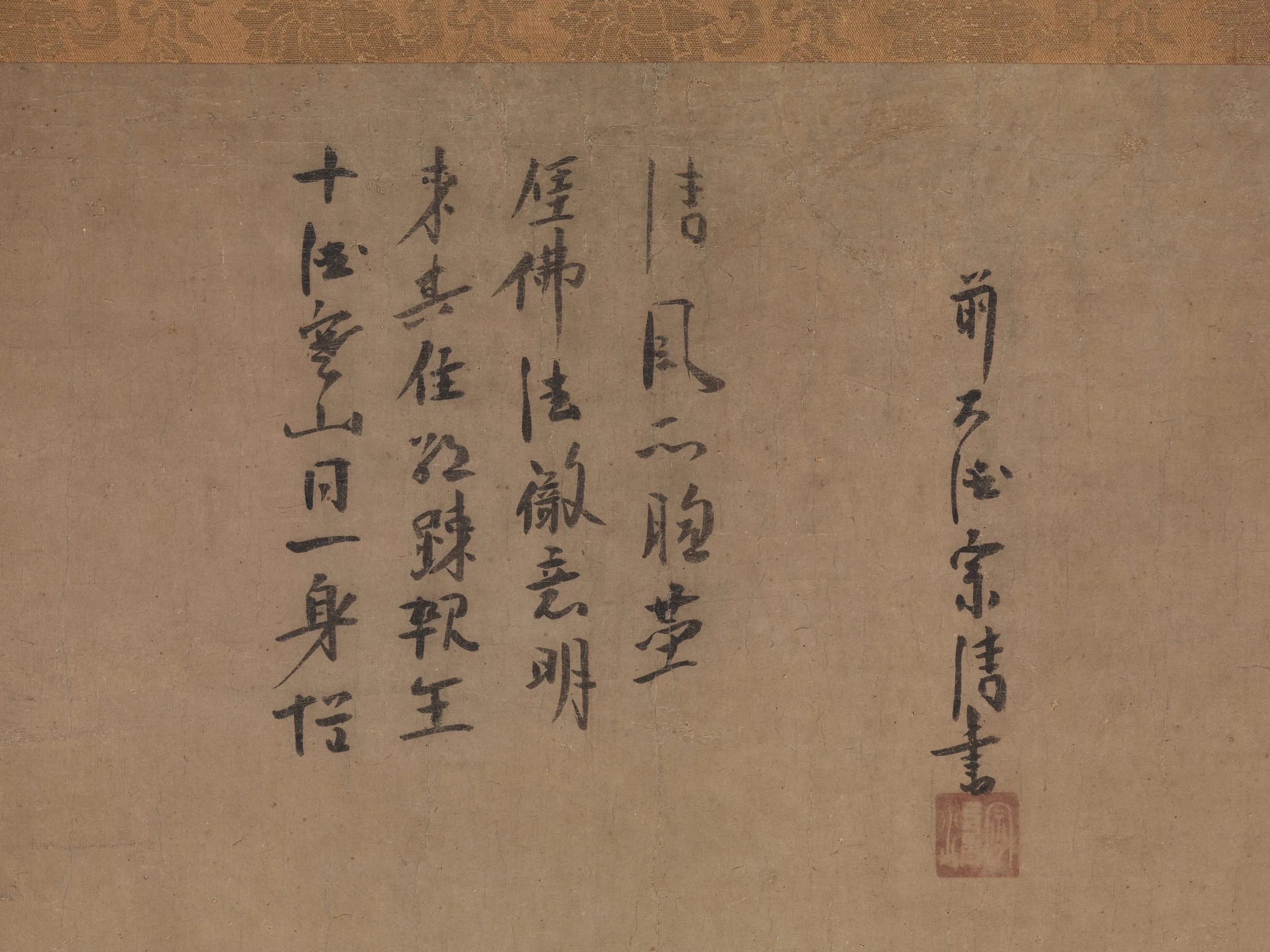
Iten Sōsei was the eighty-third abbot of the Zen temple complex at Daitokuji in Kyoto, and was patronized by the emperor Gokashiwabara (r. 1500−1526). His painting style was influenced by the Japanese painter-monk Kaō, though he employed standard Chinese iconography and aesthetic idioms for his depictions of Kanzan and Jittoku.