LACMA

ShopMembershipMyLACMATickets
LACMA
Los Angeles County Museum of Art
5905 Wilshire Blvd.
Los Angeles, CA 90036
info@lacma.org
(323) 857-6000
Sign up to receive emails
Subscribe
© Museum Associates 2026
  • About LACMA
  • Jobs
  • Building LACMA
  • Host An Event
  • Unframed
  • Press
  • FAQs
  • Log in to MyLACMA
  • Privacy Policy
© Museum Associates 2026
Collections

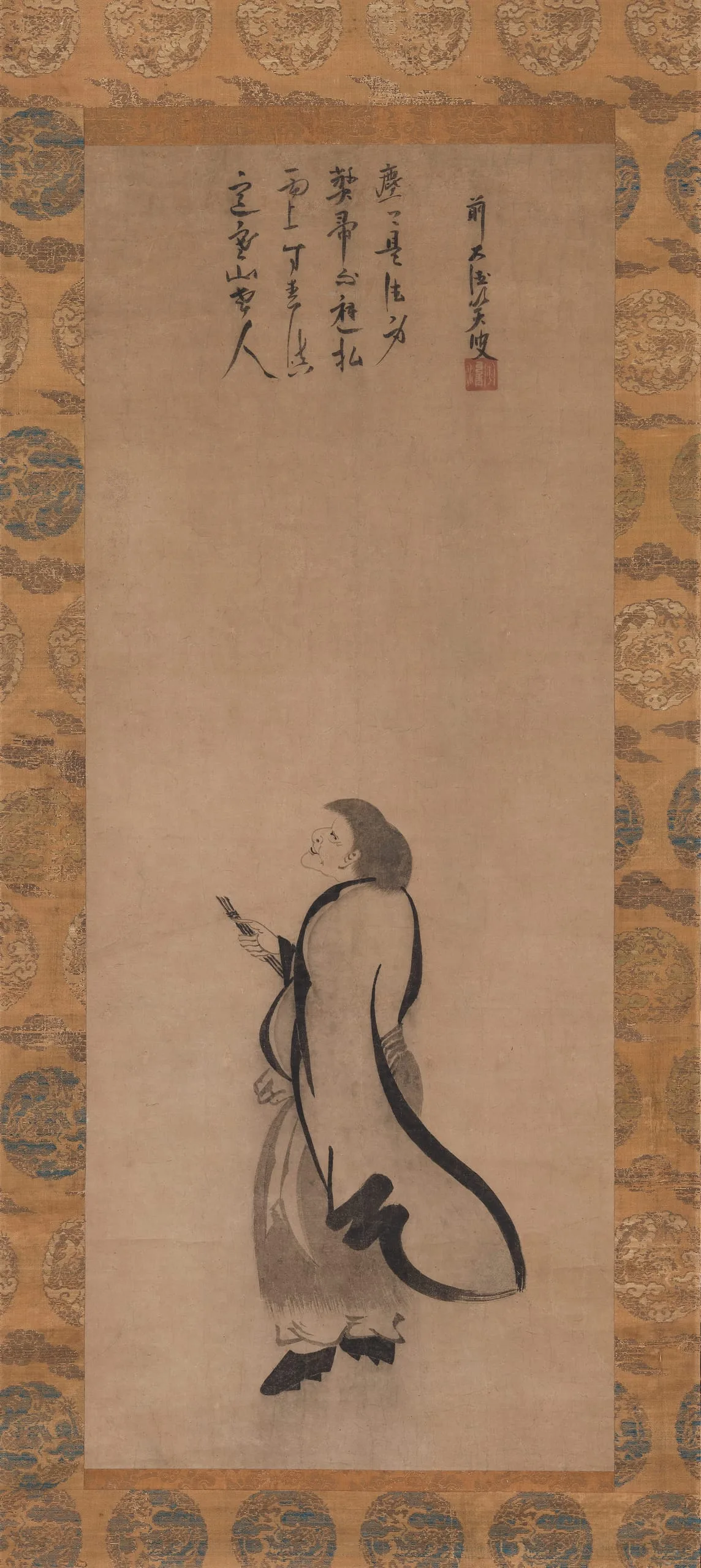
Iten Sōsei
Jittokufirst half 16th century

Not on view
Hanging scroll painting, ink on tan paper, of a solitary robed figure with shaved head gazing upward, holding a narrow staff, with columns of cursive East Asian calligraphy above
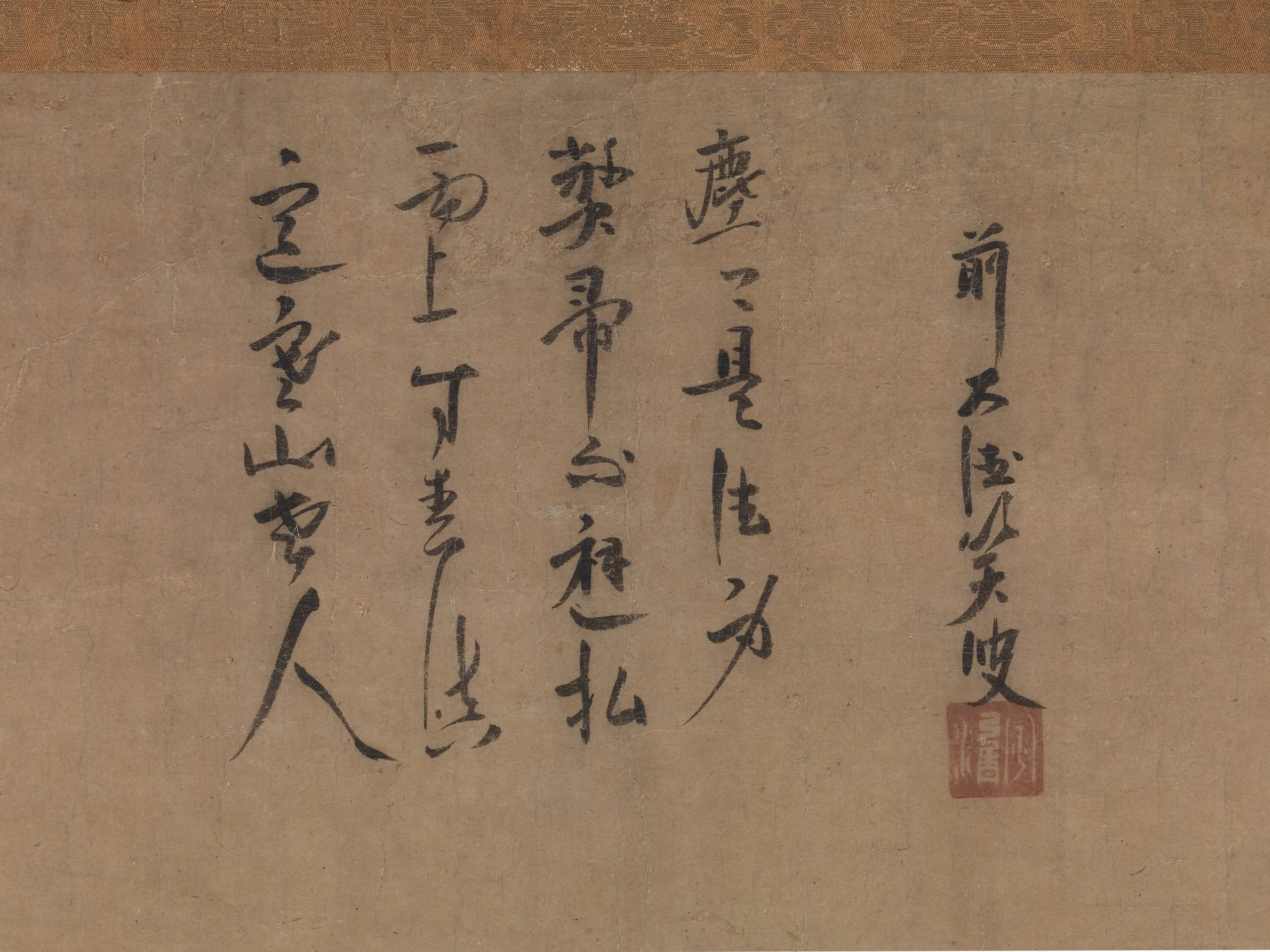
Hanging scroll detail showing Chinese calligraphy in fluid cursive script on aged beige silk, with a red seal impression at right.

Iten Sōsei, Jittoku, first half 16th century, Los Angeles County Museum of Art, Anonymous gift, photo © Museum Associates/LACMA

Artist or Maker
Iten Sōsei
Title
Jittoku
Place Made
Japan
Date Made
first half 16th century
Period
Muromachi period (1392-1573)
Medium
Hanging scroll; ink on paper, one from a pair
Dimensions
Image: 41 1/2 x 16 1/2 in. (105.0 x 41.0 cm); Mount: 76 3/4 x 22 1/4 in. (195.0 x 56.5 cm)
Credit Line
Anonymous gift
Accession Number
M.73.78.2
Classification
Paintings
Collecting Area
Japanese Art
Curatorial Notes

The eccentric pair Jittoku and Kanzan (see M.73.78.1) were a popular subject in Zen painting from the fourteenth century onward. According to legend, Jittoku (Ch. Shide) worked in the kitchen of a temple on Mount Tientai in Zhejiang Province, China, during the Tang dynasty (618−907). Kanzan (Ch. Hanshan), a poet-recluse, lived in a cave near the temple and often came by for leftover rice. The two became friends, and it was said that their conversations rivaled the most learned Buddhist discourse. Poems allegedly by Kanzan, collected under the title Hanshan shi (Cold Mountain Poems), were treasured by Zen Buddhists. Kanzan and Jittoku symbolize creative, enlightened living, untroubled by petty concerns and unfettered by social conventions. They were considered to be incarnations of the two Bodhisattvas of Wisdom Monju and Fugen. Often shown in rags, evocative of their reclusion and lack of worldly attachments, the pair are sometimes seen laughing with abandon, signaling their dismissal of normal social interaction.

Iten Sōsei was the eighty-third abbot of the Zen temple complex at Daitokuji in Kyoto, and was patronized by the emperor Gokashiwabara (r. 1500−1526). His painting style was influenced by the Japanese painter-monk Kaō, though he employed standard Chinese iconography and aesthetic idioms for his depictions of Kanzan and Jittoku.
Selected Bibliography
  • Dallas Museum of Fine Arts. Masterpieces of Japanese Arts. Dallas: Dallas Museum of Fine Arts
    1969.

Related Unframed

This Weekend at LACMA
  • December 31, 2010