- Title
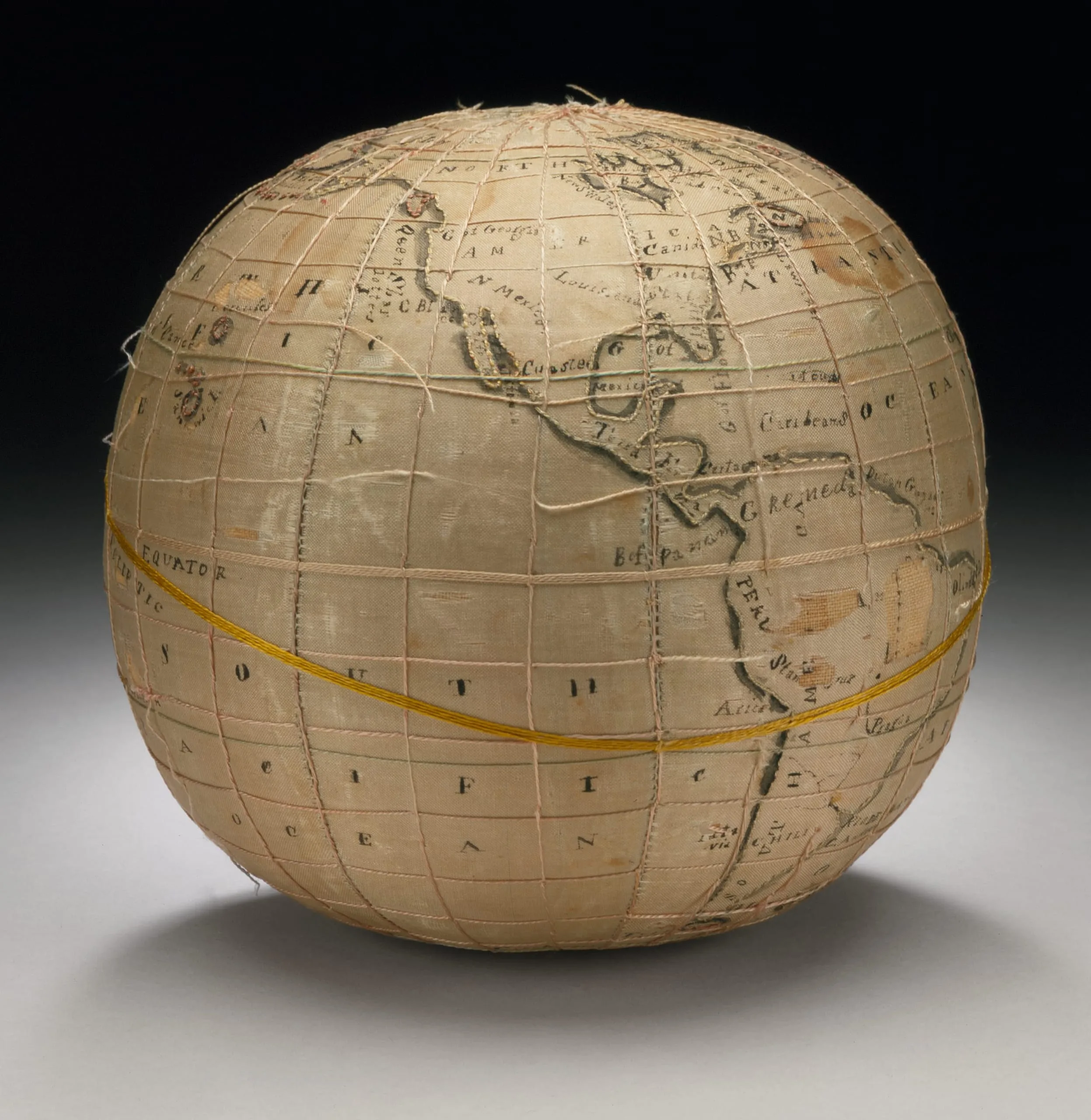
- Embroidered Terrestrial Globe
- Date Made
- 1817
- Medium
- Silk plain weave, painted, with silk embroidery
- Dimensions
- Overall (Diameter): 5 in. (12.7 cm)
Circumference: 16 5/16 in. (41.5 cm)
Weight: 0.56 lb. (0.3 kg)
- Accession Number
- 42.28.5
- Curatorial Notes
From about 1804 to 1844, girls enrolled at Westtown School, a Quaker boarding school near Philadelphia, made embroidered globes as part of their geography studies. This globe was stitched by Lydia Satterthwaite of Crosswicks, New Jersey, in 1817, when she was fourteen years old. Unique to Westtown, this educational craft was attributable in part to the widespread emphasis on geography in female curricula in the early nineteenth century. But equally significant is the fact that terrestrial globes were costly and scarce in the United States. When the school needed to replace its worn-out conventional globes in 1824, it imported three expensive ones from an instrument maker in England. Given that the first factory producing globes in the U.S. was not established until 1815, the girls at Westtown deserve credit as some of the earliest globe makers in the nation. Interestingly, while these crafts encouraged students to “think globally,” they “acted locally” when they stuffed their stitched world maps with wool shorn from sheep raised on school grounds.
Nicole LaBouff
2024