LACMA

ShopMembershipMyLACMATickets
LACMA
Los Angeles County Museum of Art
5905 Wilshire Blvd.
Los Angeles, CA 90036
info@lacma.org
(323) 857-6000
Sign up to receive emails
Subscribe
© Museum Associates 2025

Museum Hours

Monday

11 am–6 pm

Tuesday

11 am–6 pm

Wednesday

Closed

Thursday

11 am–6 pm

Friday

11 am–8 pm

Saturday

10 am–7 pm

Sunday

10 am–7 pm


  • About LACMA
  • Jobs
  • Building LACMA
  • Host An Event
  • Unframed
  • Press
  • FAQs
  • Log in to MyLACMA
  • Privacy Policy
© Museum Associates 2025
Collections

Plate14th century

Not on view
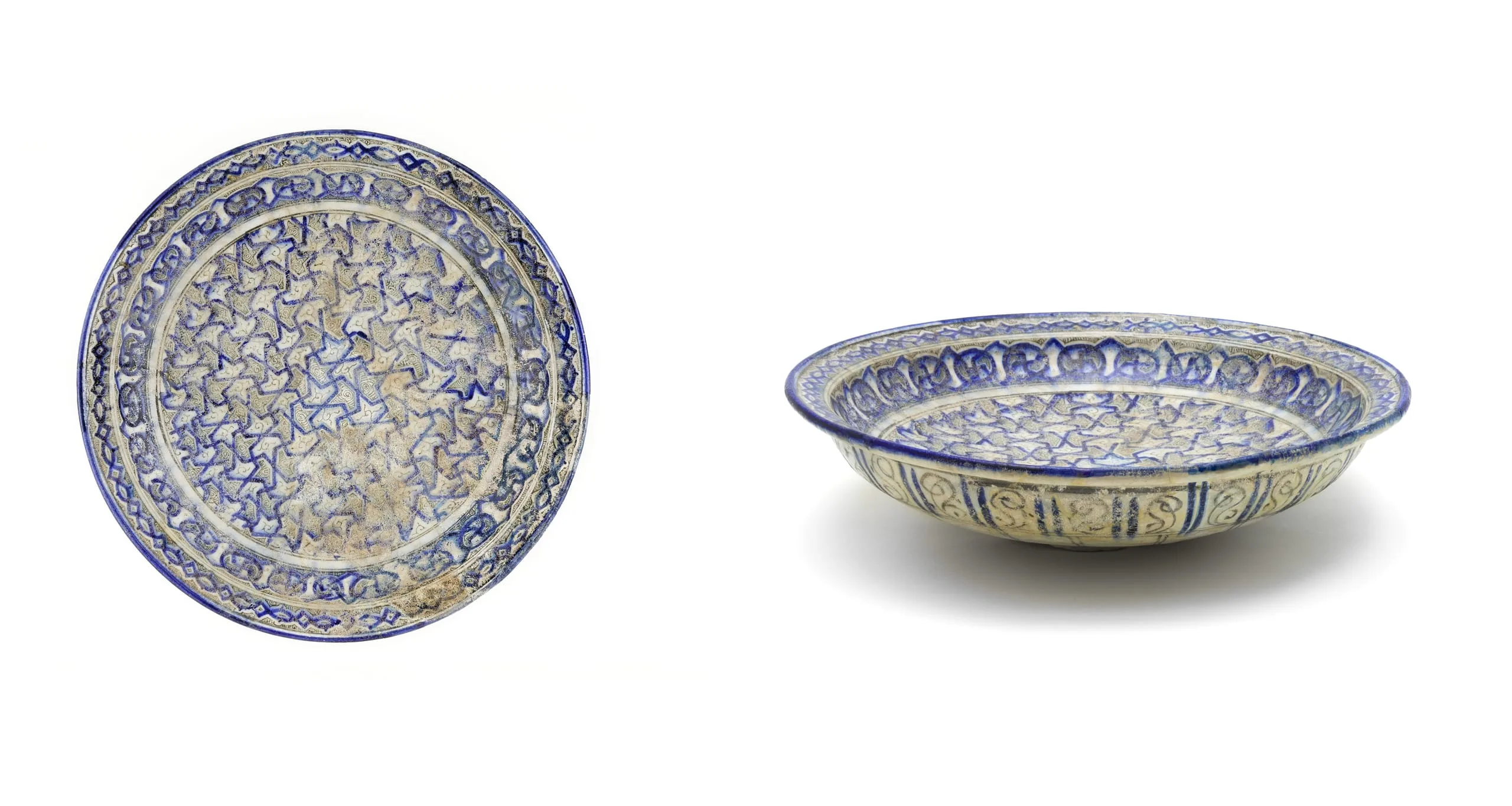
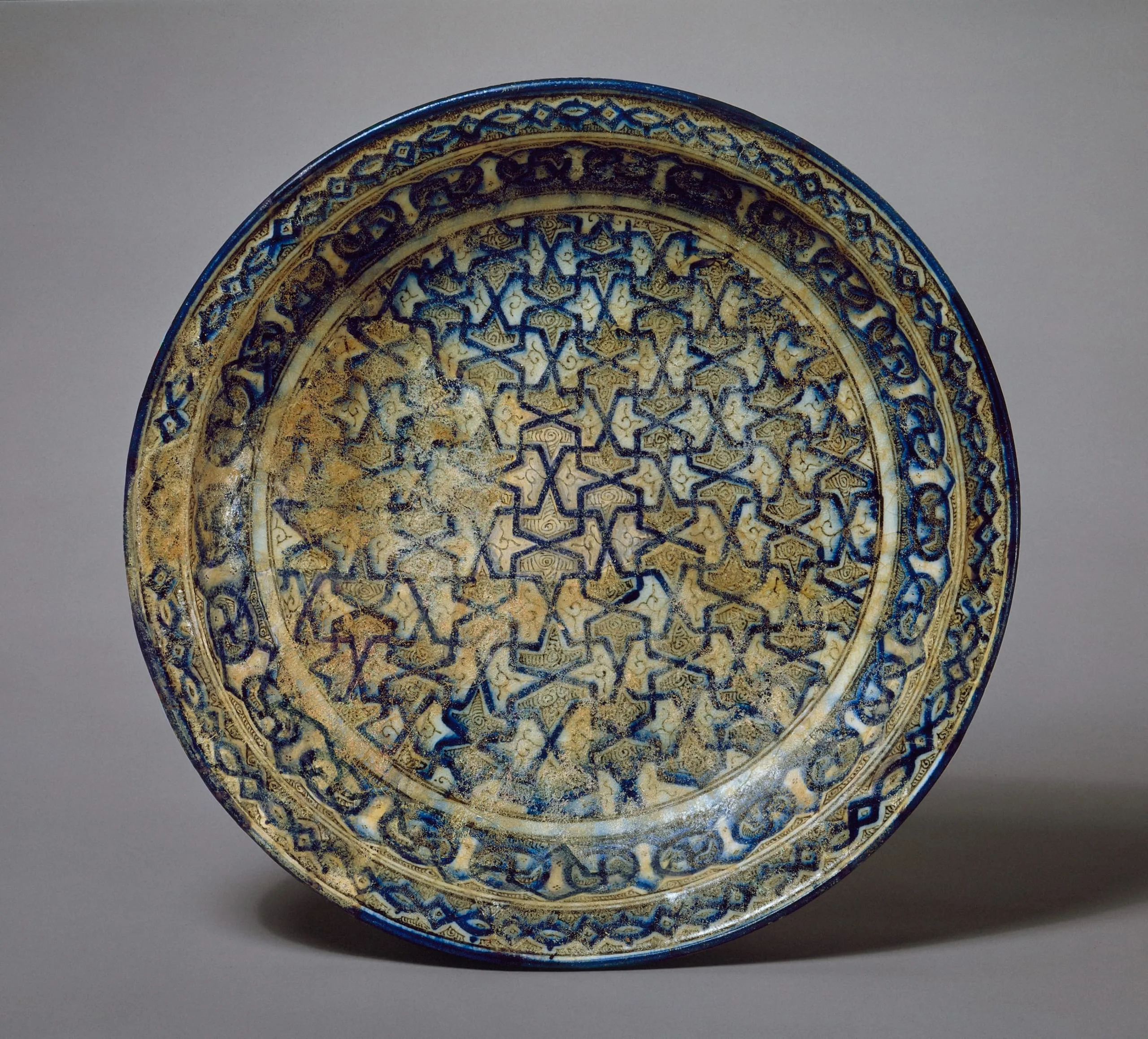
Ceramic plate with cobalt blue decoration on a worn cream ground, featuring dense interlocking angular Kufic script filling the central well and scrolling arabesque and diamond-chain bands on the rim
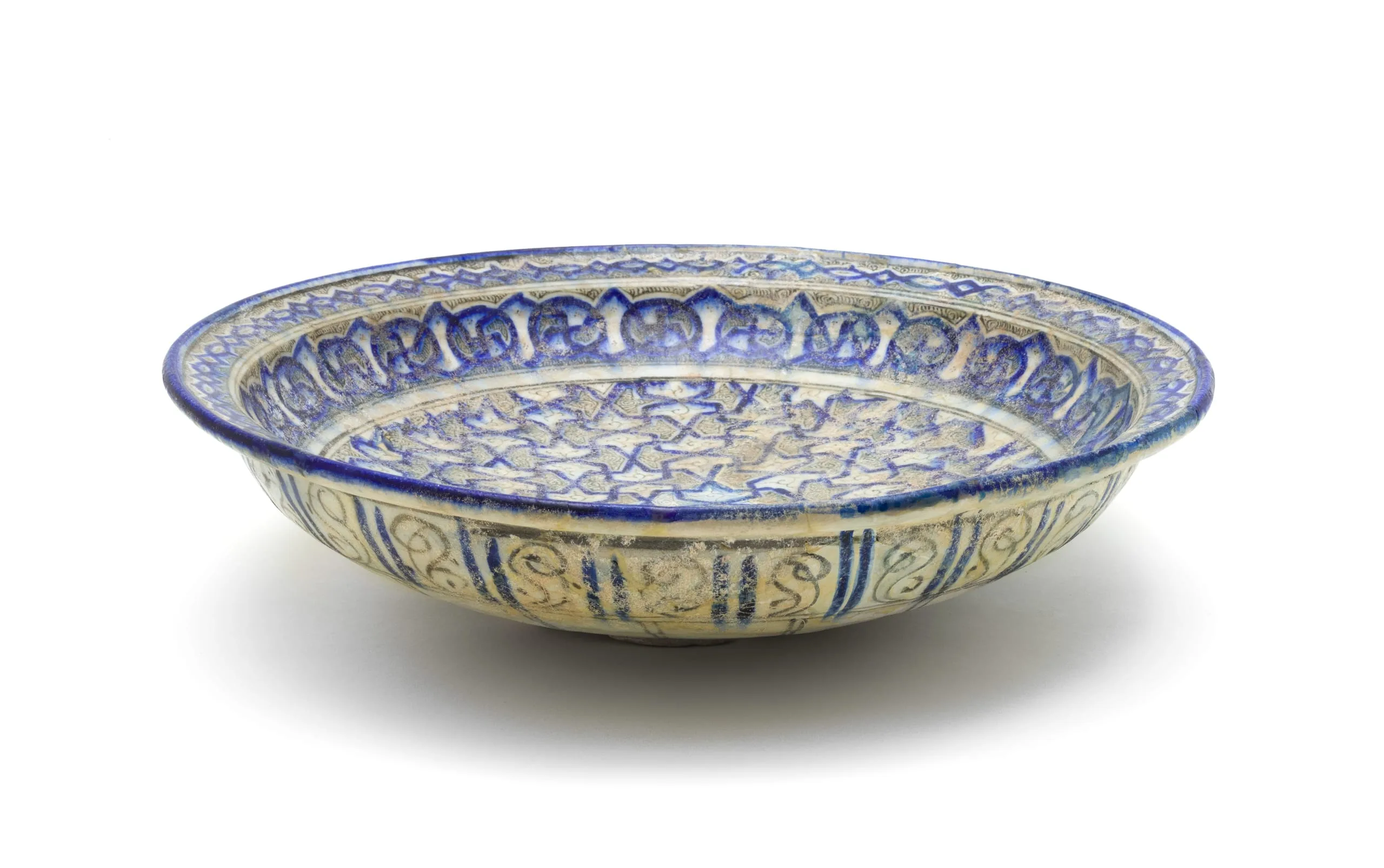
Ceramic dish with wide flat rim and shallow well, decorated in cobalt blue and cream with dense overall patterning; interior features a central field of interlocking geometric motifs, a plain band, and a leafy border on the rim; exterior with vertical cartouches and scrolling arabesques.
Ceramic dish shown from two angles: top-down and three-quarter view, revealing a shallow bowl form with cobalt blue arabesque and geometric patterns densely covering the interior, a banded border of repeated motifs along the rim, and vertical cartouches on the exterior, set against a pale cream ground.
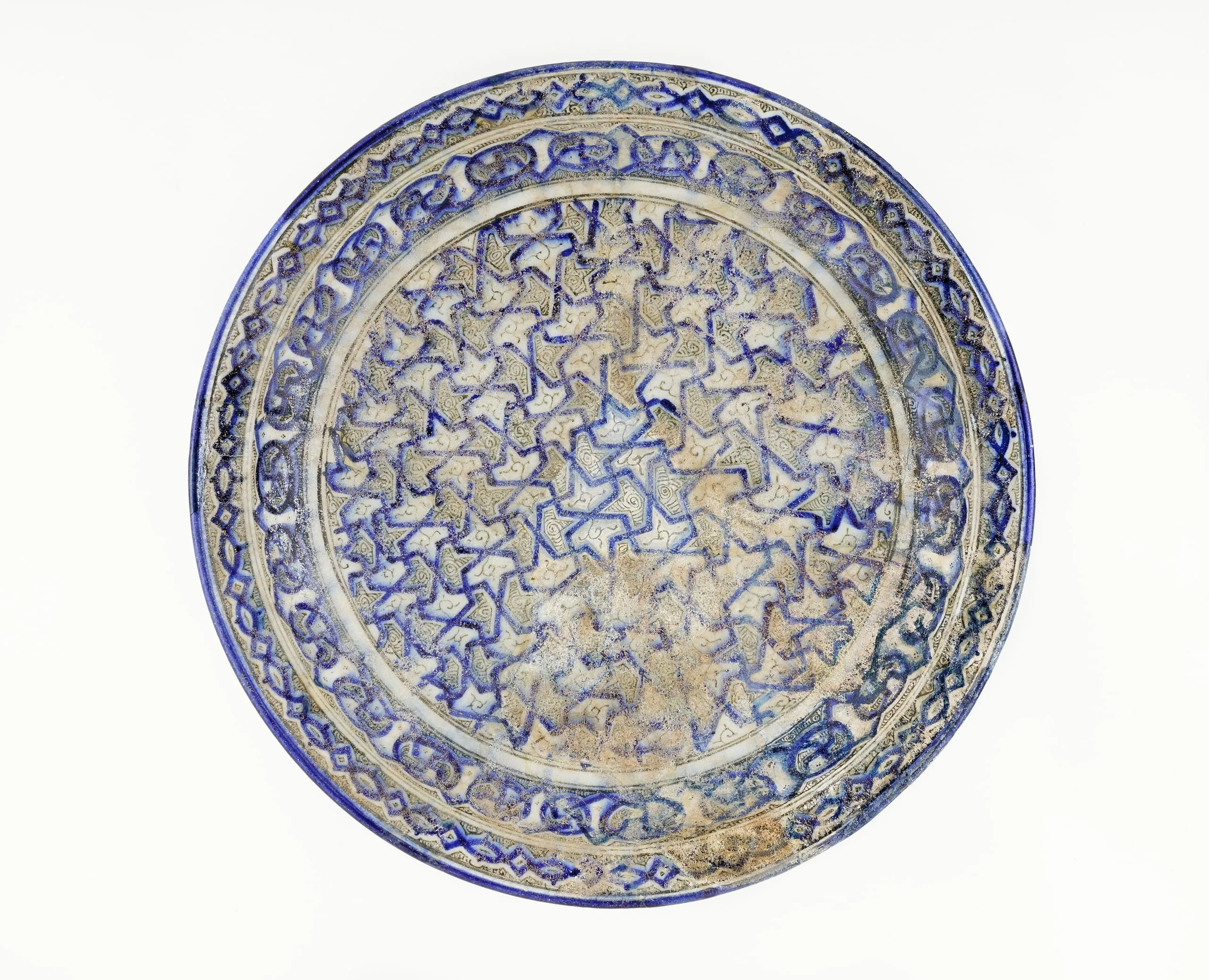
Ceramic dish with wide flat rim, decorated overall in cobalt blue and buff tones with an interlocking geometric star-and-polygon pattern across the interior; scrolling arabesque border on the rim, with worn and aged glaze surface.
Title
Plate
Place Made
Iran or Central Asia
Date Made
14th century
Medium
Fritware, underglaze-painted
Dimensions
4 x 15 in. (10.16 x 38.10 cm)
Credit Line
The Madina Collection of Islamic Art, gift of Camilla Chandler Frost
Accession Number
M.2002.1.17
Classification
Ceramics
Collecting Area
Art of the Middle East: Islamic
Curatorial Notes

For centuries, Chinese ceramics served as a source of inspiration for Islamic potters, who freely adopted and adapted those attributes that would best appeal to their clientele. Here the blue, white, and black color scheme is derived from Chinese blue and white porcelains, but this Iranian vessel maintains the geometric and floral decorative vocabulary commonly found in Islamic art, representing a fusion between the cultures.
Selected Bibliography
  • Lo Terrenal y lo Divino: Arte Islámico siglos VII al XIX Colección del Museo de Arte del Condado de Los Ángeles. Santiago: Centro Cultural La Moneda, 2015.

  • Komaroff, Linda. Beauty and Identity: Islamic Art from the Los Angeles County Museum of Art. Los Angeles: Los Angeles County Museum of Art, 2016.