LACMA

ShopMembershipMyLACMATickets
LACMA
Los Angeles County Museum of Art
5905 Wilshire Blvd.
Los Angeles, CA 90036
info@lacma.org
(323) 857-6000
Sign up to receive emails
Subscribe
© Museum Associates 2025

Museum Hours

Monday

11 am–6 pm

Tuesday

11 am–6 pm

Wednesday

Closed

Thursday

11 am–6 pm

Friday

11 am–8 pm

Saturday

10 am–7 pm

Sunday

10 am–7 pm


  • About LACMA
  • Jobs
  • Building LACMA
  • Host An Event
  • Unframed
  • Press
  • FAQs
  • Log in to MyLACMA
  • Privacy Policy
© Museum Associates 2025
Collections

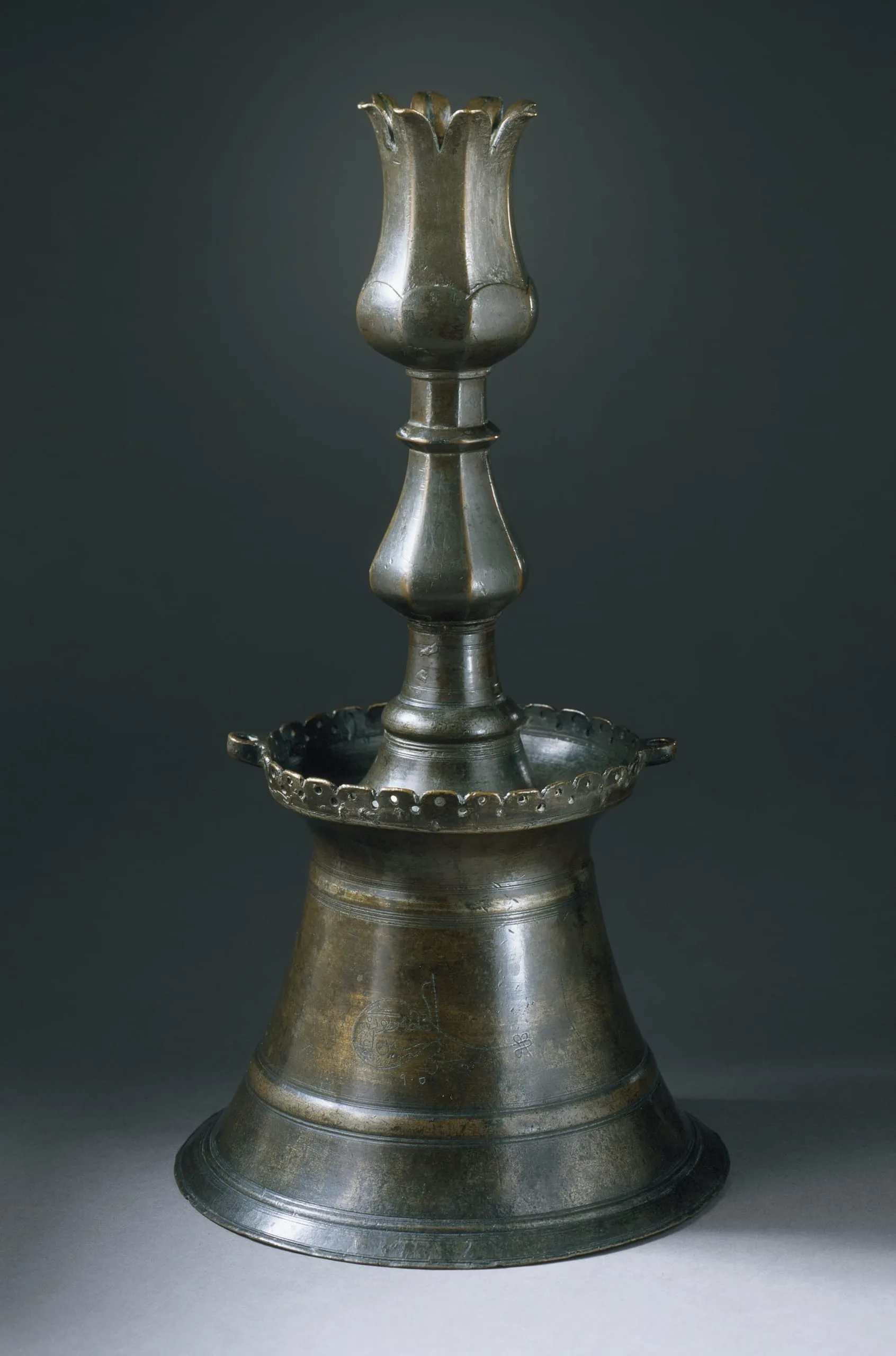
Candlestick905 A.H./1499-1500

Not on view
Dark brown metal candlestick with a flared bell-shaped base, pierced drip tray with side handles, turned stem, and tulip-shaped petal socket at the top
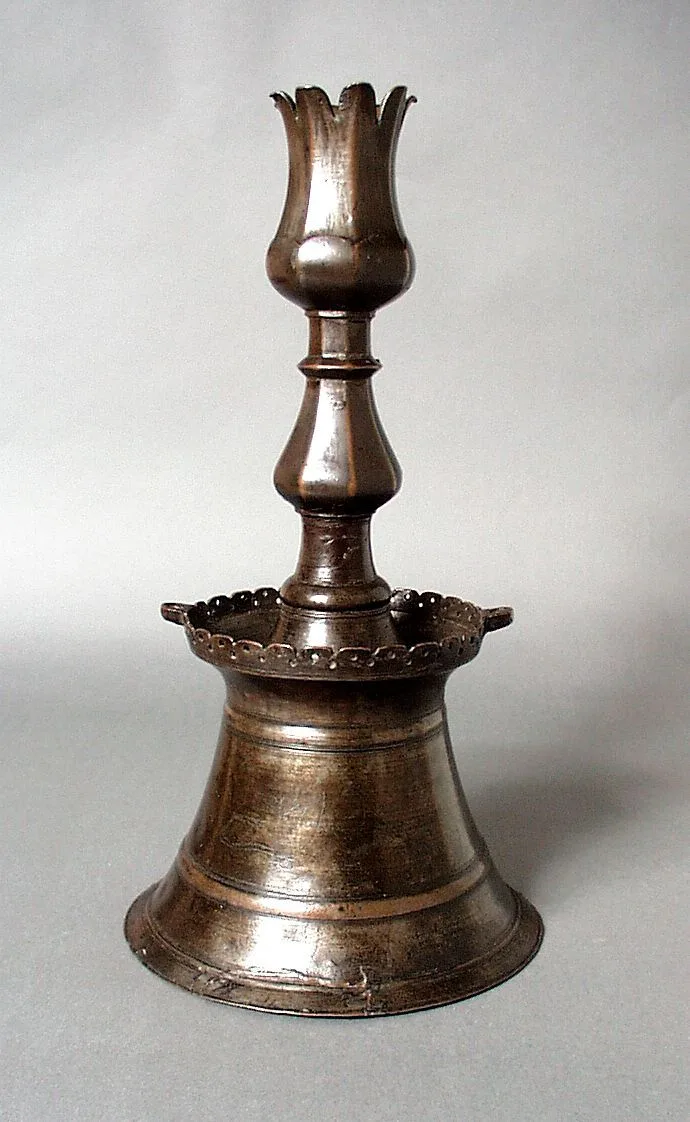
Bronze candlestick with a wide flared base, a drip tray with scalloped rim at mid-height, a turned stem with bulbous knop, and a lobed tulip-form socket at top; dark patinated surface with engraved band on the base.
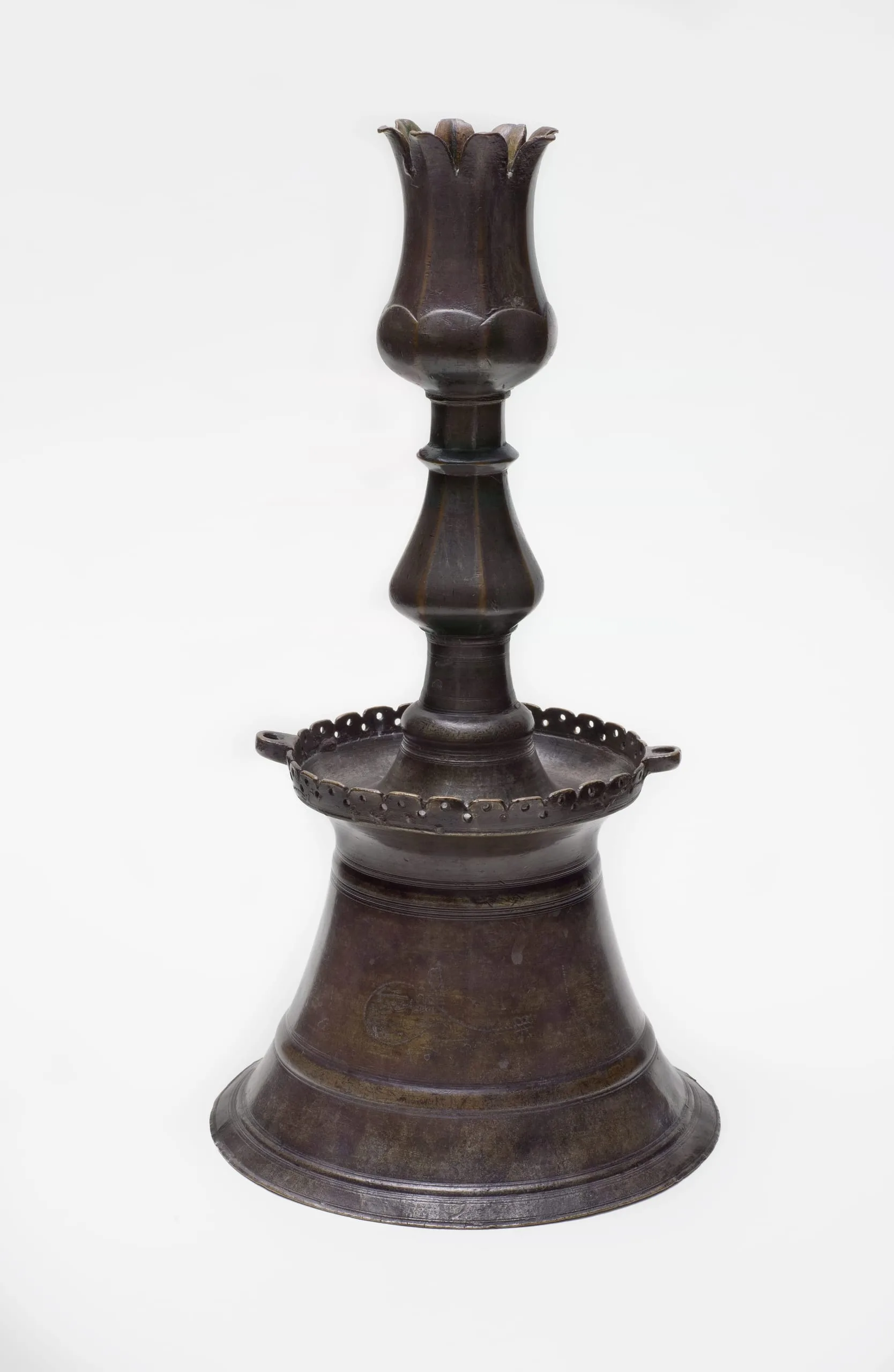
Bronze candlestick with a wide bell-shaped base, decorative scalloped drip tray, baluster stem, and tulip-form socket at top; dark patinated surface with engraved banding on the base.
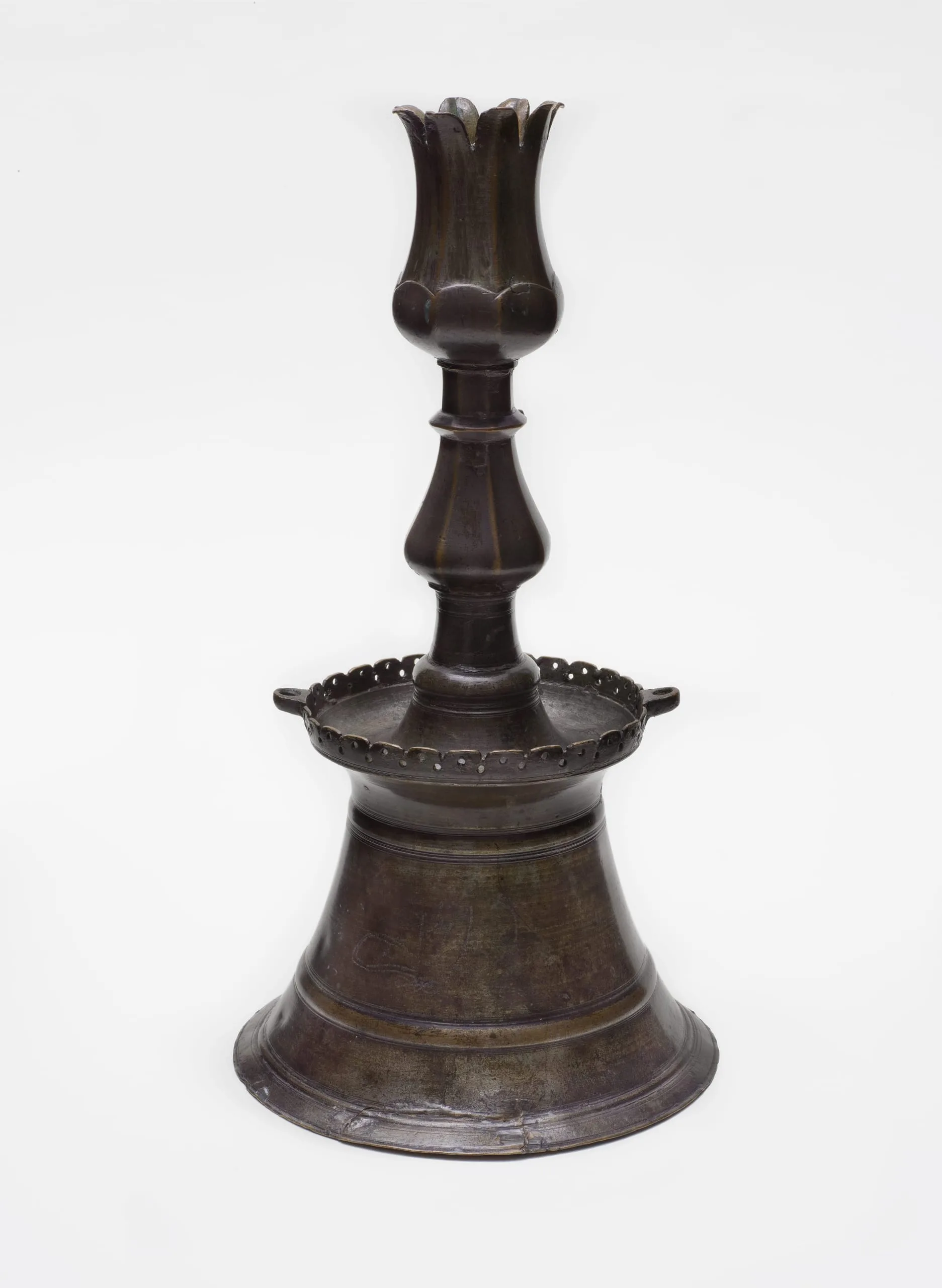
Bronze candlestick with a wide bell-shaped base, baluster stem, scalloped drip tray, and tulip-form candle socket; warm brown patina with smooth turned surfaces.
Title
Candlestick
Place Made
Turkey
Date Made
905 A.H./1499-1500
Medium
Brass
Dimensions
13 3/4 x 7 1/4 in. (34.93 x 18.42 cm)
Credit Line
The Madina Collection of Islamic Art, gift of Camilla Chandler Frost
Accession Number
M.2002.1.12
Classification
Metal
Collecting Area
Art of the Middle East: Islamic
Curatorial Notes

While this candlestick lacks the glittering surface decoration of other examples (see M.73.5.123), it is nonetheless striking for its overall form, from its elegantly tapering base to its bulbous neck capped by a tulip-shaped socket. It is the last of these features that immediately distinguishes it as an example of the Ottoman decorative arts. A native Anatolian species, the tulip was widely cultivated in gardens and became a prominent feature of design in a variety of mediums, especially in textiles and ceramics (see M.2000.31 and M.2002.1.21).
Selected Bibliography
  • Lo Terrenal y lo Divino: Arte Islámico siglos VII al XIX Colección del Museo de Arte del Condado de Los Ángeles. Santiago: Centro Cultural La Moneda, 2015.

  • Komaroff, Linda. Beauty and Identity: Islamic Art from the Los Angeles County Museum of Art. Los Angeles: Los Angeles County Museum of Art, 2016.