LACMA

ShopMembershipMyLACMATickets
LACMA
Los Angeles County Museum of Art
5905 Wilshire Blvd.
Los Angeles, CA 90036
info@lacma.org
(323) 857-6000
Sign up to receive emails
Subscribe
© Museum Associates 2025

Museum Hours

Monday

11 am–6 pm

Tuesday

11 am–6 pm

Wednesday

Closed

Thursday

11 am–6 pm

Friday

11 am–8 pm

Saturday

10 am–7 pm

Sunday

10 am–7 pm


  • About LACMA
  • Jobs
  • Building LACMA
  • Host An Event
  • Unframed
  • Press
  • FAQs
  • Log in to MyLACMA
  • Privacy Policy
© Museum Associates 2025
Collections

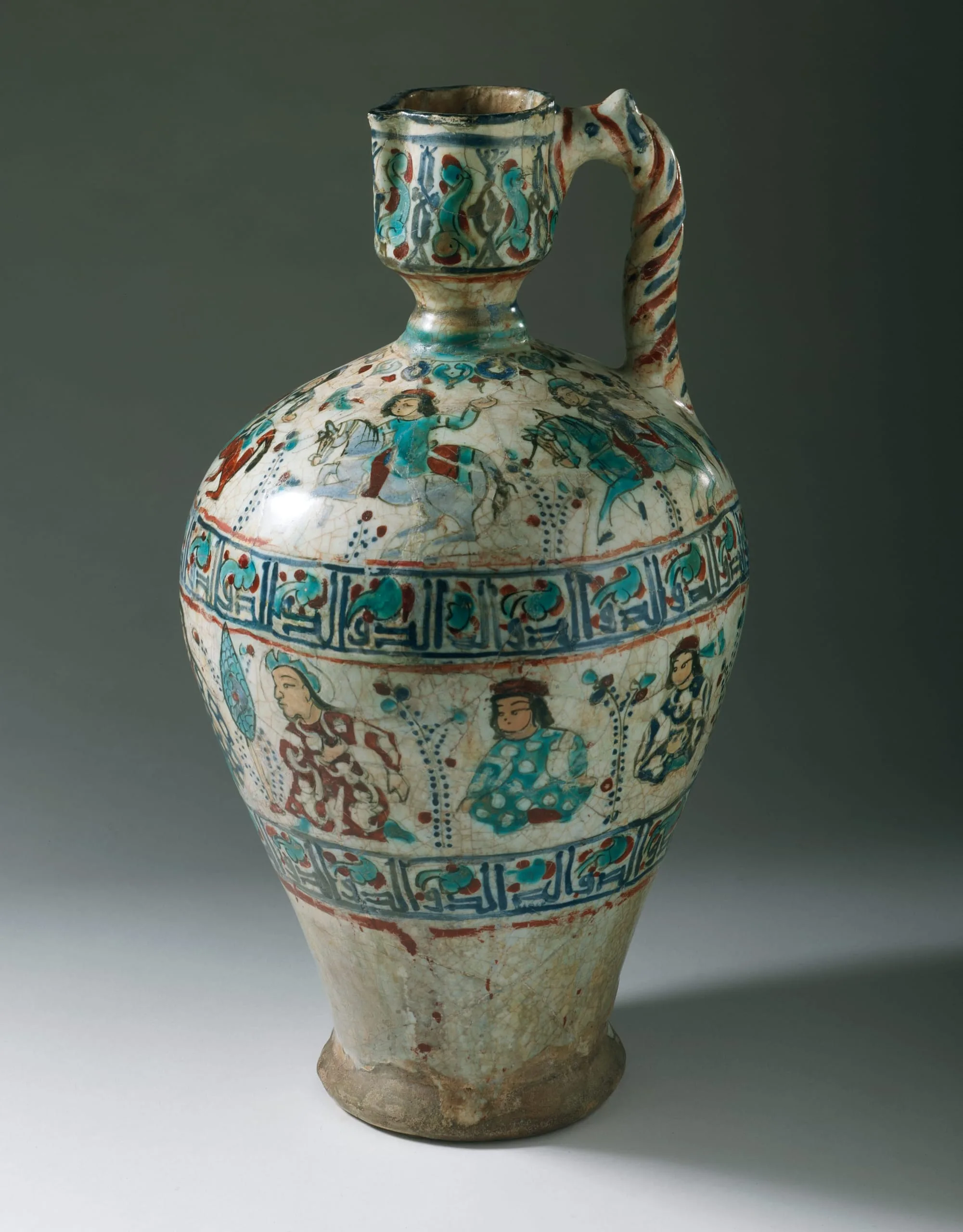
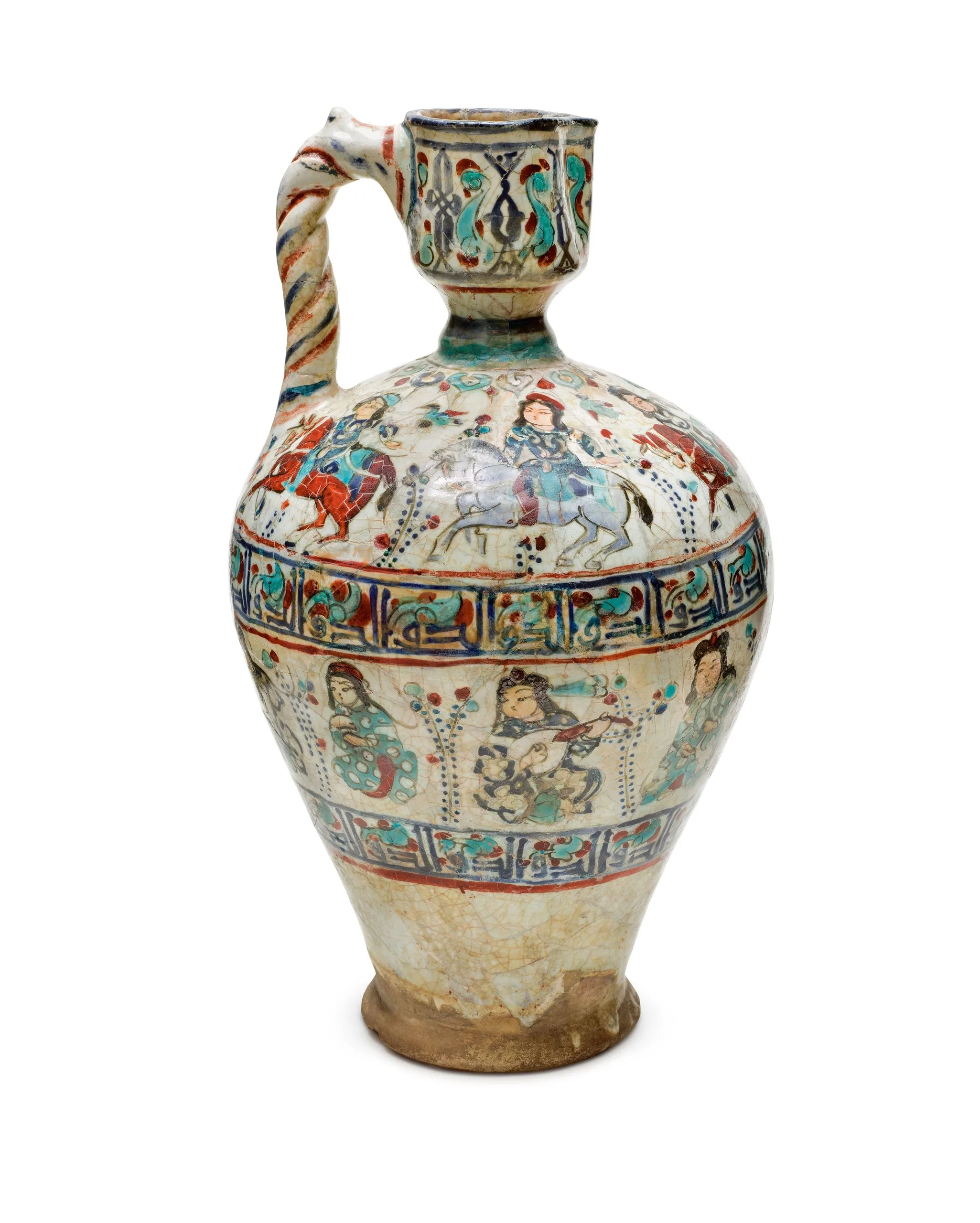
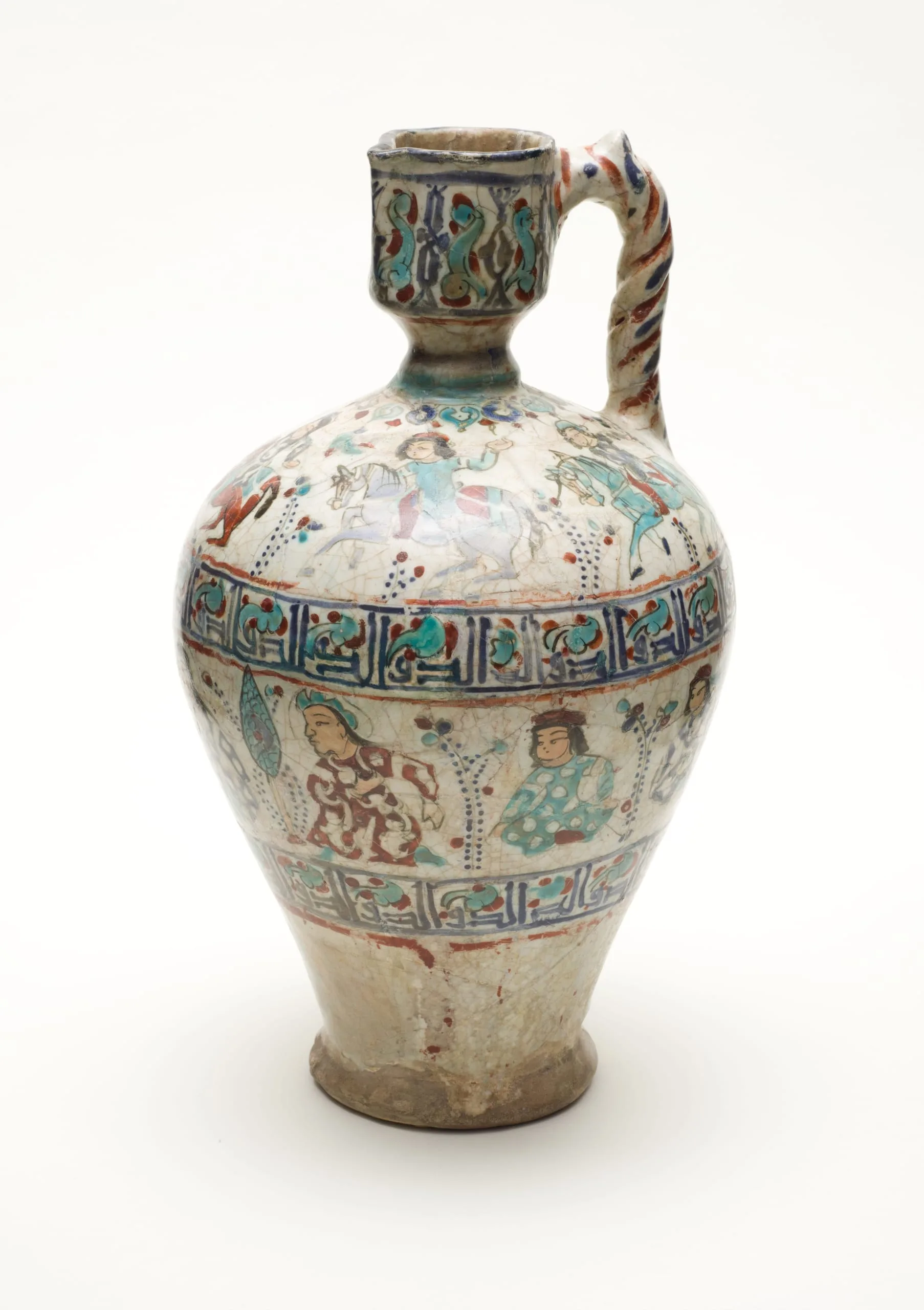
Ewerlate 12th century - early 13th century

Not on view
Ceramic ewer with cream crackled glaze, bulbous body, twisted handle, and multicolored figurative and inscription bands depicting riders, standing figures, and floral motifs in turquoise, red, and cobalt blue
Ceramic ewer with globular body, narrow neck, and twisted handle, decorated in turquoise, cobalt, and red on a white ground. Figural scenes show mounted horsemen and standing figures in patterned robes, separated by horizontal bands of Arabic script in cartouches.
Ceramic ewer with globular body, narrow neck, and loop handle, decorated in turquoise, red, and black on a white ground with crackled glaze. Figural friezes depict seated and standing human figures; horizontal bands of Arabic script separate the registers.
Title
Ewer
Place Made
Iran, Kashan
Date Made
late 12th century - early 13th century
Medium
Fritware, inglaze- and overglaze-painted (mina'i)
Dimensions
13 × 11 1/2 in. (33.02 × 29.21 cm)
Credit Line
The Madina Collection of Islamic Art, gift of Camilla Chandler Frost
Accession Number
M.2002.1.7
Classification
Ceramics
Collecting Area
Art of the Middle East: Islamic
Curatorial Notes

During the second half of the twelfth century, a new type of luxury ceramic was introduced in Iran, which modern scholars refer to as mina'i (from the Persian word for enamel). The polychrome surfaces of these wares—notable for their lively, colorful figural decoration—were produced through a costly and complicated double firing process similar to the luster painting technique, and in fact both types of wares are attributable to Kashan, where they may have been made by some of the same potters, in the same workshops. Unlike luster, mina'i ware was not produced after the thirteenth century, although it remains one of the best-known and most attractive types of medieval Iranian ceramics, as, for example, this large, elegant ewer.
Selected Bibliography
  • Komaroff, Linda, editor. Dining with the Sultan: The Fine Art of Feasting. Los Angeles: Los Angeles County Museum of Art; New York: DelMonico Books, 2023.
  • Hirx, John. "Ceramic Decals on Mina'i Wares." In Iranian Art from the Sasanians to the Islamic Republic: Essays in Honour of Linda Komaroff, edited by Sheila S. Blair, Jonathan M. Bloom and Sandra S. Williams. Edinburgh University Press, 2024.