- Title
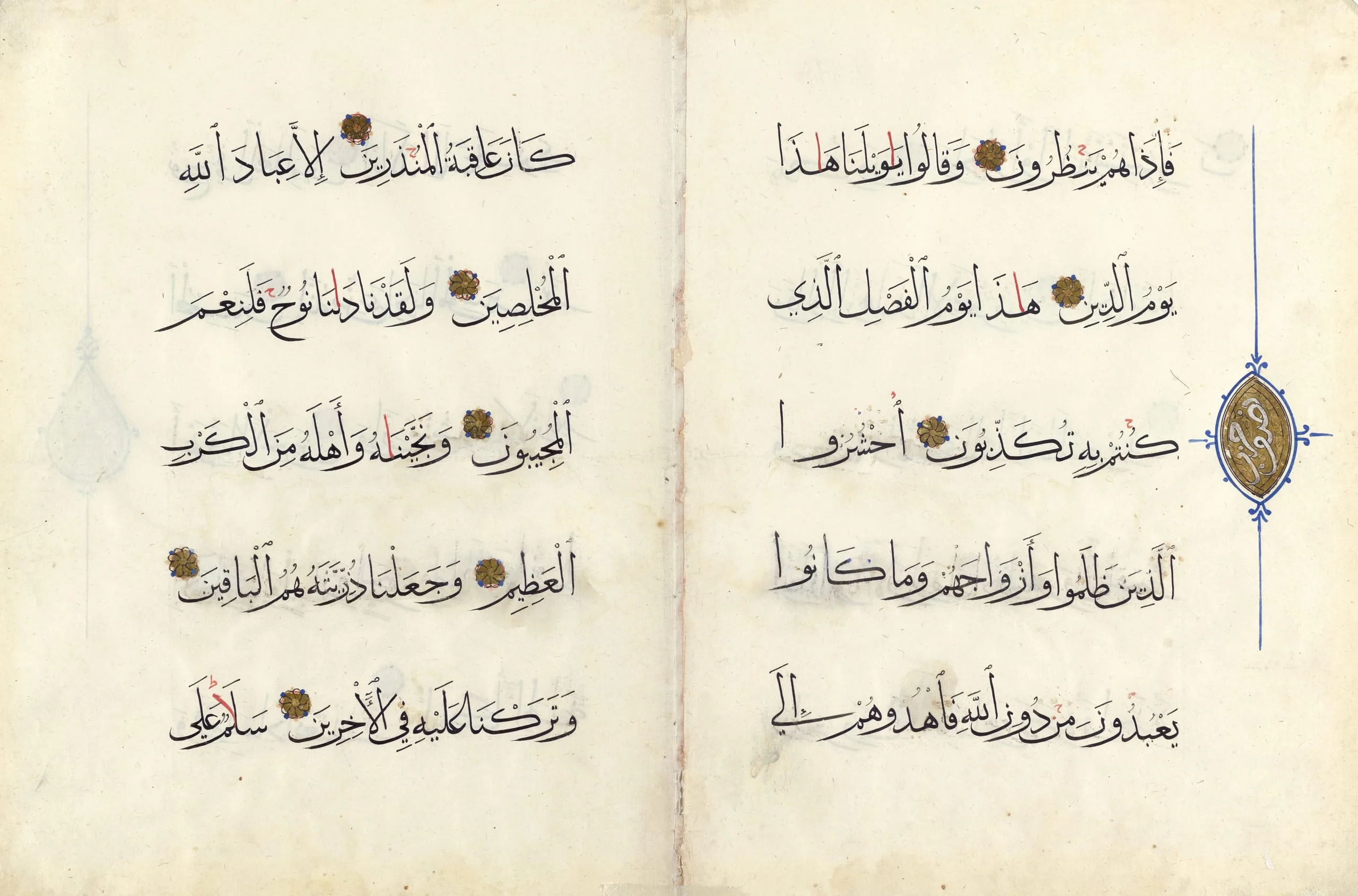
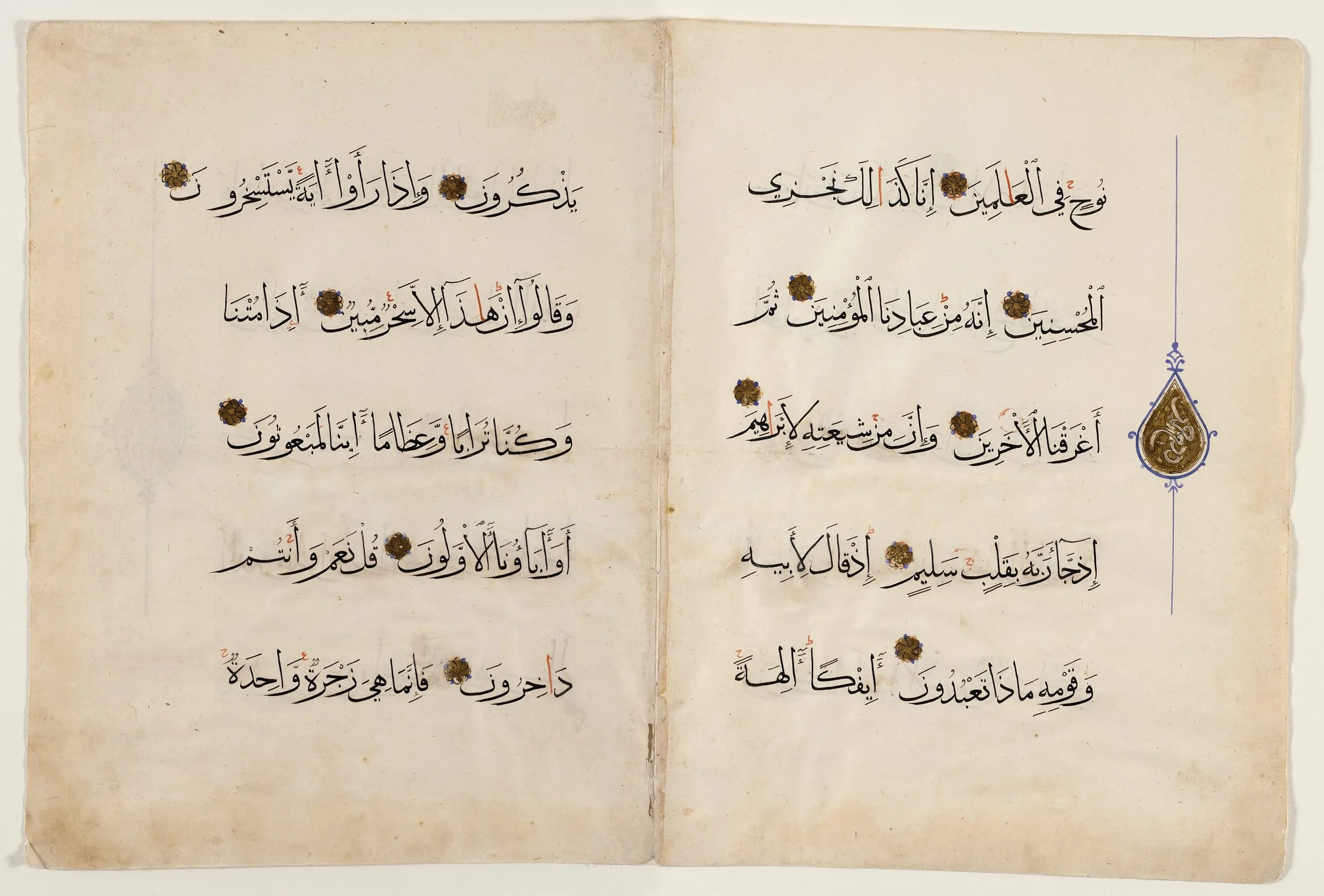
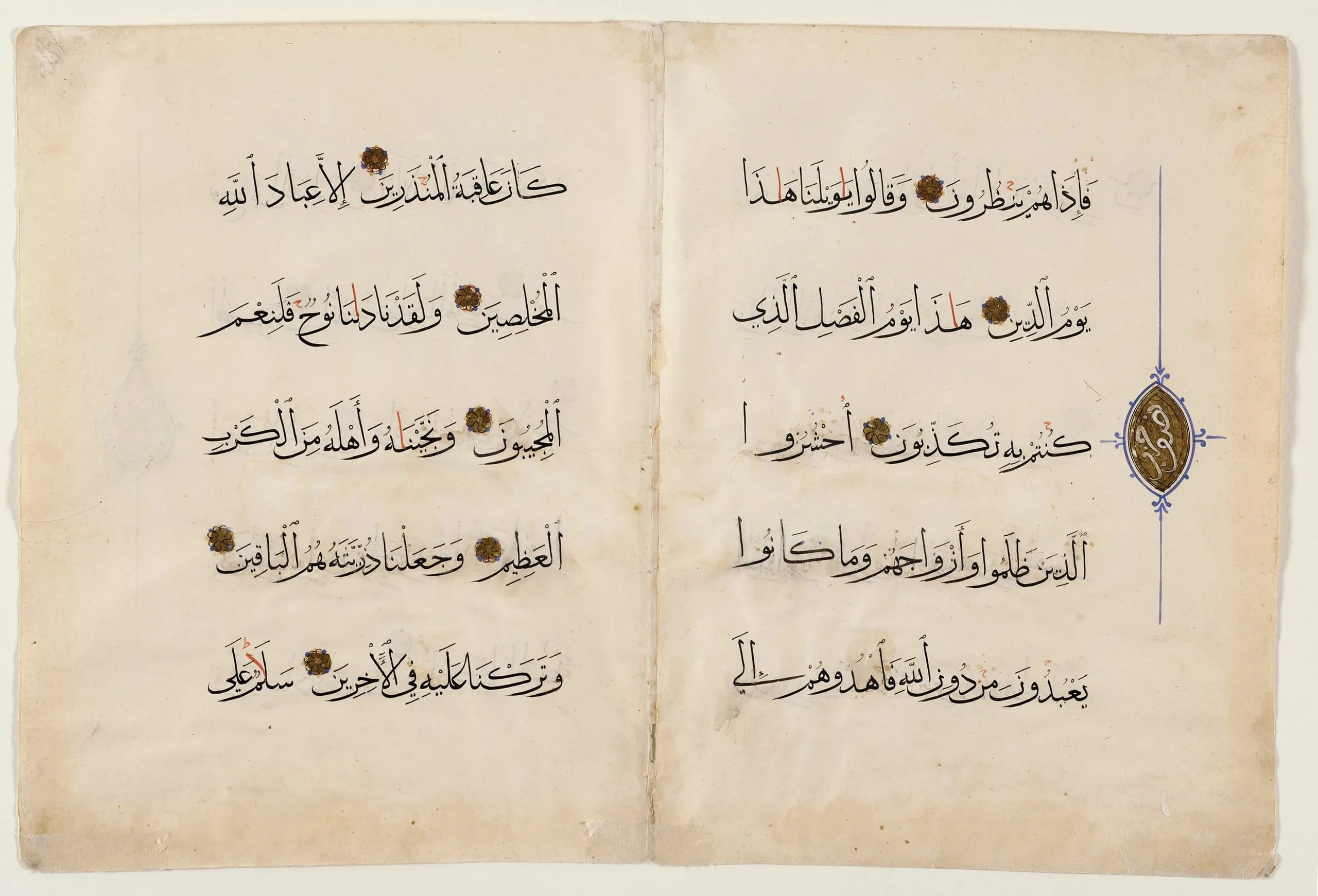
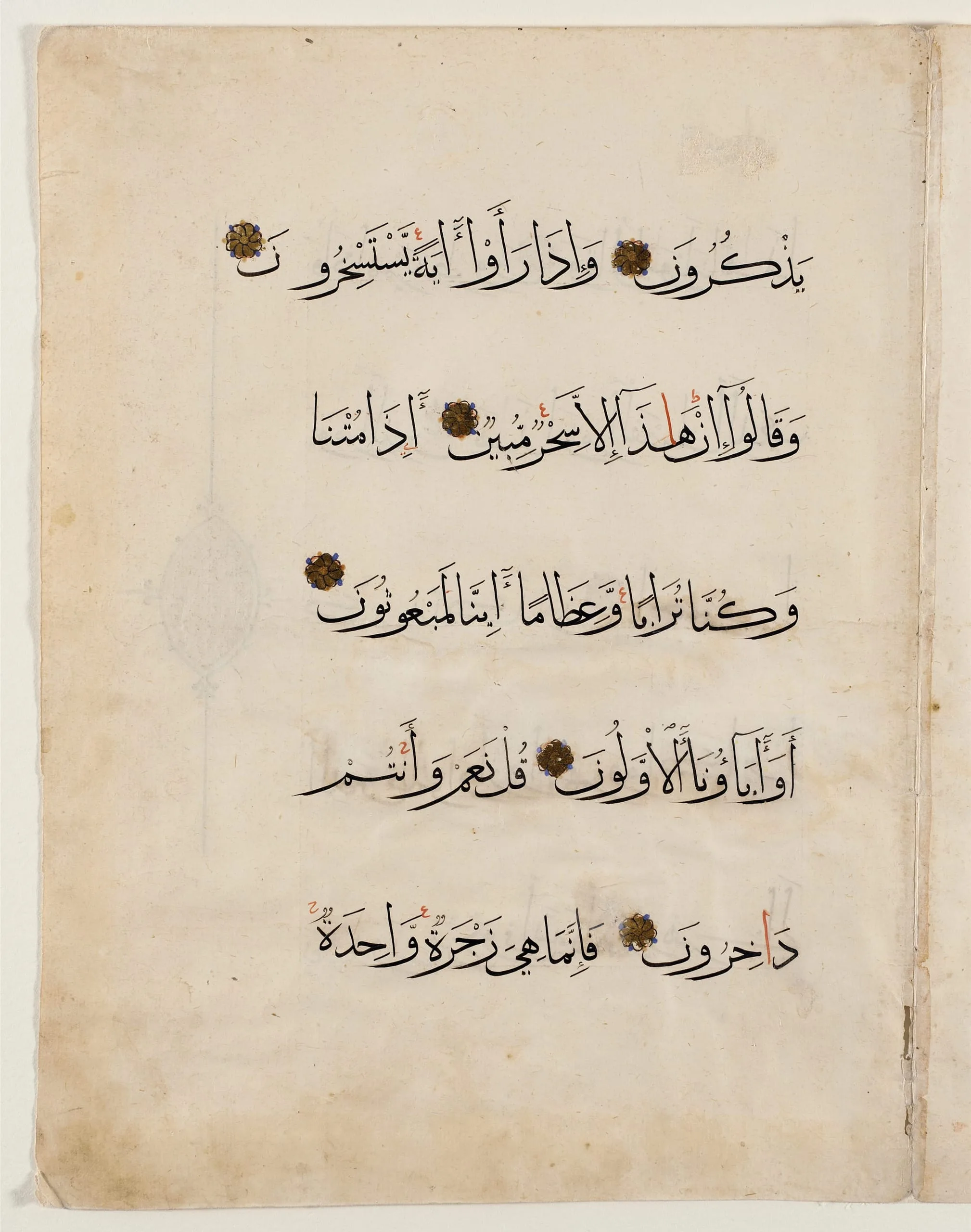
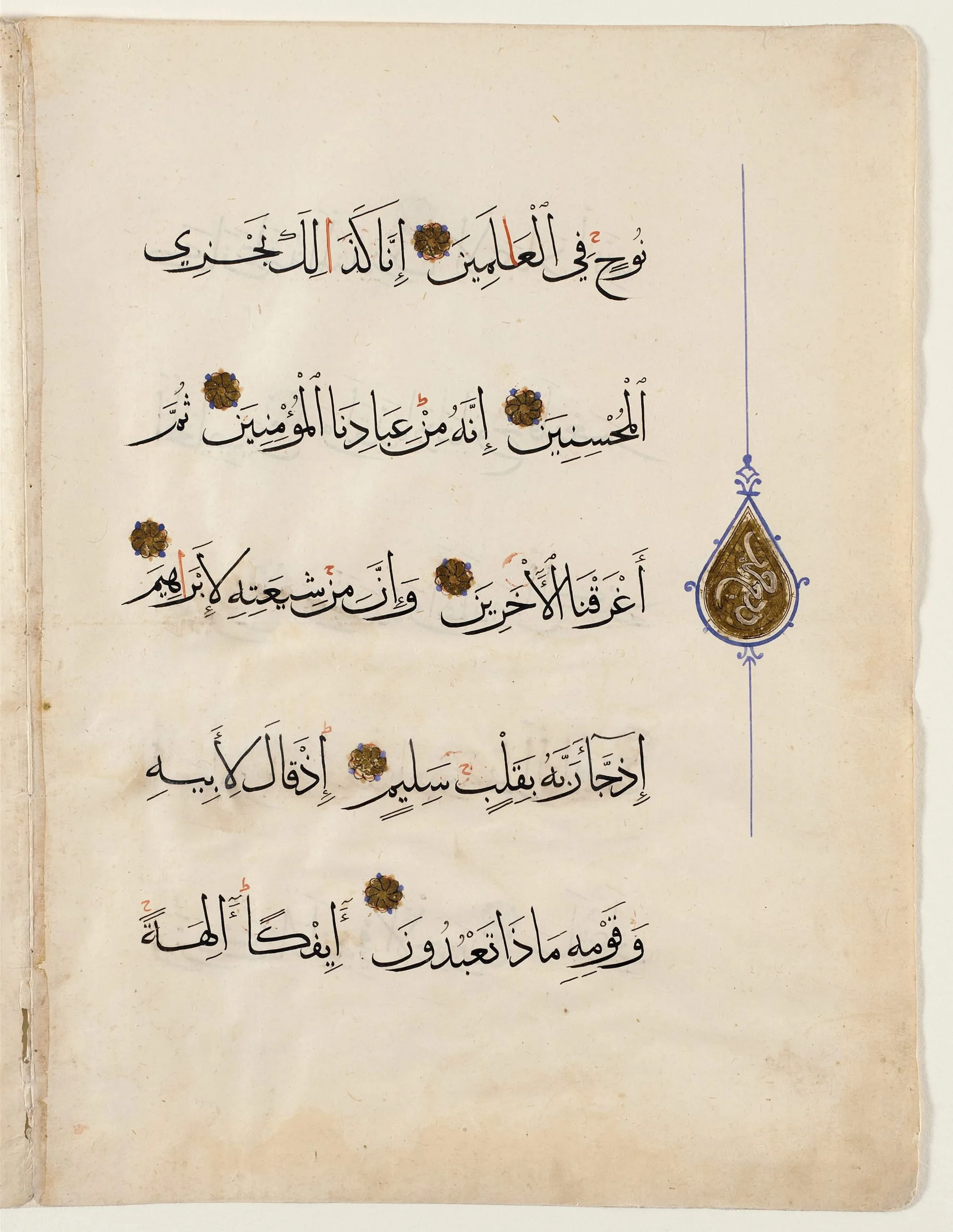
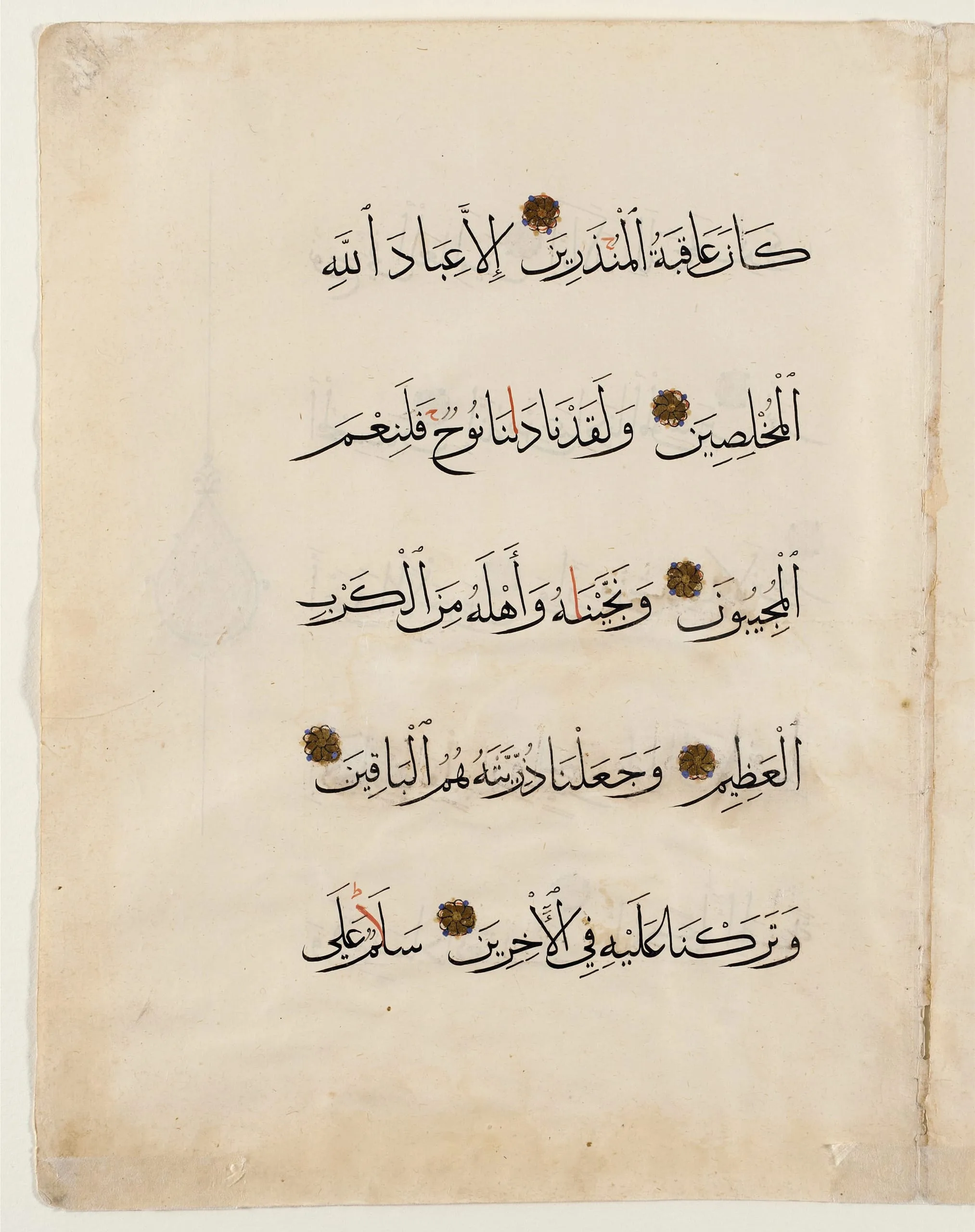
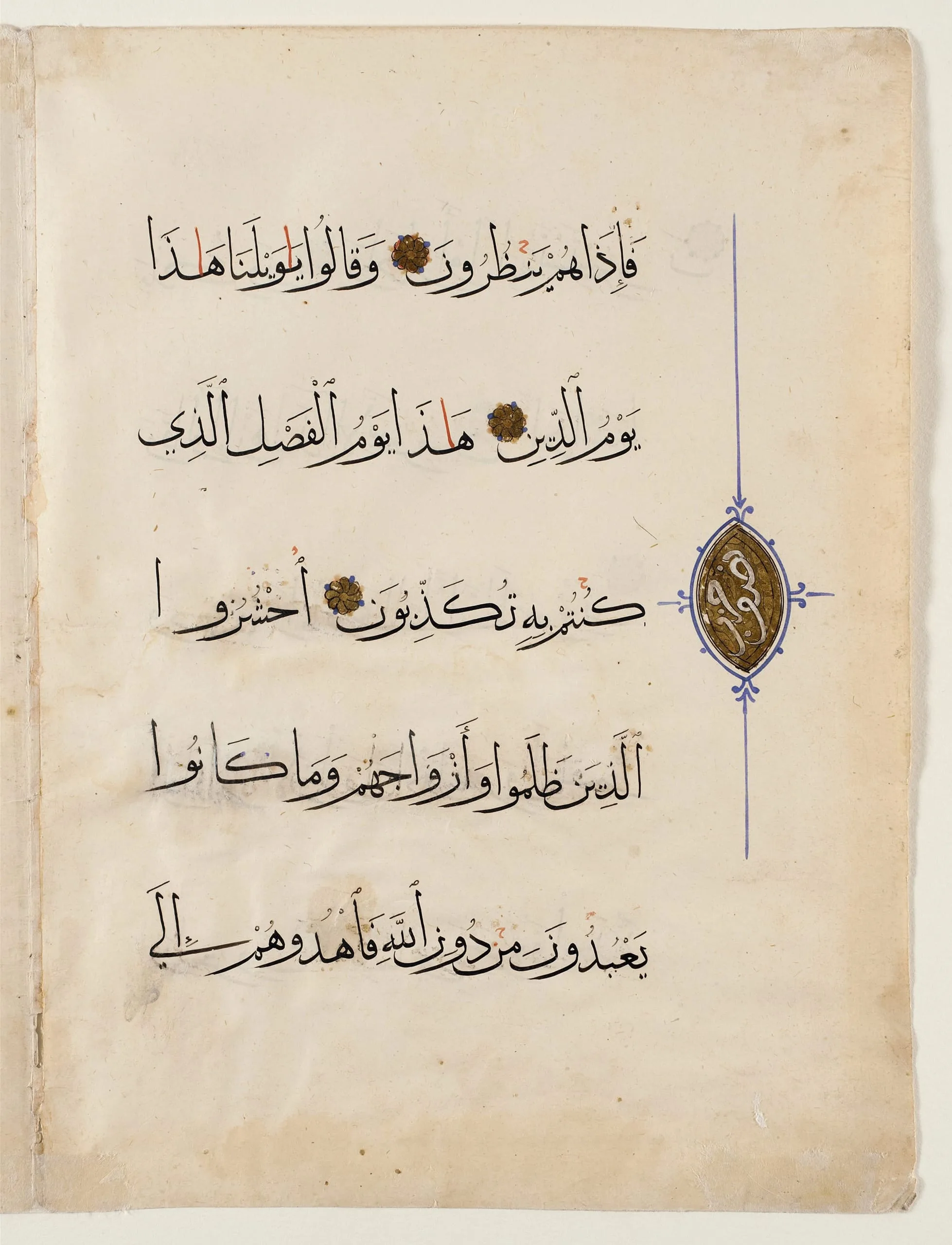
- Double Page from a Manuscript of the Qur'an (37:13-19; 37:19-23 and 37:73-79; 37:79-86)
- Date Made
- 14th century
- Medium
- Ink, opaque watercolor, and gold on paper
- Dimensions
- Bifolio, overall: 22 × 14 1/2 × 9 1/2 × 6 1/2 in. (55.88 × 36.83 × 24.13 × 16.51 cm)
Textblock: 9 1/2 × 6 1/2 in. (24.13 × 16.51 cm)
Frame: 29 × 23 × 1 1/2 in. (73.66 × 58.42 × 3.81 cm)
- Accession Number
- M.2002.1.4
- Curatorial Notes
Members of the Mamluk dynasty (1250−1517), which ruled Egypt and Syria, were prodigious builders, especially in their capital, Cairo. Along with endowing religious complexes such as mosques, tombs, and religious schools (madrasas), Mamluk patrons also commissioned multivolume sets and single volumes of the Qur’an for each institution. Mamluk Qur’ans are known for their unsurpassed calligraphy and illumination, as demonstrated by this pair of facing pages.
An institutional setting was likely the genesis of these pages, which are written in the cursive muhaqqaq script, one of the six classic Arabic scripts. Such endowed manuscripts were often lavishly made, as seen in the fine materials and embellishment of these folios. The use of gold verse markers and high-quality, finely burnished paper with generous margins indicates that they came from a costly Qur’an.