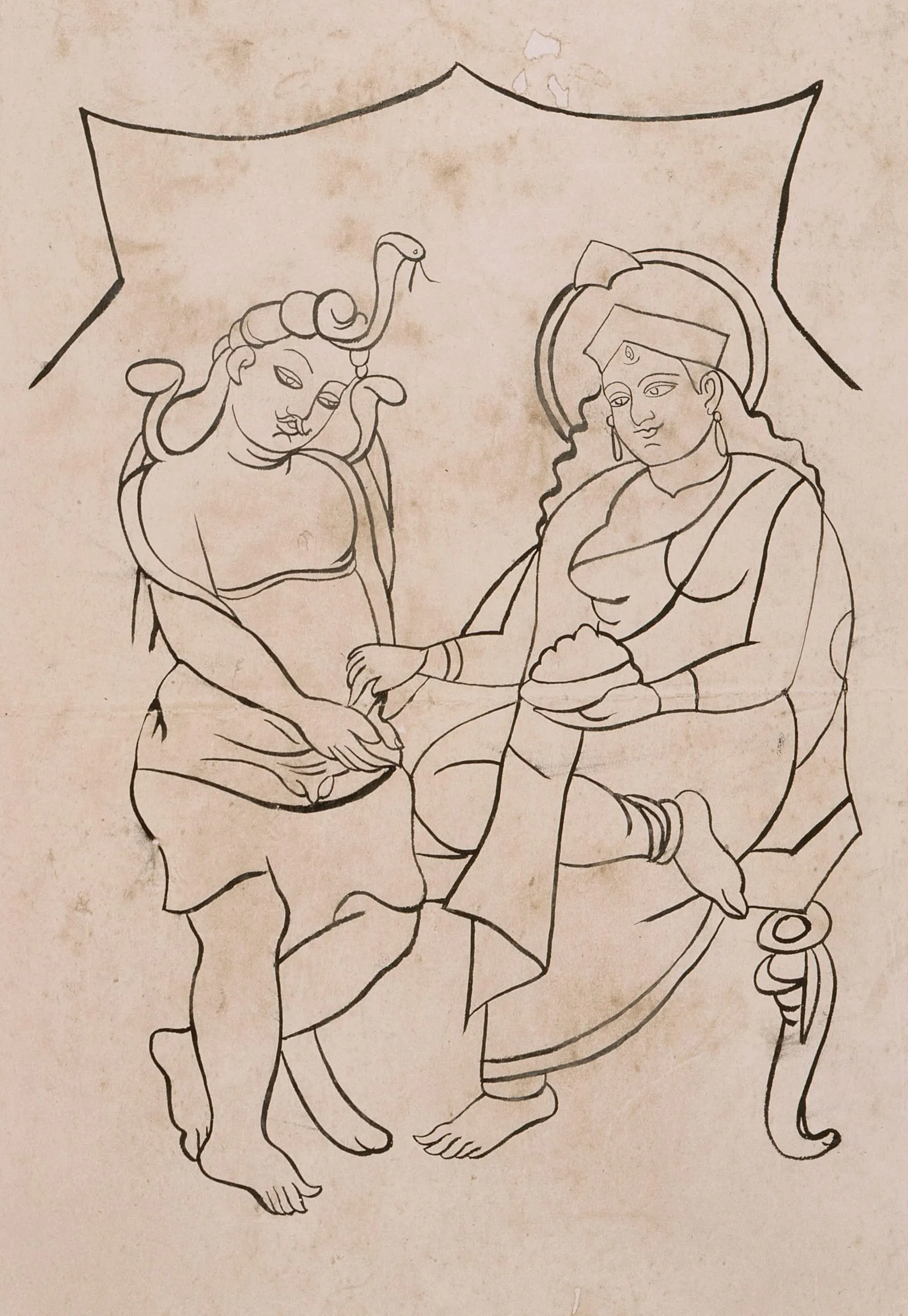
Annapurna is the Goddess of Nourishment. She is a beneficent aspect of Parvati, the wife of Shiva. Annapurna is especially revered in Bengal and in Varanasi (Benares). In Bengal, she is honored with a festival in March in which her image and temple are adorned with green rice sprouts to celebrate the annual sprouting of the all-important rice crop. In Varanasi, she is worshipped in the fall during the Offering of Food Festival (Annakut) in which a veritable mountain of food is offered in her temple (see AC1999.127.41). Annapurna is typically portrayed in textual descriptions and opaque watercolor images as wearing red garments and, as in this drawing, dispensing food to her supplicant husband Shiva. She is graced with Shiva's crescent moon and third eye on her forehead.
Dramatically and quickly rendered Kalighat paintings and ink drawings were sold in the bazaars near the revered temple of the goddess Kali in the Kalighat area of southern Kolkata (formerly Calcutta). Of all the painterly styles and techniques current in cosmopolitan 19th- and early 20th-century Calcutta, including Western oil paintings, graphics, and watercolors by British and Continental artists; Western-style works by classically trained Indian artists; and traditional Hindu and Indo-Islamic works of art, Kalighat paintings and drawings were the most innovative and had the strongest influence on later generations of early modern and contemporary South Asian artists. See also M.86.118.1 and M.86.118.2.