- Title
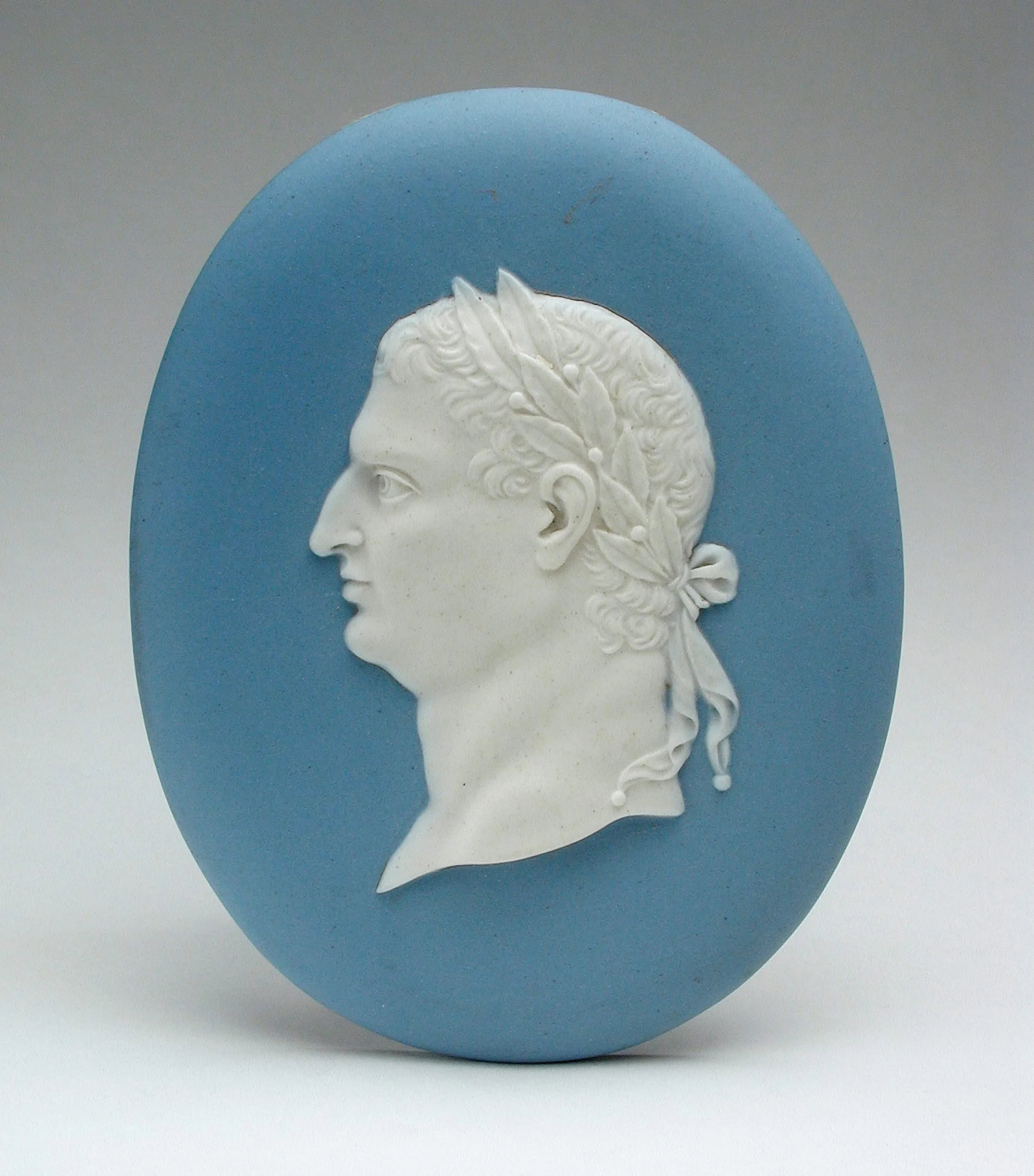
- Portrait of Vitellius
- Date Made
- circa 1880
- Medium
- Stoneware (solid blue jasperware with white applied relief); giltwood
- Dimensions
- Plaque: 4 1/2 x 3 3/4 in. (11.4 x 9.5 cm); Framed: 5 1/4 x 4 3/4 in. (13.3 x 12.1 cm)
- Accession Number
- AC1997.109.4a-b
- Curatorial Notes
Jasperware is a type of high-fired stoneware invented by Josiah Wedgwood in the 1770s. Inspired by ancient ceramics and cameo glass, jasperware is characterized by an unglazed matte finish, also referred to as “biscuit” porcelain, and can be colored with metallic oxide in a range of pastel tones. This cameo was made with Wedgwood’s characteristic pale blue color. The white relief is a sprig, a separately molded low-relief decoration applied to the background before firing. Depicting Vitellius, only in power for eight months during a period of civil war known as the “Year of Four Emperors,” the cameo belonged to a series featuring Roman emperors. Many of Wedgwood’s products looked to Greek and Roman antiquity for inspiration, appealing to a renewed fascination with Mediterranean cultures after the rediscovery of ancient sites as well as nationalist interest in positioning the British Empire as the successor of the Roman Empire. These medallions are typically inscribed on the back with Wedgwood’s mark and the name of the depicted figure. They could be incorporated into furniture or displayed alone.
Cynthia Kok
2025