LACMA

ShopMembershipMyLACMATickets
LACMA
Los Angeles County Museum of Art
5905 Wilshire Blvd.
Los Angeles, CA 90036
info@lacma.org
(323) 857-6000
Sign up to receive emails
Subscribe
© Museum Associates 2025

Museum Hours

Monday

11 am–6 pm

Tuesday

11 am–6 pm

Wednesday

Closed

Thursday

11 am–6 pm

Friday

11 am–8 pm

Saturday

10 am–7 pm

Sunday

10 am–7 pm


  • About LACMA
  • Jobs
  • Building LACMA
  • Host An Event
  • Unframed
  • Press
  • FAQs
  • Log in to MyLACMA
  • Privacy Policy
© Museum Associates 2025
Collections

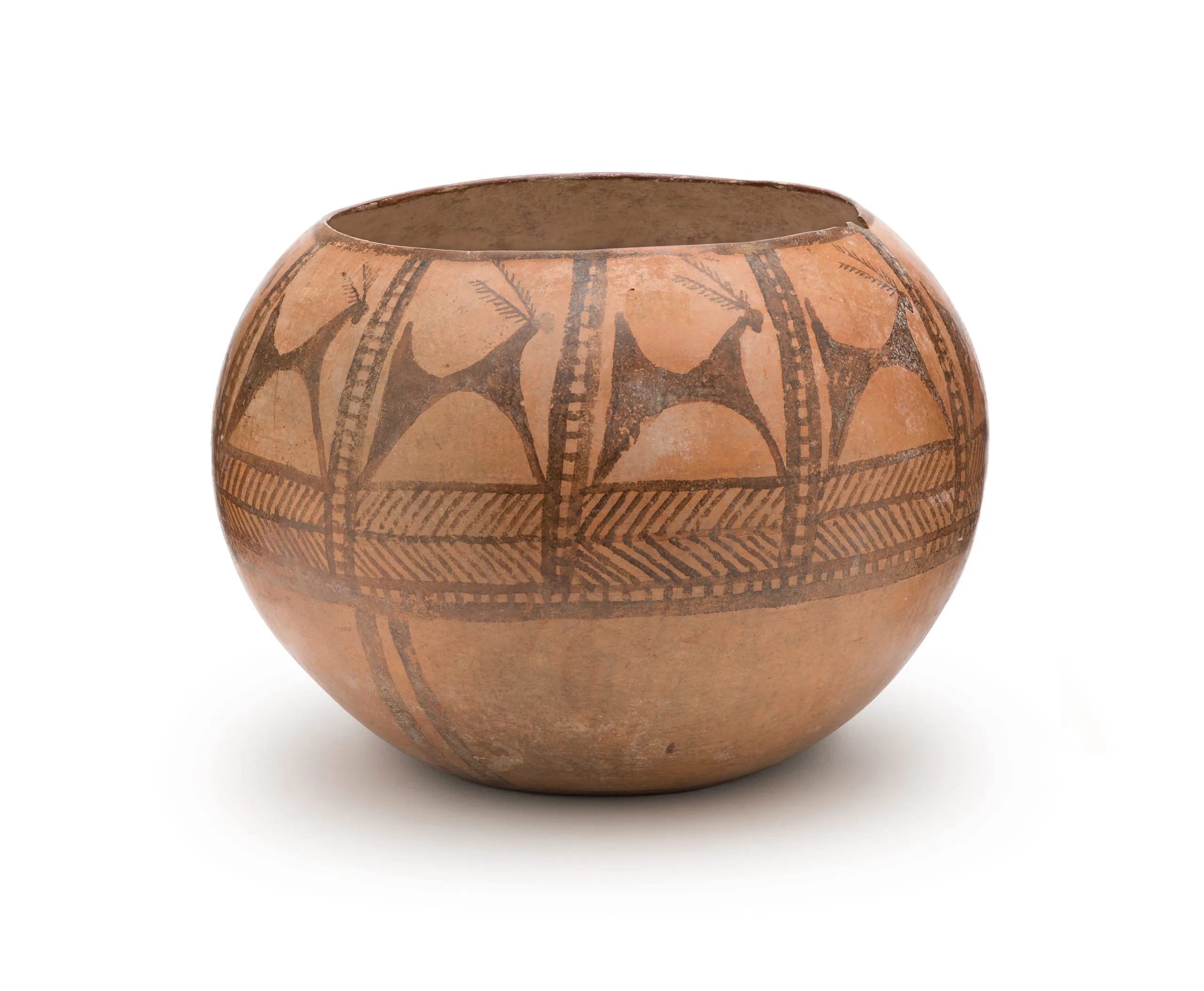
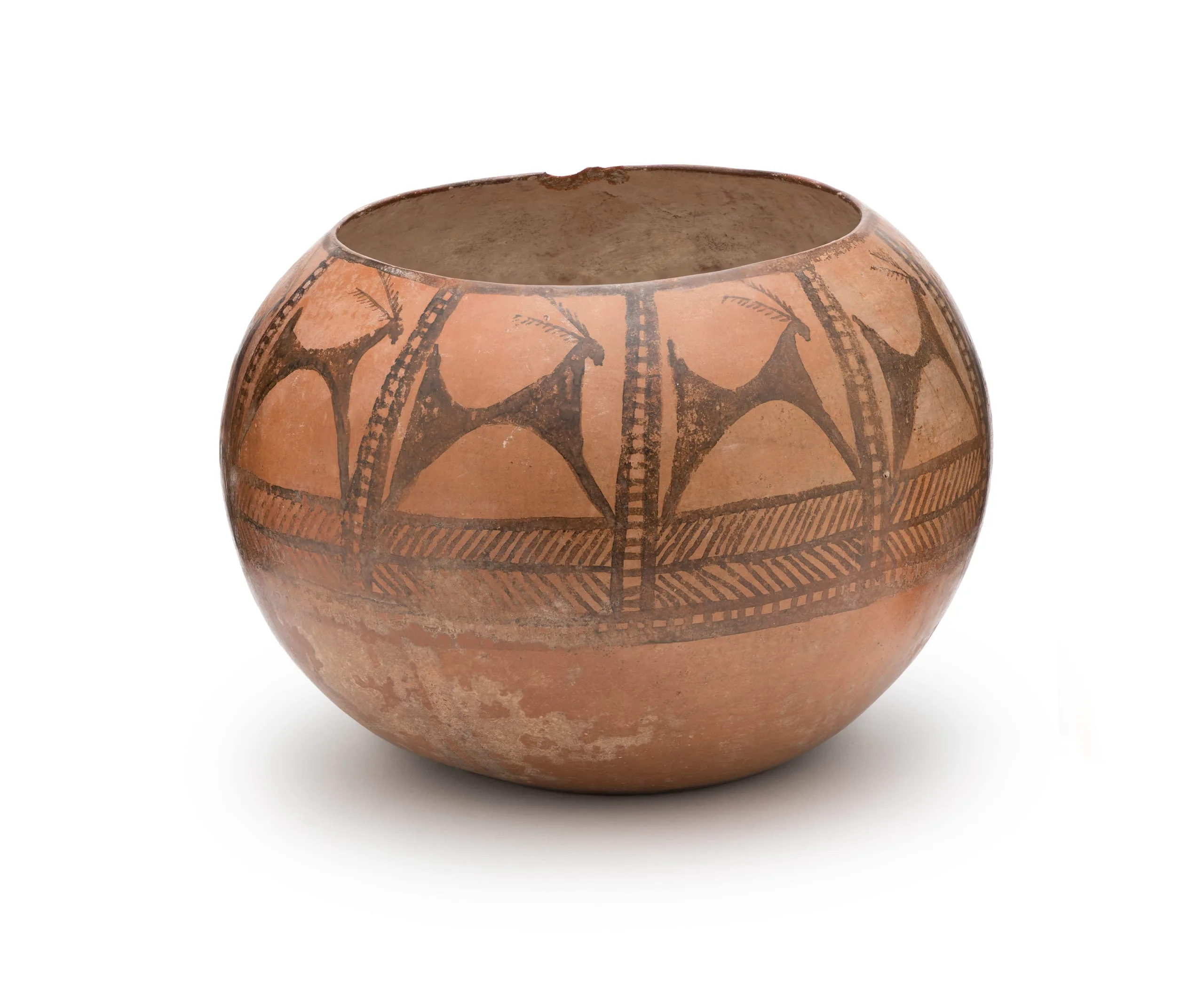
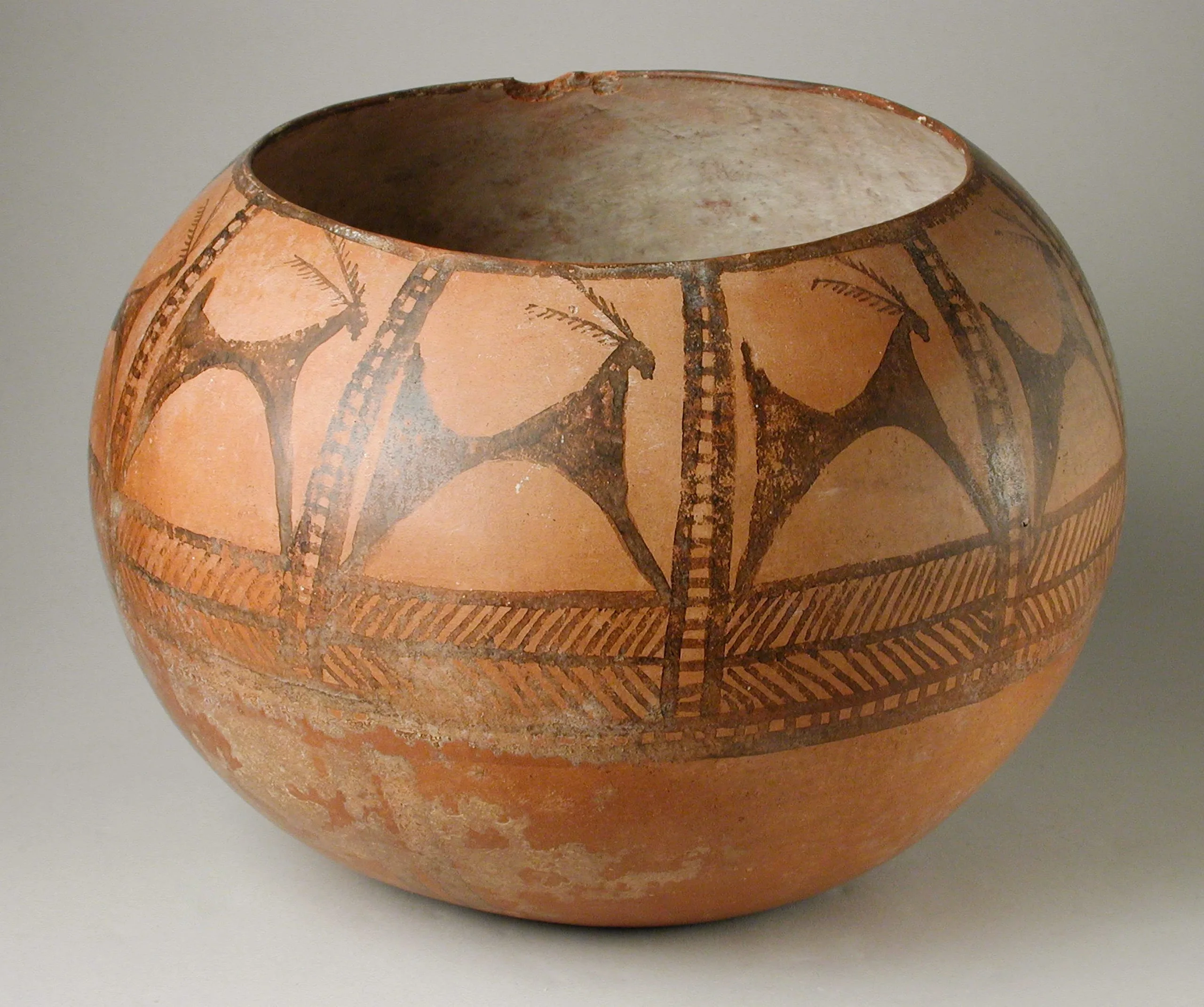
Prehistoric Painted Pottery Vesselcirca 5000-4500 B.C.

Not on view
Rounded terracotta ceramic vessel with wide globular body, painted with dark brown geometric arches, dotted vertical dividers, and a chevron band at the widest point
Ceramic vessel with globular form and wide mouth, buff-orange slip painted with dark brown geometric and zoomorphic designs, including a band of stylized four-legged animals alternating with triangular forms, above a horizontal register of hatched diagonal lines.
Ceramic vessel with globular form and wide opening, terracotta-colored with painted dark brown decoration; upper register shows repeated ibex or goat figures with curved horns separated by vertical ladder motifs, lower register features bands of hatched diagonal lines.
Title
Prehistoric Painted Pottery Vessel
Culture
Cheshmeh Ali - Esmailabad
Place Made
Central Iran
Date Made
circa 5000-4500 B.C.
Period
Neolithic
Medium
Ceramic
Dimensions
7 × 9 in. (17.78 × 22.86 cm)
Credit Line
Gift of Nasli M. Heeramaneck
Accession Number
M.76.174.156
Classification
Furnishings
Collecting Area
Art of the Middle East: Ancient
Curatorial Notes
Two painted vessels from the Tehran-Qazvin region in central Iran are the earliest ceramics in LACMA's collection of art of the ancient Near East; they are also the oldest ceramic vessels in the museum's collections overall. One of the vessels, shown here, is probably from the well-known prehistoric site of Tepe Mushalan, a settlement from the late fifth millennium BC, near the village of Esmailbad. Excavations in the 1950s revealed a large quantity of the Esmailbad painted pottery, called Esmailbad ware. The black-on-red pottery of this ancient period is extremely fine, and exemplars have come from excavations of the sites at Rey and Silak, and the Qazvin Plain. The decorative motifs were inspired by the artistic tradition of the Iranian Plateau. The motif seen here is of ibexes and goats framed in geometric designs.