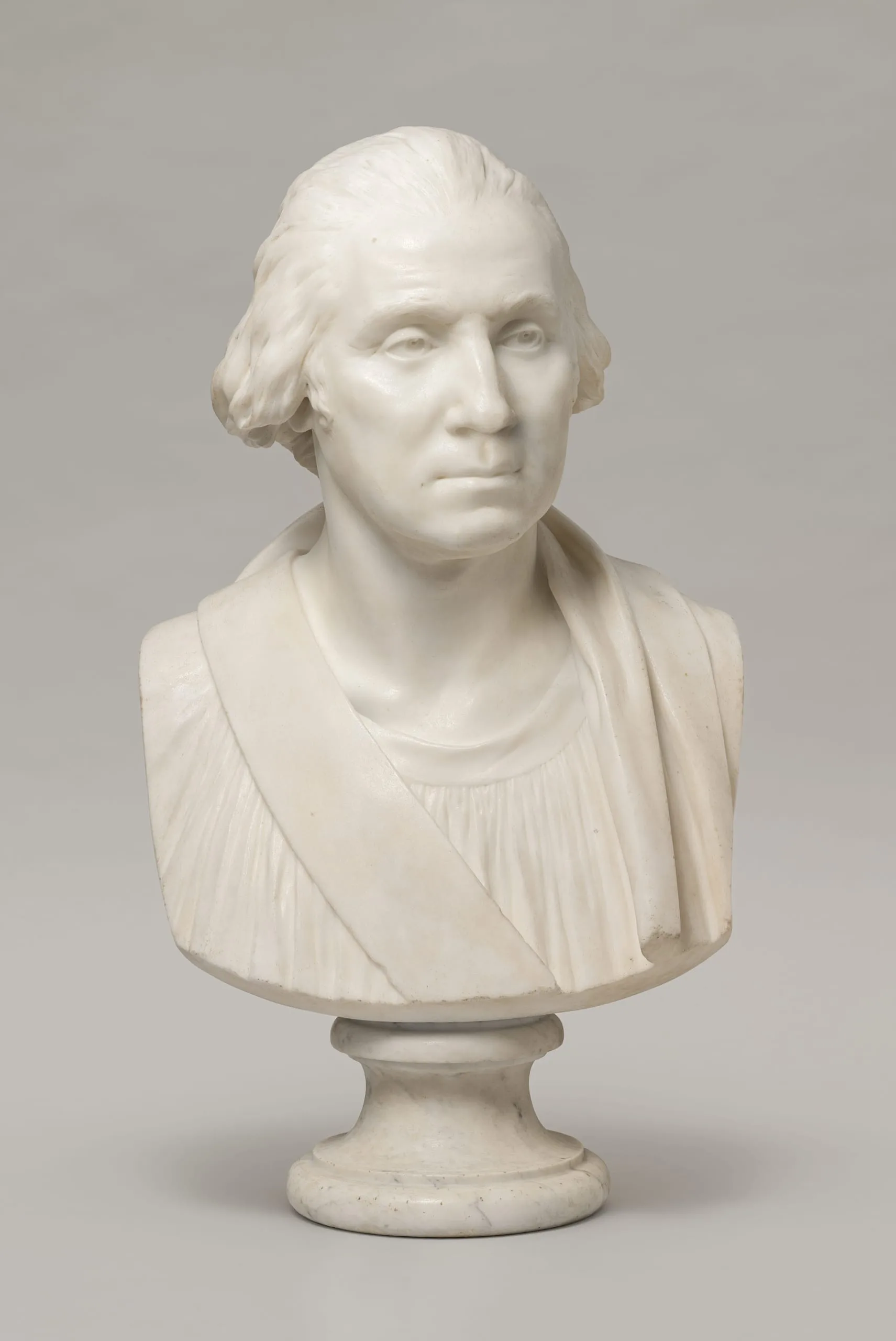
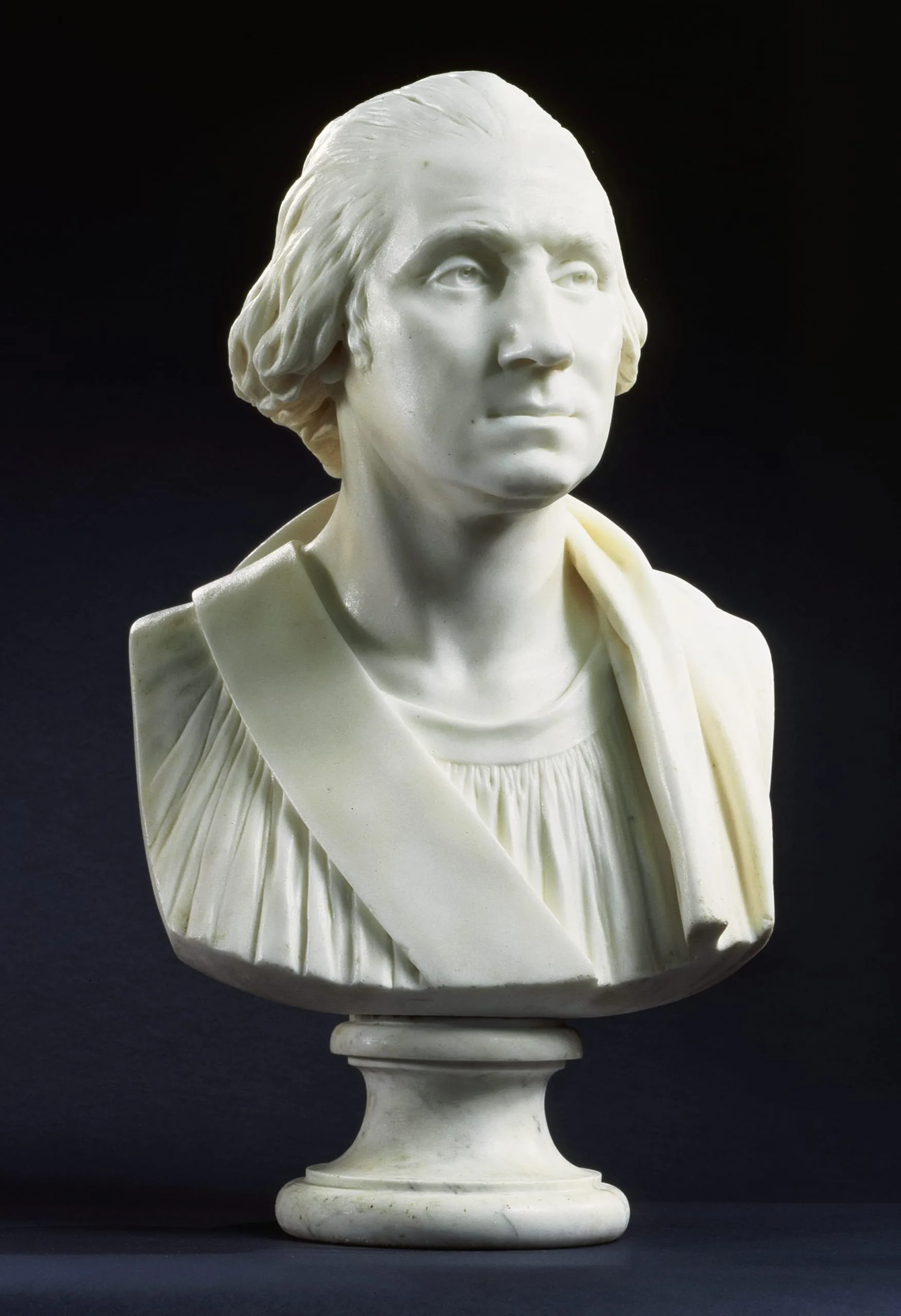
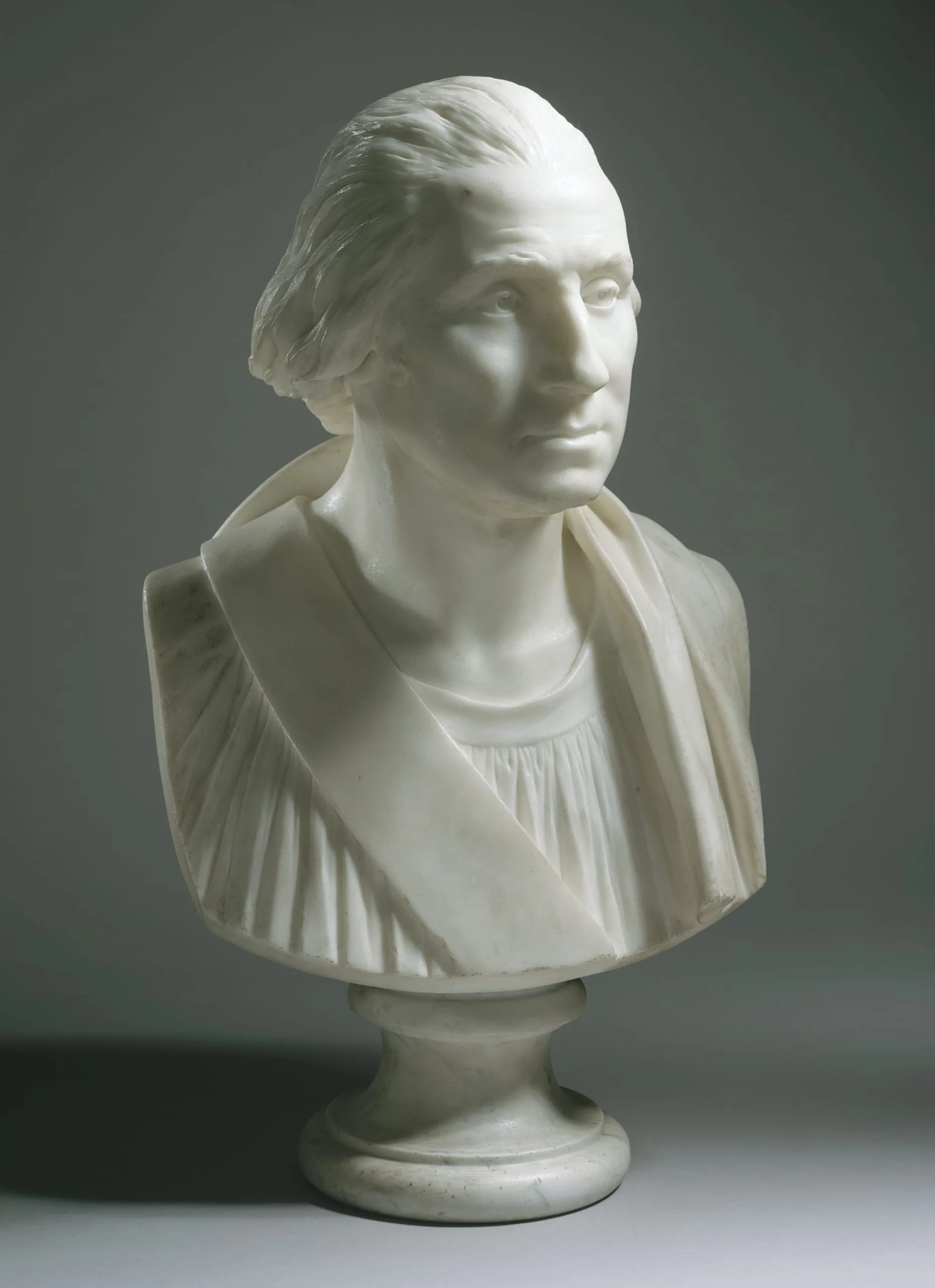
In the late eighteenth century, the French sculptor Jean-Antoine Houdon captured the likeness of numerous prominent figures pivotal to revolutionary political and social change in France and America, including Louis XVI, Benjamin Franklin, and Voltaire (M.2004.5). Houdon’s introduction to George Washington was orchestrated by Thomas Jefferson, who stated that “there could be no question as to the sculptor who should be employed, the reputation of Monsieur Houdon . . . being unrivaled in Europe.” This marble bust is one of five portraits of Washington by Houdon, in addition to the full-length sculpture that now resides in the Virginia State Capitol. Houdon captures Washington as a quietly reflective figure, adorned in a simple Roman toga with a strap crossing diagonally over his chest, reminiscent of a Roman emperor, general, or lawgiver. Yet, instead of producing another image of a confident and proud commander, Houdon offers an intimate glimpse into the private persona of a great public figure—in effect, fulfilling Jefferson’s mandate that Washington’s sculpture be “exactly that of life.”
The extensive and well-preserved correspondence of Franklin and Jefferson sheds light on the commissioning process of the bust. The project was inaugurated in June 1784, when the Virginia State Assembly voted to commission a marble statue of General Washington. Virginia’s governor, Benjamin Harrison, subsequently wrote to Franklin and Jefferson—then the American minister to France—requesting their oversight of the commission. In a letter to Washington, Jefferson conveyed Houdon’s enthusiasm for the project, noting that the sculptor even “offers to go to America for the purpose of forming your bust from life,” rather than relying on existing portraits, a common practice at the time. The following year, Houdon set sail for America and completed a life mask and bust of Washington in both terracotta and plaster. He returned to Paris by the end of the year.
2024