- Title
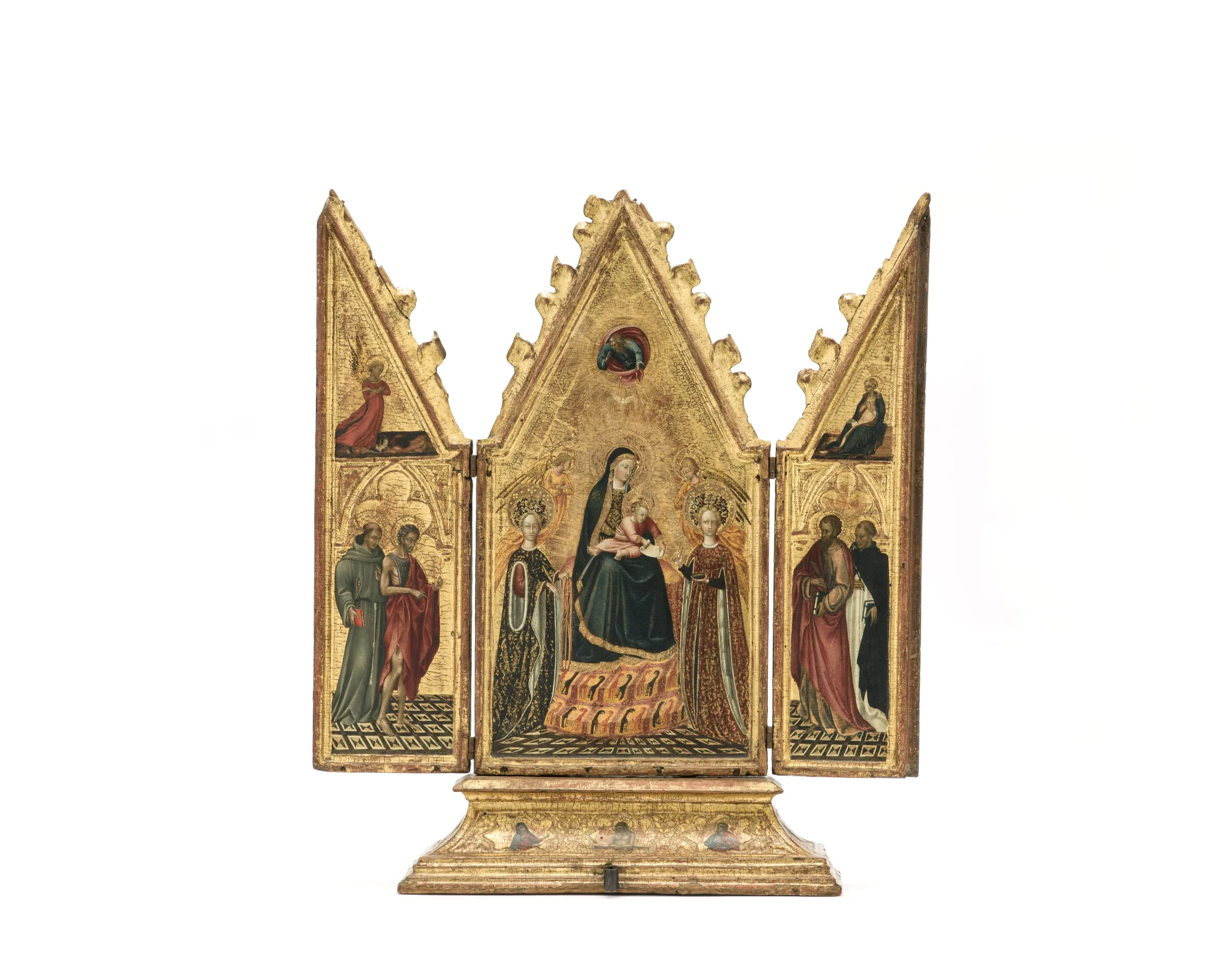
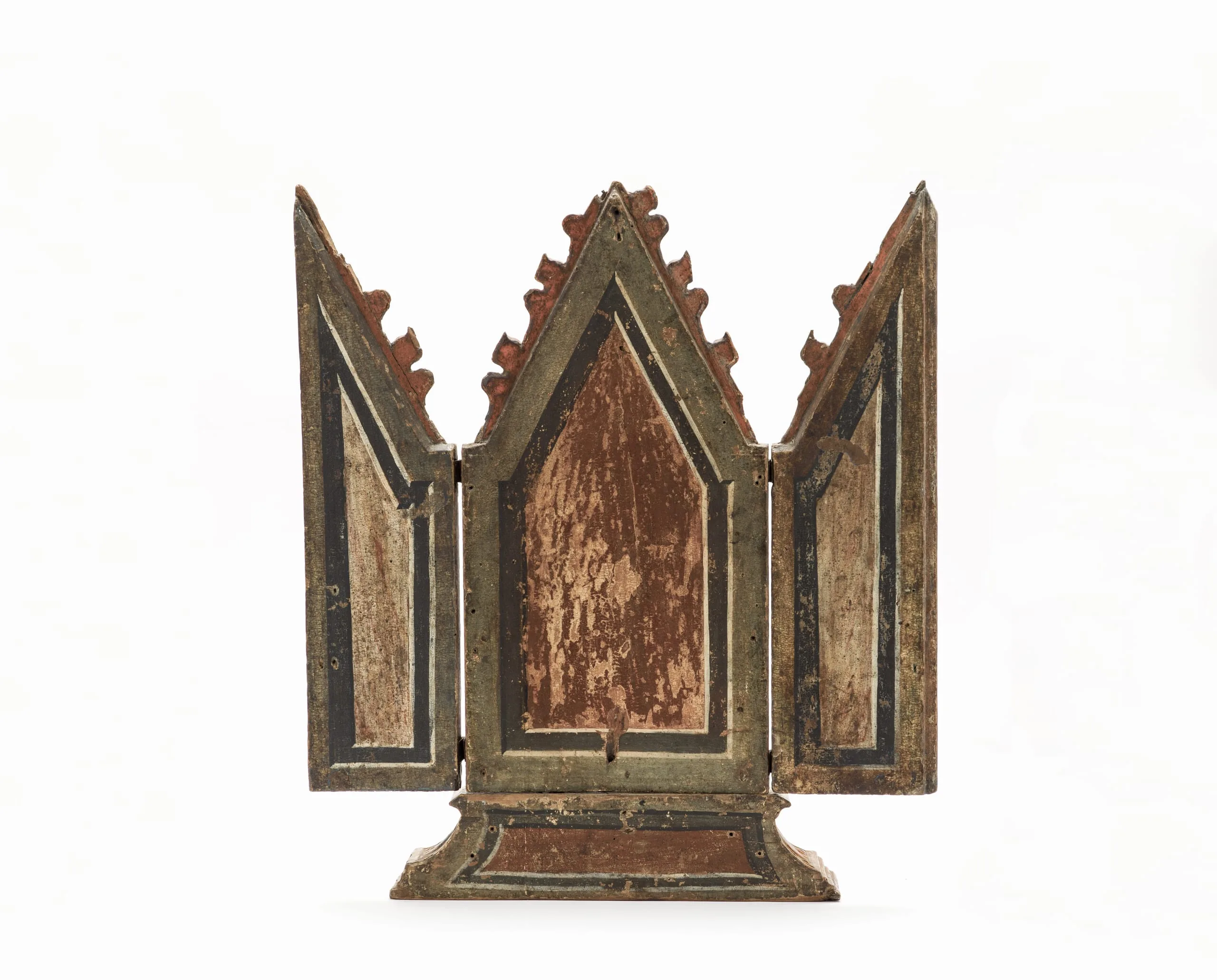
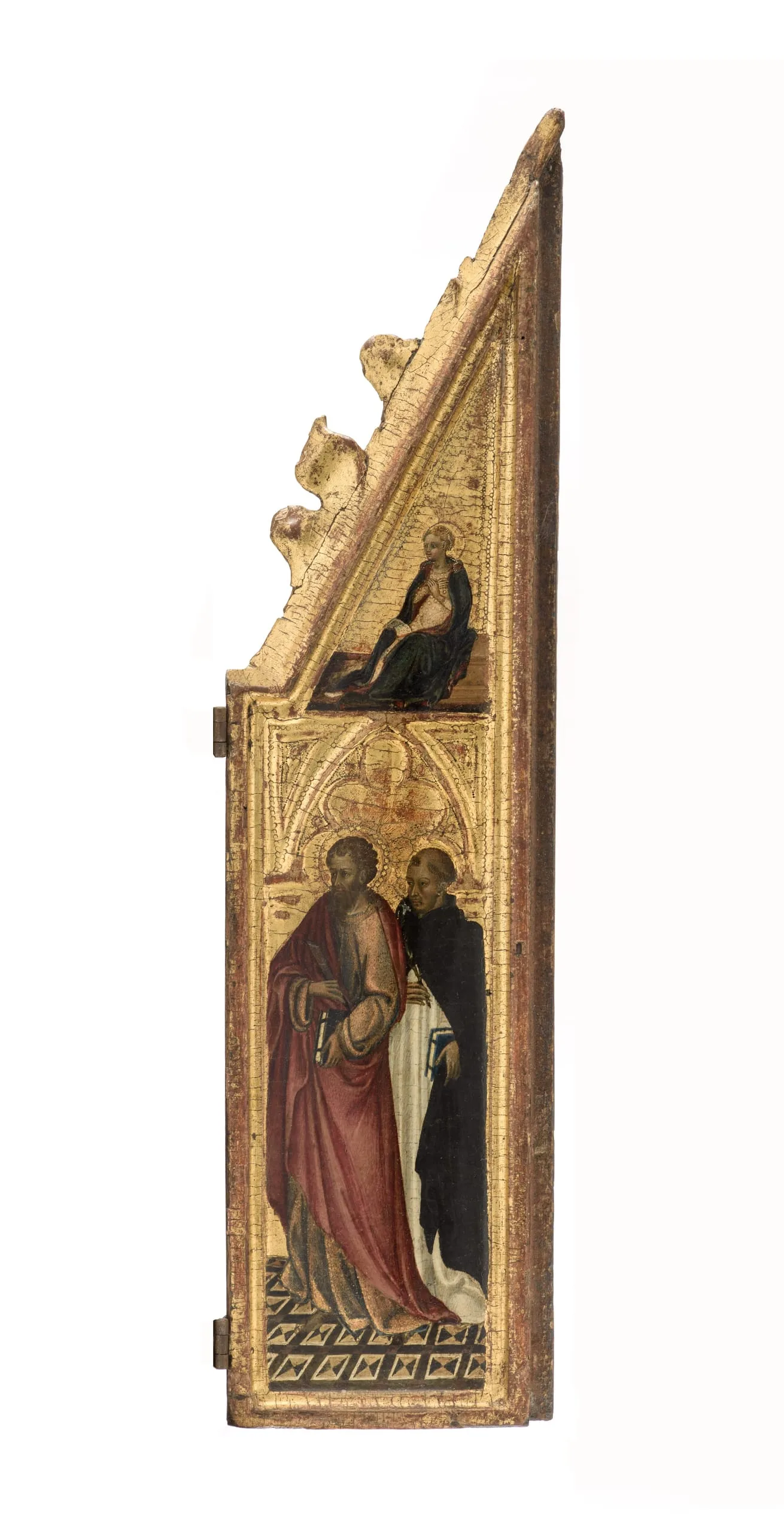
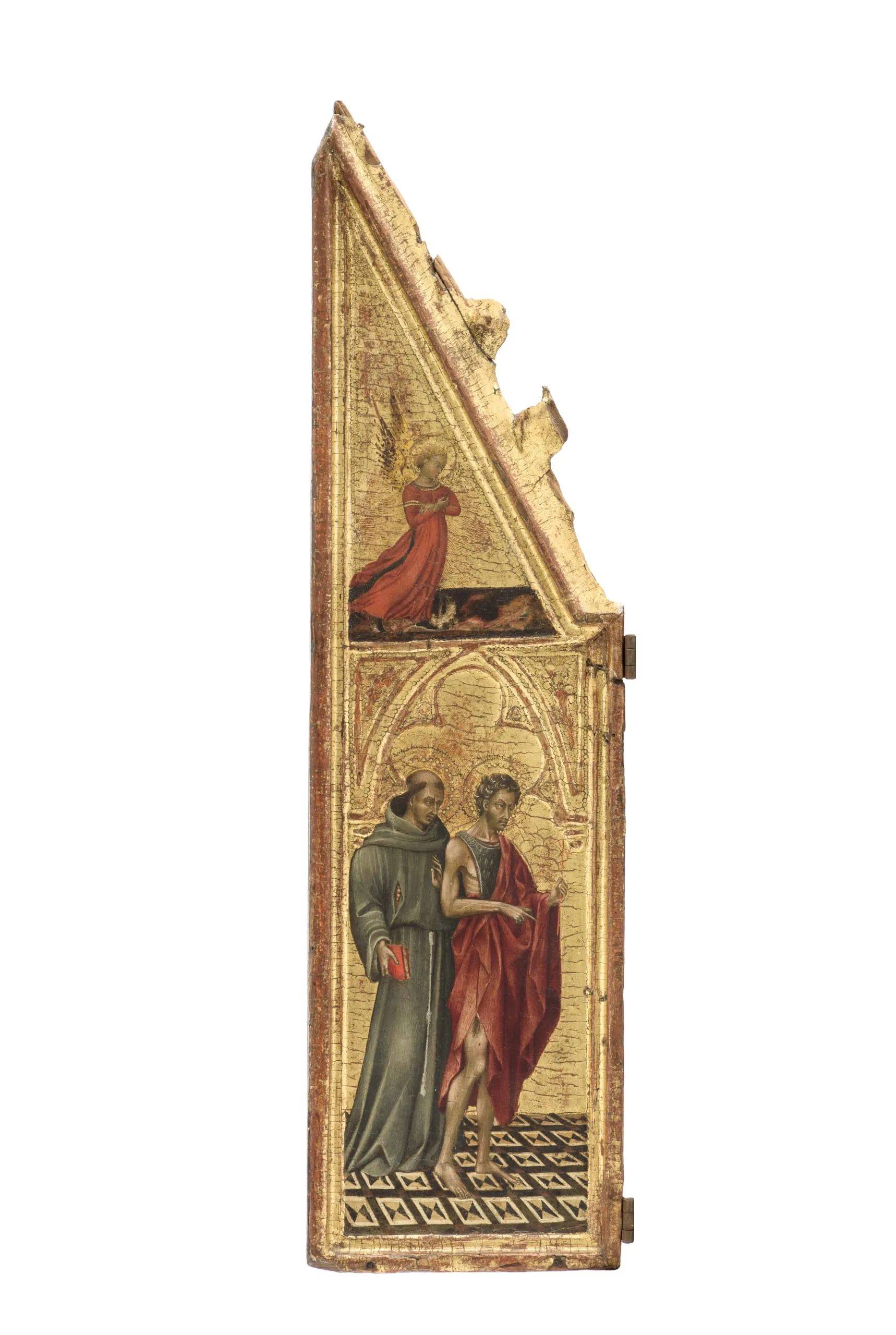
- Triptych with the Enthroned Virgin between Saint Catherine of Alexandria and Saint Lucy (central panel); Saint Francis, Saint John the Baptist, and the Archangel Gabriel (left wing); Saint Bartholomew, Saint Dominic, and the Virgin Annunciate ( right wing)
- Date Made
- circa 1427-1430
- Medium
- Tempera and gold on panel
- Dimensions
- Overall: 25 3/4 × 22 1/8 in. (65.41 × 56.2 cm)
Central Panel: 21 5/8 × 10 13/16 in. (55 × 27.5 cm)
Left Wing: 21 5/8 × 5 13/16 in. (55 × 14.7 cm)
Right Wing: 21 5/8 × 5 1/2 in. (55 × 14 cm)
- Accession Number
- AC1996.139.1a-b
- Curatorial Notes
Extremely adept in the medium of tempera, Giovanni di Paolo was entrusted to paint highly prestigious commissions ranging from illuminated manuscripts to devotional objects, including sculpture. Working for private individuals and families, guilds, and even the pope, Giovanni likely made this delicately detailed folding triptych for a prominent patron in Siena in the late 1420s, the town in which the painter forged his reputation. In the central panel, the Madonna and Christ Child are enthroned above a carpet illustrated with stylized animal figures, based on a type of floor covering likely crafted in Anatolia (modern-day Turkey) and typical of the luxury goods that were traded from Asia to Europe. The Virgin and Child receive God’s divine blessing, the Holy Spirit in the form of a white dove. The rest of the triptych is populated by several saints and religious figures whose detailed depictions display Giovanni’s extraordinary talent. Wearing richly patterned robes and headdresses, Saints Catherine and Lucy hold the attributes of their martyrdom—the former, a spiked wheel; the latter, her eyes. Saints Francis and John the Baptist stand in the left panel, Saints Bartholomew and Dominic in the right; the archangel Gabriel and the Virgin Annunciate appear in the gables above. The base features the Man of Sorrows, a symbol of Christ as the suffering savior, flanked by the Madonna and Saint John. Two indistinct coats of arms likely identify the patron, whose wealth is underscored by the thinly applied gold that fills the space between the figures.
This well-preserved triptych would have offered its patron a multisensory devotional experience, as the stimulation of the senses was essential to fifteenth-century spiritual practices. The small taper on the base, likely original, was designed to hold a candlestick. The flickering flame would have glistened on the gold ground, accentuating the halos around the Madonna and Child and unifying the busy scene, creating an otherworldly space.
2024
- Provenance
Possibly commissioned by a member of the Placidi family, Siena. Private collection, Germany, from ca. 1920 (sale,London, Christie’s, 13 Dec. 1991, lot 73,to); [Matthiesen Gallery, London, 1996,sold 1996 to]; LACMA