LACMA

ShopMembershipMyLACMATickets
LACMA
Los Angeles County Museum of Art
5905 Wilshire Blvd.
Los Angeles, CA 90036
info@lacma.org
(323) 857-6000
Sign up to receive emails
Subscribe
© Museum Associates 2025

Museum Hours

Monday

11 am–6 pm

Tuesday

11 am–6 pm

Wednesday

Closed

Thursday

11 am–6 pm

Friday

11 am–8 pm

Saturday

10 am–7 pm

Sunday

10 am–7 pm


  • About LACMA
  • Jobs
  • Building LACMA
  • Host An Event
  • Unframed
  • Press
  • FAQs
  • Log in to MyLACMA
  • Privacy Policy
© Museum Associates 2025
Collections

Mona Hatoum
Prayer Mat1995

Not on view
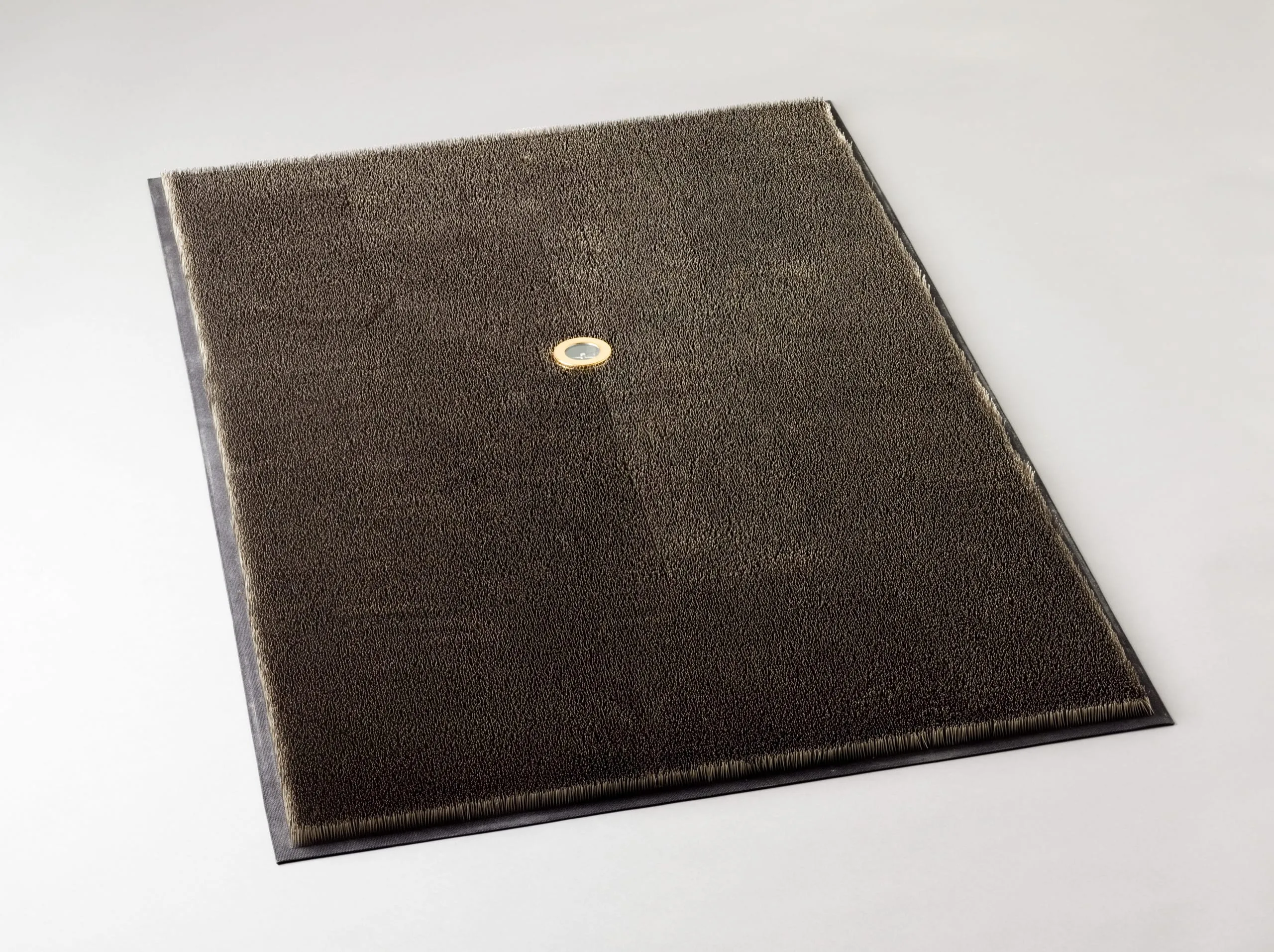
Square charcoal-brown fiber mat with black rubber edging and a small gold-rimmed peephole lens embedded at its center, photographed from a slightly elevated angle
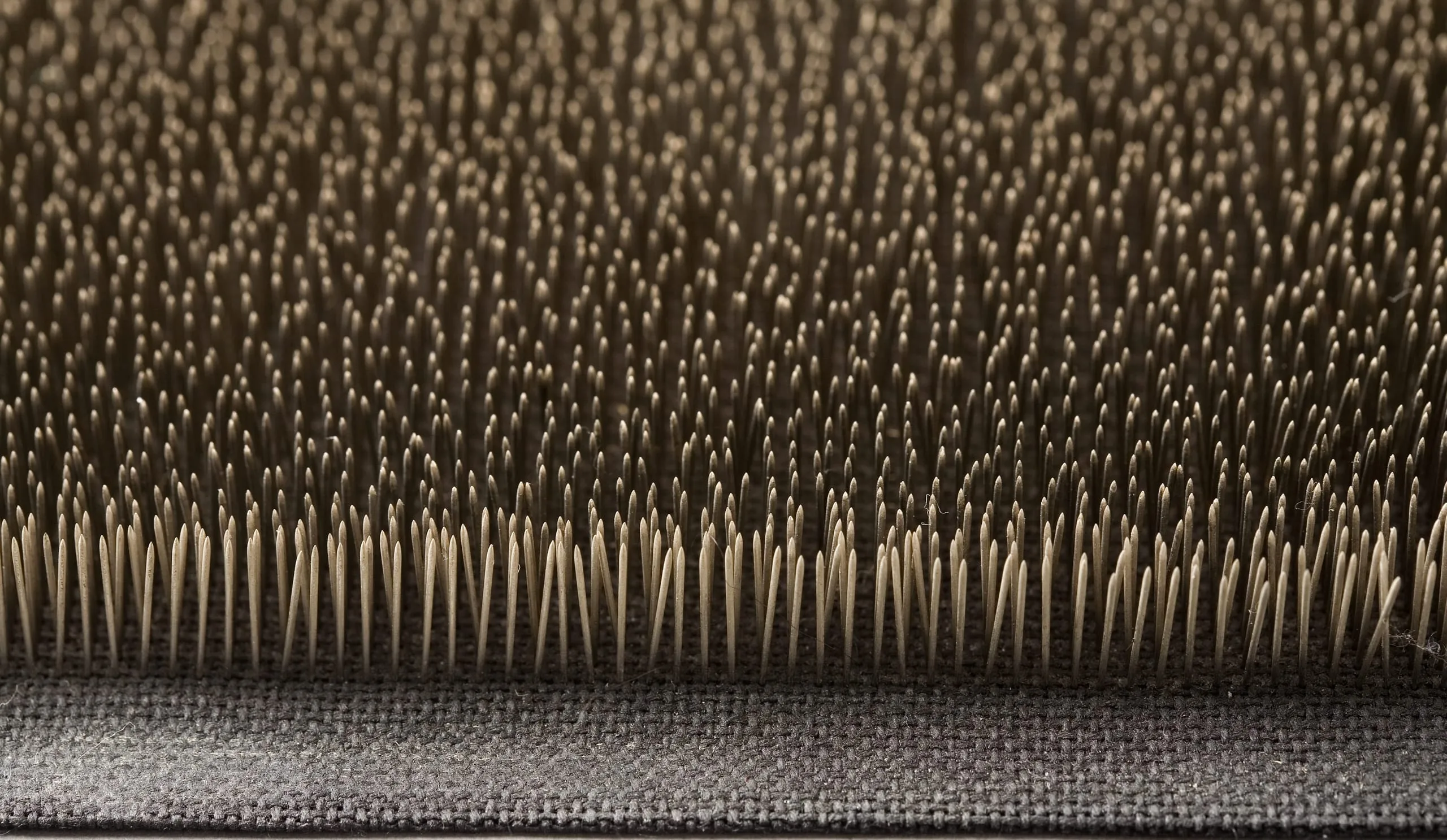
Close-up view of a textile or sculptural work featuring densely packed upright tan-colored spikes or bristles, receding into soft focus, mounted on a gray woven backing visible along the lower edge.
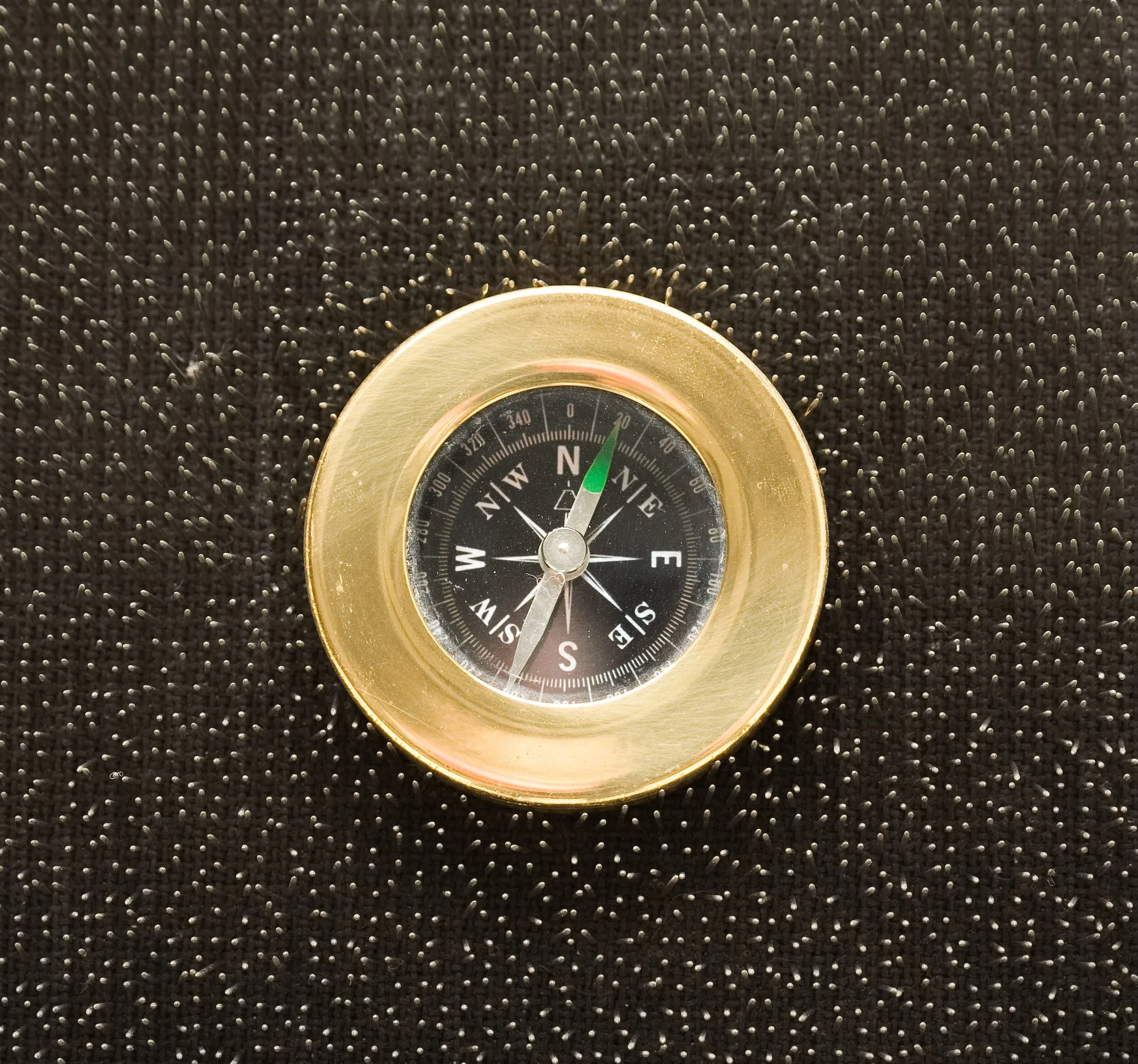
Small brass pocket compass with polished circular case, black dial face marked with cardinal and intercardinal directions and degree gradations, silver needle with green-tipped north pointer, photographed from above on dark textured fabric.
Artist or Maker
Mona Hatoum
Lebanon, Beirut, active England, born 1952
Title
Prayer Mat
Place Made
Palestine, active England
Date Made
1995
Medium
Nickel plated brass pins, compass, canvas, glue
Dimensions
44 × 26 1/2 × 5/8 in. (111.76 × 67.31 × 1.59 cm)
Credit Line
Gift of the Peter Norton Family Foundation
Accession Number
AC1996.13.1
Classification
Sculpture
Collecting Area
Contemporary Art
Curatorial Notes

As part of their daily prayer rituals, while facing toward Mecca, Muslims perform a series of bowings and prostrations that include touching their heads to the ground. Mona Hatoum’s dramatically unsettling Prayer Mat, with its rows of sharply pointed nails and embedded compass, projects a feeling of discomfort by subverting the object’s intended use as a soft, clean surface on which the supplicant can kneel in the direction of the Kaaba, in Mecca, the spiritual home of all Muslims. This complex work, which transforms symbols of comfort and spirituality into something torturous, draws upon the artist’s own experience to suggest the exile’s pain and disorientation in not being able to return home. Hatoum frequently plays with contradictions, such as hard and soft, pain and comfort, to suggest the menacing within the mundane. She often seeks to agitate and challenge viewers with her work. Her imaginative and fearless use of substances such as nails, human hair, and glass marbles has helped to expand the formal and material qualities of artistic expression for a new generation.

Selected Bibliography
  • Komaroff, Linda. Islamic Art Now: Contemporary Art of the Middle East. Los Angeles: Los Angeles County Museum of Art, 2015.