LACMA

ShopMembershipMyLACMATickets
LACMA
Los Angeles County Museum of Art
5905 Wilshire Blvd.
Los Angeles, CA 90036
info@lacma.org
(323) 857-6000
Sign up to receive emails
Subscribe
© Museum Associates 2025

Museum Hours

Monday

11 am–6 pm

Tuesday

11 am–6 pm

Wednesday

Closed

Thursday

11 am–6 pm

Friday

11 am–8 pm

Saturday

10 am–7 pm

Sunday

10 am–7 pm


  • About LACMA
  • Jobs
  • Building LACMA
  • Host An Event
  • Unframed
  • Press
  • FAQs
  • Log in to MyLACMA
  • Privacy Policy
© Museum Associates 2025
Collections

Unknown
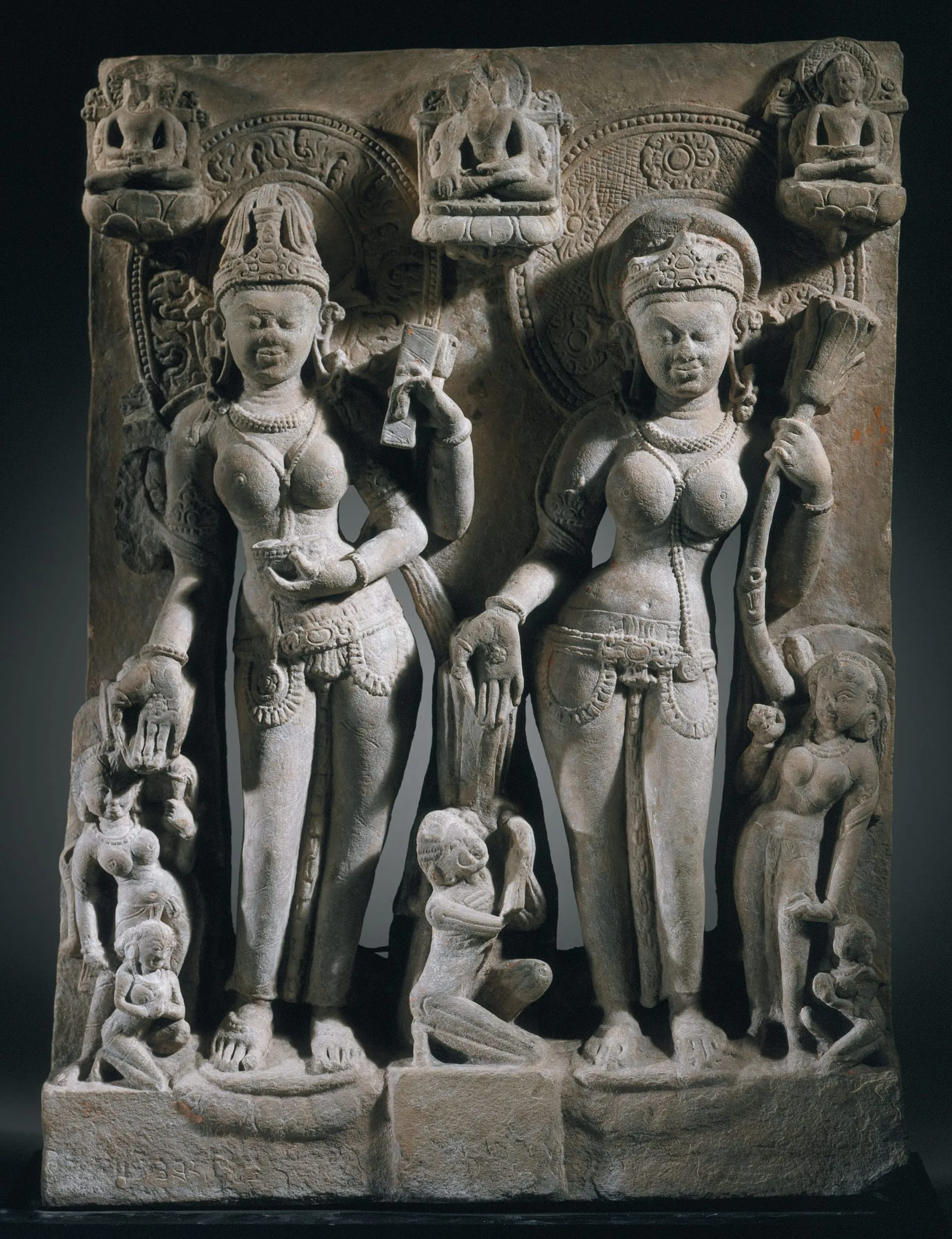
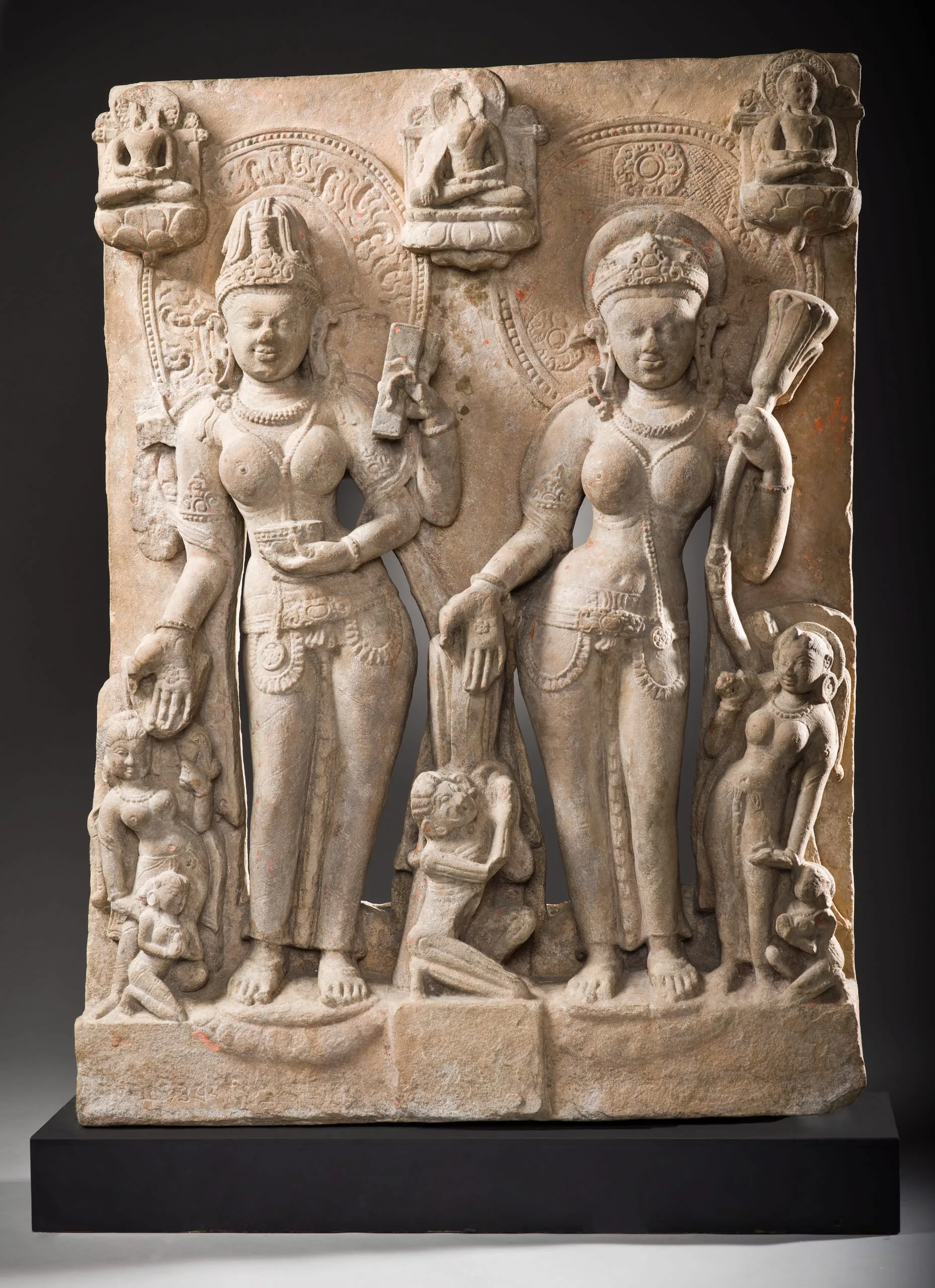
The Buddhist Goddesses Tara and Chunda9th century

Not on view
Pale tan sandstone relief sculpture showing two standing multi-armed female figures with crowns and jewelry, flanked by smaller attendant figures, with carved elements above
Stone relief sculpture with two standing female figures in elaborate crowns, jewelry, and draped garments, each holding attributes; smaller figures at their feet and flanking columns topped with seated deities above.
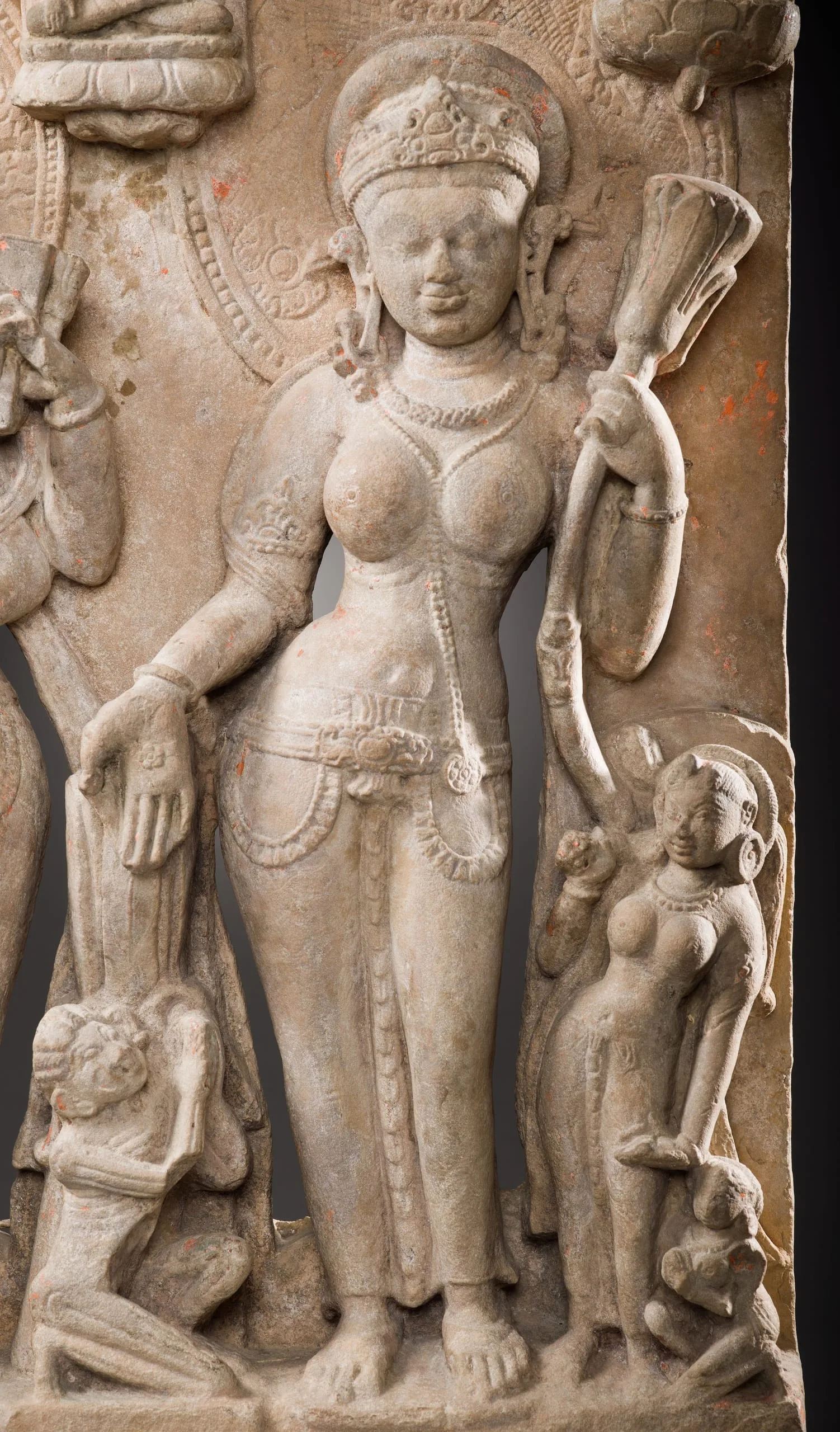
Sandstone relief sculpture of a standing female deity with elaborate crown and jewelry, four arms, holding a fly whisk; flanked by smaller attendant figures in high relief carving
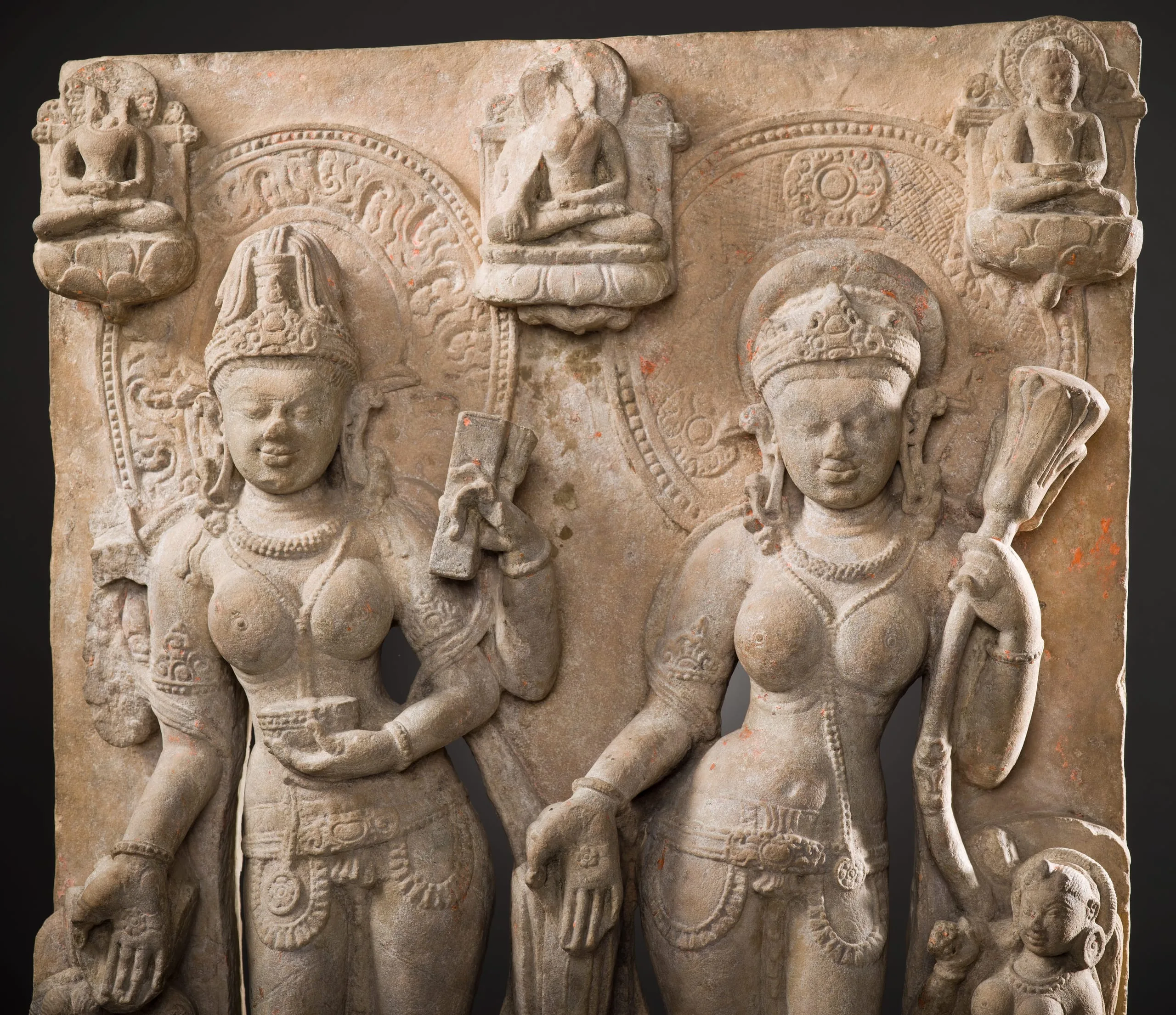
Stone relief sculpture, two standing female figures in high relief wearing ornate jewelry, beaded necklaces, and decorated hip belts, each holding ritual attributes; circular medallions with seated figures in meditation pose arranged above them; traces of red pigment visible on the weathered sandstone surface.
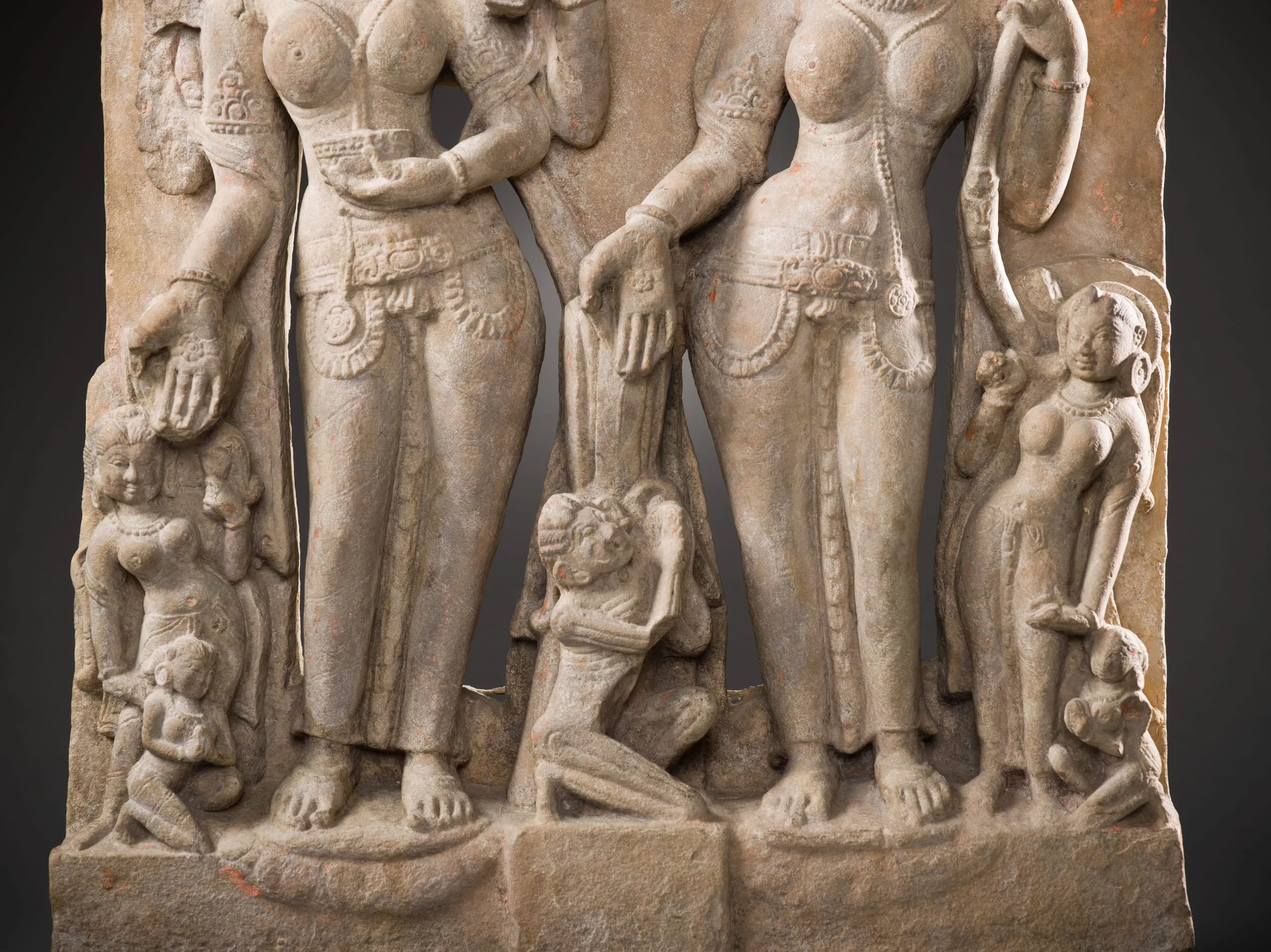
Sandstone relief panel with two large standing figures in elaborate jewelry and draped lower garments, flanked by smaller attendant figures and a crouching figure between them at the base.
Artist or Maker
Unknown
Title
The Buddhist Goddesses Tara and Chunda
Place Made
India, Uttar Pradesh, Farrukhabad, Pakhna
Date Made
9th century
Medium
Sandstone with traces of red devotional paint
Dimensions
35 x 26 x 5 in. (88.9 x 66.04 x 12.7 cm)
Credit Line
Purchased with funds provided by Harry and Yvonne Lenart
Accession Number
M.90.164
Classification
Sculpture
Collecting Area
South and Southeast Asian Art
Curatorial Notes

These two Buddhist goddesses personify concepts crucial to the achievement of Enlightenment. Tara, who embodies compassion, stands on the right. She is crowned and has two arms. Her right hand is held in the gesture of ‘gift-giving’ (varada mudra) and her left hand grasps the long stem of a lotus bud. Kneeling beneath Tara is a skeletal figure symbolizing the needy beings who benefit from her compassionate aid. Chunda, a four-armed goddess who represents wisdom, stands on the left. She has the piled hair of an ascetic. Her lower right hand is held in the gesture of ‘gift-giving’ and her upper right hand is now-missing. Her upper left hand holds a sacred manuscript and a lotus stem. Her lower left hand carries a wine cup. The divine pair is flanked by female attendants bearing honorific fly whisks made from the white tail-hairs of a yak (cauri or chowri) and knelling devotees with their hands held in the gesture of adoration (anjali mudra). An effaced inscription is on the lower left front of the base.

Although Hindu images predominated in central and northern India after the 6th century, sculptures such as this demonstrate the continued vitality of Buddhist practice in the region.

Another relief from this series is in the State Museum, Lucknow.
Selected Bibliography
  • El Universo de la India: Obras Maestras del Museo de Arte del Condado de Los Angeles. Santiago: Centro Cultural Palacio La Moneda, 2012.