- Title
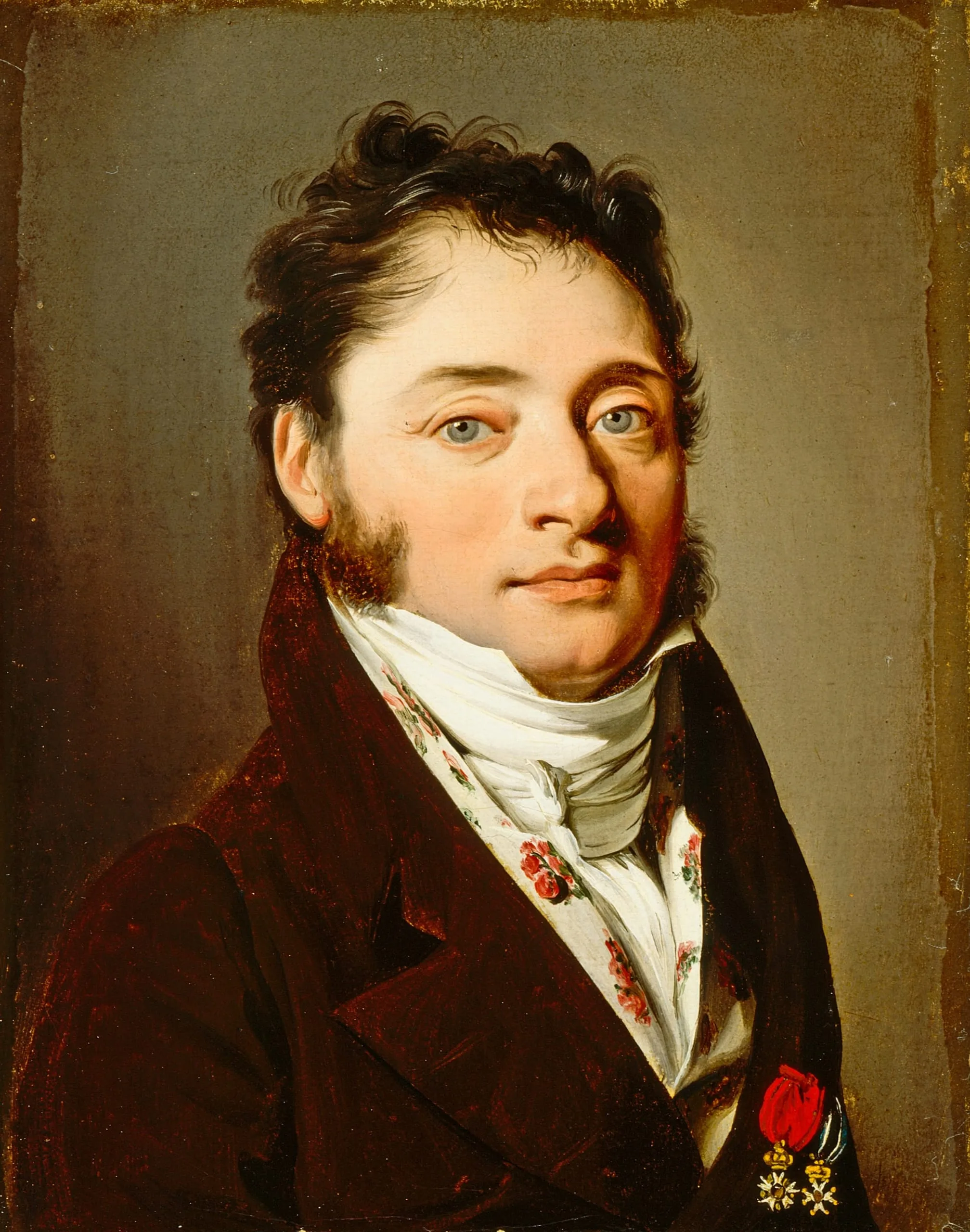
- Portrait of a Gentleman
- Date Made
- circa 1800
- Medium
- Oil on canvas
- Dimensions
- Frame (Frame): 13 1/2 × 11 1/2 × 2 1/2 in. (34.29 × 29.21 × 6.35 cm)
- Accession Number
- M.2003.197.2
- Curatorial Notes
This is one of more than 5,000 small-format portraits by Louis-Léopold Boilly, who depended on this type of work for a steady stream of income. His enormous output was made possible by the use of optical devices that allowed him to paint more quickly. Boilly’s self-proclaimed goal was to complete a picture in under two hours so that the client could take it home shortly after the sitting—anticipating the portrait photographs that would flood visual culture in Europe in the second half of the nineteenth century.
Like many of his contemporaries, such as Jacques-Louis David and Adélaïde Labille-Guiard, Boilly painted during a tumultuous period that included the French Revolution, the rise and rule of Napoleon, and Napolean’s subsequent defeat and the restoration of the monarchy. Boilly captured the shifting cultural and aesthetic norms in this swiftly changing environment, particularly as relates to the complicated rules and expectations involving gender. Here, the sitter—as yet unidentified—wears a flowered shirt and two pins on a plain brown overcoat. His dress reflects the transition, circa 1800, from the fashionable luxury of the pre-revolutionary era to the more reserved self-fashioning of Napoleonic times.
- Selected Bibliography
Bréton, Étienne, and Pascal Zubar. Louis-Léopold Boilly: Le Peintre de la Société Parisienne de Louis XVI à Louis-Philippe. Vol. 1. Paris: Arthena, 2019.
- Bréton, Étienne, and Pascal Zuber. Louis-Léopold Boilly: Le Peintre de la Société Parisienne de Louis XVI à Louis-Philippe. Vol. 2. Paris: Arthena, 2019.
- Edwards, Lydia. How to Read a Suit: A Guide to Changing Men's Fashion from the 17th to the 20th Century. London: Bloomsbury Visual Arts, 2020.