LACMA

ShopMembershipMyLACMATickets
LACMA
Los Angeles County Museum of Art
5905 Wilshire Blvd.
Los Angeles, CA 90036
info@lacma.org
(323) 857-6000
Sign up to receive emails
Subscribe
© Museum Associates 2026
  • About LACMA
  • Jobs
  • Host An Event
  • Unframed
  • Press
  • FAQs
  • Log in to MyLACMA
  • Privacy Policy
© Museum Associates 2026
Collections

Unknown
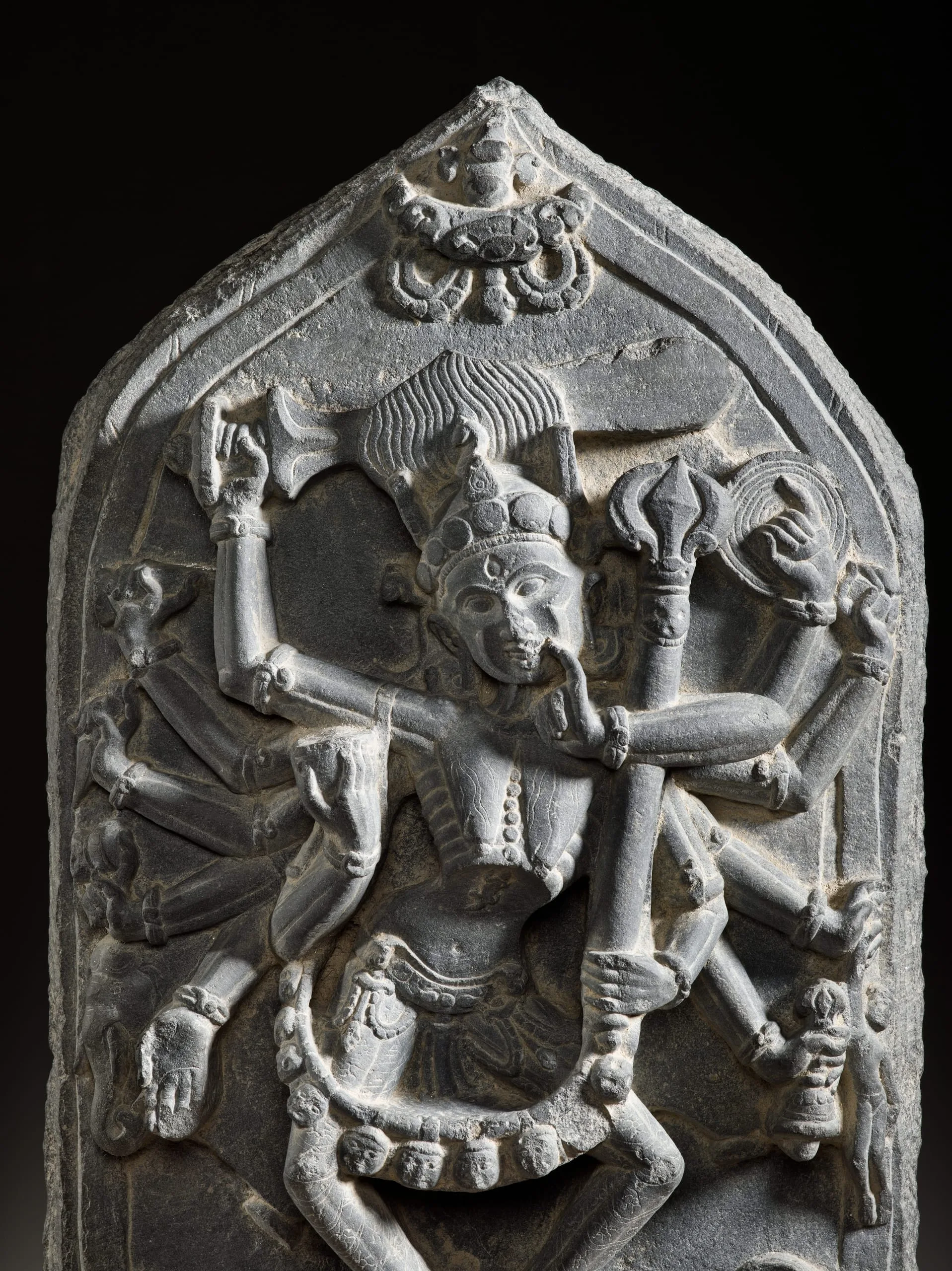
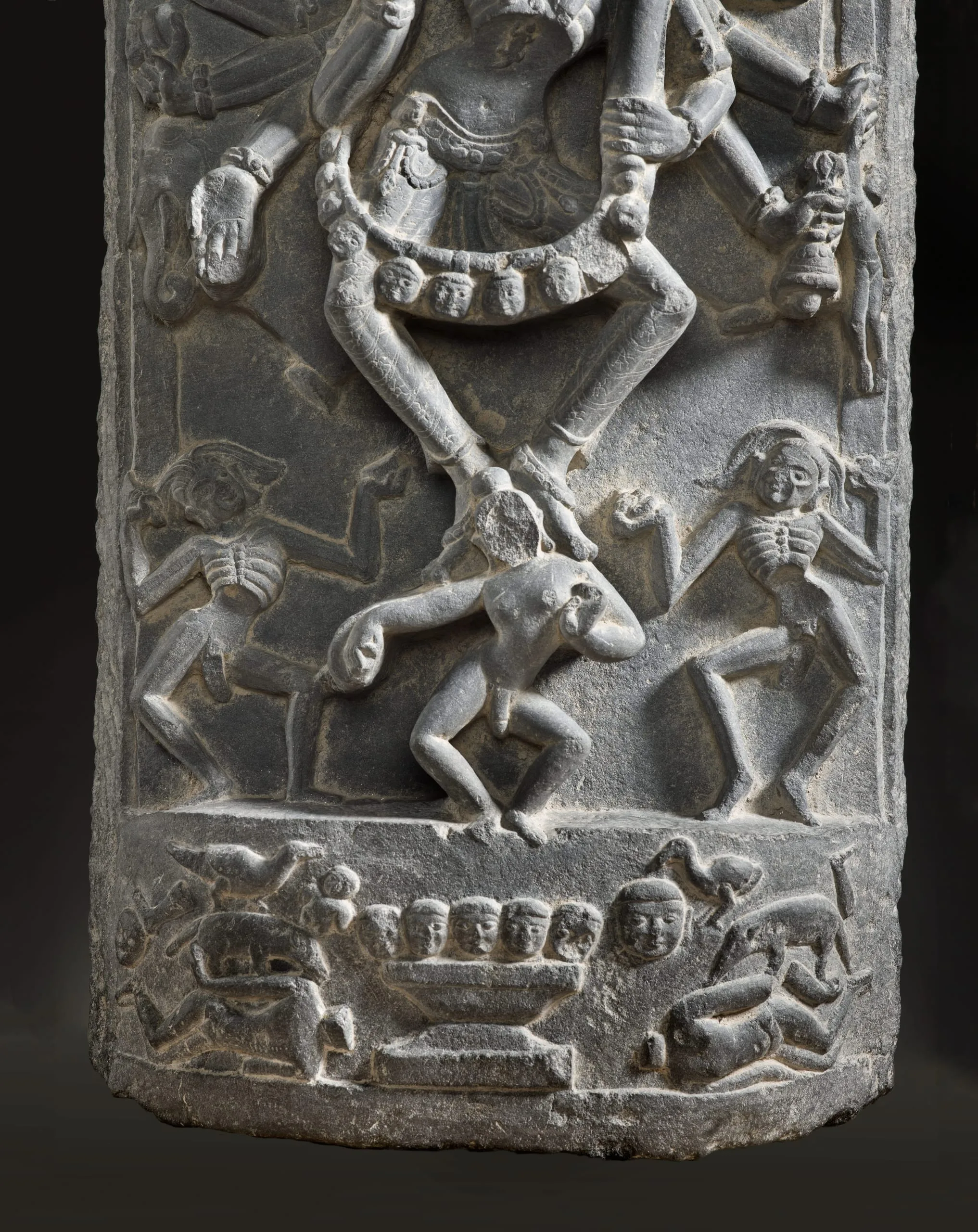
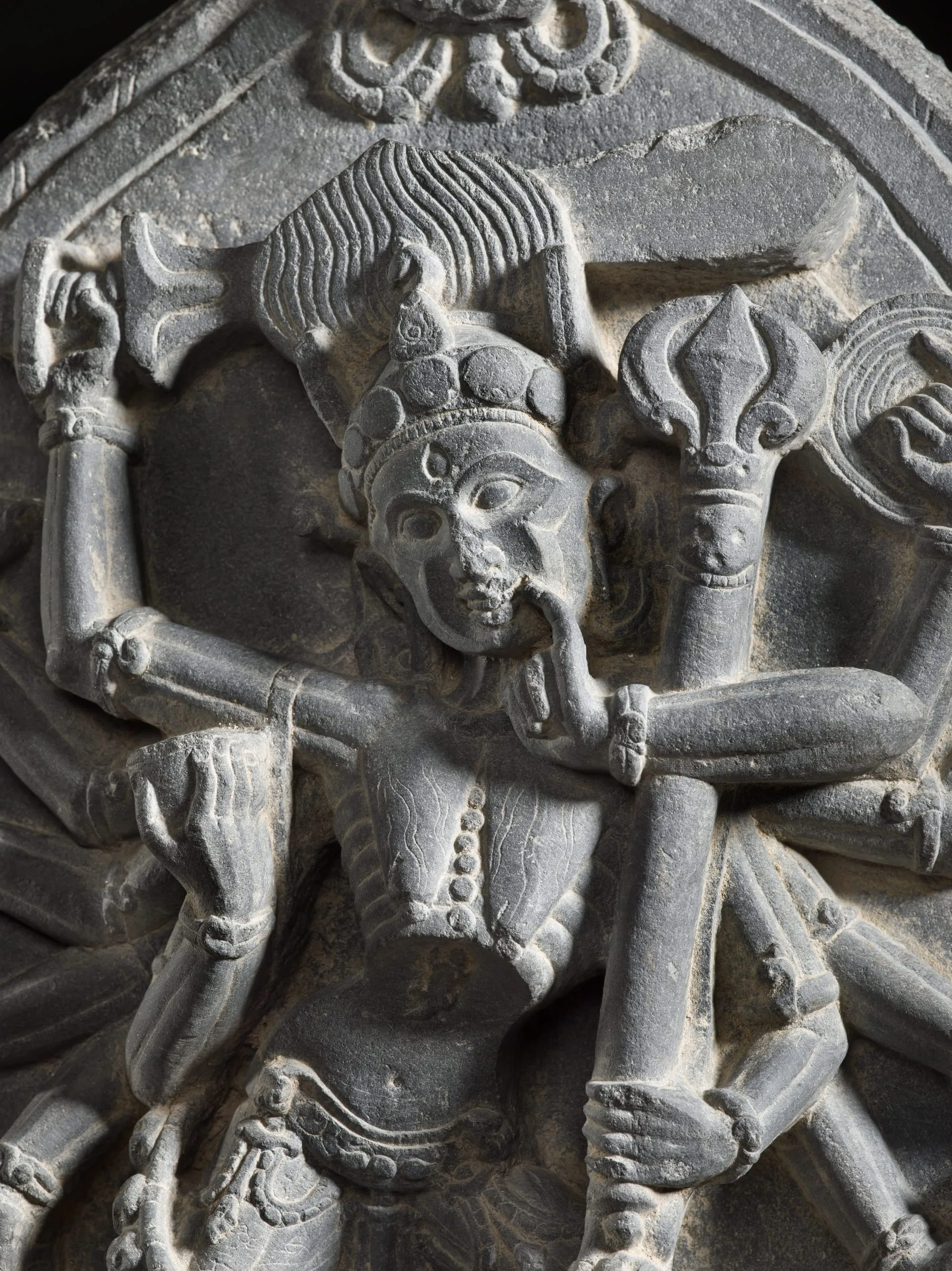
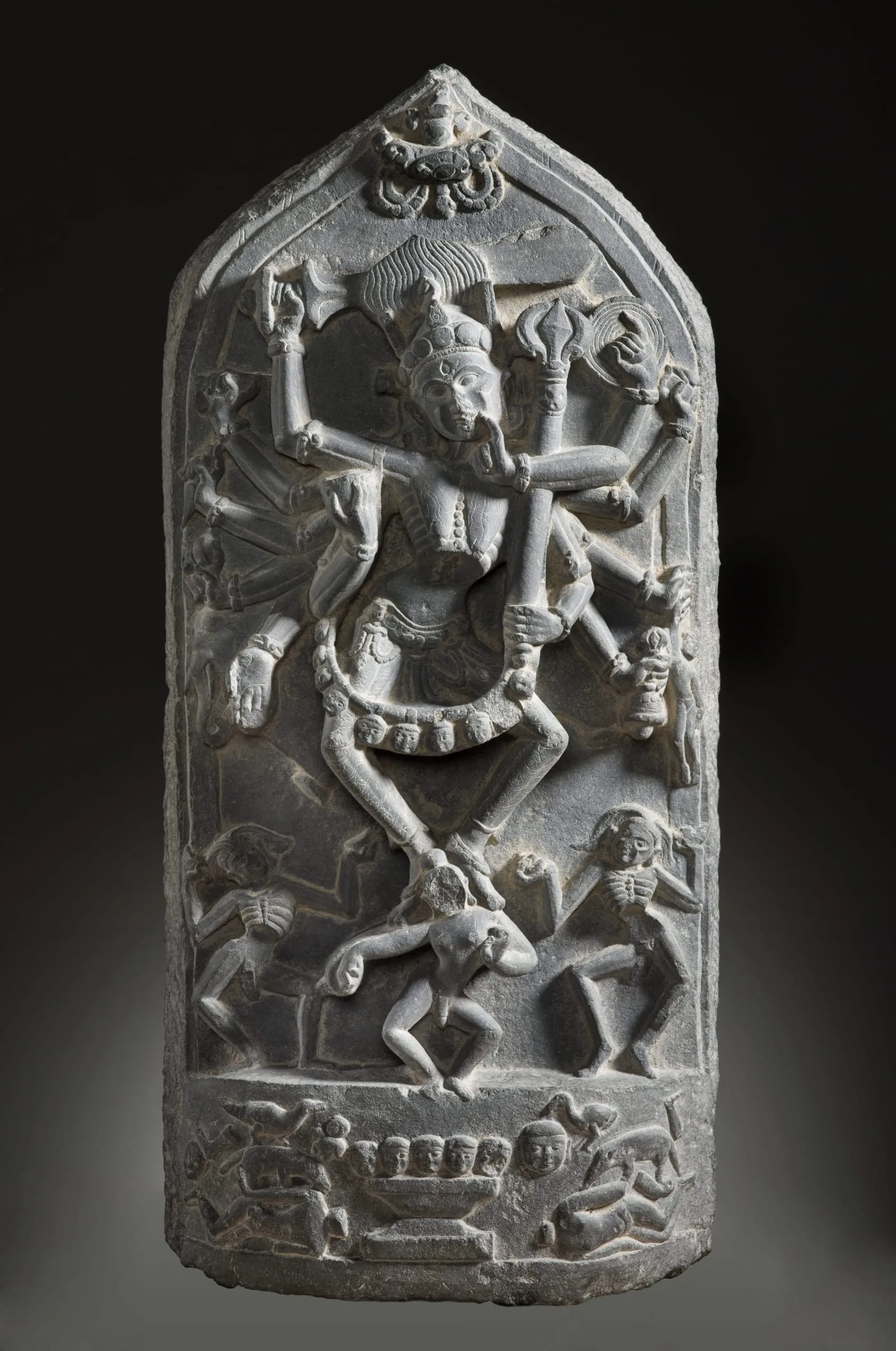
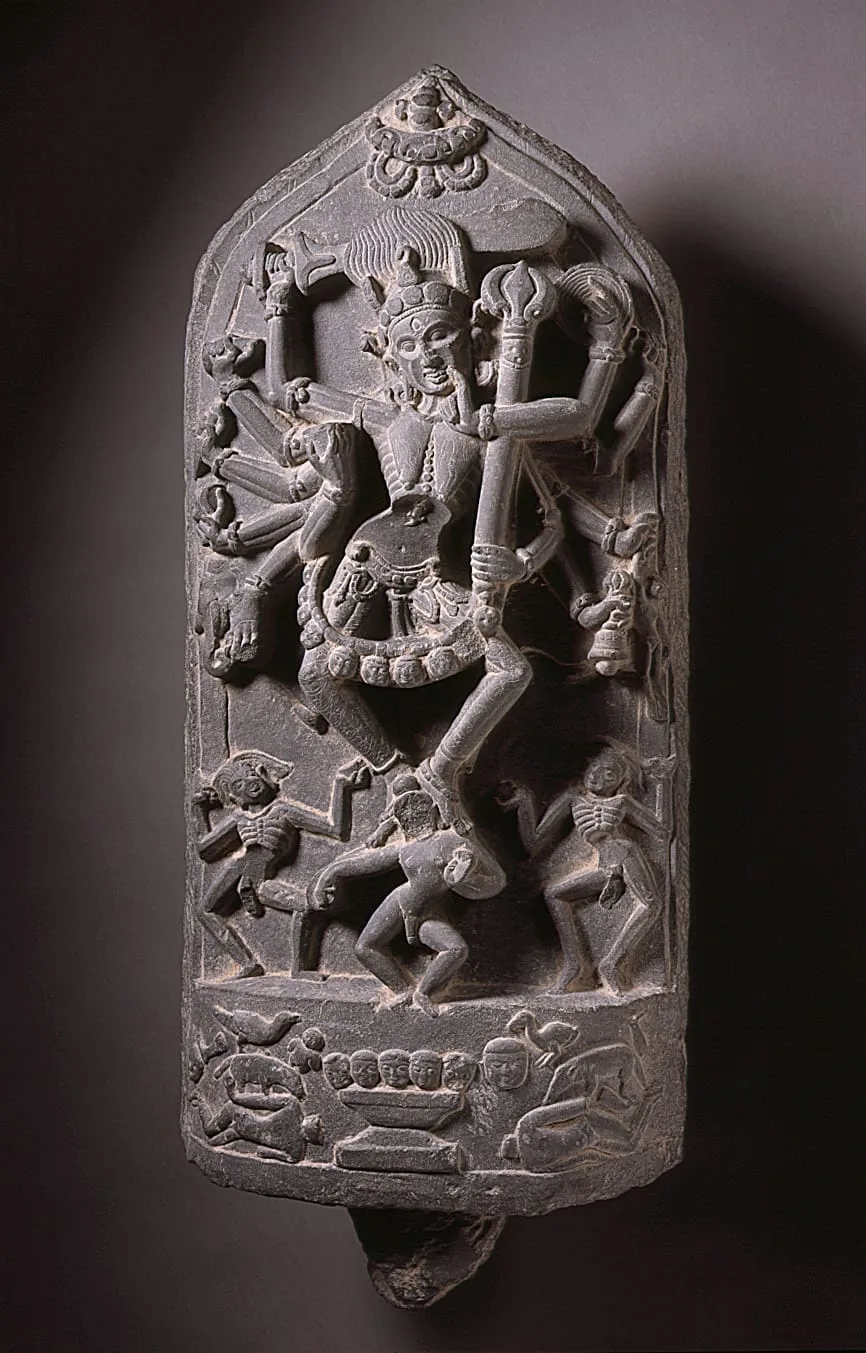
The Hindu Goddess Chamunda12th century

Not on view
Dark gray stone stele carved in high relief with a multi-armed dancing figure wearing a crown and jewelry, flanked by skeletal attendant figures, with a row of smaller worshippers at the base
Stone relief stele with arched top, depicting a multi-armed dancing deity with a fierce expression, adorned with a garland and jewelry, flanked by smaller attendant figures in dynamic poses; a row of severed heads appears along the base register; dark gray stone with finely carved detail.
Gray stone stele with high-relief carving of a multi-armed deity in dynamic dancing pose, holding attributes including a disc and staff, wearing a beaded garland and crown, with smaller flanking figures and a prabhavali arch above.
Stone relief sculpture with multiple registers of carved figures; upper section shows a multi-armed deity with a garland of heads flanked by skeletal attendants; central register depicts a dynamic dancing figure; lower register shows severed heads on a platform with prostrate figures at the sides.
Stone relief sculpture of a multi-armed dancing deity within a circular surround, carved in gray stone with detailed crown, jewelry, and dynamic pose with multiple extended arms holding attributes.

Unknown, The Hindu Goddess Chamunda, 12th century, Los Angeles County Museum of Art, Museum Acquisition Fund and the Indian Art Special Purpose Fund, photo © Museum Associates/LACMA

Artist or Maker
Unknown
Title
The Hindu Goddess Chamunda
Place Made
India, West Bengal
Date Made
12th century
Medium
Black schist
Dimensions
24 x 10 3/4 x 3 1/2 in. (60.96 x 27.31 x 8.89 cm)
Credit Line
Museum Acquisition Fund and the Indian Art Special Purpose Fund
Accession Number
M.90.166
Classification
Sculpture
Collecting Area
South and Southeast Asian Art
Curatorial Notes

The Hindu goddess Chamunda is a ferocious (ugra) form of the Great Goddess, Durga, the Hindu goddess of death and destruction (see also M.80.3). Her name is a contraction of the names of the demon generals Chanda and Munda, whom she slew in battle (see M.70.70). She is also one of the Mother Goddess (matrikas), the female creative aspects (shaktis) of the Hindu gods (see M.71.110.2 and M.80.157). The Agni Purana, an encyclopedic treatise compiled in the 7th–11th centuries, records that there are eight varieties of Chamunda that are primarily differentiated by their number of arms, the attributes they hold, and their mounts (vahanas). This representation depicts the twelve-armed Siddha-Yogeshvari (The goddess of perfected yoga). See Nalini Kanta Bhattasali, Iconography of Buddhist and Brahmanical Sculptures (in the Dacca Museum) (Dacca: Rai S. N. Bhadra Bahadur, Dacca Museum Committee, 1929; reprint ed., New Delhi: Aryan Books International, 2001), pp. 210-212.

The emaciated Chamunda is naked with desiccated breasts and bony limbs. She has Shiva’s third eye of wisdom (jñana netra), flaming hair, and wears a tiara with circular bosses and a long garland of severed skulls (mundamala). Her sunken belly has a scorpion crawling across it as a symbol of sickness and death. Chamunda’s twelve hands mainly hold assorted weapons and ritual objects. Her principal left hand is held in a distinctive gesture of cleaning her teeth with the little finger of her left hand following the defeat of Chanda and Munda (charchika mudra). The goddess is in a dance posture (natyasthana) on the shoulders of her mount, a nude ascetic boy. She is accompanied by two dancing skeletal male figures. Chamunda is exalted by an aureola (prabhavali) with a flaming jewel and garlands at the apex. The base of the sculpture depicts the charnel grounds with headless corpses being devoured by jackals and ravens. In the center is a pedestal (yoni pitha) representing the divine feminine womb with the five heads of Shiva (pañcha shiras) symbolic of his five philosophical and cosmic aspects (see also M.75.11). A support tang protrudes from beneath the base.
Selected Bibliography
  • El Universo de la India: Obras Maestras del Museo de Arte del Condado de Los Angeles. Santiago: Centro Cultural Palacio La Moneda, 2012.