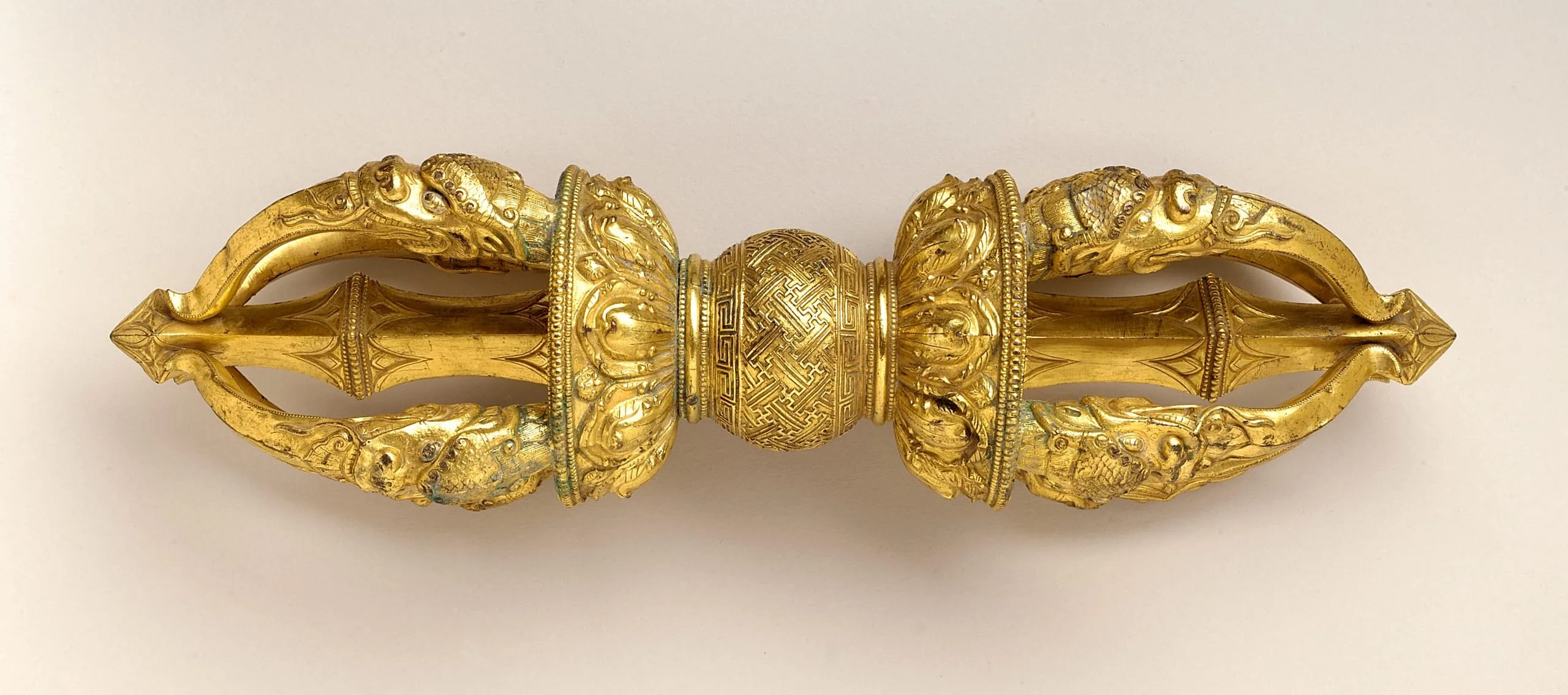
A wide range of ritual objects are used in the myriad Vajrayana Buddhist ceremonies performed to propitiate deities for obtaining boons and mundane blessings, to ensure good weather for agricultural bounty, to exorcise demons and avert calamities, and to overcome negative spiritual forces hindering enlightenment. The sacramental implements include thunderbolts (vajra or dorje), priest’s bells, flaying knives, ascetic’s staffs, and mirrors; water ewers and vases, butter lamps, skull cups, conch shells, and other vessels; and musical instruments, especially drums, horns, trumpets, and hand cymbals. Perhaps the two most important ceremonial objects are the thunderbolt and bell. The thunderbolt symbolizes the adamantine or unchanging nature of eternity and the male component of compassion. The bell represents the female aspect of wisdom. The pairing of the thunderbolt and bell embodies the enlightened state of compassion and wisdom achieved through the perfect union of the male and female principles.
The thunderbolt’s longitudinal shaft has petaled segments and diamond tips. It symbolizes the cosmic pillar or axis mundi. The middle has a compressed ball molding with geometric designs. It is abutted by matching lotus pedestals. The identical ends symbolize the male and female aspects. Each end has five prongs (four blades issuing from a mythical aquatic monster (makara) and the central axis), which represent the five Jina Buddhas and their respective transcendental insights.