- Title
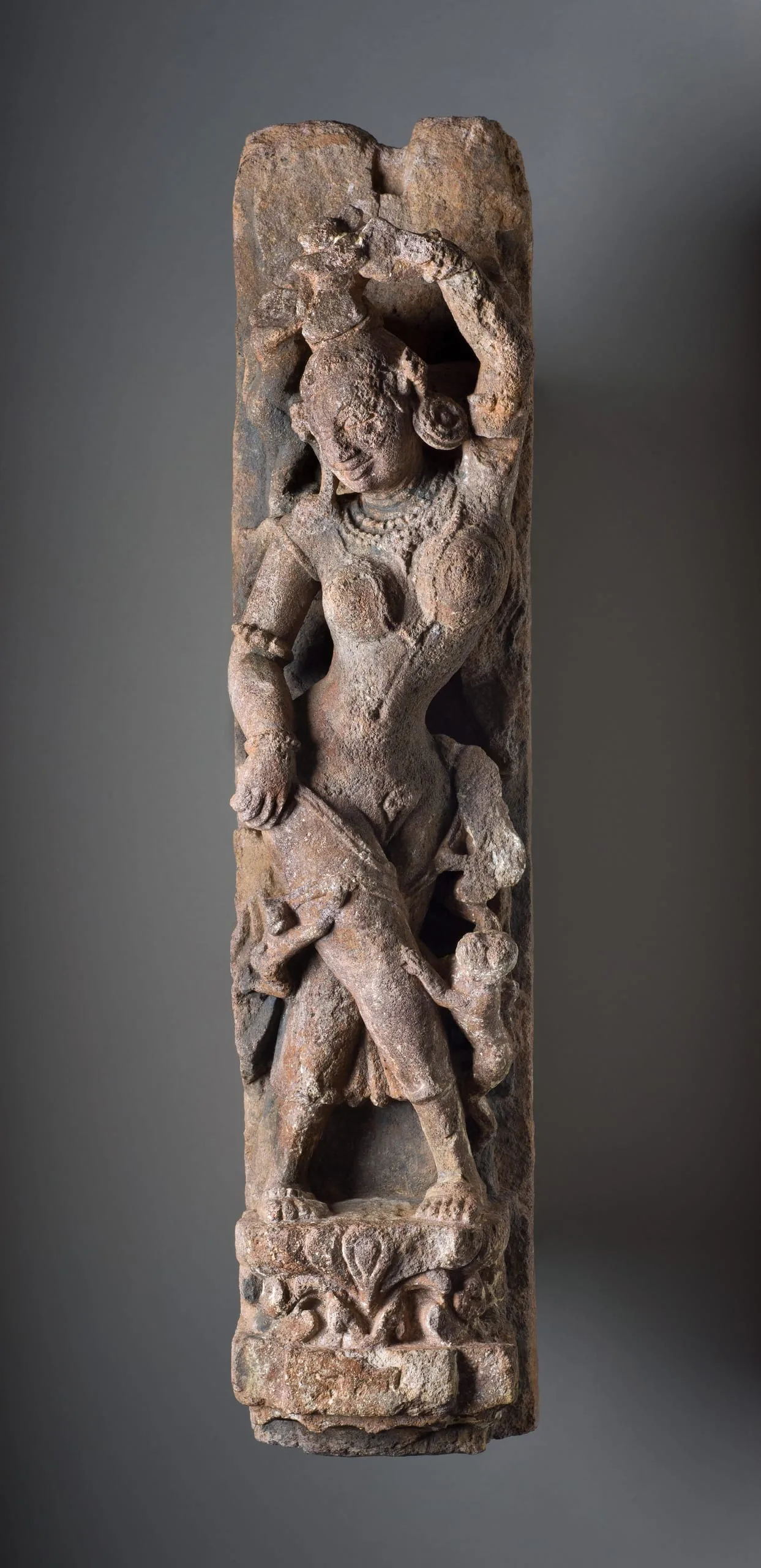
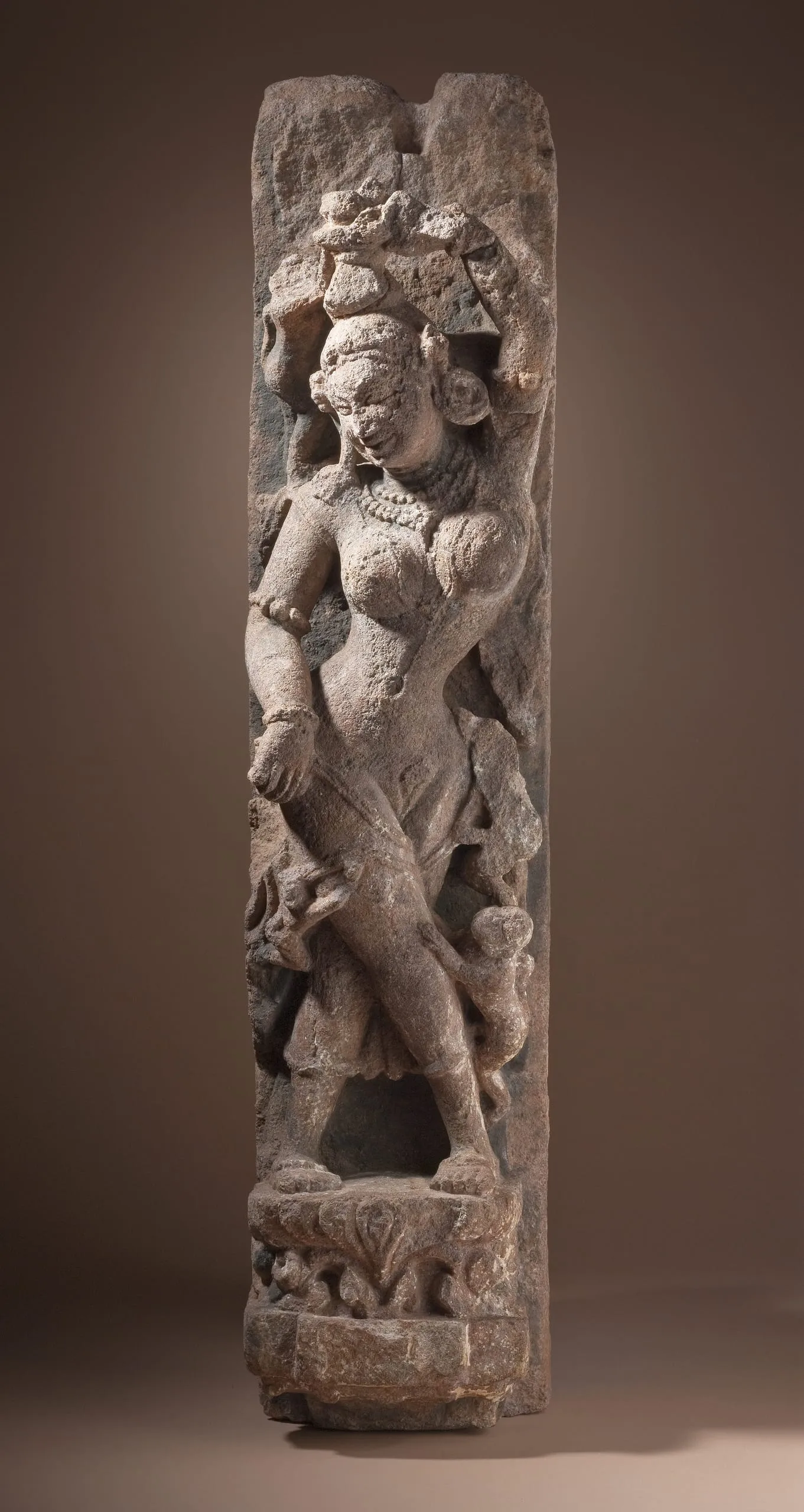
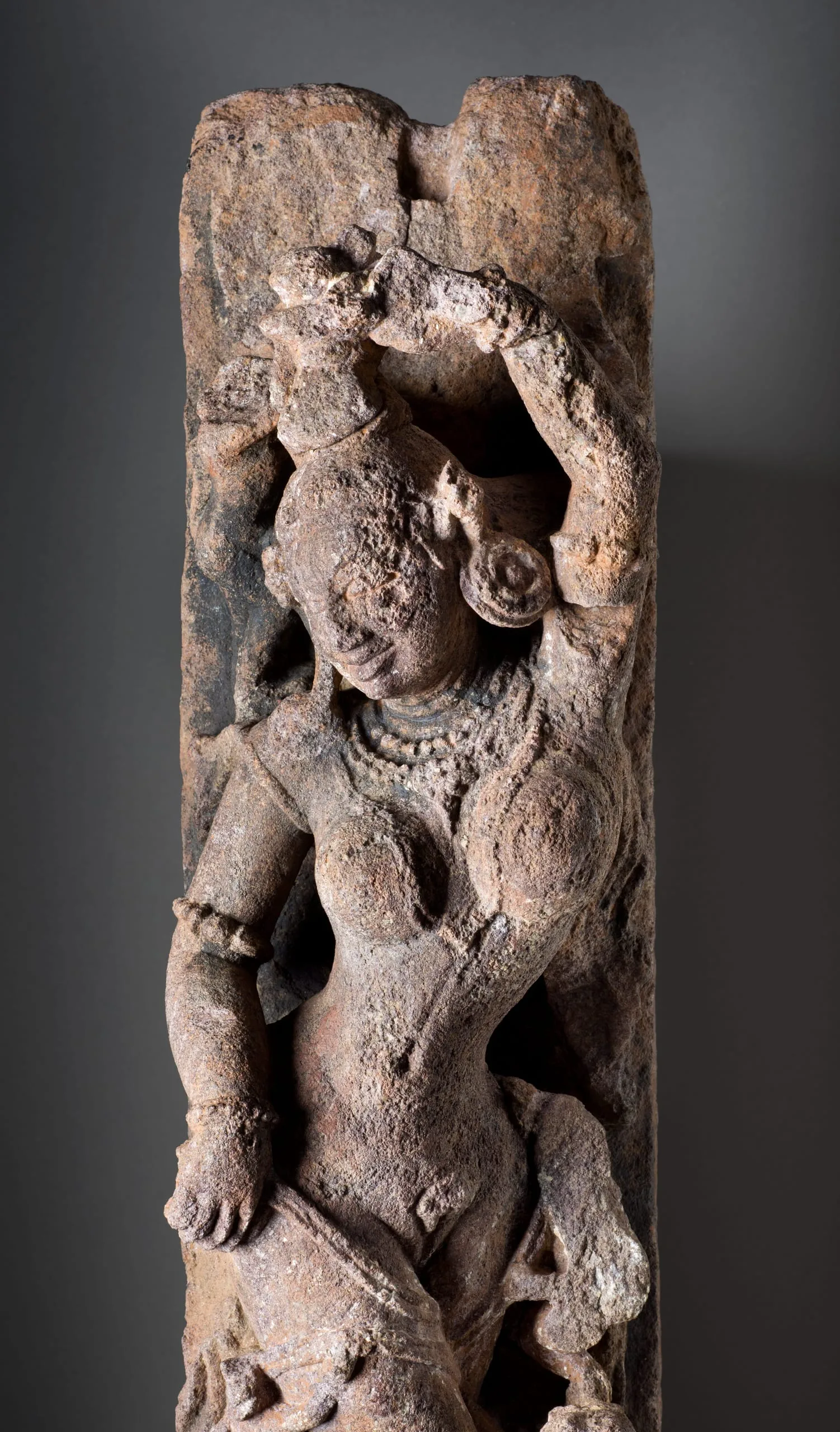
- Celestial Nymph Cavorting with Monkeys
- Date Made
- 12th century
- Medium
- Gneissic rock
- Dimensions
- 28 x 6 x 6 3/4 in. (71.12 x 15.24 x 17.15 cm)
- Accession Number
- M.76.48.2
- Curatorial Notes
The imagery of a beautiful woman has long captivated Indian artists. Representations range from elegant tree dryads enlivening the sculpted gateways of Sanchi stupas in circa 50 BCE-50 CE (see M.85.2.1) to 18th-century paintings of an eager heroine on her way to meet her lover for an illicit tryst (kama abhisarika nayika) as described in the Rasikapriya (Connoisseur’s Delights) composed in 1591 by the Braj-Bhasa poet Keshavdas (see M.71.49.6). Voluptuous forms and supple body postures, enhanced by romantic or risqué passions, ensured the continuing artistic appeal of sensuous nymphs and impassioned damsels. They can be identified by various Sanskrit names: apsaras (celestial nymph), surasundari (heavenly beauty), or alasakanya (indolent woman).
This richly adorned celestial nymph stands with in a provocative dance posture her legs fully crossed, and her head twisted to at an acute angle to look towards the ground behind her. Her left arm is raised over her head to steady a water pot on her head. Her right hand is by her hip and grasping the hem of her lower garment that is being pulled aside by a troop of monkeys playfully attempting to disrobe her. Rambunctious simians trying to unclothe a celestial beauty was a popular visual trope in medieval South Asian sculpture. See also M.71.73.132, M.77.150, M.79.57, and M.86.184.
- Selected Bibliography
- Pal, Pratapaditya. Indian Sculpture, vol.2. Los Angeles: Los Angeles County Museum of Art; University of California Press, 1988.
Pal, Pratapaditya. The Divine Presence: Asian Sculptures from the Collection of Mr. and Mrs. Harry Lenart. Los Angeles: Los Angeles County Museum of Art, 1978.
El Universo de la India: Obras Maestras del Museo de Arte del Condado de Los Angeles. Santiago: Centro Cultural Palacio La Moneda, 2012.