- Title
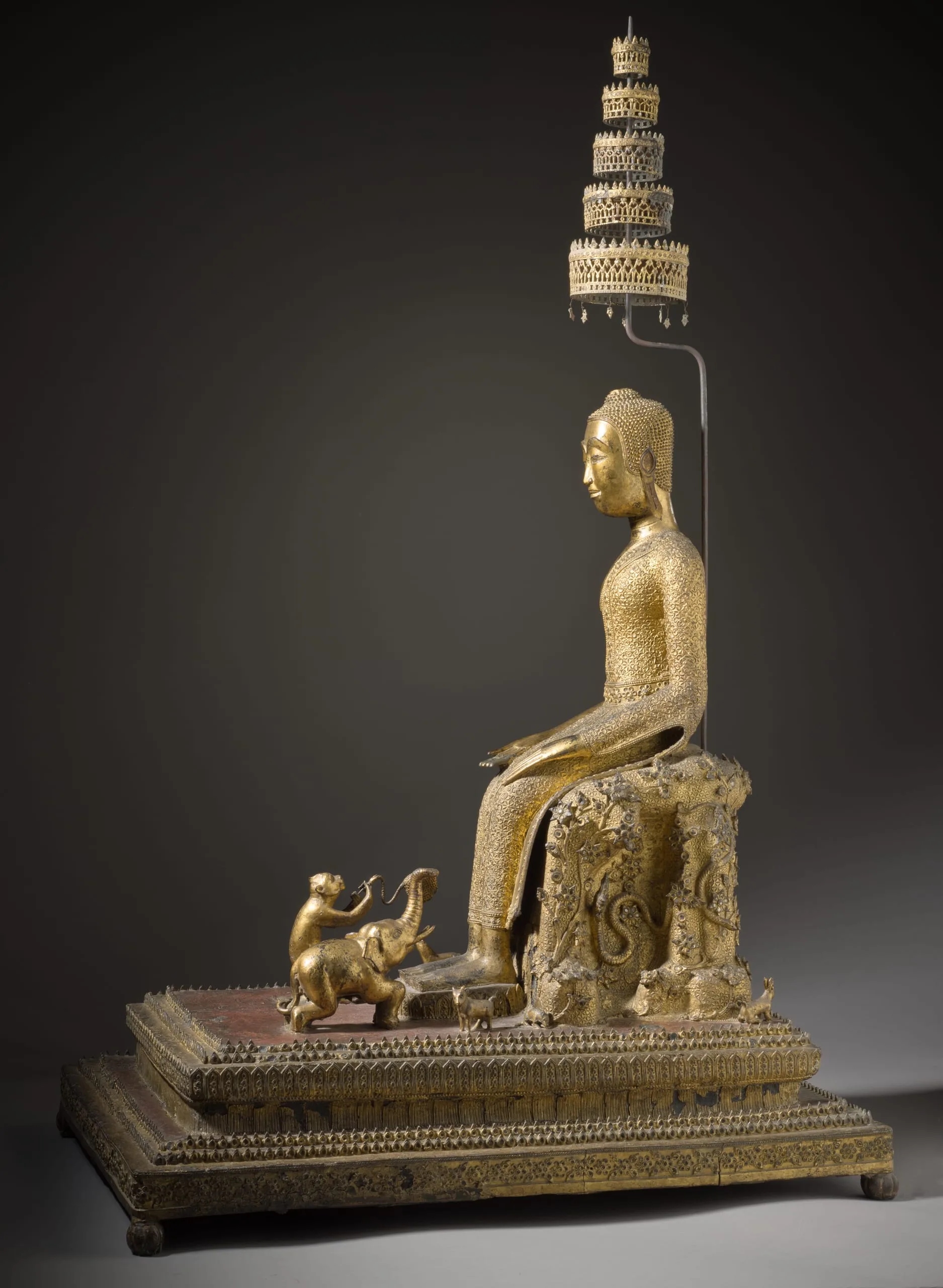
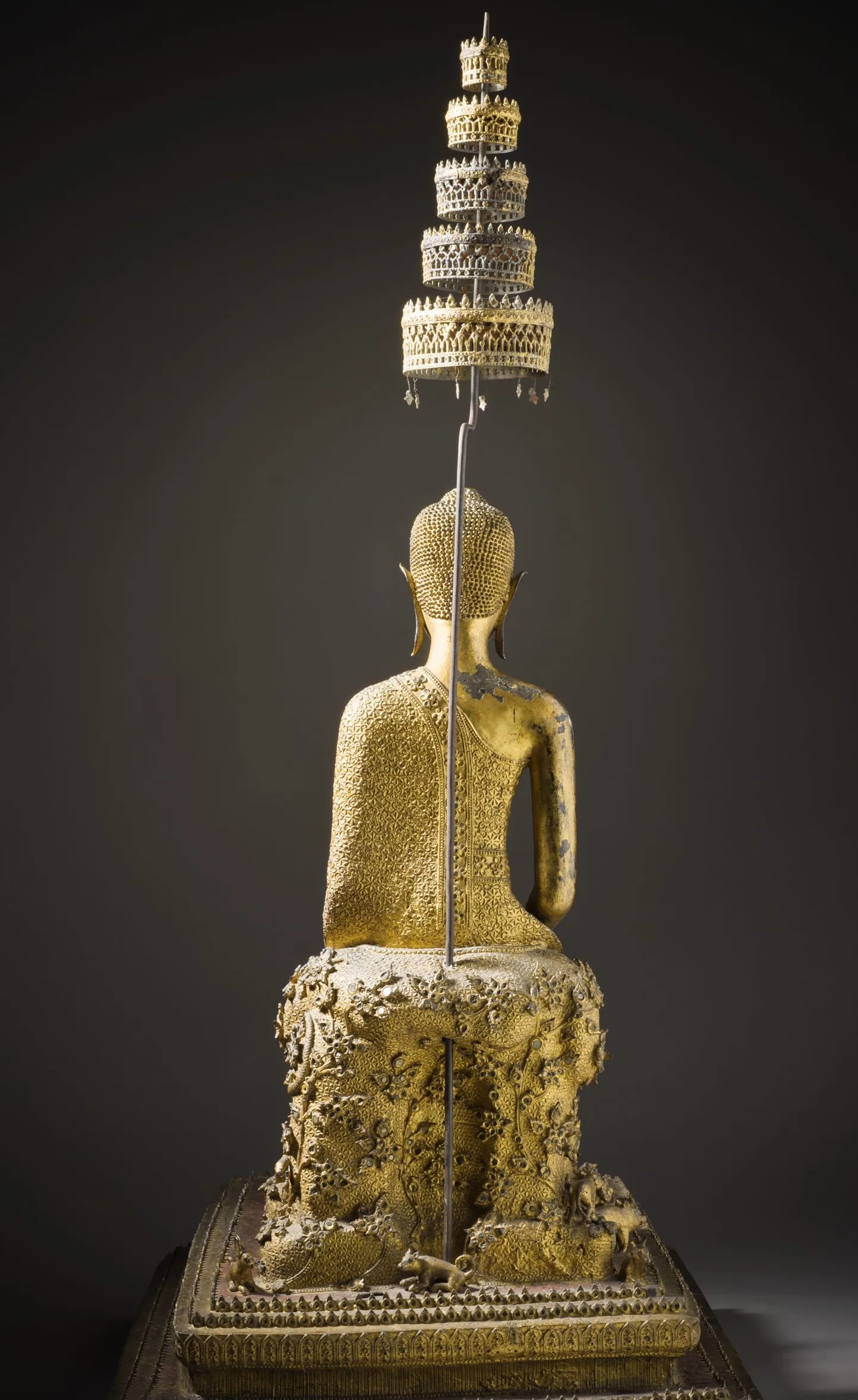
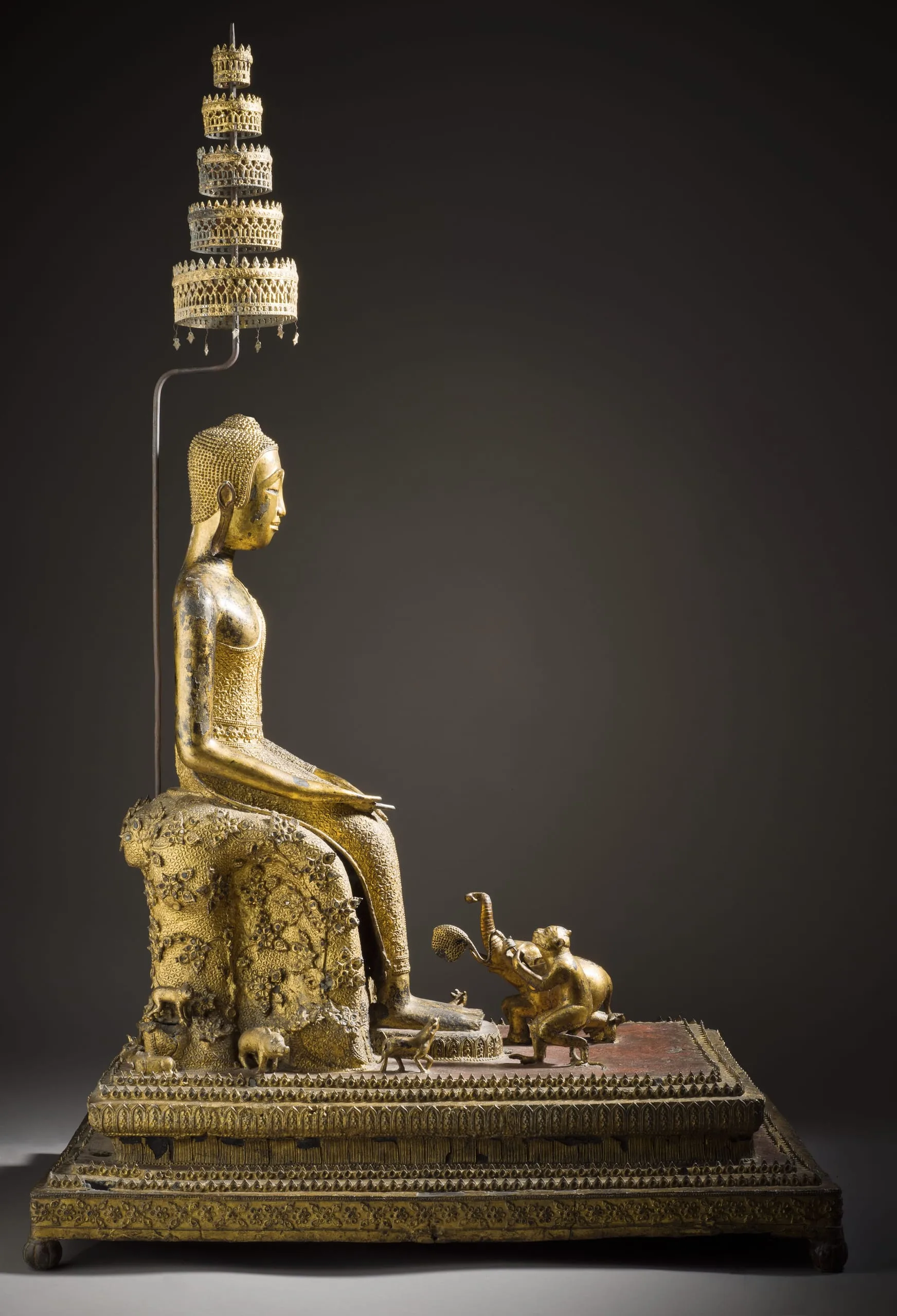
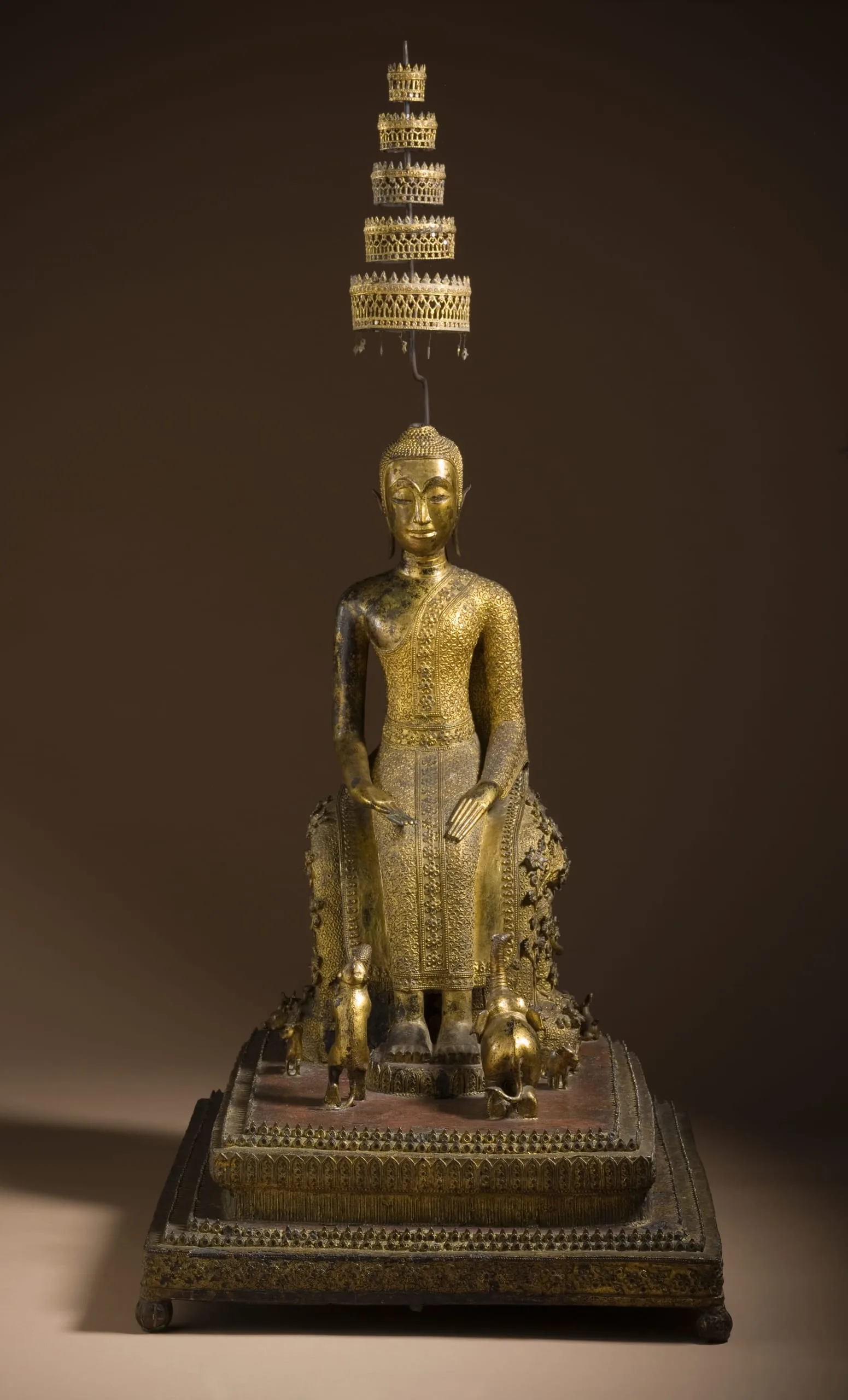
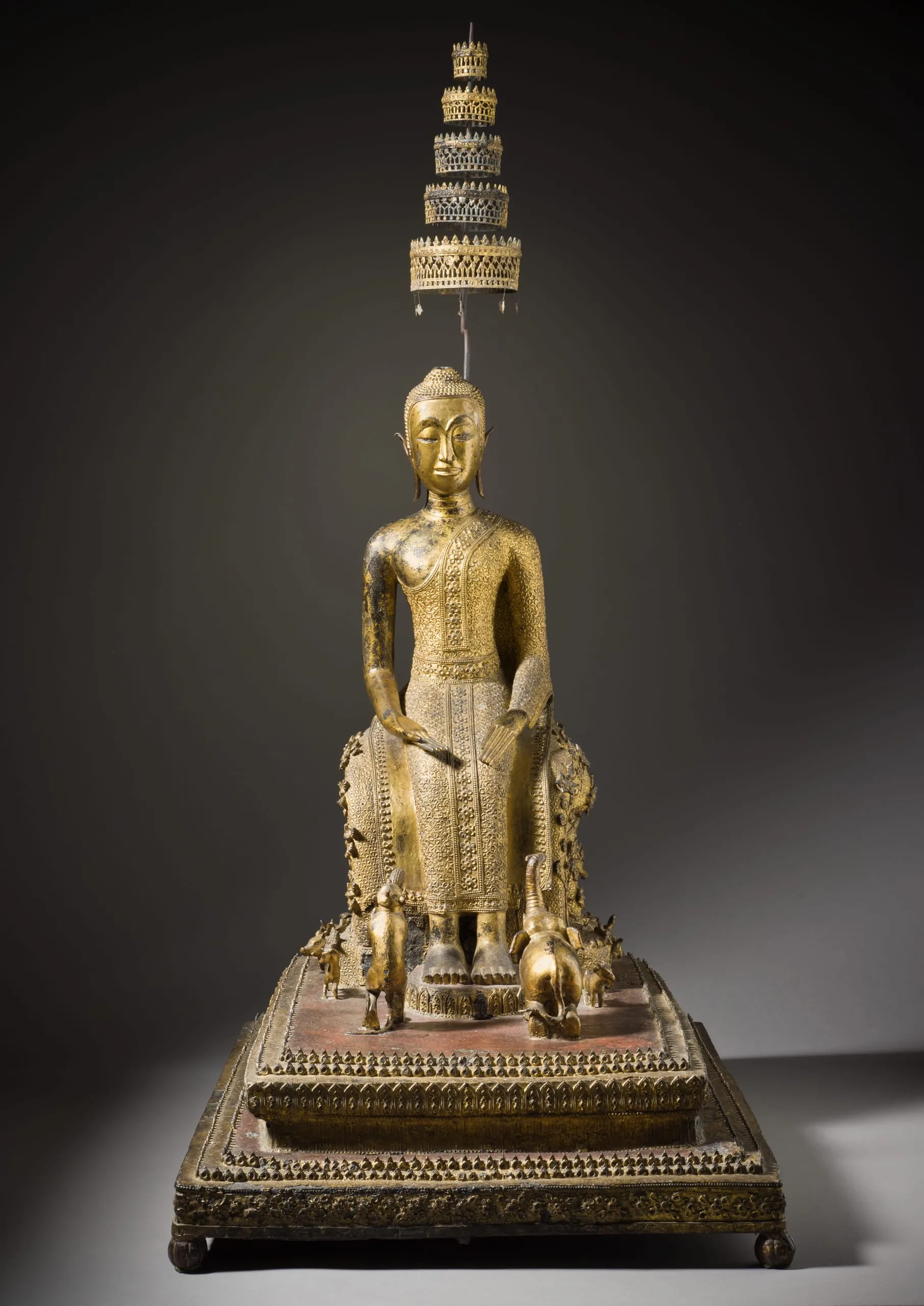
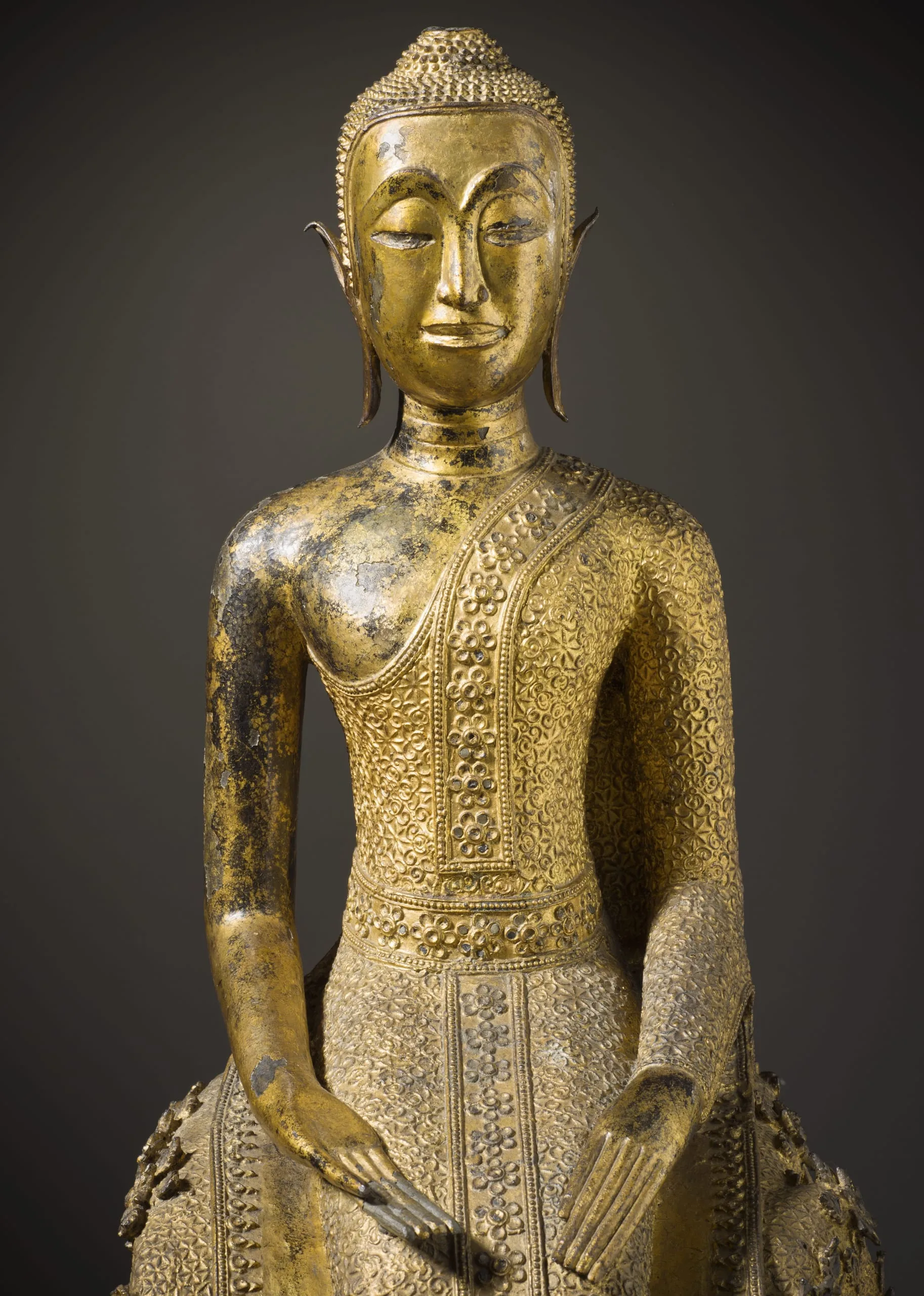
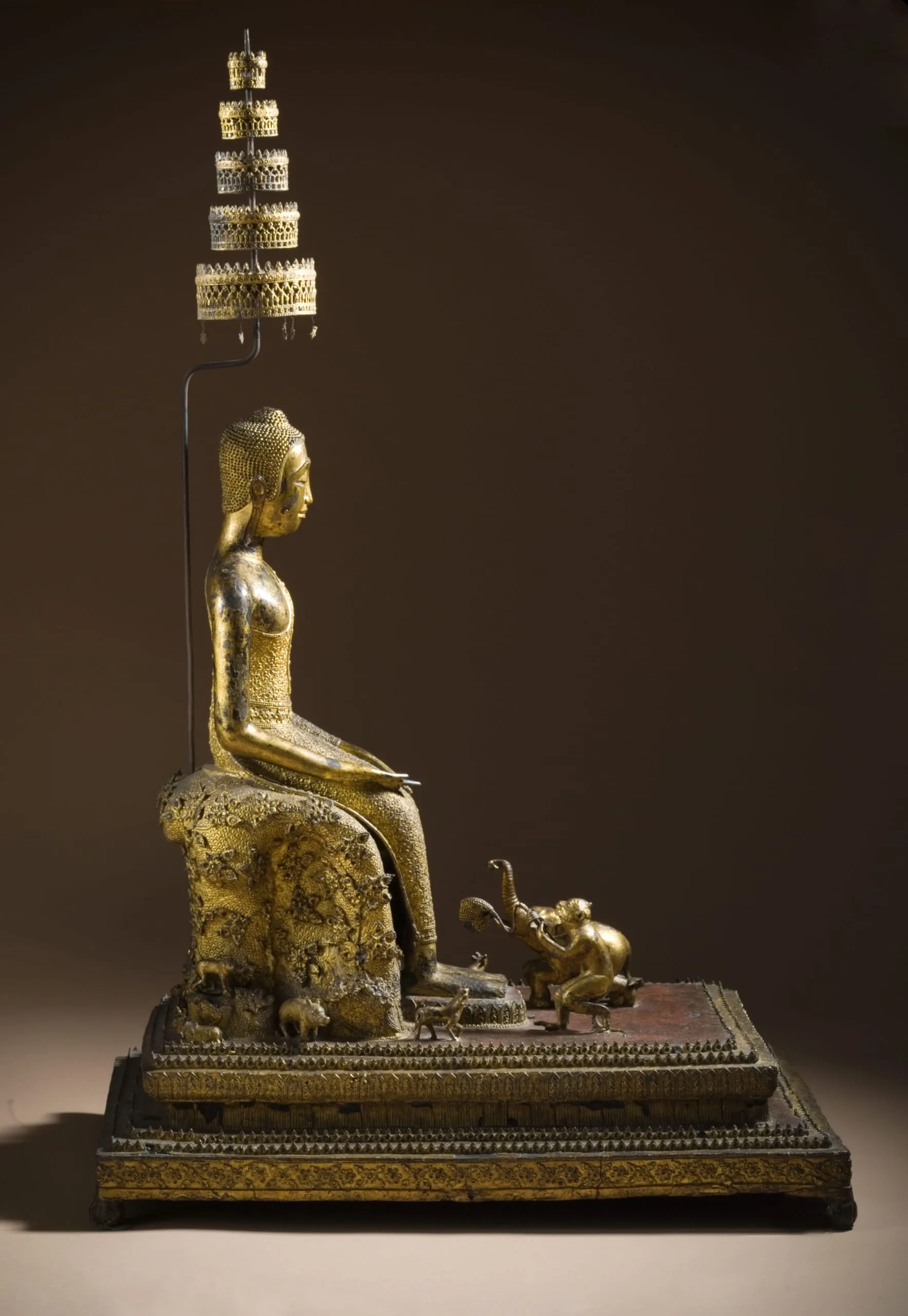
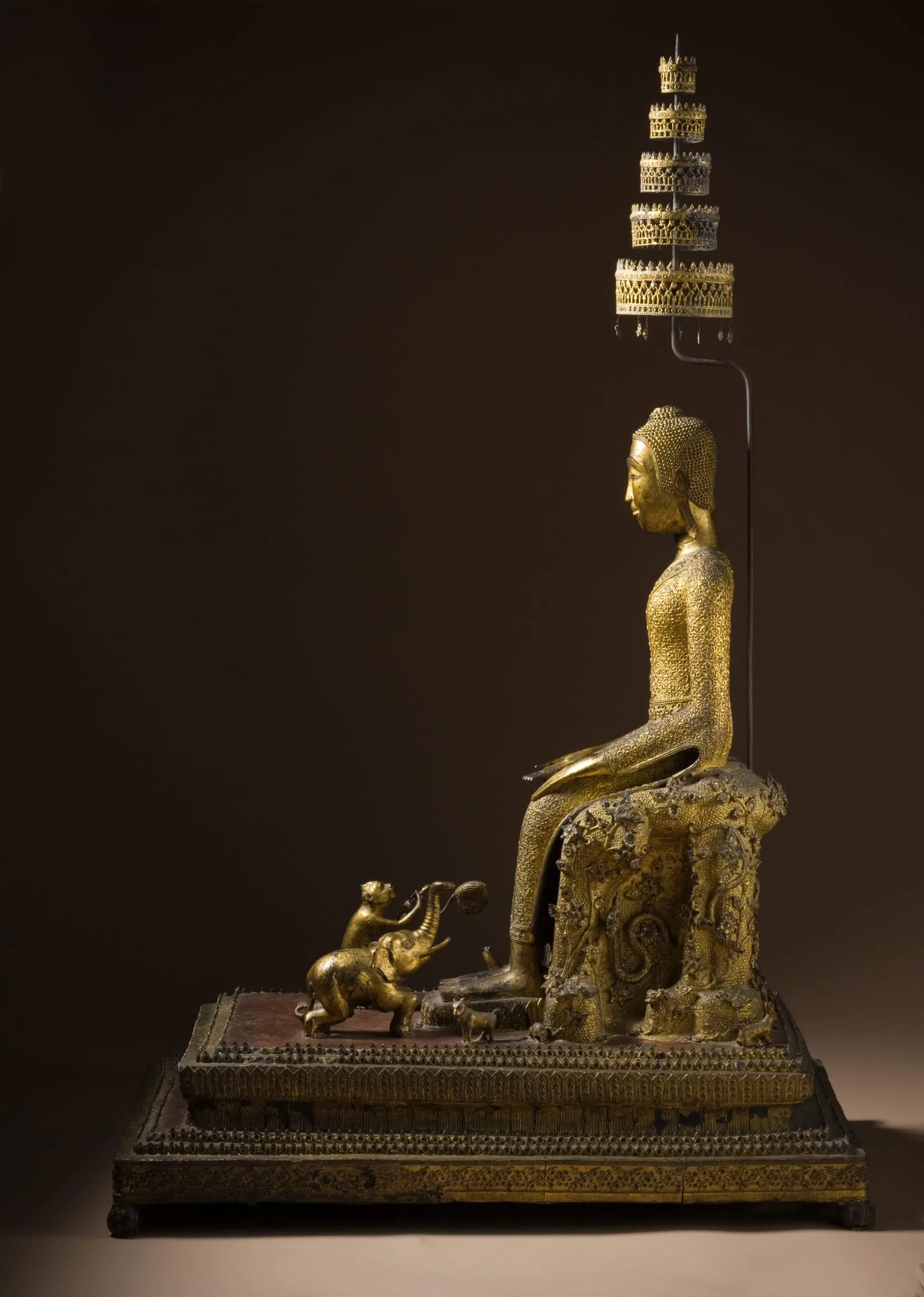
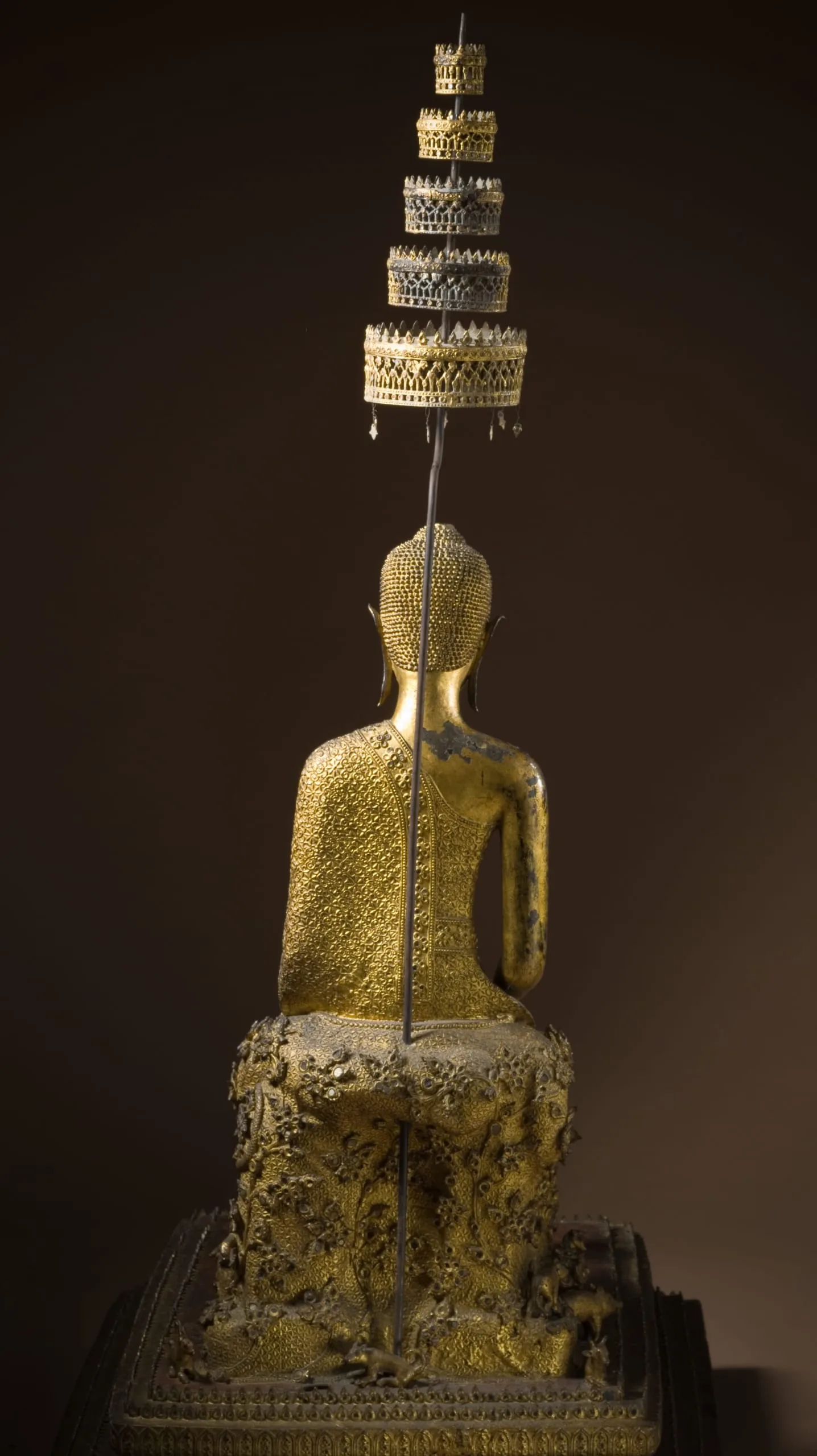
- Monkey’s Gift of Honey to Buddha Shakyamuni in the Parileyyaka Forest
- Date Made
- 19th century
- Medium
- Gilt copper alloy with lacquer
- Dimensions
- 45 1/2 x 20 1/4 x 28 3/4 in. (115.57 x 51.44 x 73.03 cm)
- Accession Number
- AC1993.53.1a-b
- Curatorial Notes
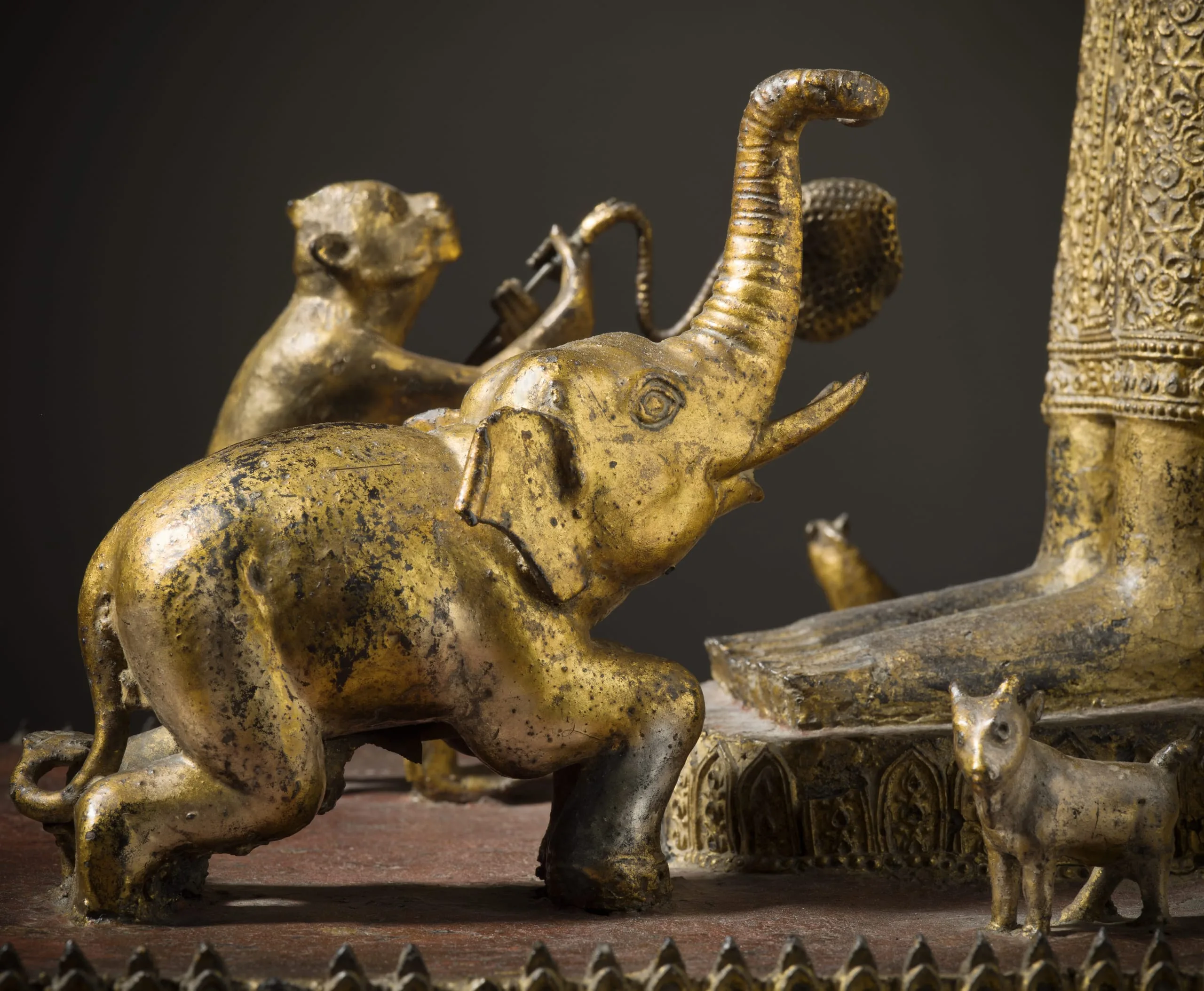
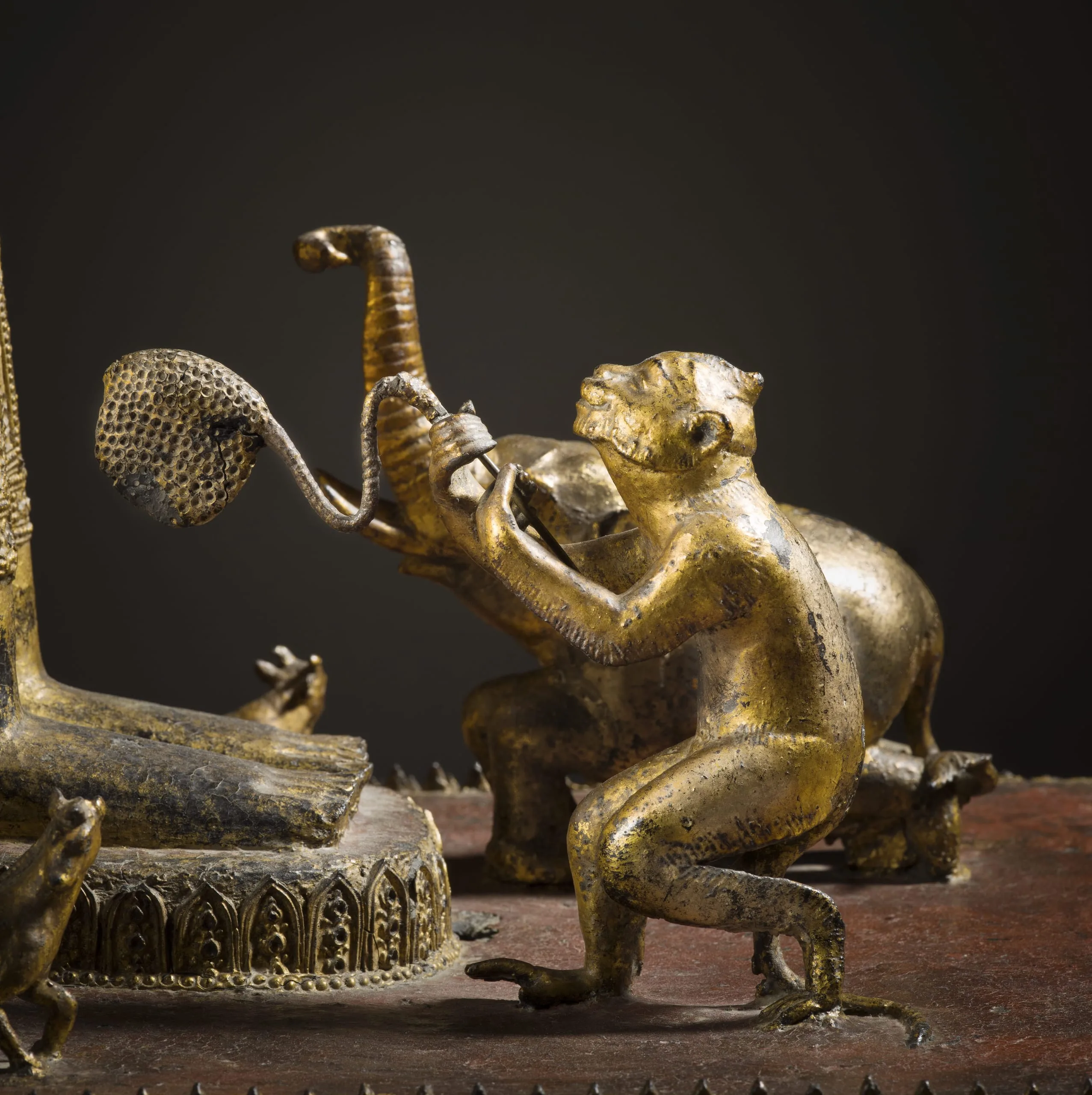
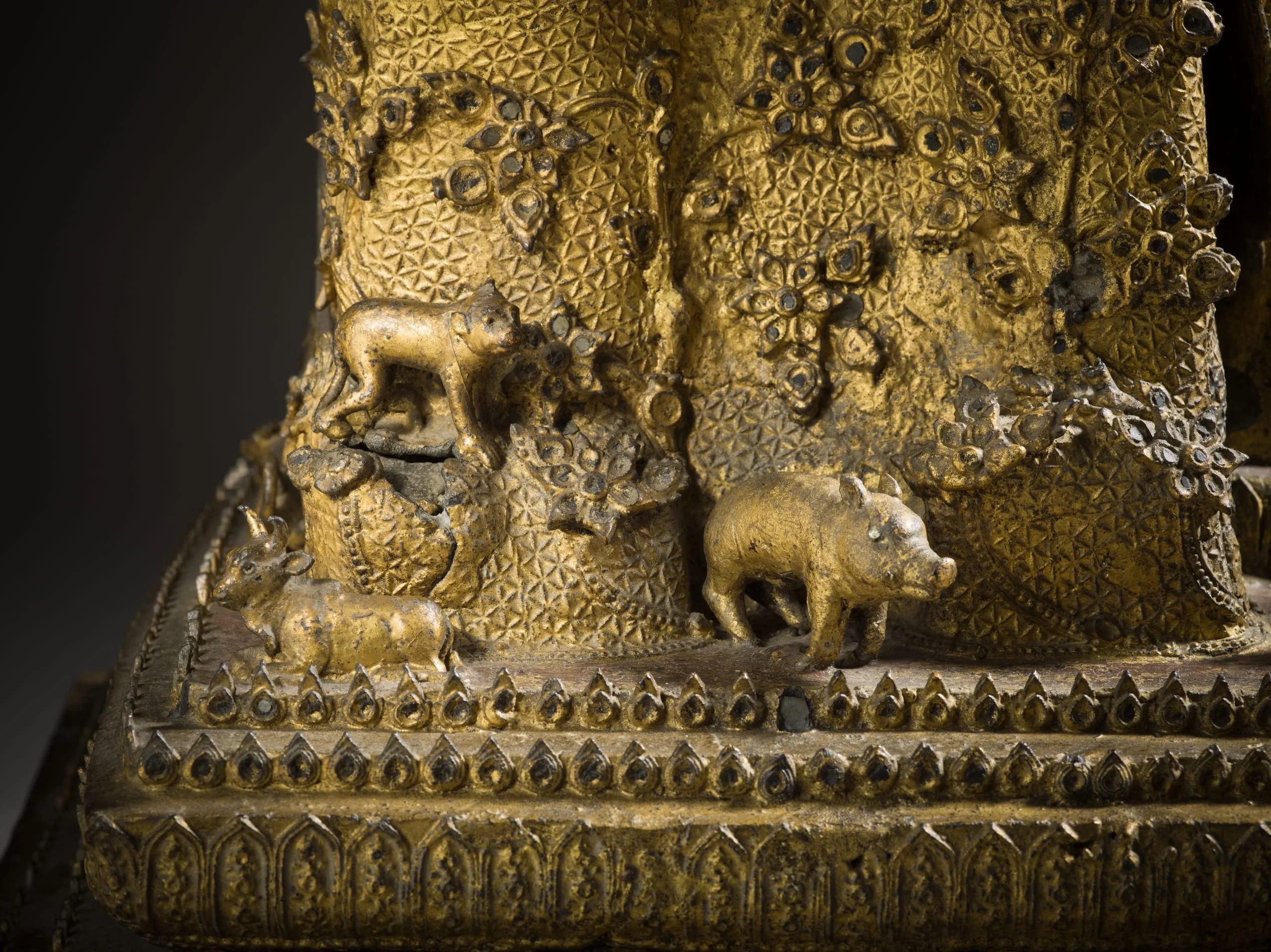
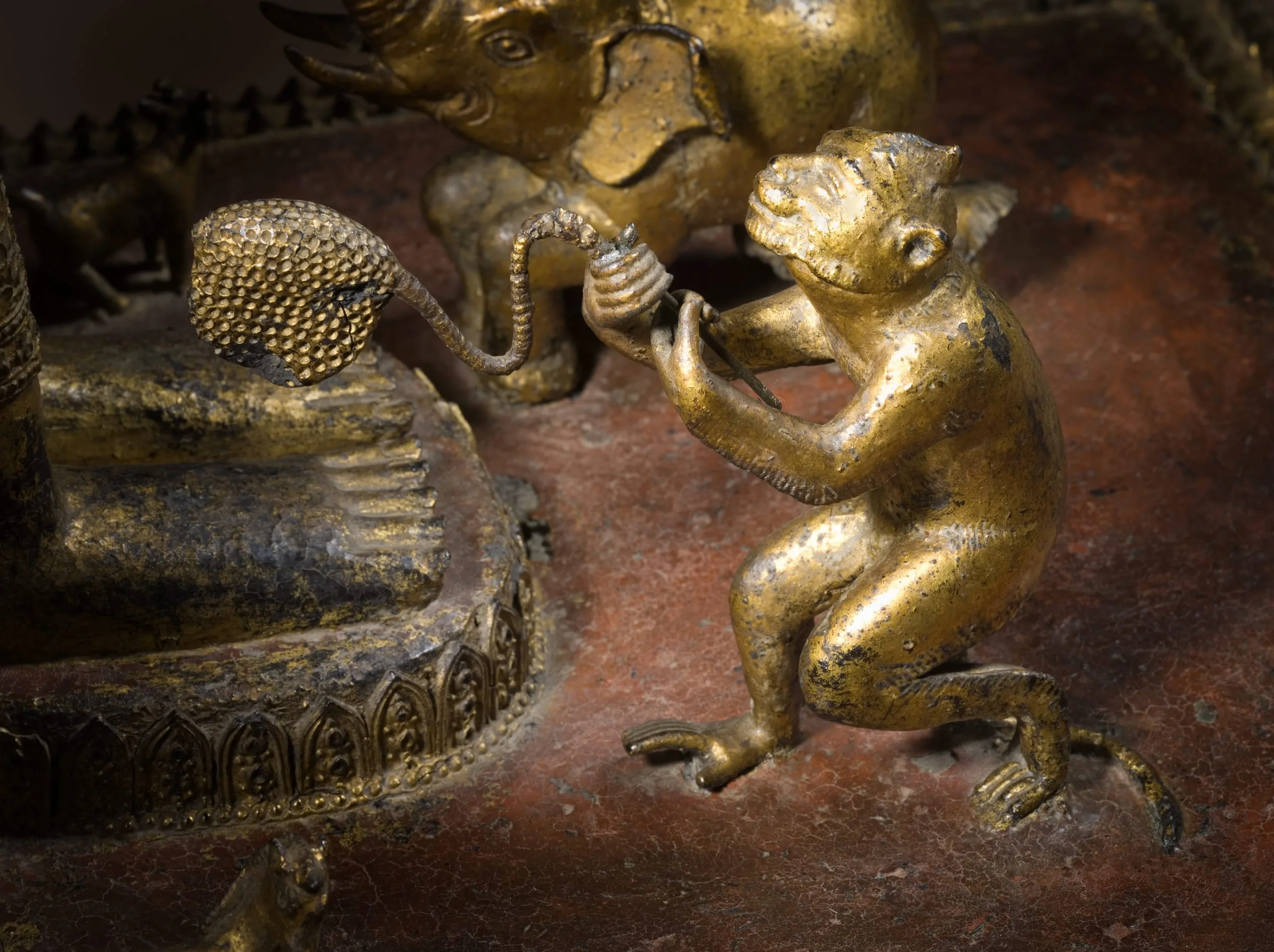
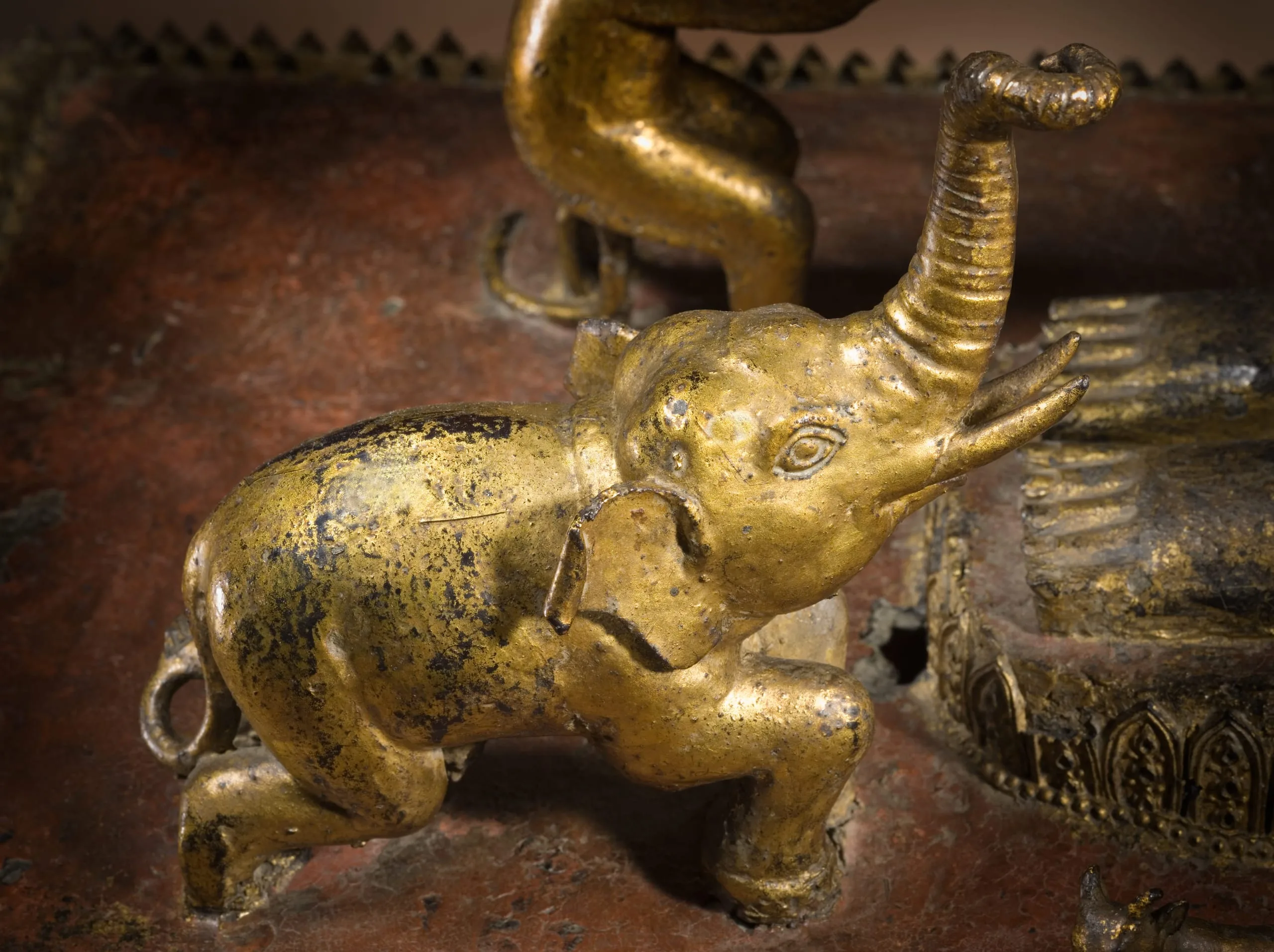
This statue depicts a legend from the life of the Buddha. According to the Thai version of this tale, when the Buddha was residing at the city of Kosambi near present-day Allahabad in northern India, his disciples often quarreled among themselves. The Buddha was discouraged by their incessant bickering and went by himself to the Palileyyaka Forest to meditate and fast. One day a monkey lord was frolicking in the trees and saw a lord of the elephants attending the Buddha and bringing him water. The monkey happened to glance upon a honeycomb and decided it would be fitting to offer it to the Buddha. The Buddha was deeply impressed by the animals’ devotion and was moved to break his fast. The monkey was so overjoyed that the Buddha accepted his gift that he went springing through the treetops, dancing with happiness, but fell and was killed. Due to his selfless offering of food to the Buddha, the monkey was immediately reborn into the highest heaven of sensual delight, the Heaven of the Thirty-Three Gods. Curiously, this legend was infrequently portrayed in the art of India, where the monkey’s offering of honey is nonetheless regarded as one of the Eight Great Miracles of the Buddha’s life (see M.77.19.1a-b). In Thailand during the 19th century, representations of the legend became popular and were used in the context of ceremonies performed to prolong life.
- Selected Bibliography
Brown, Robert L. "Selections From the Southeast Asian Art Collection of the Los Angeles County Museum of Art." Arts of Asia 38 (3): 75-87 (May-June 2008)
- Brown, Robert L. "Telling the Story in Art of the Monkey's Gift of Honey to the Buddha." Bulletin of the Asia Institute New Series/23 (2009): 43-52.
Brown, Robert L. Southeast Asian Art at LACMA: An Online Scholarly Catalogue. Los Angeles: Los Angeles County Museum of Art, 2013. Accessed June 25, 2024. http://seasian.catalog.lacma.org/.
- Little, Stephen, Tushara Bindu Gude, Karina Romero Blanco, Silvia Seligson, Marco Antonio Karam. Las Huellas de Buda. Ciudad de México : Instituto Nacional de Antropología e Historia, 2018.
- Little, Stephen, and Tushara Bindu Gude. Realms of the Dharma: Buddhist Art across Asia. Los Angeles: Los Angeles County Museum of Art, 2025.