LACMA

ShopMembershipMyLACMATickets
LACMA
Los Angeles County Museum of Art
5905 Wilshire Blvd.
Los Angeles, CA 90036
info@lacma.org
(323) 857-6000
Sign up to receive emails
Subscribe
© Museum Associates 2025

Museum Hours

Monday

11 am–6 pm

Tuesday

11 am–6 pm

Wednesday

Closed

Thursday

11 am–6 pm

Friday

11 am–8 pm

Saturday

10 am–7 pm

Sunday

10 am–7 pm


  • About LACMA
  • Jobs
  • Building LACMA
  • Host An Event
  • Unframed
  • Press
  • FAQs
  • Log in to MyLACMA
  • Privacy Policy
© Museum Associates 2025
Collections

Unknown
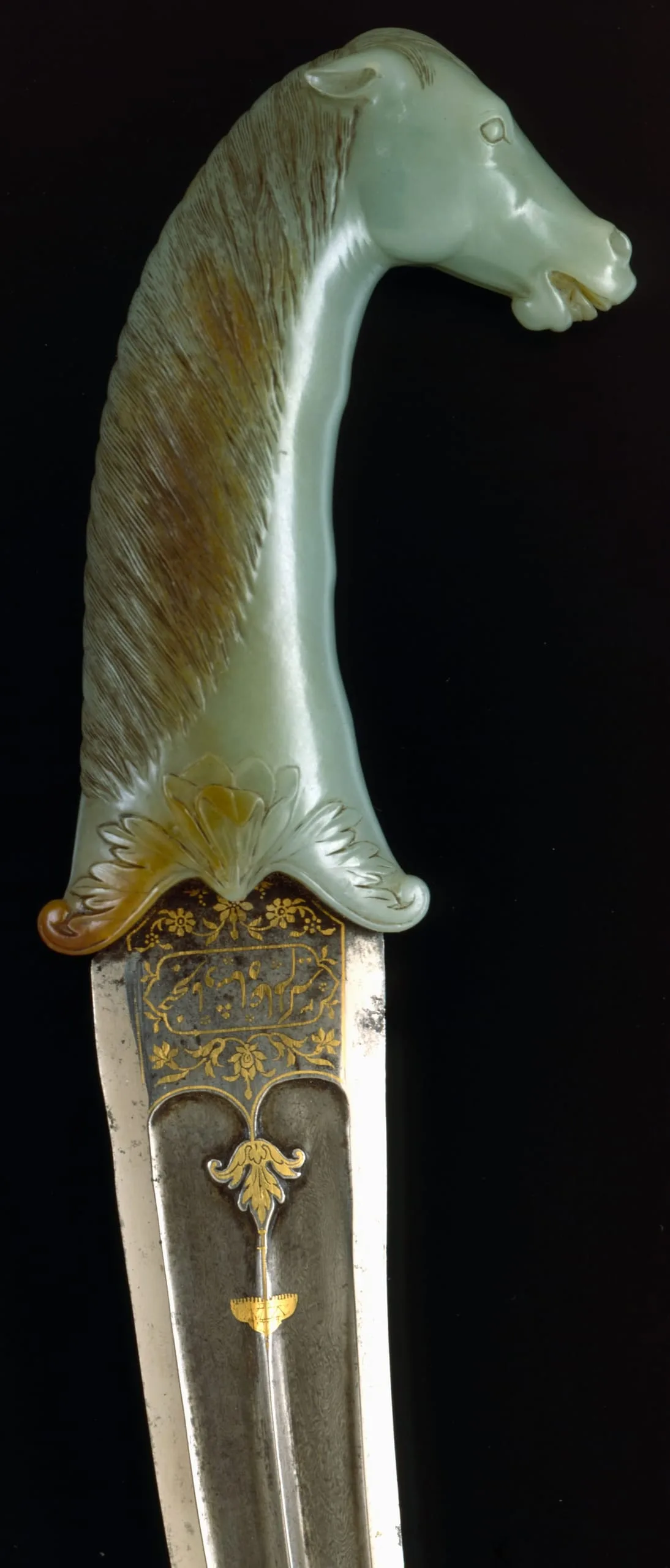
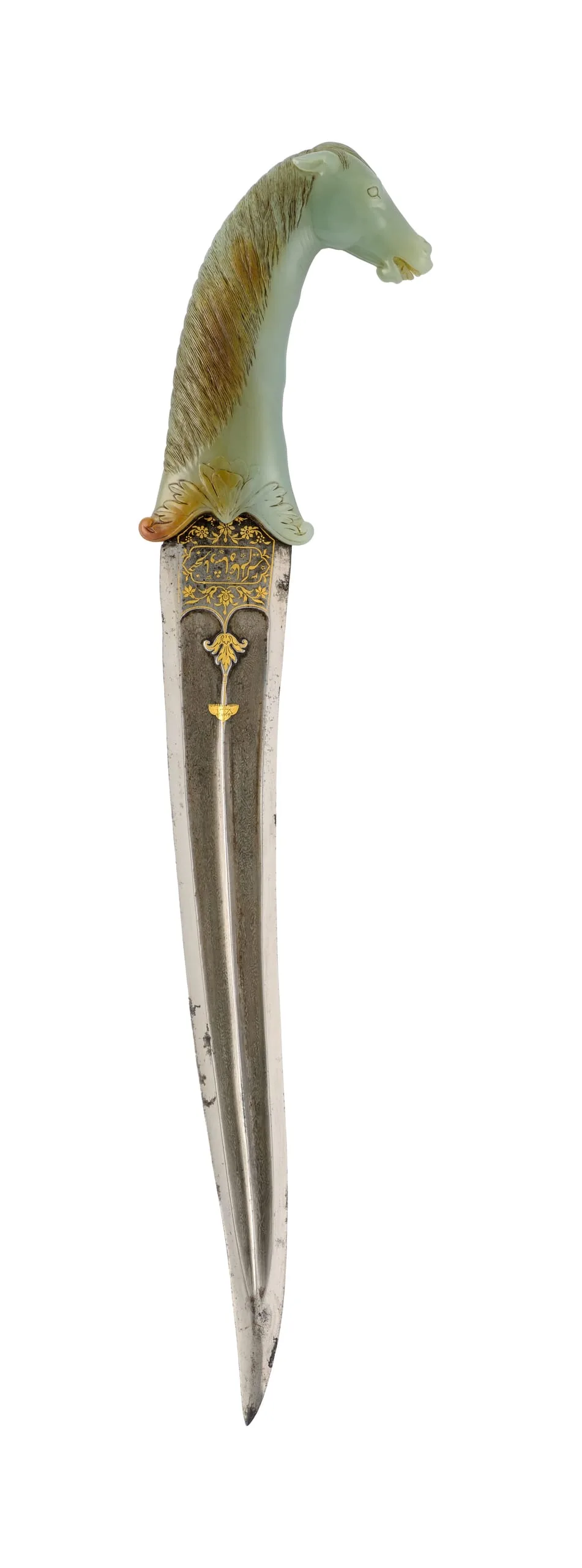
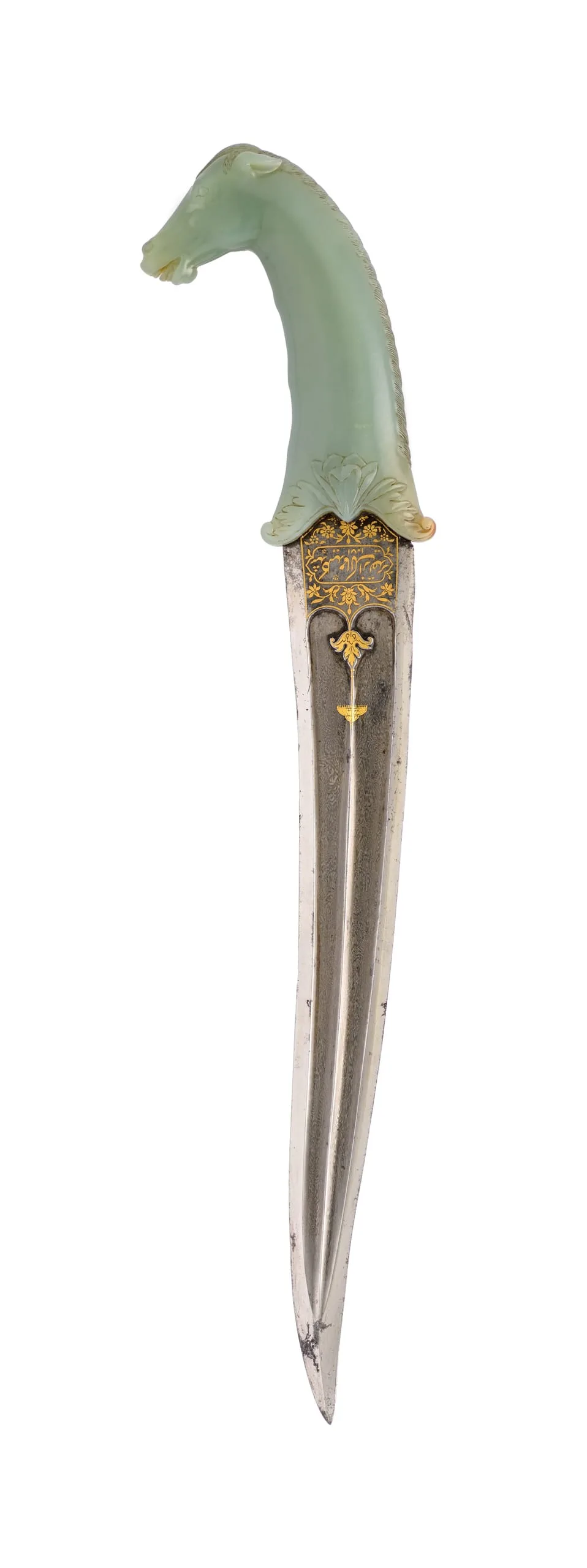
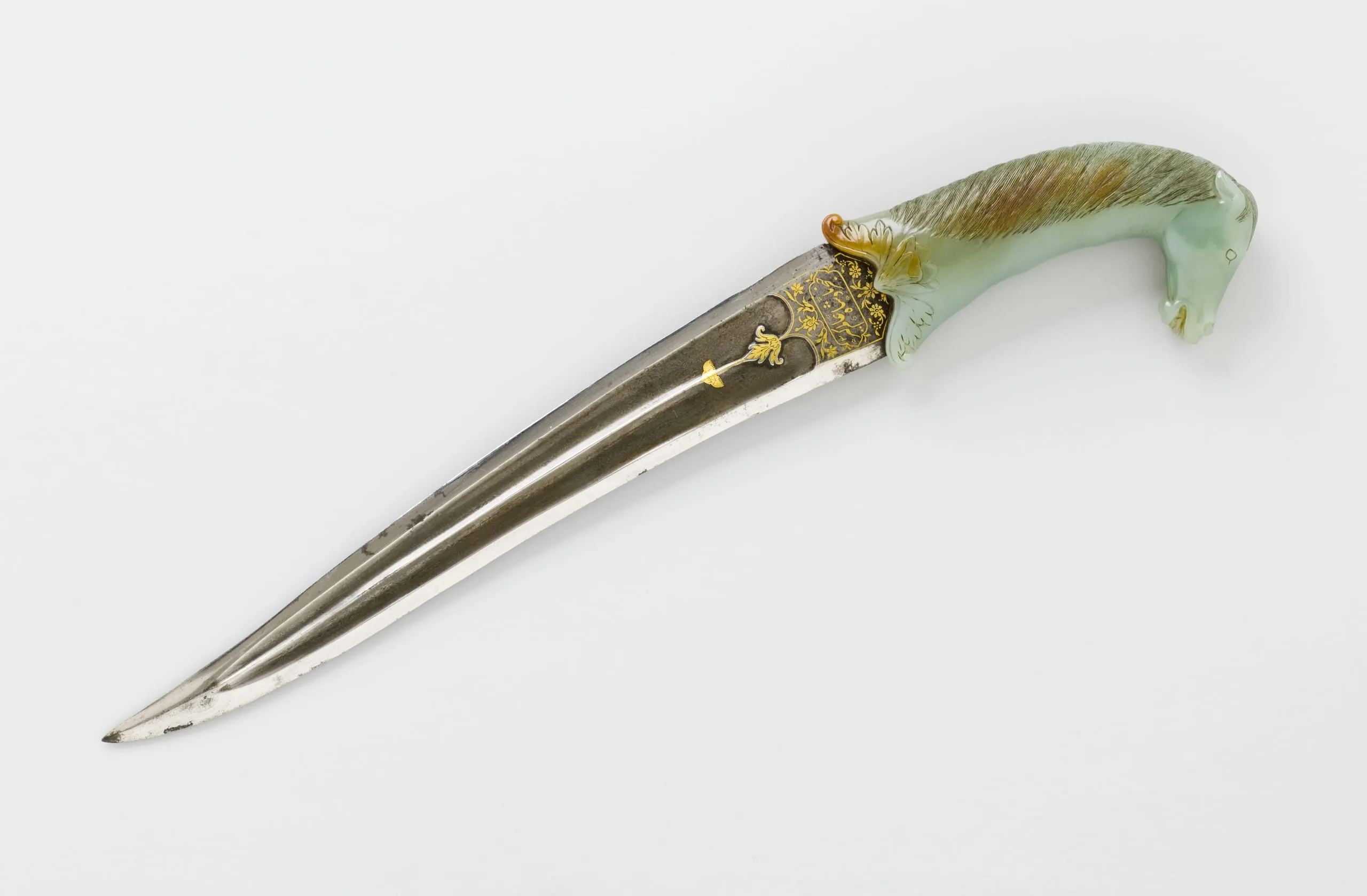
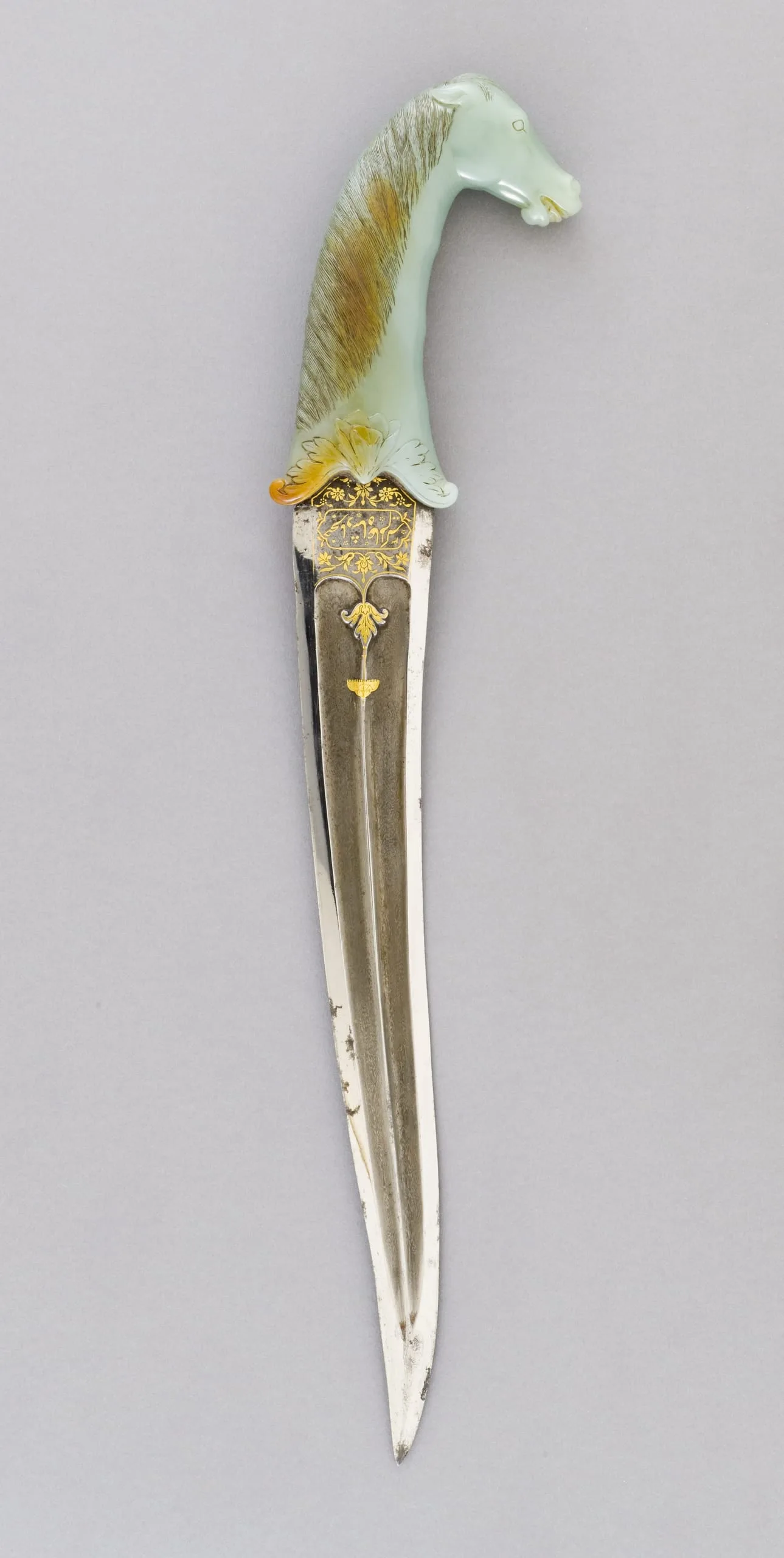
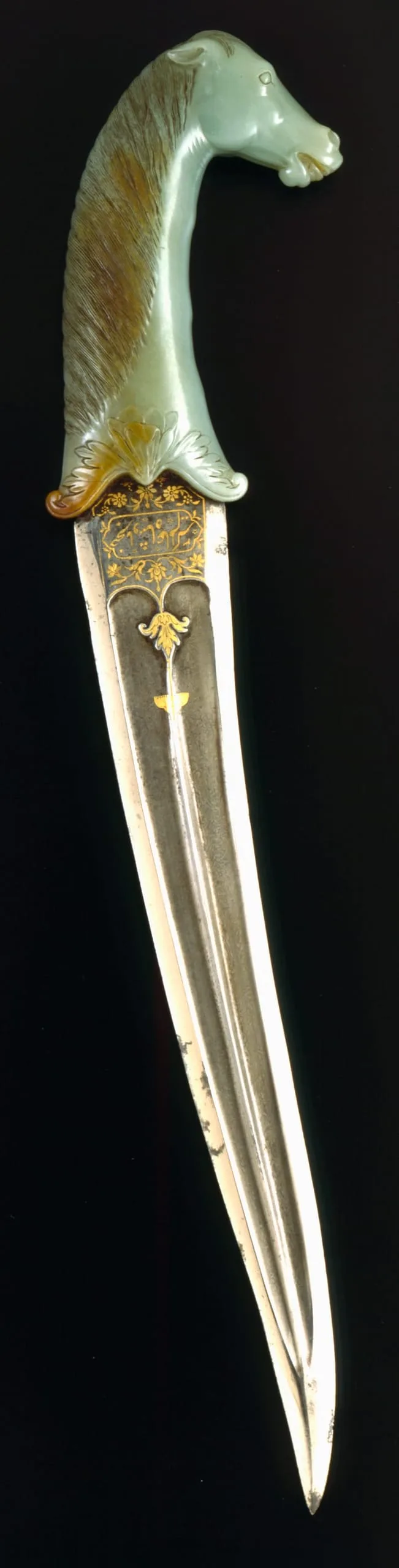
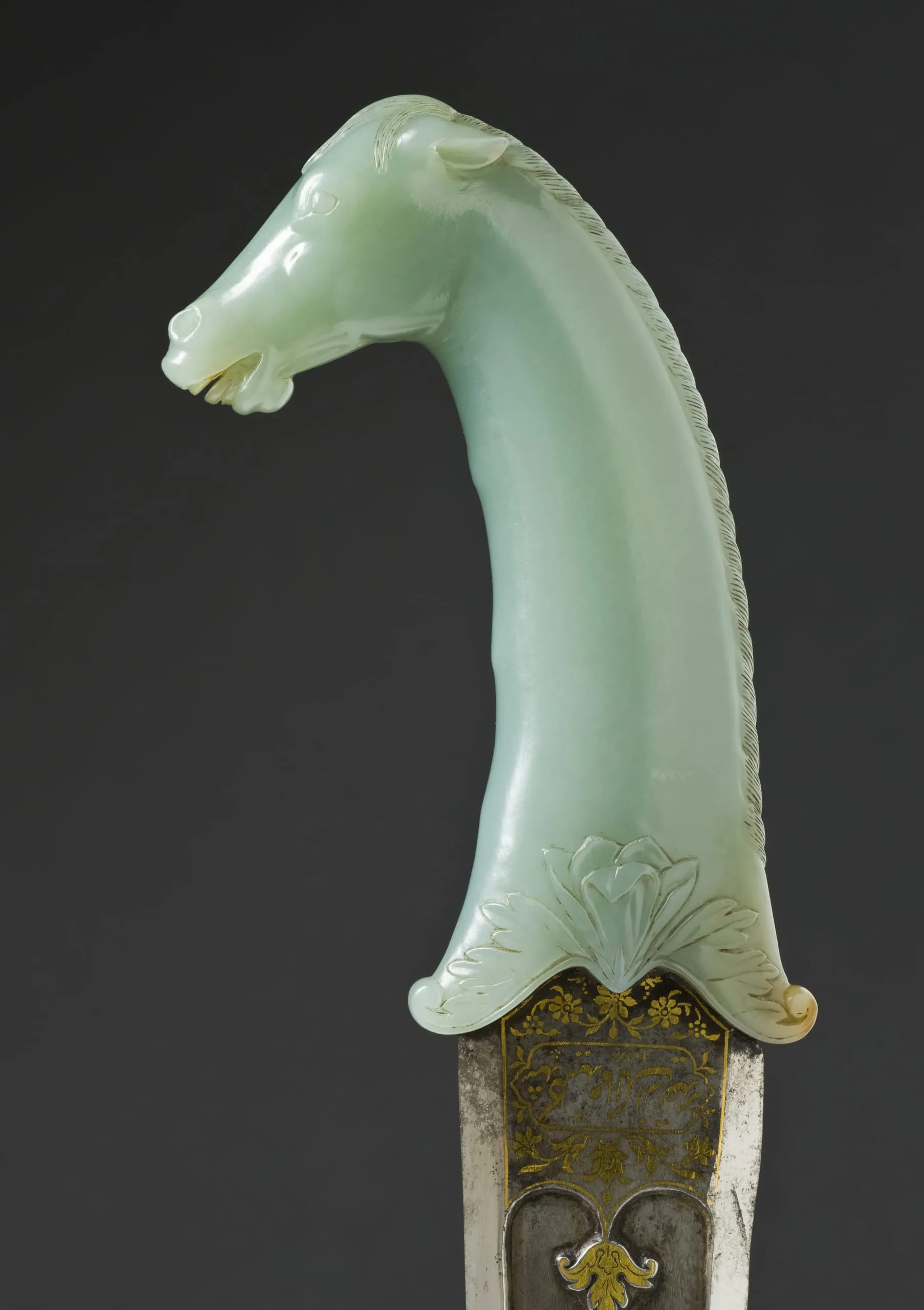
Dagger (khanjar) of Emperor Aurangzeb (reigned 1658–1707) and sheathDated 1660-1661

Not on view
Decorative dagger with a long steel blade featuring gold inlay near the hilt and a carved celadon jade handle with a curved pistol-grip form
Dagger with pale green jade hilt carved in the form of a horse head, brown fur or hair inlay along the neck, gold-inlaid filigree quillon, and a double-edged steel blade tapering to a point.
Dagger with pale green jade hilt carved in the form of a horse head, gold-inlaid decorative collar with floral motifs, and a double-edged steel blade tapering to a point.
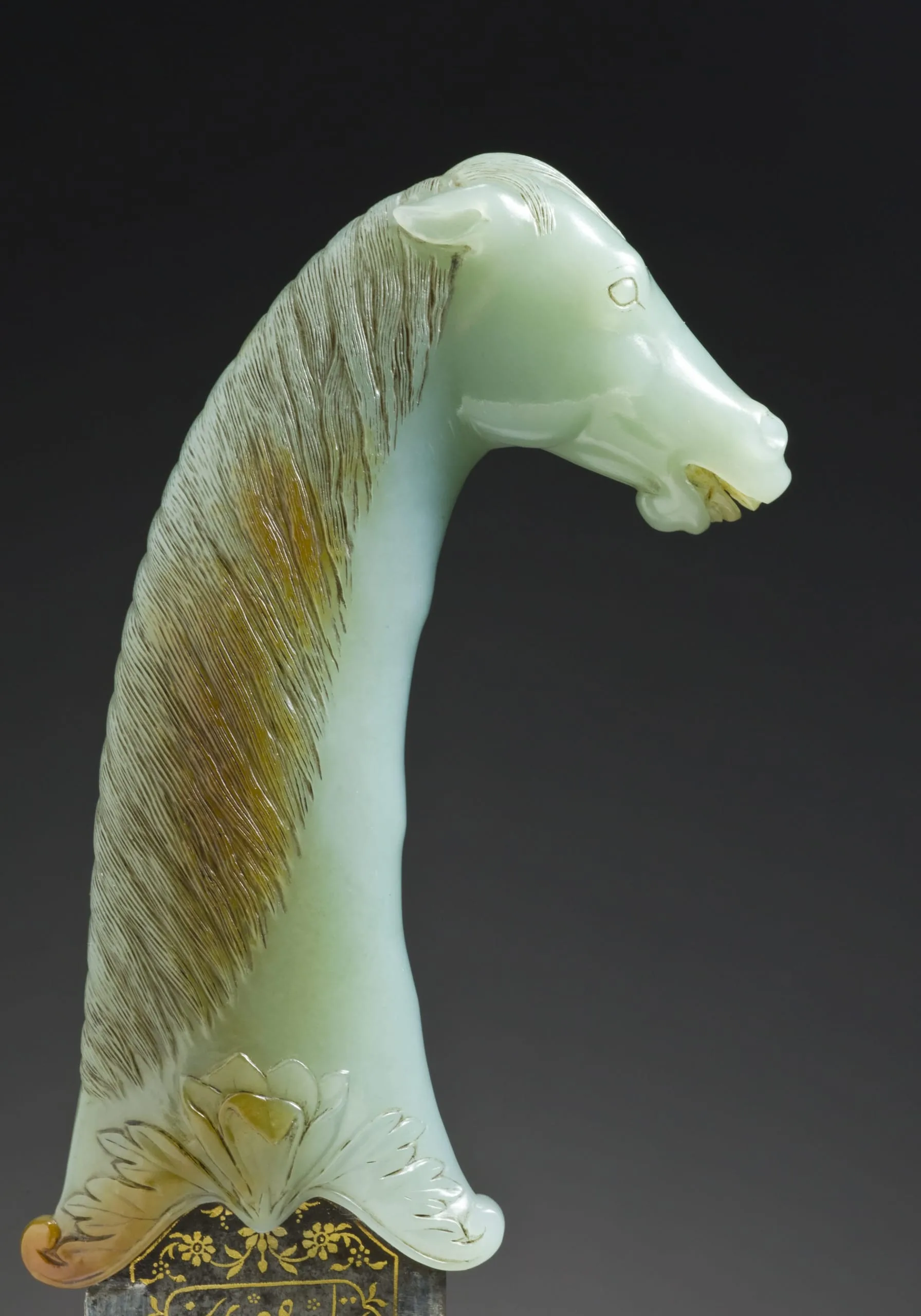
Dagger with pale celadon jade hilt carved in the form of a horse head with arched neck, smooth polished surface with incised mane detail; steel blade spine decorated with gold-inlaid floral scrollwork.
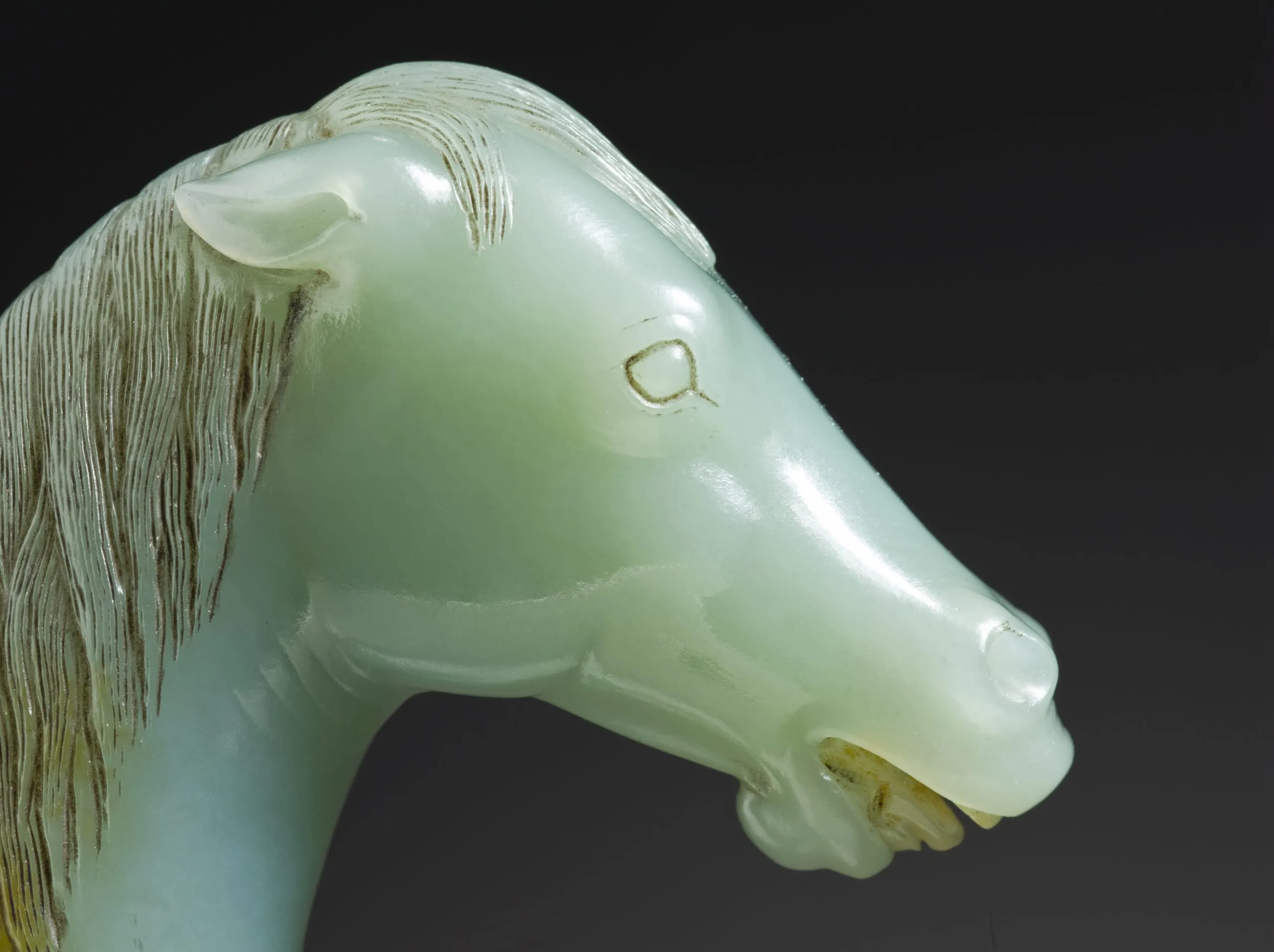
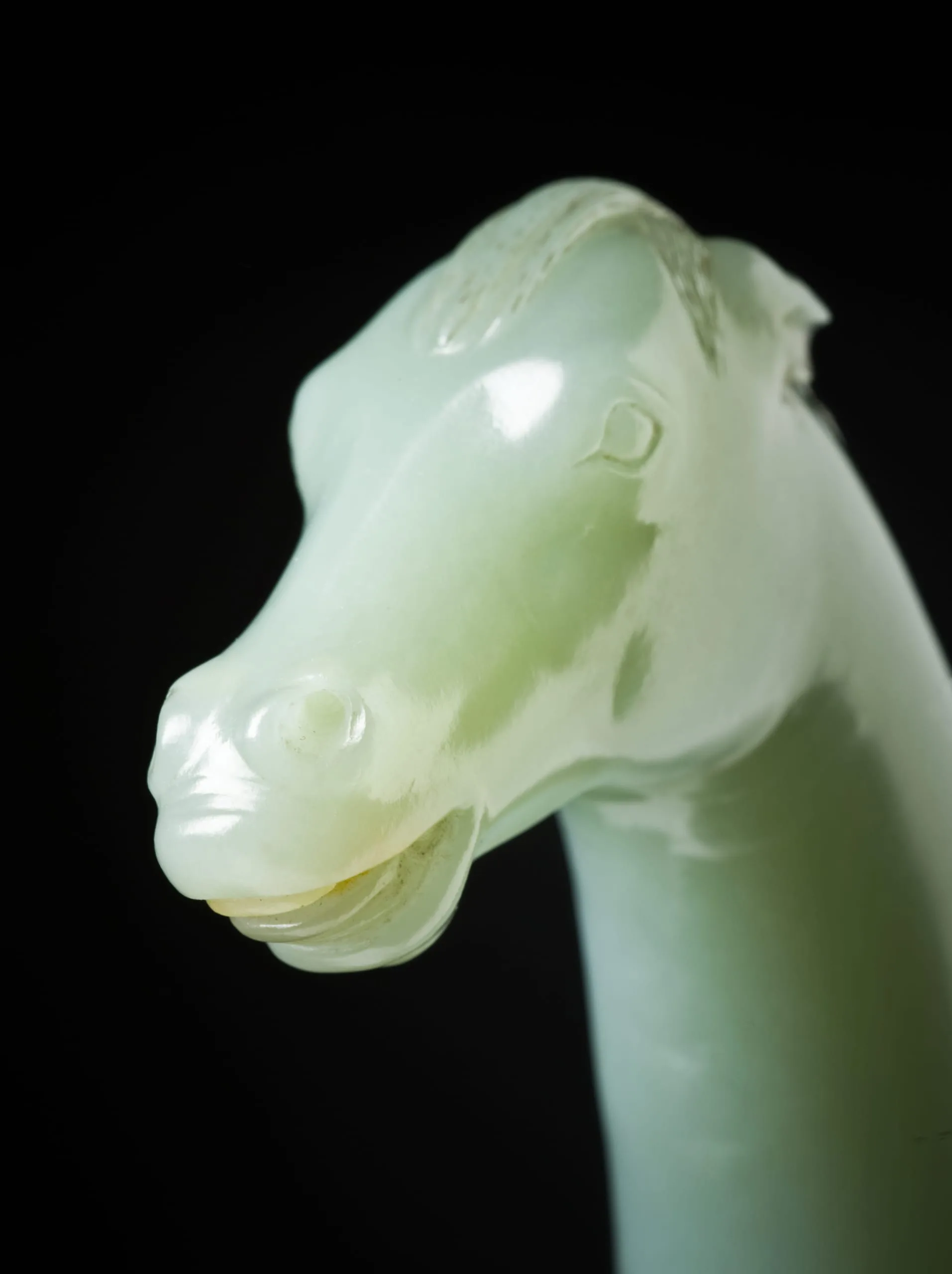
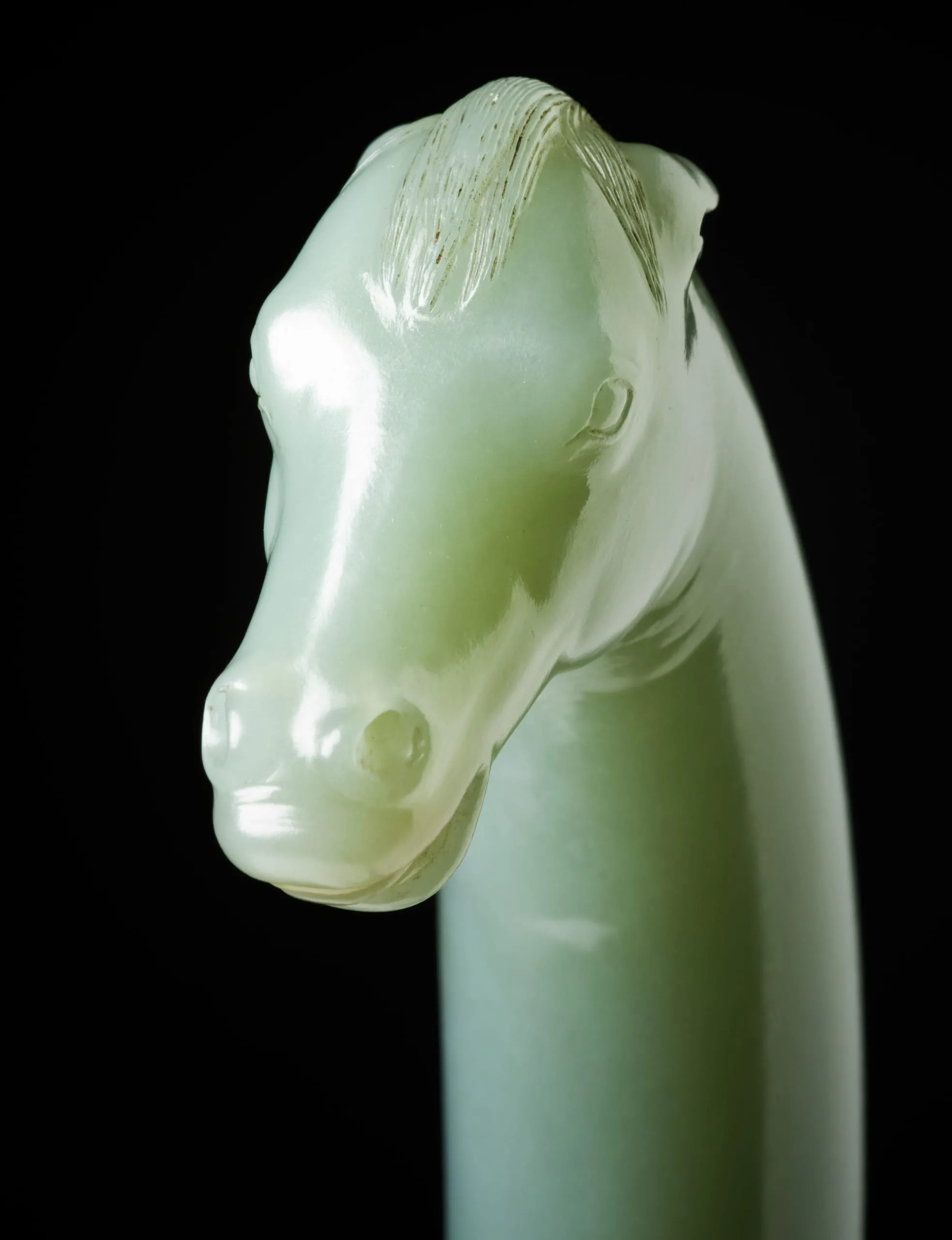
Jade carving of a horse's head and neck in pale celadon green nephrite, with finely incised mane and eye details, polished to a smooth lustrous surface against a dark background.
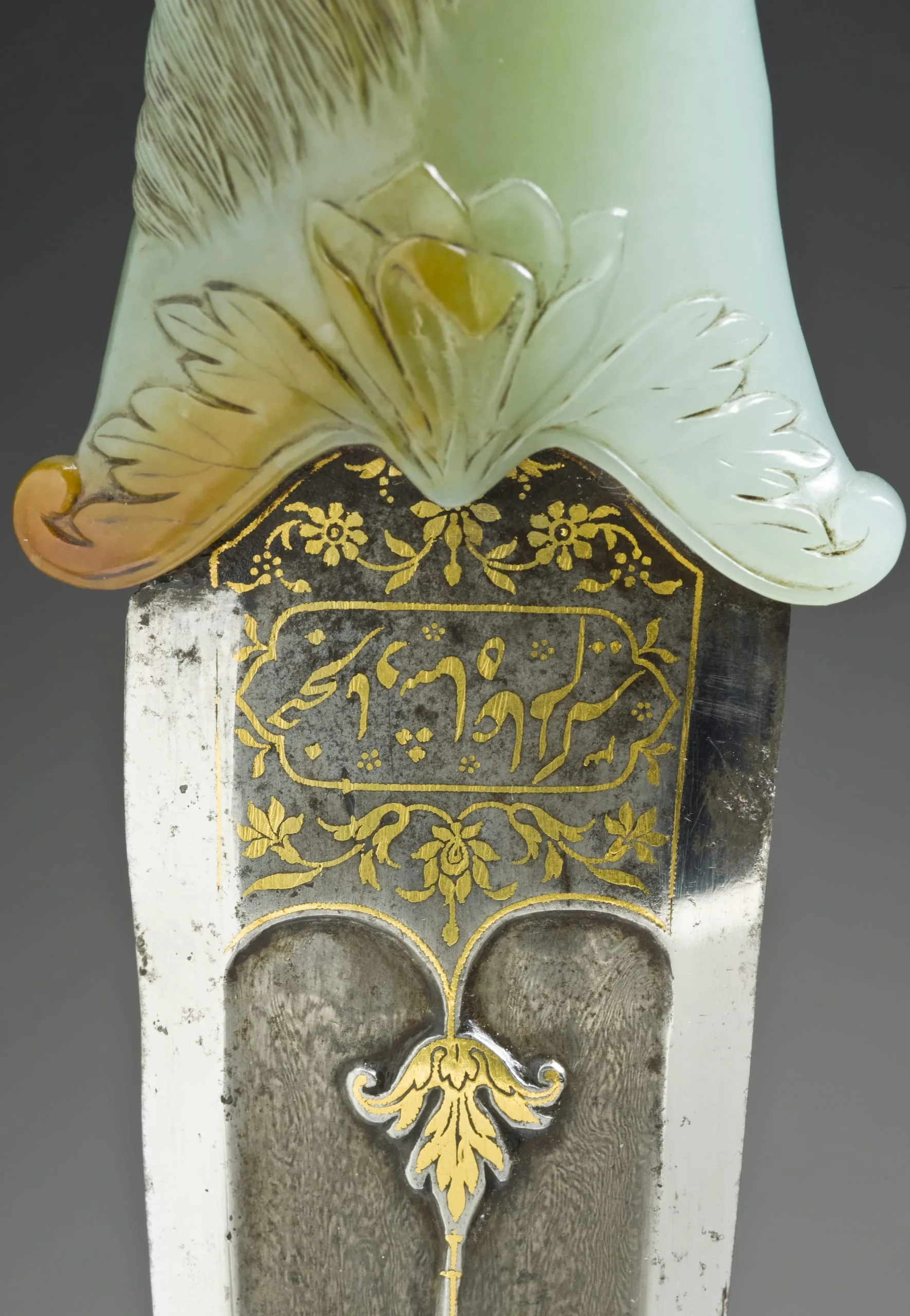
Close-up of a dagger hilt and upper blade; pale celadon jade handle carved with foliate and floral relief meets a steel blade inlaid with gold koftgari decoration, including a cartouche containing Nastaliq script surrounded by scrolling floral motifs.
Pale celadon jade carving of a horse head and neck, shown in profile, with finely incised mane striations and russet-toned inclusions; carved floral motifs at the base above a gilt-decorated dark mount.
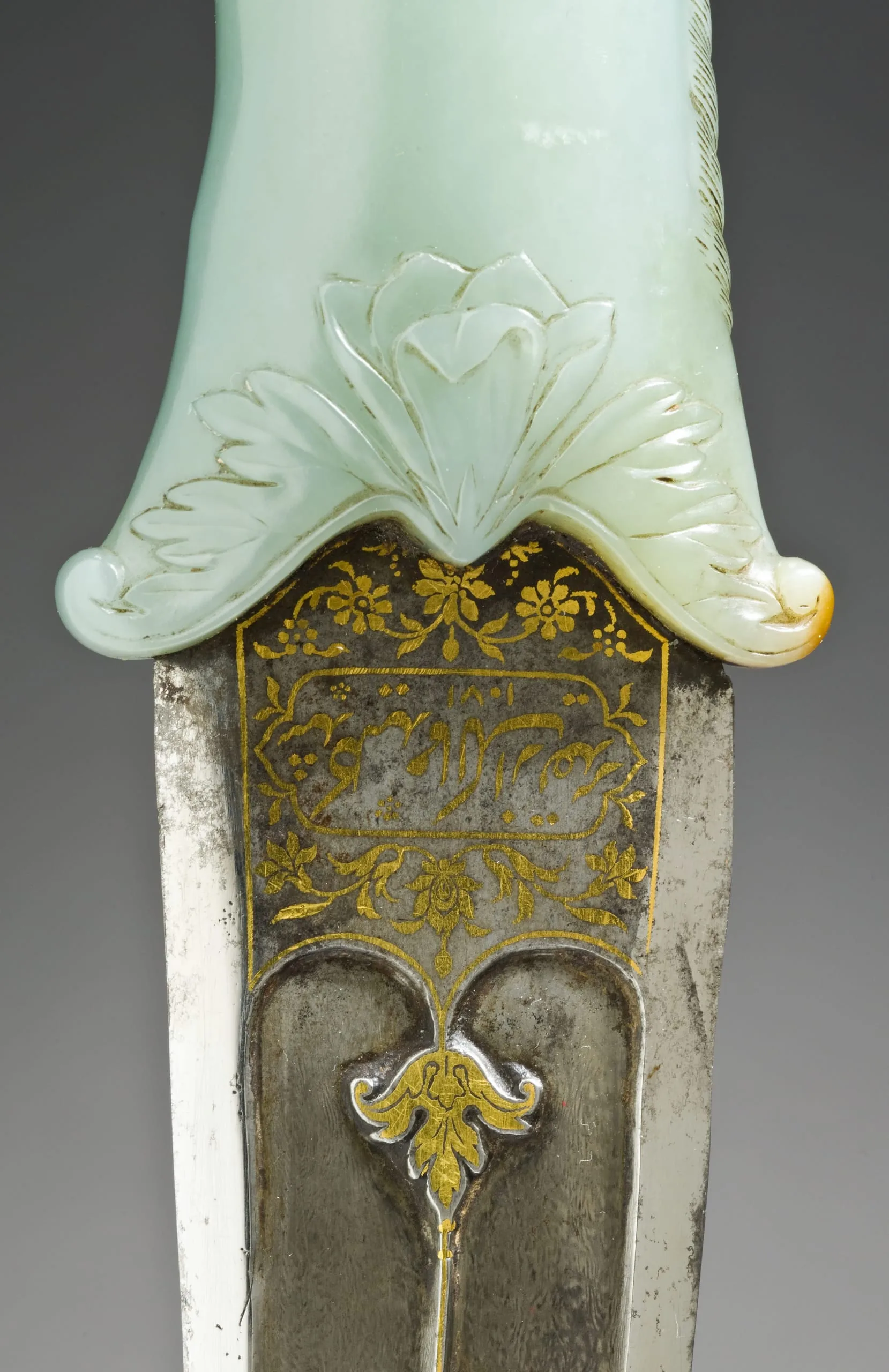
Close-up of a dagger hilt and blade junction, featuring a pale celadon jade handle carved with lotus and leaf forms, fitted to a steel blade with gold-inlaid floral and scrollwork decoration in koftgari technique.
Jade carving of a horse head and neck in pale celadon green, shown in close-up profile against a black background, with polished surface and carved facial details including nostrils, eye, and slightly open mouth.
Jade carving of a horse's head and neck in pale celadon green nephrite, with finely incised mane, highly polished surface, photographed against a black background.
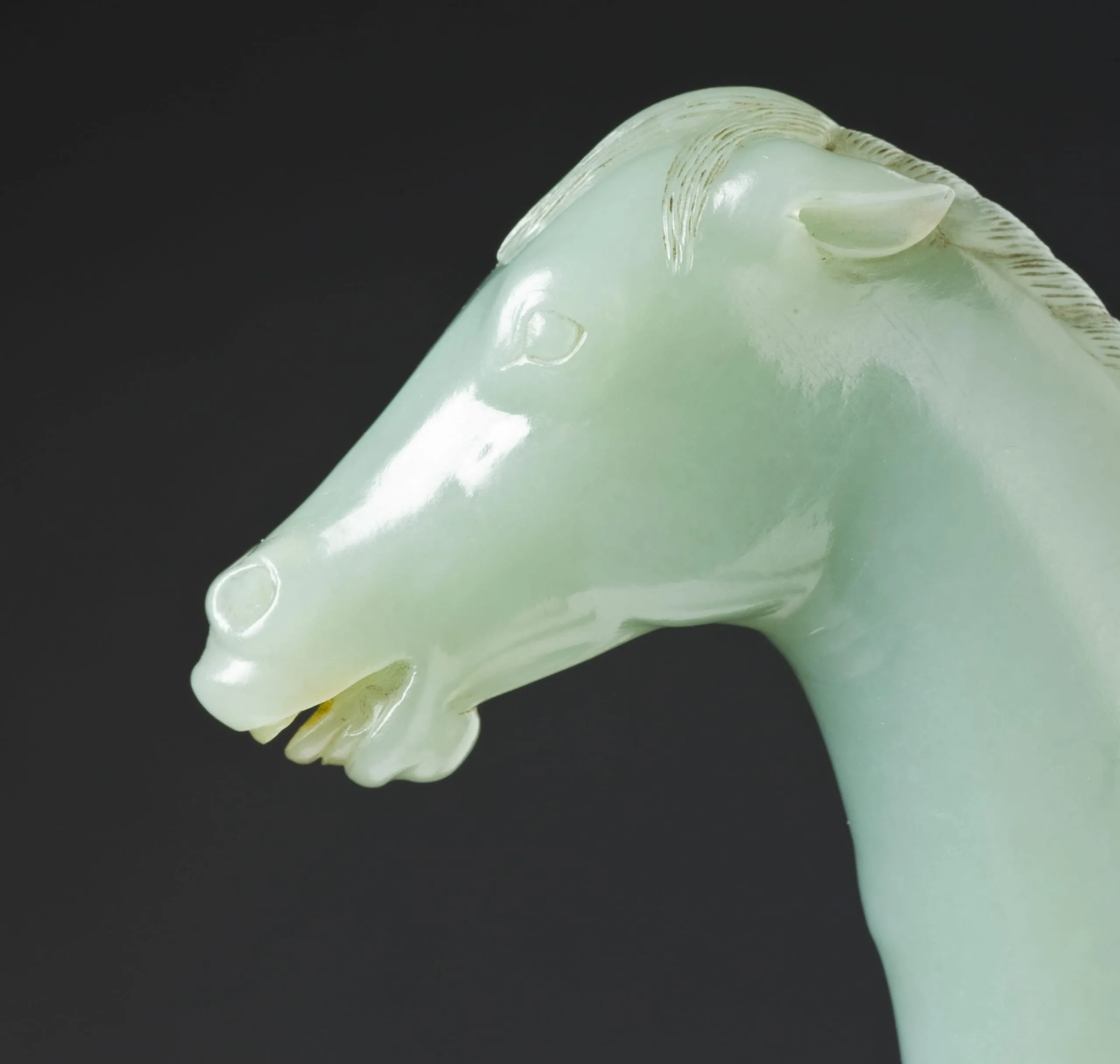
Jade carving of a horse's head and neck in pale celadon green, shown in profile with mouth slightly open; finely incised mane and smooth, polished surface against a dark background.
Dagger with pale green jade handle carved in the form of a horse's head with detailed mane, mounted above a steel blade with gold-inlaid floral and arabesque decoration at the ricasso.
Dagger with a pale green jade hilt carved in the form of a horse's head, with brown-streaked mane detail; steel blade with gold koftgari inlaid scrollwork at the bolster.
Dagger with pale green jade handle carved in the form of a horse's head, gold koftgari-decorated bolster with scrolling floral motifs, and a slender double-fullered steel blade tapering to a point.
Artist or Maker
Unknown
Title
Dagger (khanjar) of Emperor Aurangzeb (reigned 1658–1707) and sheath
Place Made
India, Mughal empire
Date Made
Dated 1660-1661
Medium
Light green nephrite jade hilt; steel blade inlaid with gold; wood sheath covered in velvet with metallic thread
Dimensions
Dagger: 13 3/4 x 2 in. (34.93 x 5.08 cm); Sheath: 10 x 1 5/8 x 3/4 in. (25.4 x 4.13 x 1.91 cm)
Credit Line
From the Nasli and Alice Heeramaneck Collection, Museum Associates Purchase
Accession Number
M.76.2.7a-b
Classification
Arms and Armor
Collecting Area
South and Southeast Asian Art
Curatorial Notes

The crown jewel of LACMA’s South Asian decorative art collection is a sublime dagger inscribed in gold on the almost certainly original watered-steel blade as belonging to the Mughal Emperor Aurangzeb (r. 1658–1707) and dating it from 1660–61 (AH 1071). The dagger’s exquisite hilt in the form of a horse's head is superbly modeled in light green nephrite jade with areas of the burnt-orange skin of the jade left on the surface to serve as highlights in its delicately incised mane. The horse’s head is an artistic tour de force that likely portrays an Arabian stallion, which was generally regarded as the superior breed by the Mughals and, therefore, befitting the supreme status of the emperor. The horse is rendered in naturalistic detail and imbued with a martial spirit appropriate to Aurangzeb who spent much of his rule on military campaigns. The imperial charger is ready for battle: his ears are laid back, his nostrils flare, and his lips snarl.

Extending along the central axis on both faces of the blade is a stylized acanthus leaf cast in the steel and gilded, and a gilded royal parasol, symbolic of its imperial ownership and possibly indicating the dagger’s honorific status as a presentation item bestowed by the emperor.

Imperial Mughal daggers and swords were typically embellished with hilts made of precious materials, often bejeweled, and their blades were crafted of the finest damascene steel (layers of metal forged together and etched to enhance the watered pattern). They were often given to high-ranking officers for meritorious service or bravery. The wearing at court of such ornate daggers and swords by the nobility signified their royal favor. Unique or exceptionally fine daggers are frequently documented in imperial Mughal accounts as among the most esteemed gifts suitable for the emperor.

See Stephen Markel, "Mughal Jades: A Technical and Sculptural Perspective." Asianart.com (July 2008), figs. 6-12. http://www.asianart.com/articles/markel2/index.html#2
Selected Bibliography
  • Markel, Stephen. Mughal and Early Modern Metalware from South Asia at LACMA: An Online Scholarly Catalogue. Los Angeles: Los Angeles County Museum of Art, 2020. https://archive.org/details/mughal-metalware (accessed September 7, 2021).
  • Mills, Rosie Chambers. Eternal Medium: Seeing the World in Stone. Los Angeles: Los Angeles County Museum of Art, 2023.