- Title
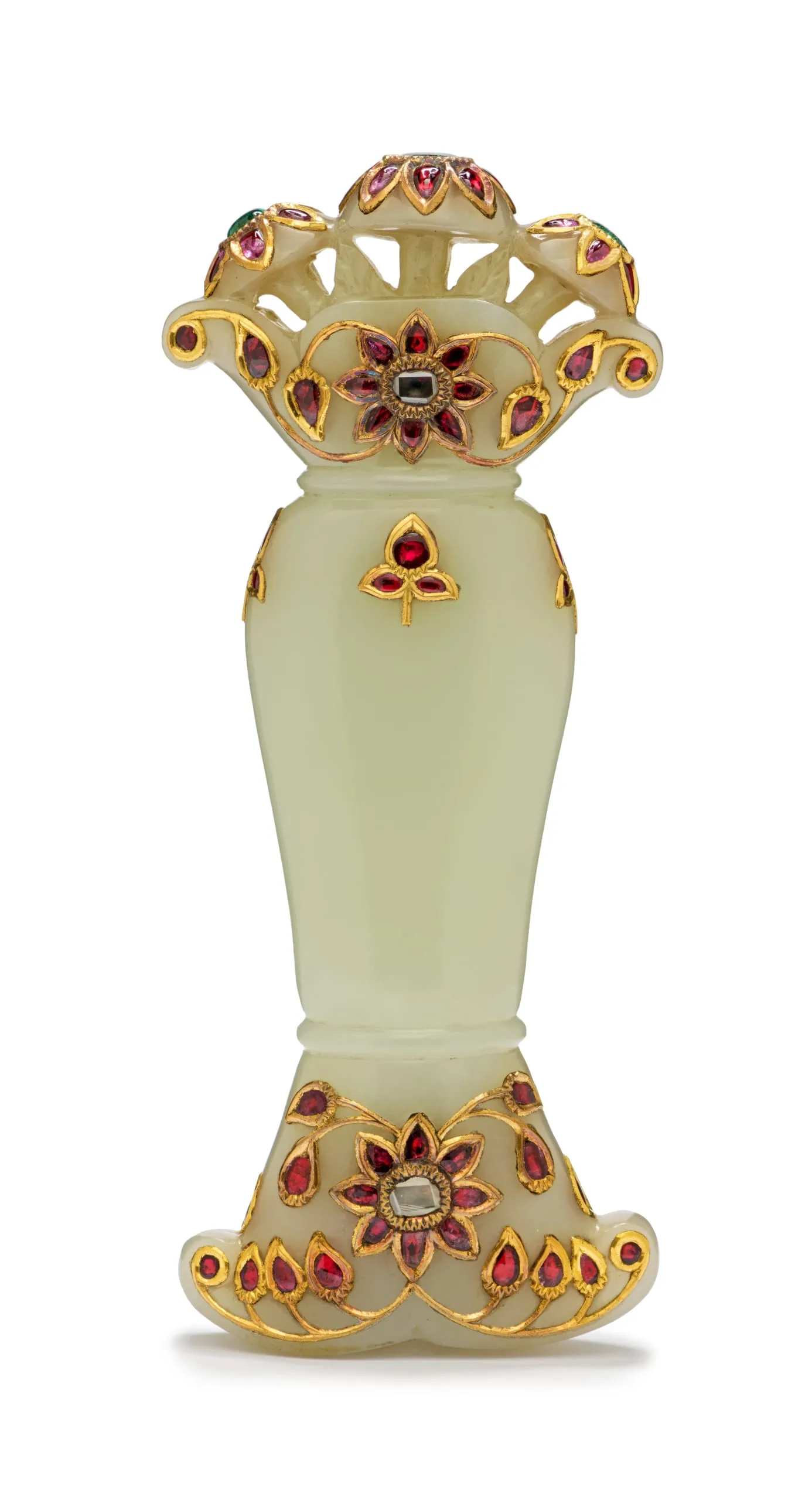
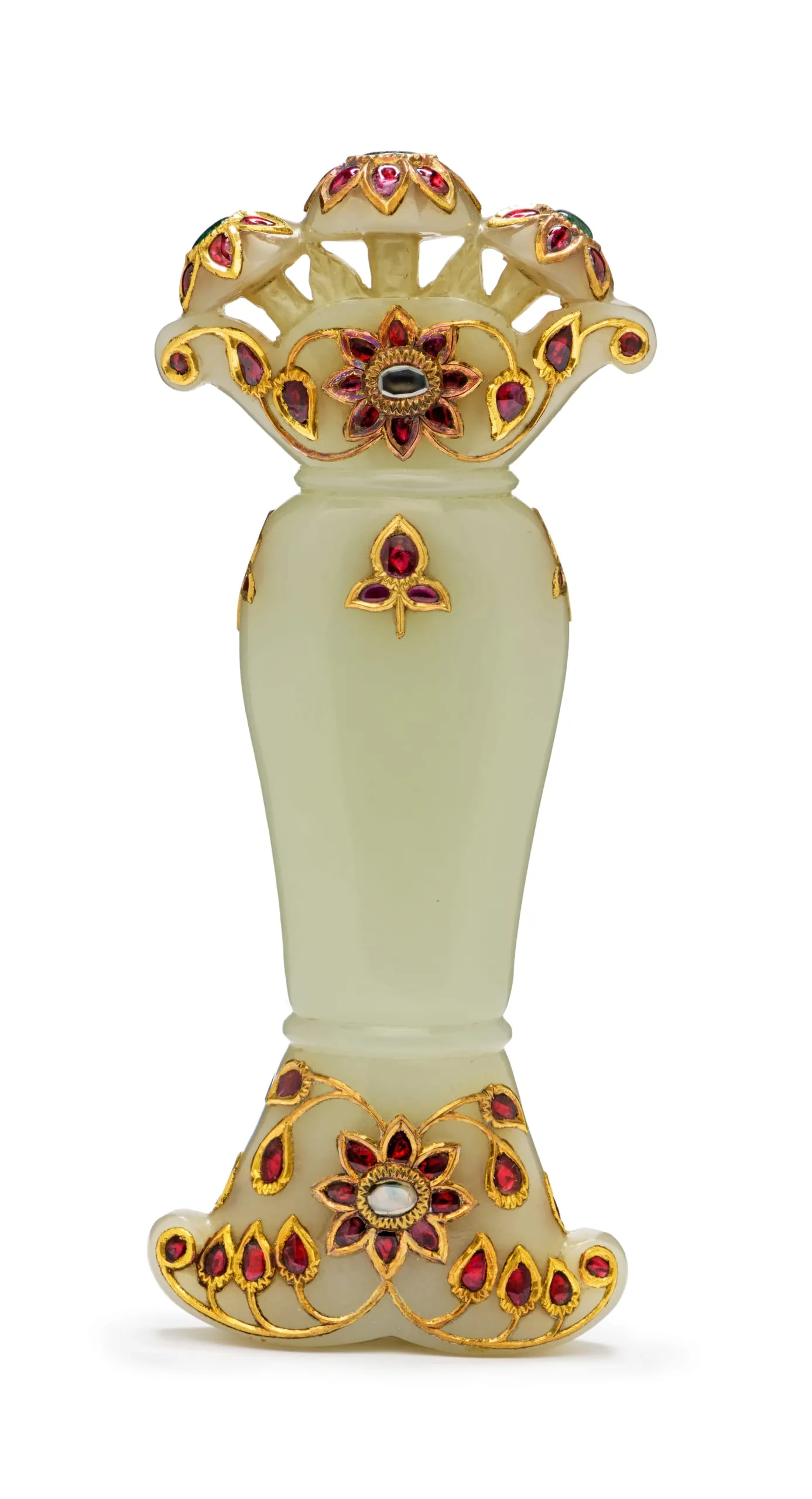
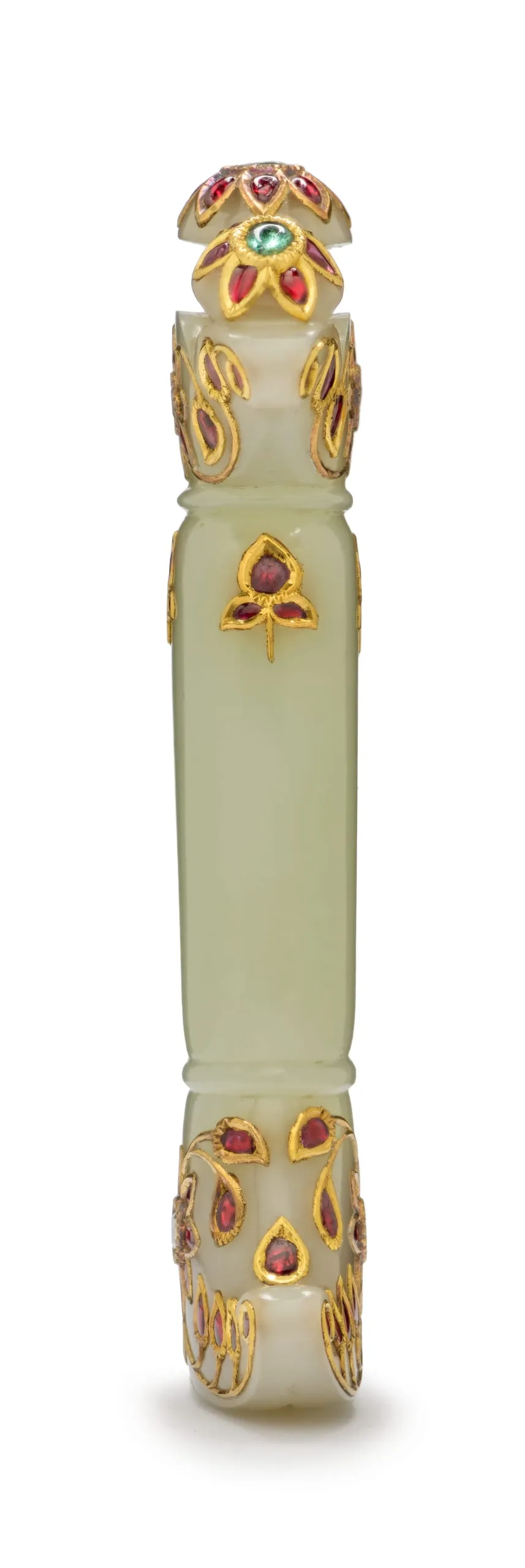
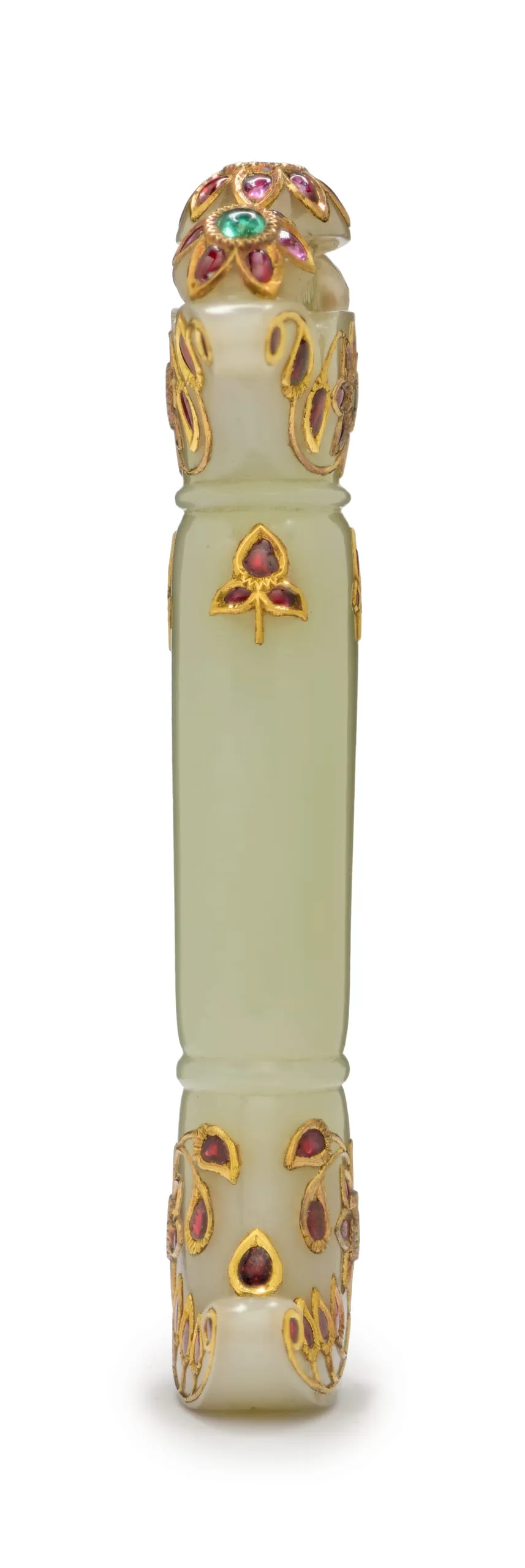
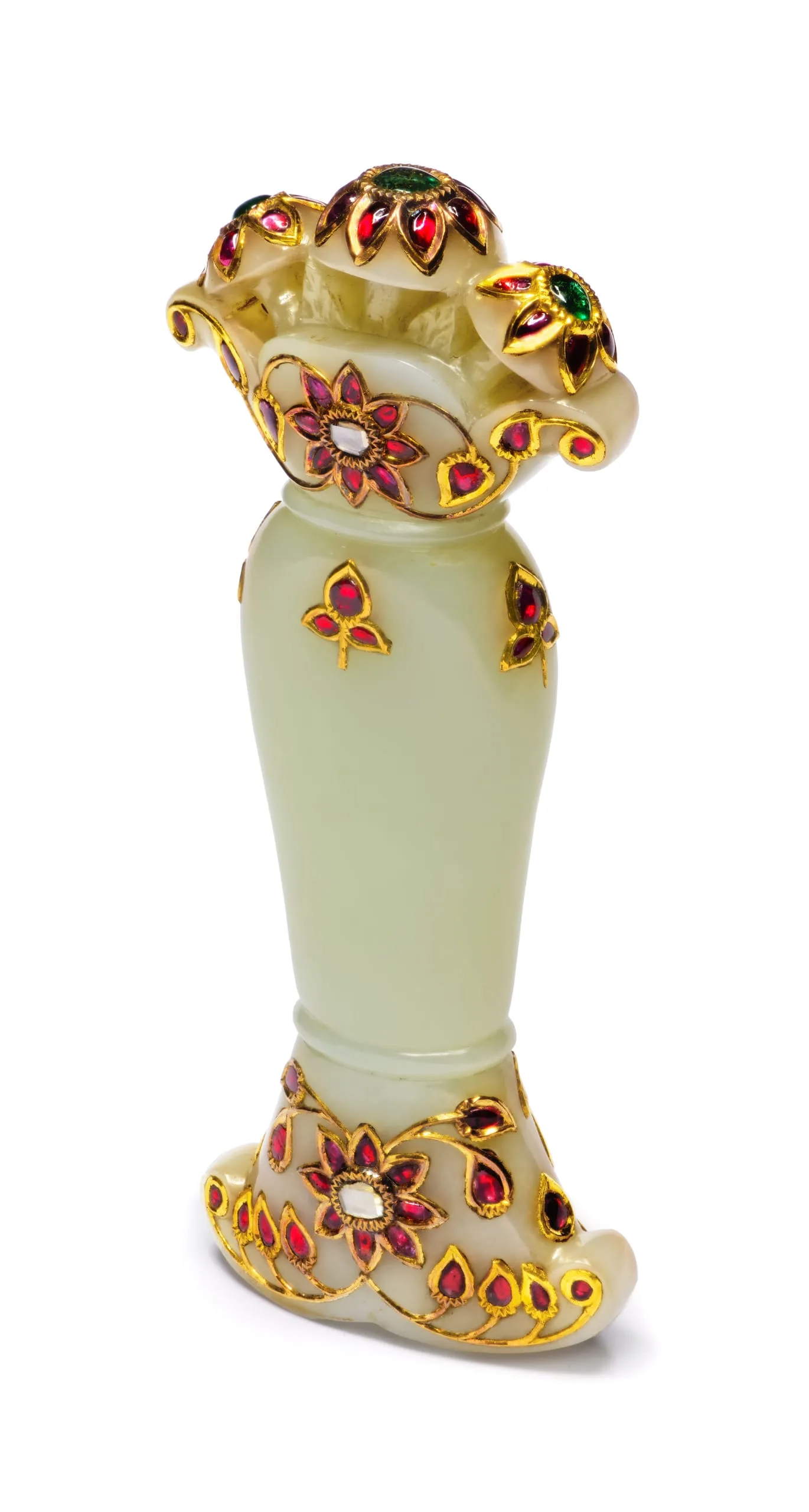
- Dagger Hilt with Triple Lotus Bud Pommel
- Date Made
- circa 1700-1750
- Medium
- White nephrite jade inlaid with rubies, diamonds, and emeralds set in gold
- Dimensions
- 4 7/8 x 2 1/8 x 3/4 in. (12.38 x 5.4 x 1.91 cm)
- Accession Number
- M.76.2.14
- Curatorial Notes
This exquisite dagger hilt is made of white nephrite jade inlaid with rubies, diamonds, and emeralds set in gold. It is embellished with a pommel in the form of three bejeweled lotus buds on openwork individual stalks interspersed with two triangular leaves, most likely intended as schematic representations of acanthus leaves. The stalks rise out of a vase-like form, which suggests the bouquet is an allusion to the ancient Buddhist and Hindu "vase-of-plenty" symbolizing abundance and vitality. The surface of the vase is ornamented on each side with an eight-petaled open blossom inlaid in gold with ruby petals and a diamond pistil in the center. The blossoms issue gold vines with ruby leaves that extend along the scrolling edges of the pommel bars. Delicate chiseling of the gold at the base of leaves and around the central diamond is selectively employed for artistic effect. Similar gem-set floral motifs grace the scrolling quillons (cross guards) at the mouth of the hilt. Demarcated by plain roll borders, the baluster vase-shaped grip is unadorned except for four ruby and gold trefoil-shaped leaves set at opposite points on the vase’s shoulders. Their visual emphasis, enhanced by the lack of the commonplace shallow relief floral decoration on the surface of the jade bespeaks an austere elegance reminiscent of the white marble monuments inlaid with gemstones that were introduced by the Emperor Shah Jahan (r. 1628-58) and emulated by succeeding Mughal monarchs.
- Selected Bibliography
- Rosenfield, John. The Arts of India and Nepal: The Nasli and Alice Heeramaneck Collection. Boston: Museum of Fine Arts, Boston, 1966.
- Markel, Stephen. "The Use of Flora and Fauna Imagery in Mughal Decorative Arts." Marg 50, no. 3 (March 1999).
- Komaroff, Linda. Gifts of the Sultan: the Arts of Giving at the Islamic Courts. Los Angeles: Los Angeles County Museum of Art, 2011.
- Zumaya, Diva. The World Made Wondrous: the Dutch Collector's Cabinet and the Politics of Possession. Los Angeles: Los Angeles County Museum of Art, 2023.