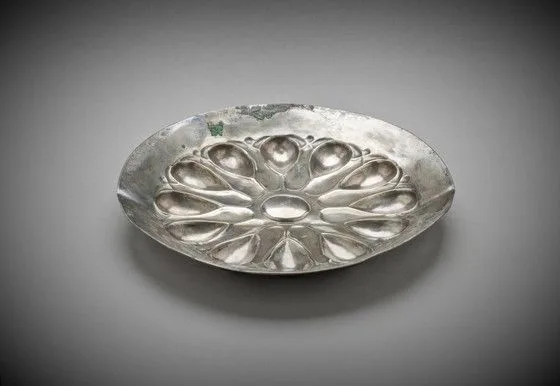
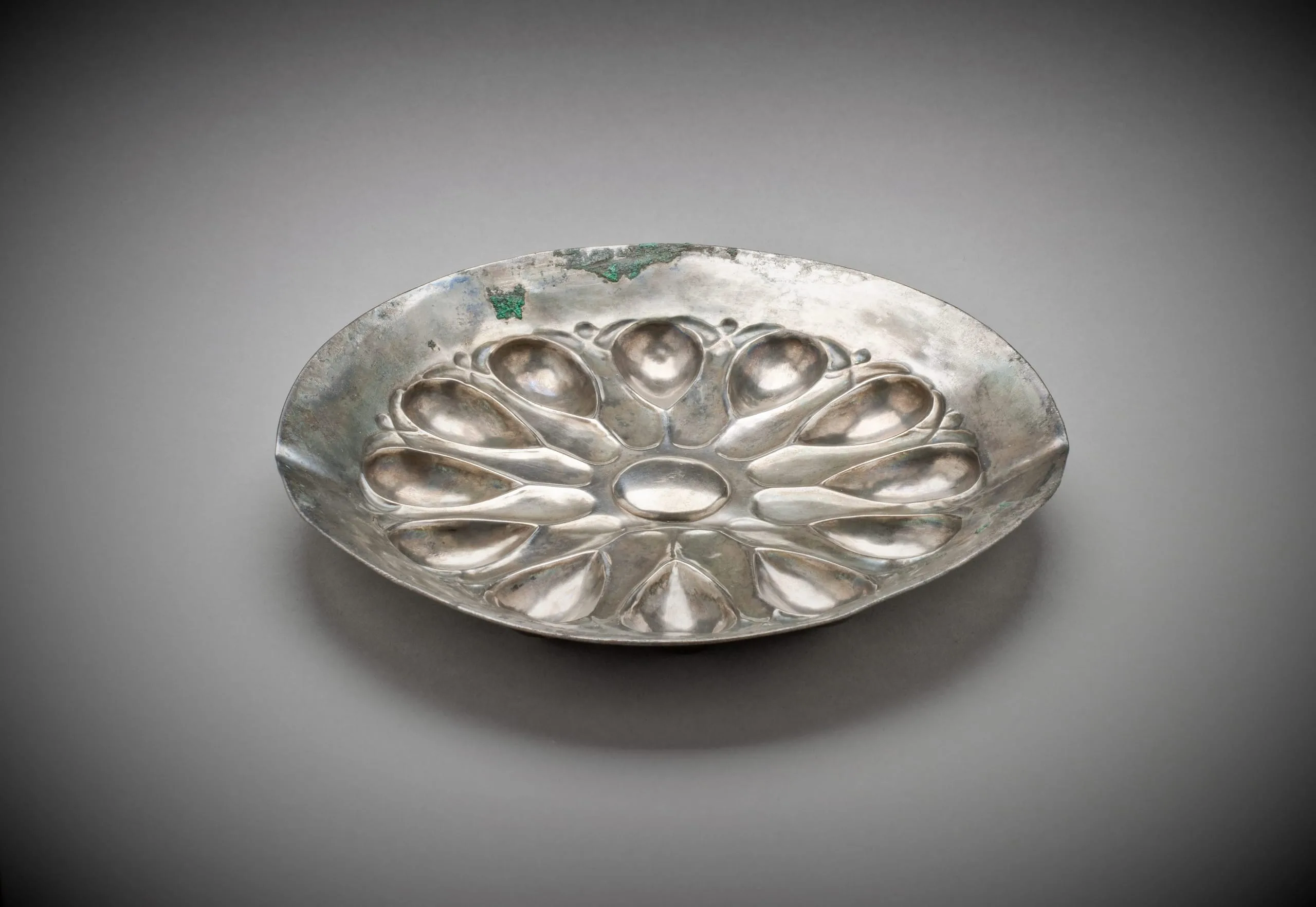
This silver bowl, or phiale, features a raised central boss (omphalos) surrounded by a frieze of twelve tear-shaped bosses, between which radiate leaf-shaped tongues terminating in lotus buds. Similar vessels are known from across the lands that were once part of the Achaemenid Empire. Dated to the fifth to fourth centuries BCE, their wide geographic distribution, extending from Iran to Greece and from Anatolia to Egypt, suggests a broad cross-cultural appeal for such luxury vessels.
Although the exact function of these bowls is not certain, within the Achaemenid world they were likely associated with elite banqueting. Drinking from these bowls was not easy and required practice, yet, the raised boss at the base would have allowed the vessel to be held in one hand, with the middle finger resting in the indentation and the thumb stabilizing the rim.
Achaemenid royal banquets were renowned for their extravagance and splendor and were reported to host thousands of guests. Attendees were permitted to take away leftover food, while those favored by the king received the precious vessels used at the table as gifts. Such gifts functioned as important markers of status and prestige for their recipients.