LACMA

ShopMembershipMyLACMATickets
LACMA
Los Angeles County Museum of Art
5905 Wilshire Blvd.
Los Angeles, CA 90036
info@lacma.org
(323) 857-6000
Sign up to receive emails
Subscribe
© Museum Associates 2025

Museum Hours

Monday

11 am–6 pm

Tuesday

11 am–6 pm

Wednesday

Closed

Thursday

11 am–6 pm

Friday

11 am–8 pm

Saturday

10 am–7 pm

Sunday

10 am–7 pm


  • About LACMA
  • Jobs
  • Building LACMA
  • Host An Event
  • Unframed
  • Press
  • FAQs
  • Log in to MyLACMA
  • Privacy Policy
© Museum Associates 2025
Collections

Pellegrino Tibaldi
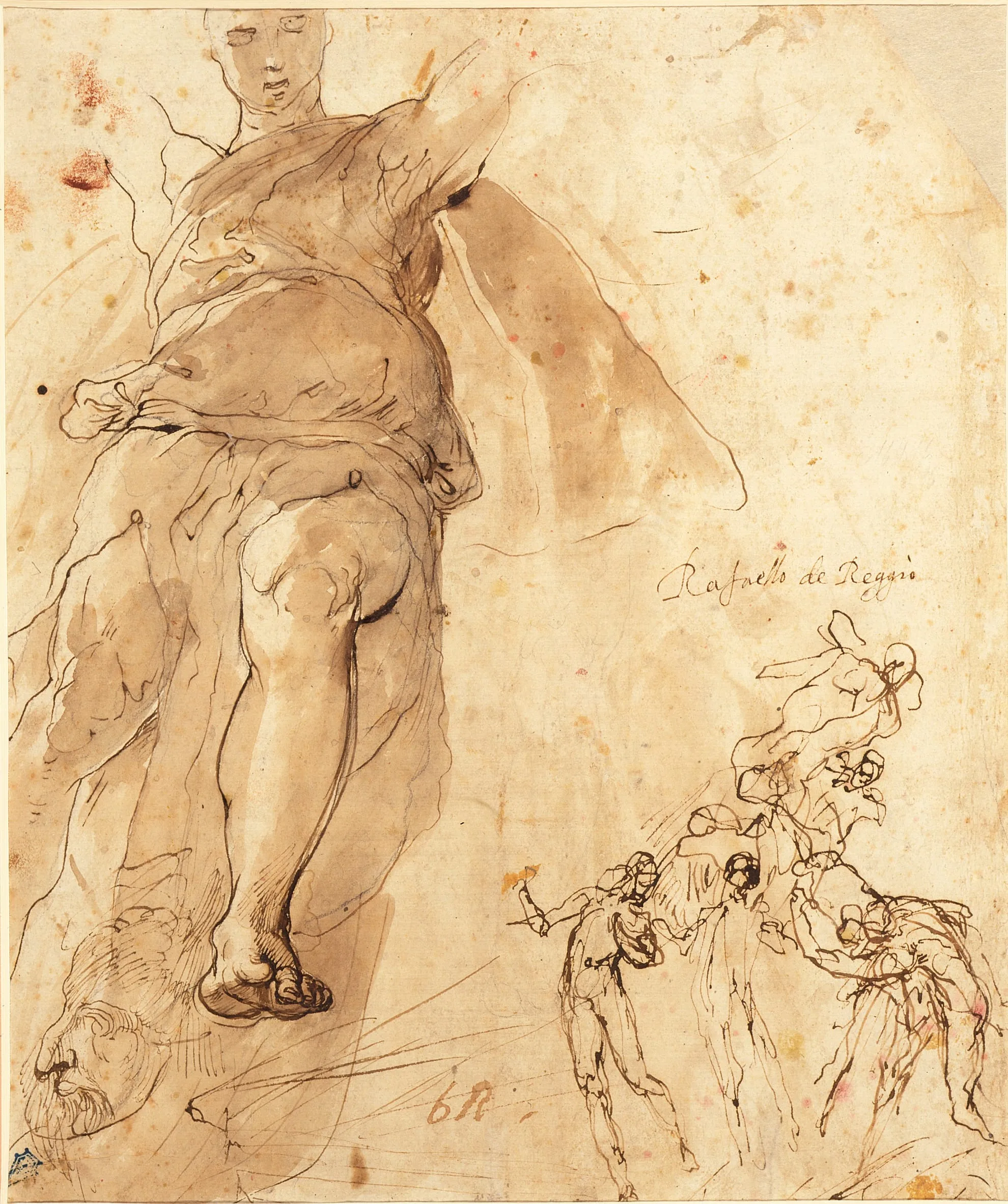
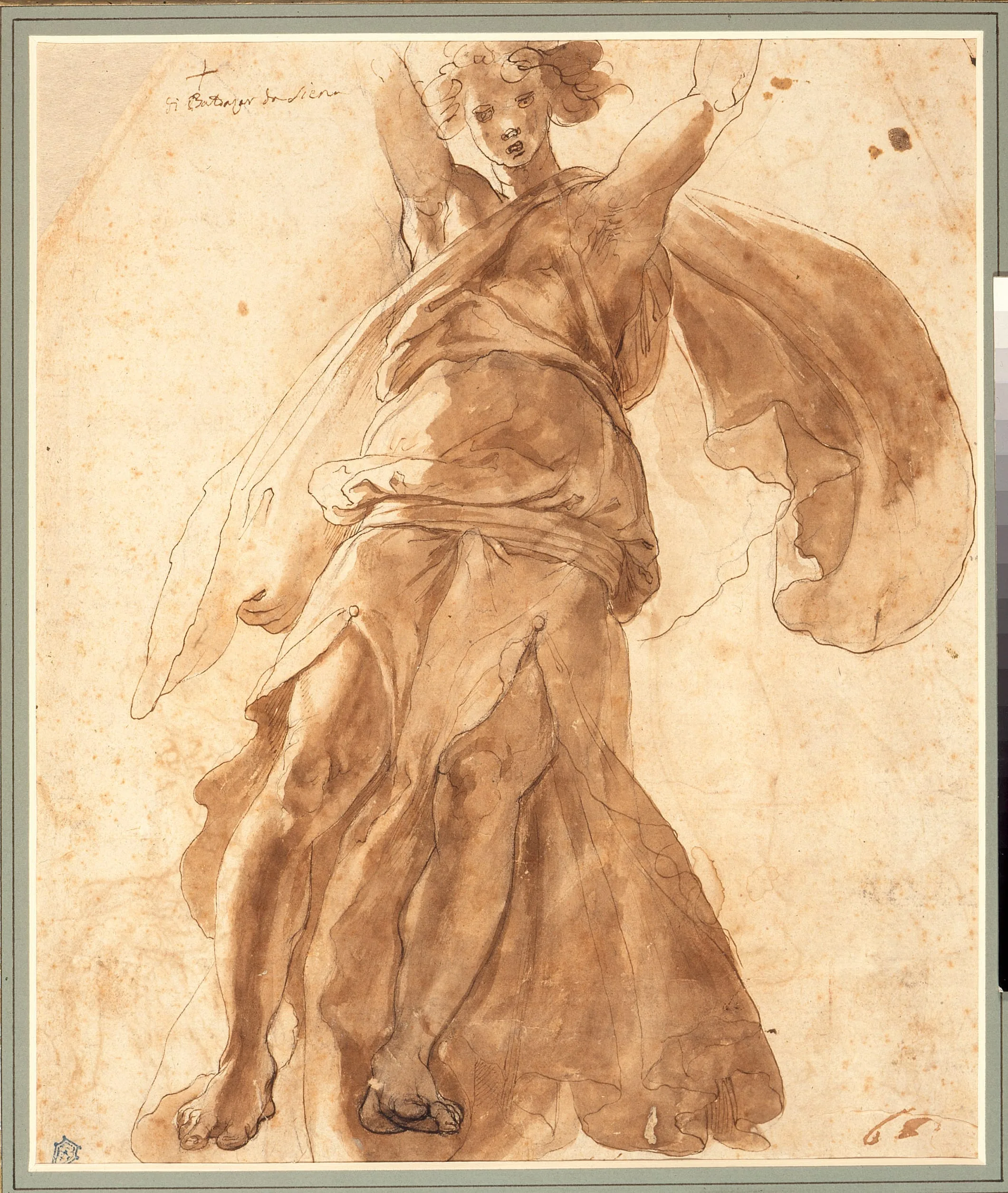
Dancing Figure (recto); Dancing Figure and Other Studies (verso)circa 1555-1558

Not on view
Drawing in brown ink and wash on cream paper, full-length standing female figure in billowing classical drapery with arms raised, shown from a low viewpoint
Pen, ink, and wash drawing on cream paper; large standing draped figure dominates the left, rendered with fluid wash and fine ink lines; a sketched lion's head appears at lower left; at right, a loose group of smaller figures in dynamic poses; italic script inscription reads 'Rafaello de Reggio'; scattered foxing throughout.
Artist or Maker
Pellegrino Tibaldi
Title
Dancing Figure (recto); Dancing Figure and Other Studies (verso)
Place Made
Italy
Date Made
circa 1555-1558
Medium
Brown ink and wash
Dimensions
Sheet: 13 x 10 3/4 in. (33 x 27.3 cm) each
Credit Line
Los Angeles County Fund
Accession Number
60.74.1-.2
Classification
Drawings
Collecting Area
Prints and Drawings
Curatorial Notes
Excerpted from Davis, Bruce. Master Drawings in the Los Angeles County Museum of Art. Los Angeles: Los Angeles County Museum of Art, 1997, 26–29.
Although trained in Bologna with his architect father, Pellegrino Tibaldi spent a few crucial years in the late 1540s in Rome, where he worked on several major commissions, such as the Rovere Chapel in the church of Santissima Trinità dei Monti and the Sala Paolina in the Castel Sant’Angelo, with Daniele da Volterra, Marco Pino, Jacopino del Conte, Sicolante da Sermoneta, and other leading mannerist painters. Perhaps most significant for Tibaldi’s development was his absorption of Michelangelo’s vigorous style and its exaggerated muscularity, represented at that time by The Last Judgment and the Cappella Paolina frescoes. Tibaldi returned to Bologna about 1553, where his most important patrons were the Poggi family. His later career was spent in Milan and Spain.
The wiry and curvilinear delineation of these figures owes a considerable stylistic debt to Perino del Vaga’s draftsmanship, with which Tibaldi would have been familiar during his stay in Rome. The daring and bravura perspective, however, is Tibaldi’s own invention. The figures were employed in his ceiling fresco decoration, datable to about 1555–58, in a room in the Palazzo Poggi in Bologna devoted to the story of Ulysses. The dancing figures were used as decorative devices, boldly viewed di sotto in sù (seen from below), with no relation to the historical narrative of the Greek hero. His innovative architectural illusionism had significant impact on later Bolognese artists, particularly the Carracci family and other decorative painters.
Provenance
Hollstein and Puppel, Germany, Berlin, May 6, 1931, lot 1177.
Selected Bibliography
  • Amerson, L. Price, Jr., editor. The Fortuna of Michelangelo: Prints, Drawings and Small Sculpture from California Collections. Sacramento: The E. B. Crocker Art Gallery, 1975.