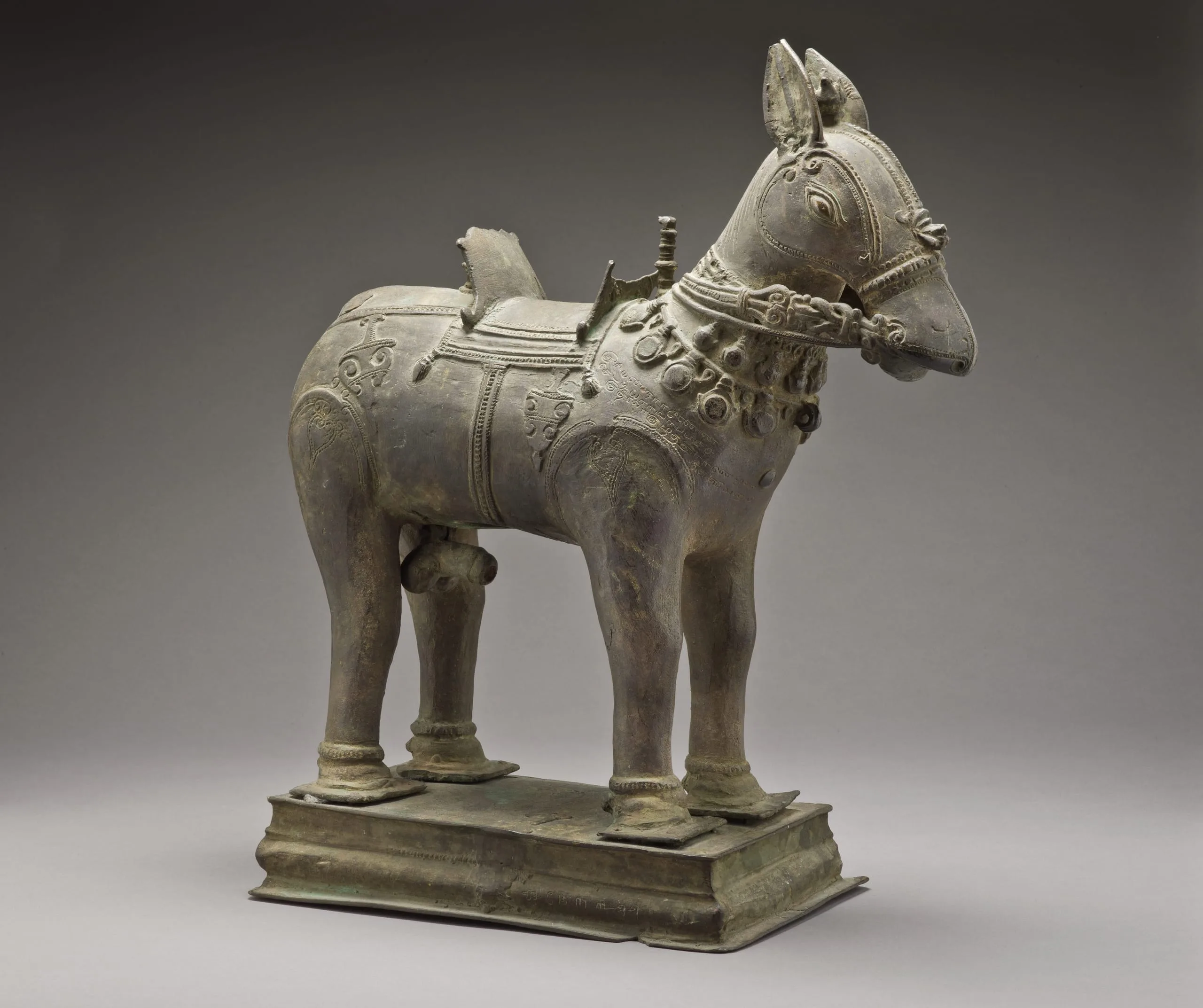
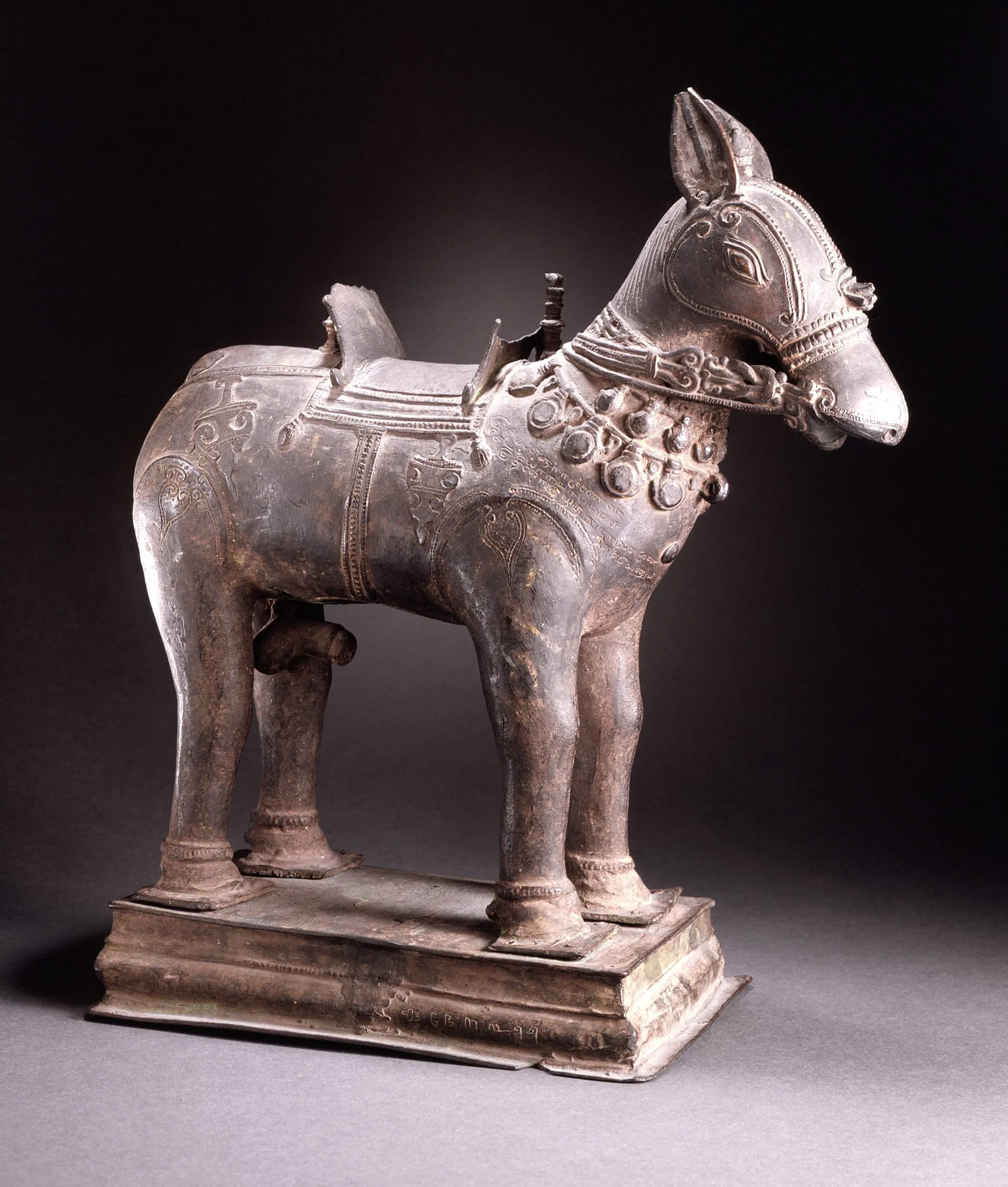
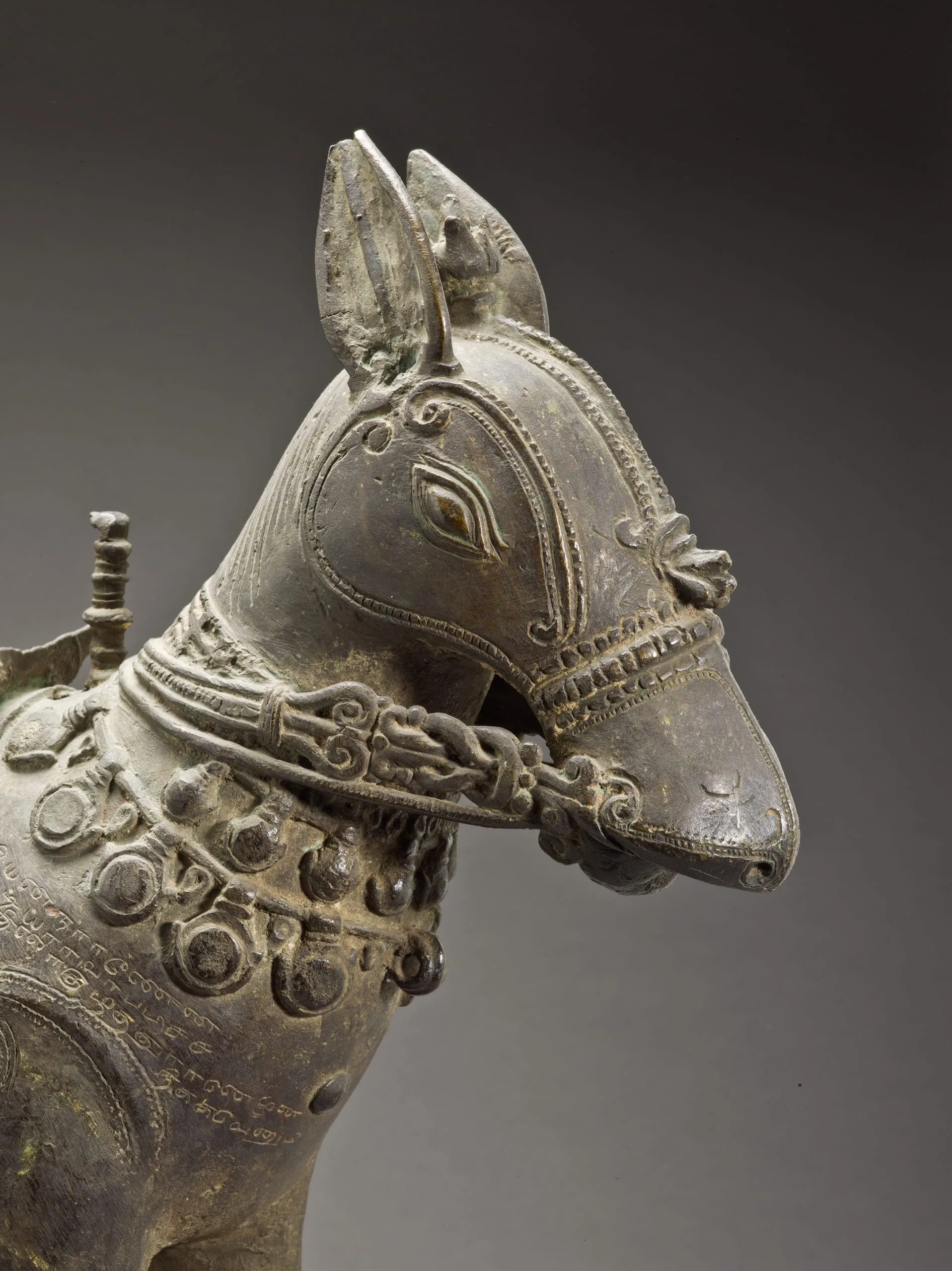
Horses have long been particularly venerated in the distinctive culture of south India. This is primarily because the horse is the sacred mount of one of the major gods of south India, Aiyanar, who is a principal village tutelary deity (gramadevata). Consequently, images of horses are often erected at the boundaries of temples, palaces, and villages to represent Aiyanar, and thereby protect the sacred space and community within. Horses, along with elephants, are also prominently featured in many south Indian religious festival processions, both living animals and their life-size images. See also M.86.148 and AC1999.97.1.
This stallion wears ornate trappings, including a bridle with a complex buckle and a saddle with a columnar horn, pommel (raised front of the saddle), cantle (raised back of the seat), saddle cloth, cinch strap (around the abdomen), and crupper (strap going under the tail and connecting to the back of the saddle to keep it from sliding forward). It is richly caparisoned with two chains of bells around his neck, pendent plaques, decorative markings on the face and juncture of the legs to the torso, and anklets.
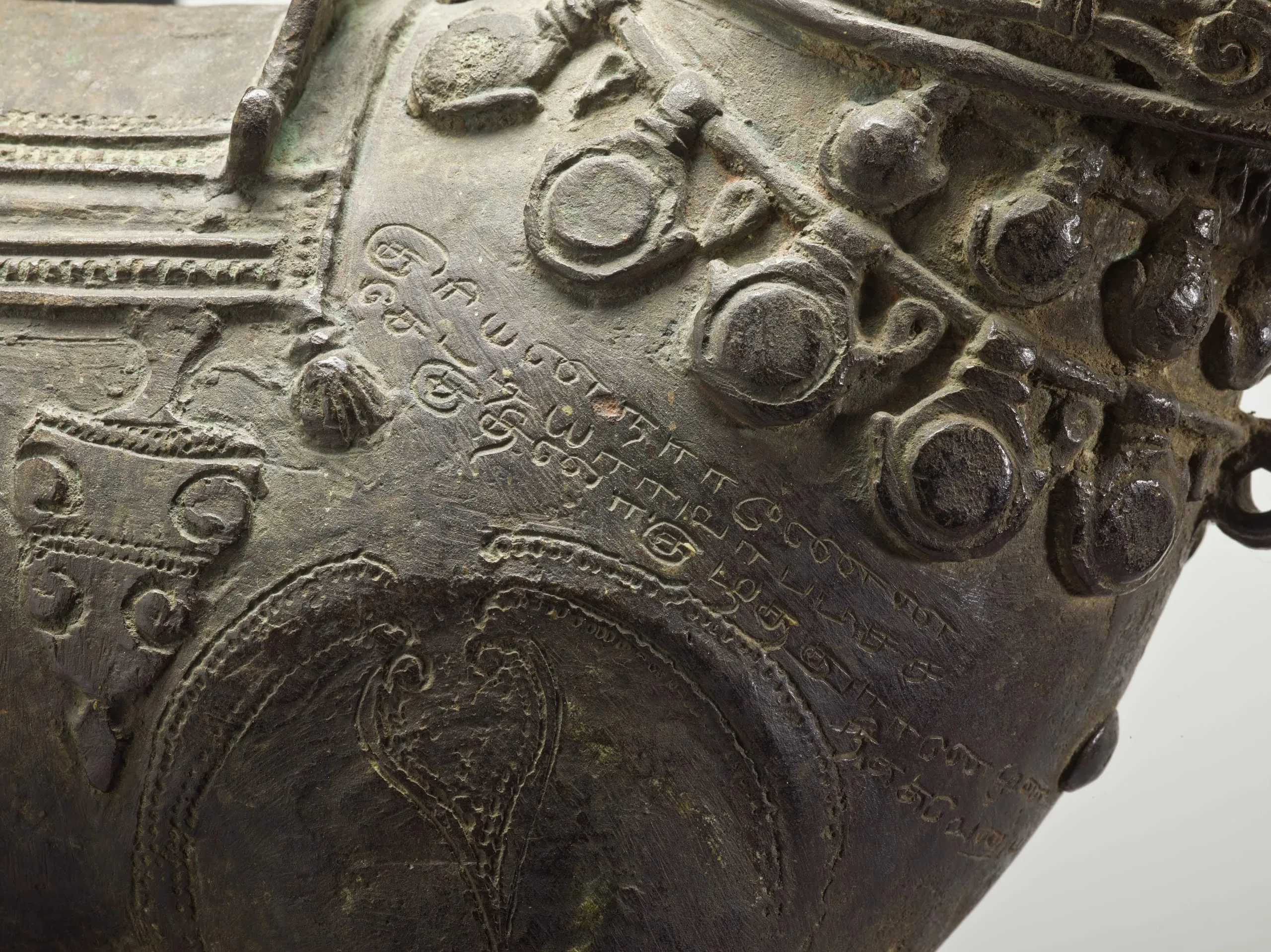
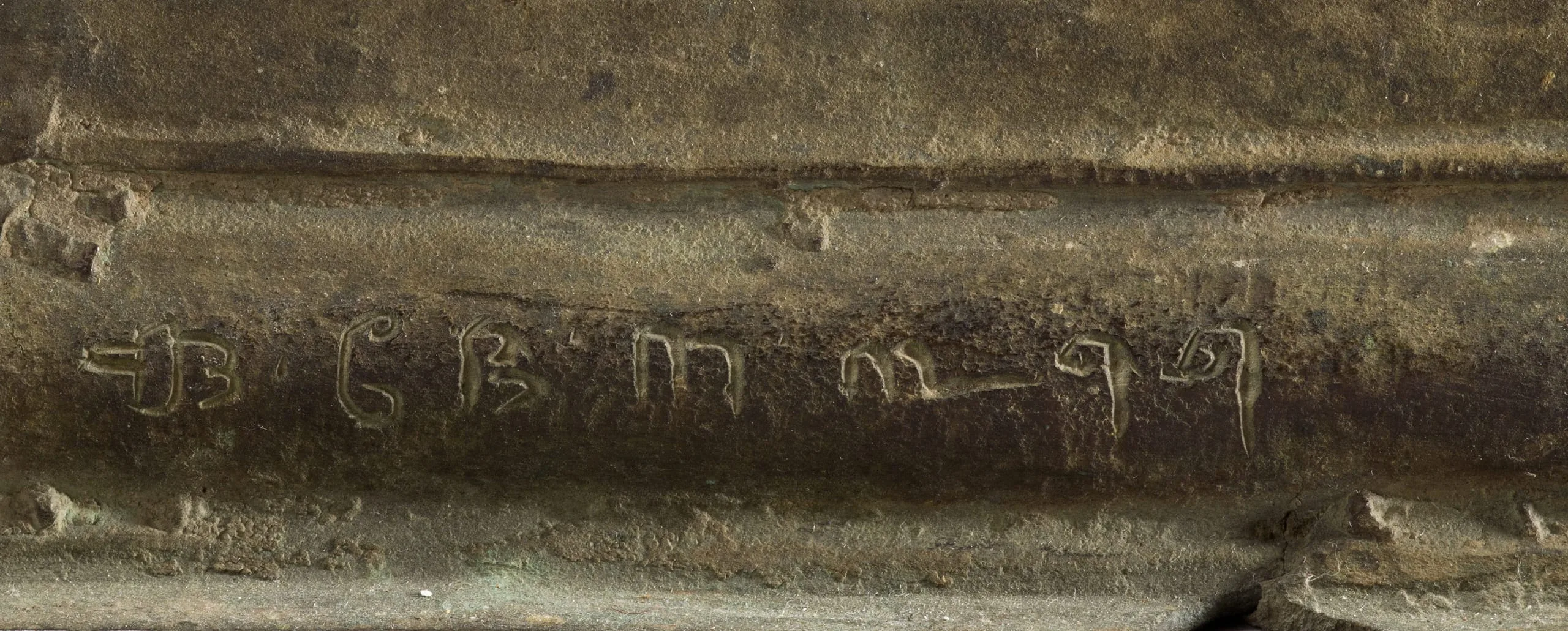
The Tamil inscription on the horse’s chest reads, Suriyan Naranan caused to mold (this) horse. Let the presence of Kulatturan ["The Lord of Kulathur" (Aiyanar)] be in front (at all time). (Translation by Marxia Gandhi.)