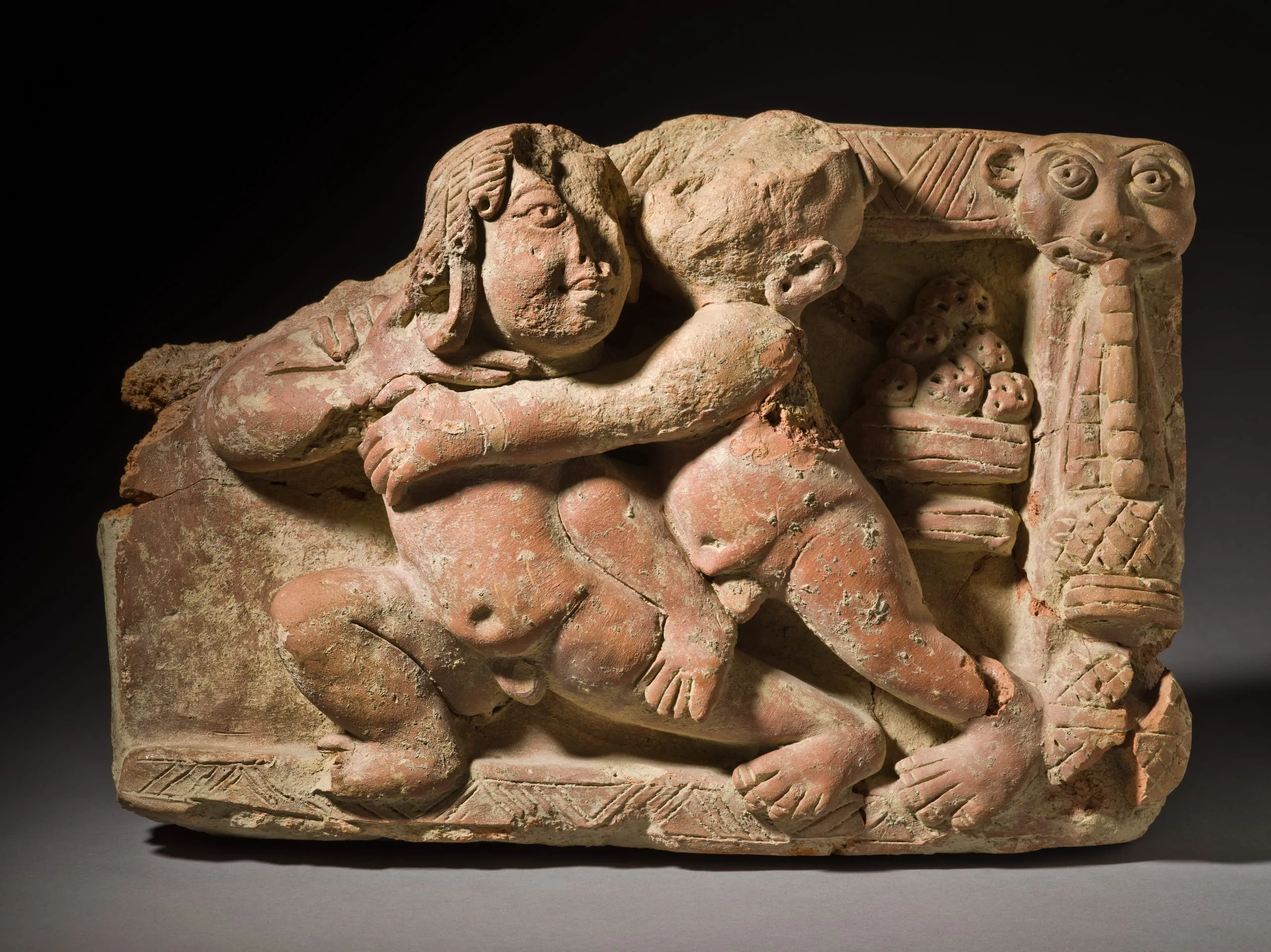
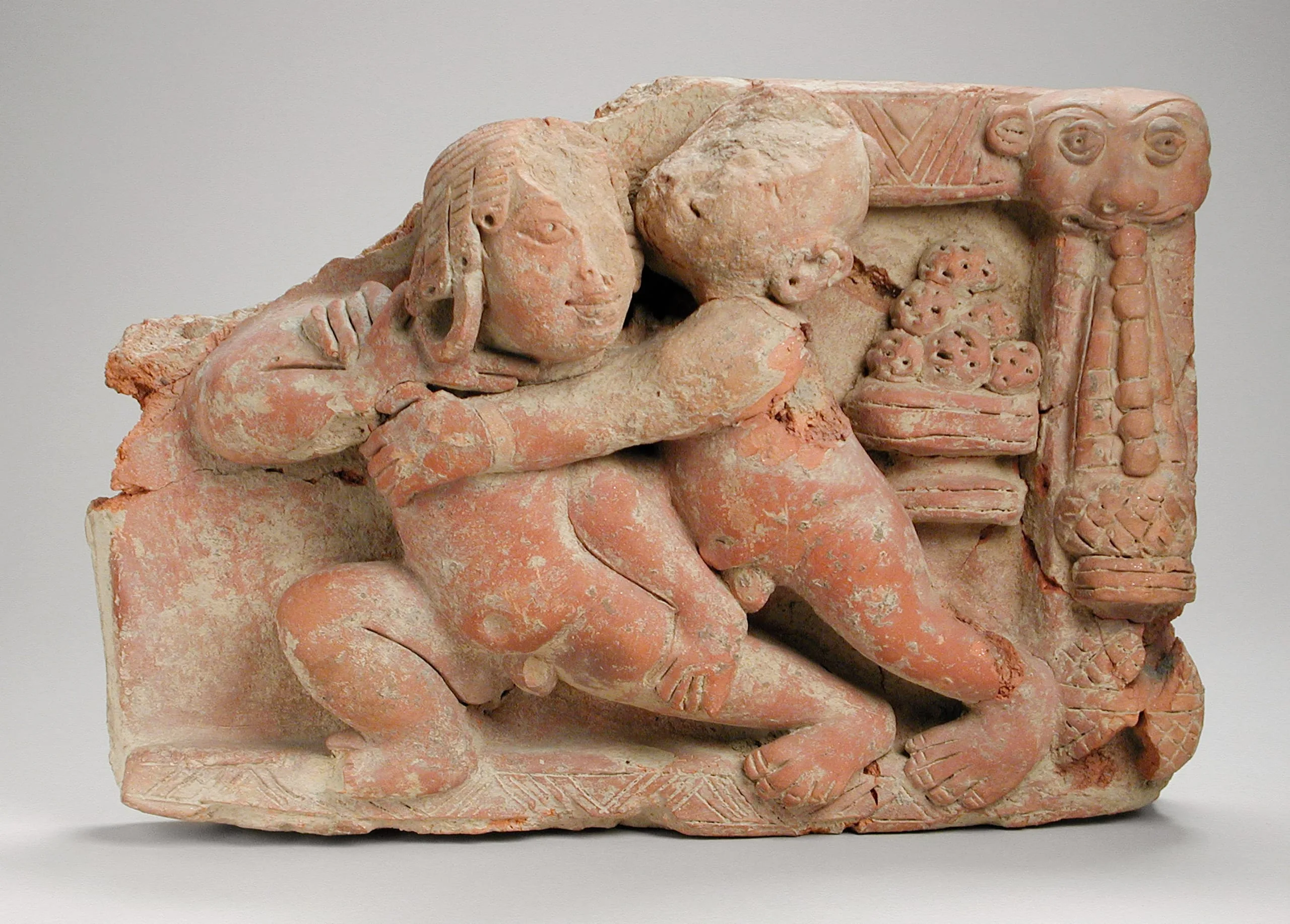
Wrestling Combat (malla-yuddha) was a prestigious form of entertainment popular at all levels of Indian society. There were wrestlers sponsored by royal courts as well as professional wrestlers. Renowned accounts of fierce wrestling combats are narrated in the Indian epics, such as Krishna’s and Balarama’s victorious battles in Mathura with the evil King Kamsa’s wrestlers and ultimately Kamsa himself.
Here, two naked boy wrestlers grapple with each other. In the background is a stand with heaps of treasures for the victor. In the frame of the panel, there is a divider motif of an apotropaic "Face of Glory" (kirttimukha) spewing jewels into an auspicious overflowing pot (purna ghata) symbolic of fertility.
An earthenware bull, possibly Nandi, in the Asian Art Museum, San Francisco (1988.52) is likely from the same series or workshop as the LACMA Wrestlers based on the presence of the same panel frame motif of a kirttimukha spewing jewels into an overflowing pot.