LACMA

ShopMembershipMyLACMATickets
LACMA
Los Angeles County Museum of Art
5905 Wilshire Blvd.
Los Angeles, CA 90036
info@lacma.org
(323) 857-6000
Sign up to receive emails
Subscribe
© Museum Associates 2026
  • About LACMA
  • Jobs
  • Building LACMA
  • Host An Event
  • Unframed
  • Press
  • FAQs
  • Log in to MyLACMA
  • Privacy Policy
© Museum Associates 2026
Collections

Unknown
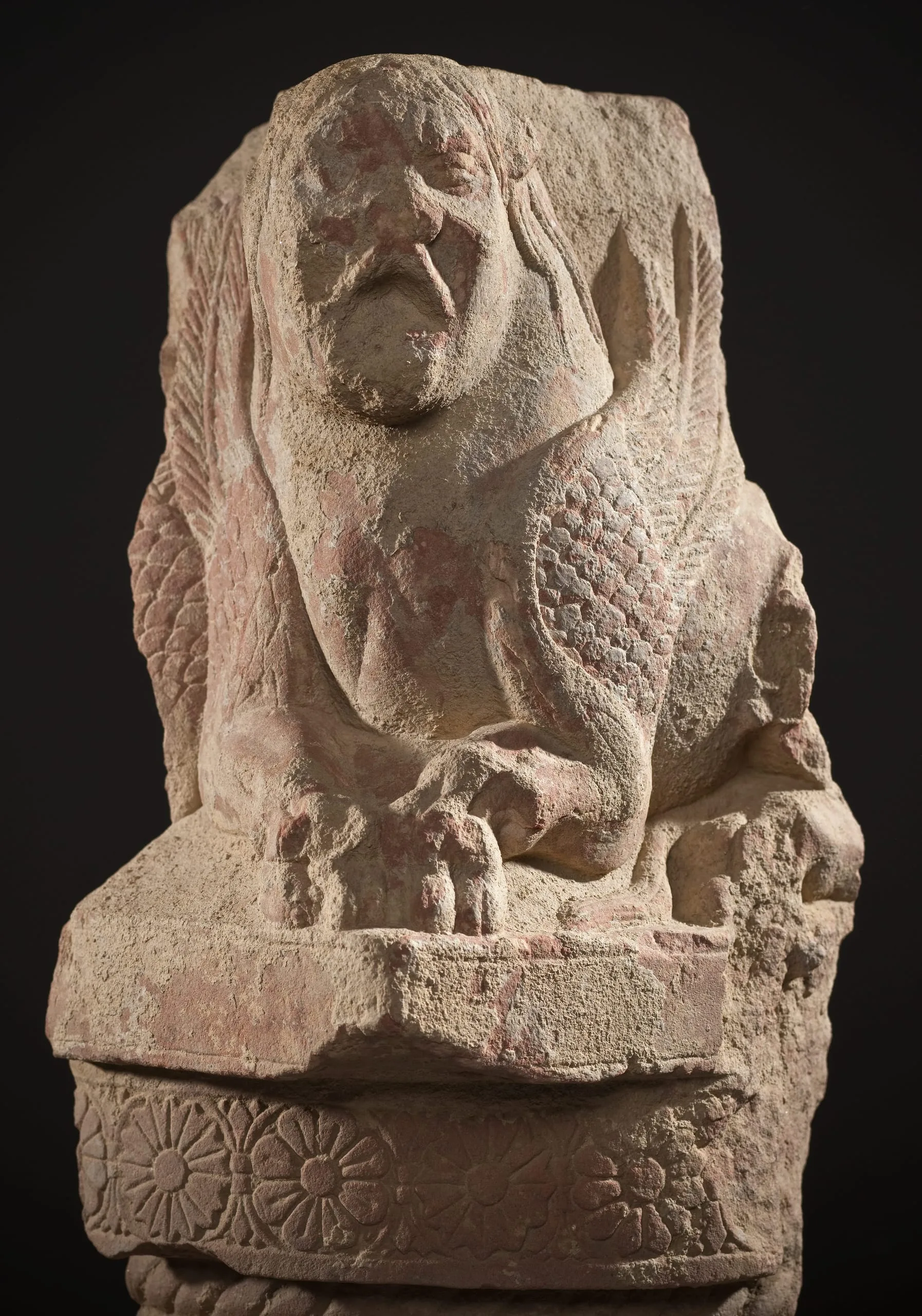
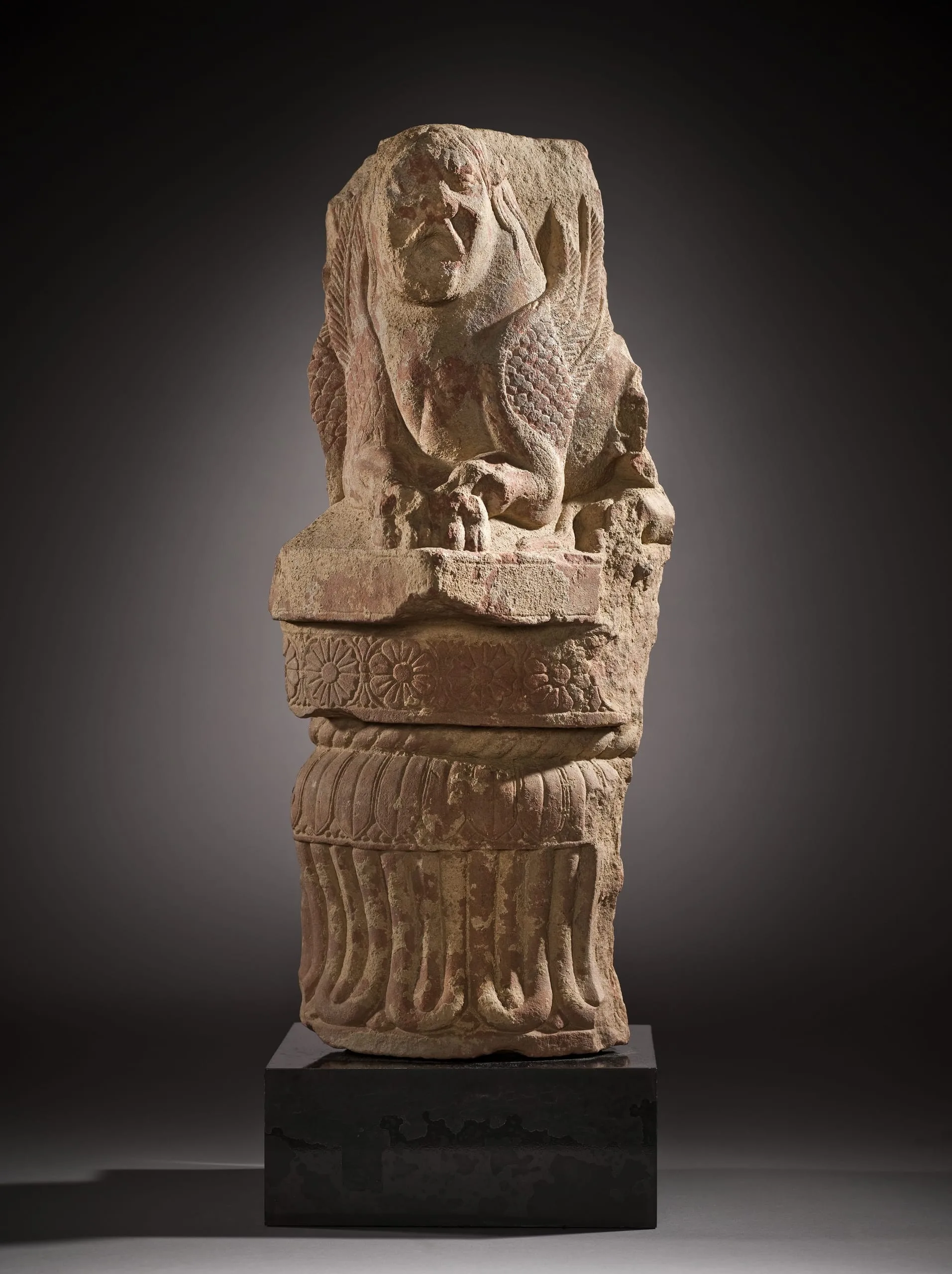
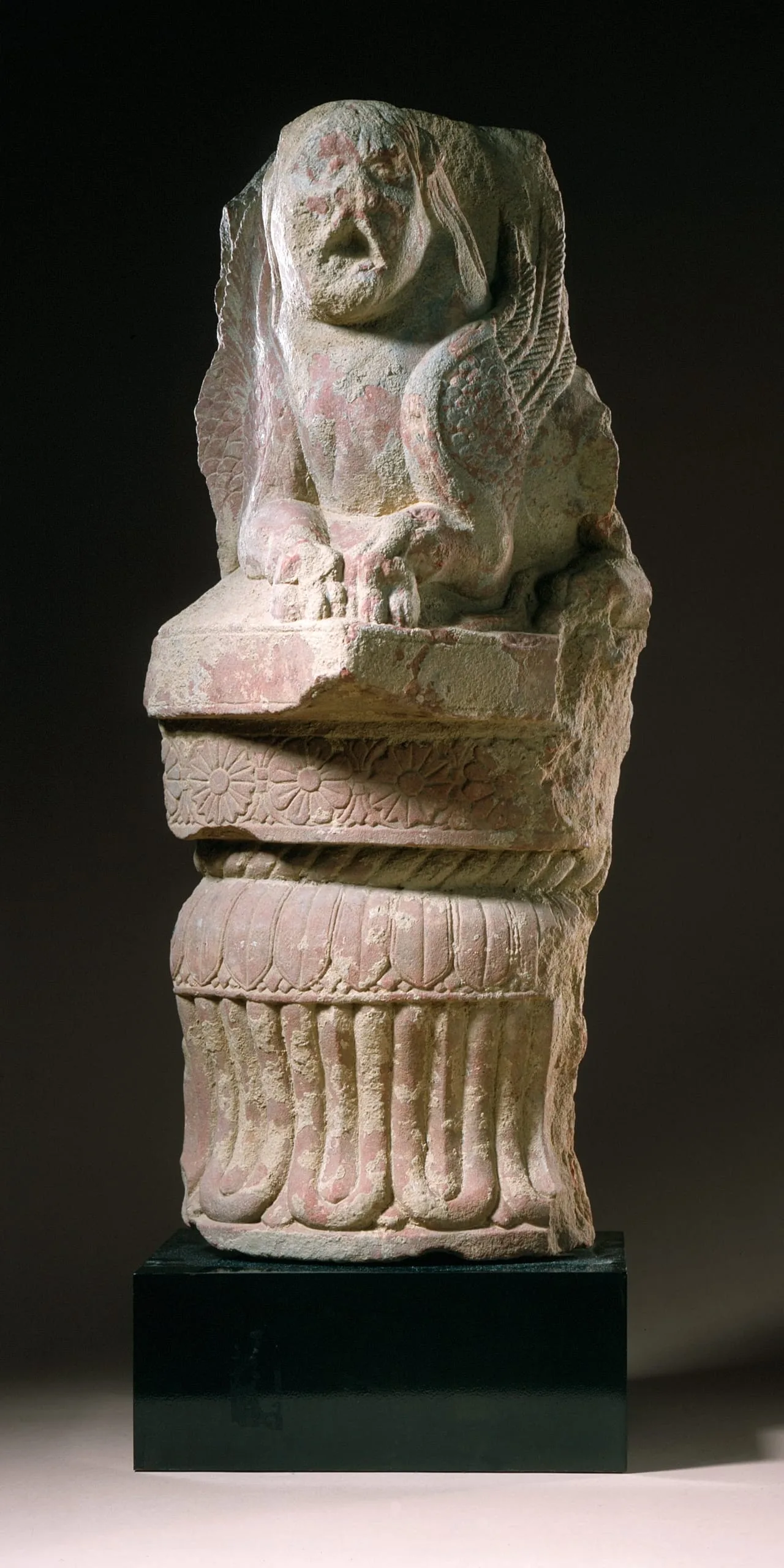
Capital with a Hybrid Leonine Creature2nd century

Not on view
Stone sculpture of a winged sphinx-like creature seated atop a carved column capital with rosette and leaf decoration, sandy tan stone with weathered surface
Stone sculpture of a winged creature with a human-like face atop a tiered pedestal decorated with carved petal and rosette bands; traces of pink and green pigment remain on the weathered surface.
Sandstone sculpture of a crouching sphinx-like creature with a human face, scaled wings folded against its body, and a clawed forepaw resting on a plinth decorated with incised rosette motifs along the base.

Unknown, Capital with Winged Lion, 2nd century, Los Angeles County Museum of Art, Purchased with funds provided by The Smart Family Foundation and Mr. and Mrs. Edgar G. Richards, photo © Museum Associates/LACMA

Artist or Maker
Unknown
Title
Capital with a Hybrid Leonine Creature
Place Made
India, Uttar Pradesh, Mathura region
Date Made
2nd century
Medium
Mottled red sandstone
Dimensions
23 1/4 x 9 3/4 x 9 in. (59.05 x 24.76 x 22.86 cm)
Credit Line
Purchased with funds provided by The Smart Family Foundation and Mr. and Mrs. Edgar G. Richards
Accession Number
M.88.3
Classification
Sculpture
Collecting Area
South and Southeast Asian Art
Curatorial Notes

This forceful sculpture was originally the capital of a pilaster in the form of a pillar (stambha) framing the entrance to a sacred enclosure in the Mathura region of present-day Uttar Pradesh. It features a campaniform lotus capital that would have been atop a now-missing plain shaft. It is surmounted by a two-part abacus. The lower element is round and carved with lotus medallions. The upper element is a square plinth that supports a finial in the form of a seated leogryph (vyala or yalis) with a mustachioed human head on the body of a winged lion similar to a sphinx. Vyalas are mythical beasts of west Asian inspiration that are believed to be fearless guardians that protect sanctified spaces both physically and spiritually. They are conceived in various hybrid forms, including elephant-headed (gaja-vyala), lion-headed (simha-vyala), horse- headed (ashva-vyala), dog-headed (shvana-vyala), and human-headed (nir-vyala or nara-vyala).

A comparable Mathura pillar capital with a vyala finial, albeit envisioned with a serpentine tail, is in the Victoria and Albert Museum, London (IS.712-1883).
Selected Bibliography
  • El Universo de la India: Obras Maestras del Museo de Arte del Condado de Los Angeles. Santiago: Centro Cultural Palacio La Moneda, 2012.