LACMA

ShopMembershipMyLACMATickets
LACMA
Los Angeles County Museum of Art
5905 Wilshire Blvd.
Los Angeles, CA 90036
info@lacma.org
(323) 857-6000
Sign up to receive emails
Subscribe
© Museum Associates 2025
  • About LACMA
  • Jobs
  • Building LACMA
  • Host An Event
  • Unframed
  • Press
  • FAQs
  • Log in to MyLACMA
  • Privacy Policy
© Museum Associates 2025
Collections

James McNeill Whistler
The Thames1896

On view:
Geffen Galleries, In Conversation: James McNeill Whistler and Japan
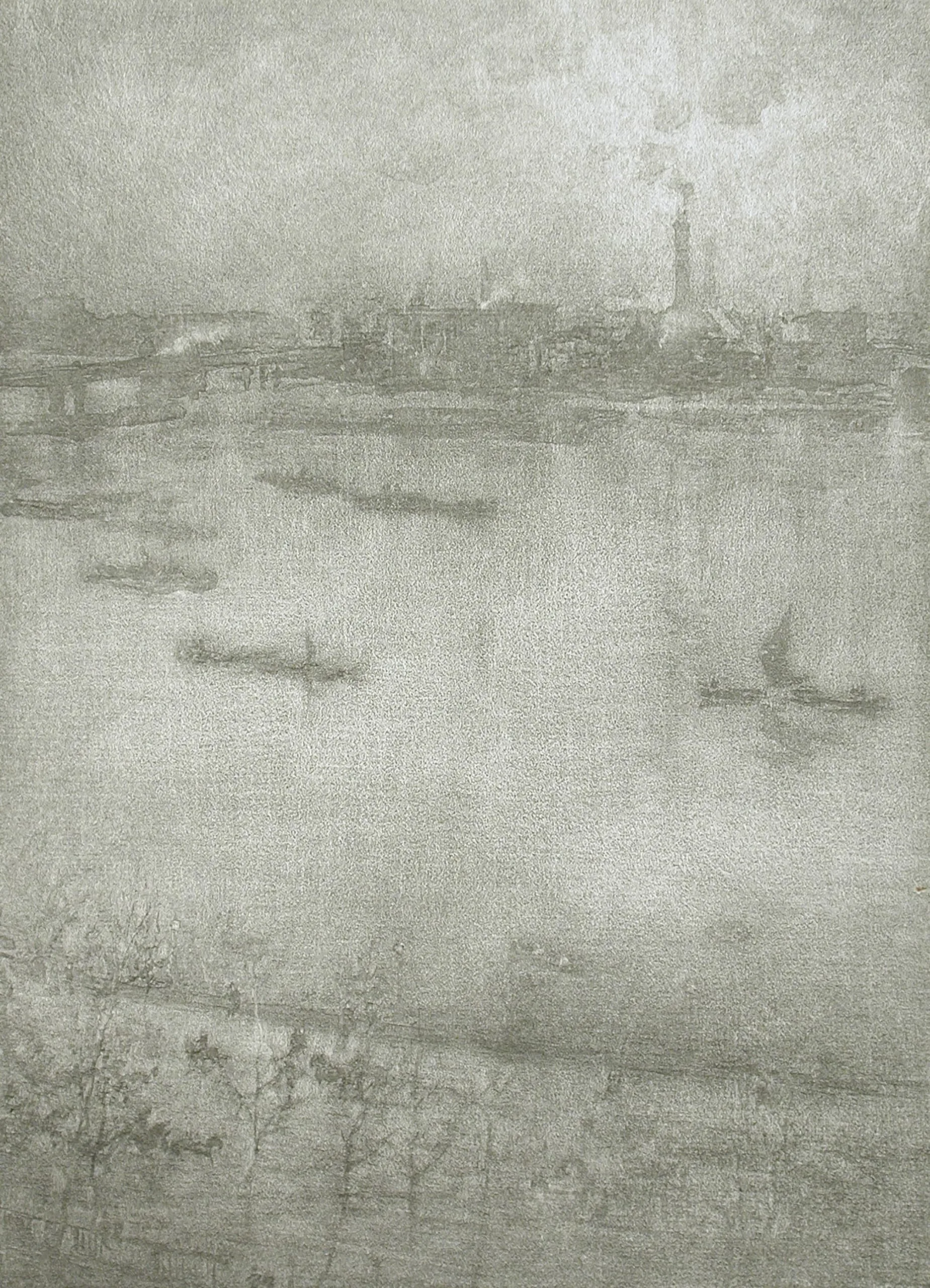
Lithograph of a misty river scene with small boats on calm water, a hazy industrial skyline with a smokestack in the distance, and bare trees along an embankment in the foreground, rendered in soft silvery grays

James McNeill Whistler, The Thames, 1896, Los Angeles County Museum of Art, Purchased with funds provided by Mr. and Mrs. Billy Wilder, Walter Stein and Wallace L. DeWolf, photo © Museum Associates/LACMA

Artist or Maker
James McNeill Whistler
United States, 1834-1903
Title
The Thames
Place Made
United States
Date Made
1896
Medium
Lithotint
Dimensions
10 7/16 x 7 5/8 in. (26.51 x 19.37 cm)
Credit Line
Purchased with funds provided by Mr. and Mrs. Billy Wilder, Walter Stein and Wallace L. DeWolf
Accession Number
87.2
Classification
Prints
Collecting Area
Prints and Drawings
Curatorial Notes

This view of the Thames from the window of Whistler’s suite at the Savoy Hotel is one of his final printed Nocturnes, a series of paintings and works on paper of nighttime scenes imbued with an ethereal glow. Whistler’s lithographic compositions were drawn directly onto the stone, which reversed the orientation of his original drawing. Here, the silver and gray tones that lend a velvet tactility to the chilly atmosphere and dreamlike haziness were created with black ink tusche washes applied with a brush to the stone, as well as scraping techniques, in a process called lithotint. The two-dimensional flatness of the image is emphasized by the distinct sections of land, river, city, and sky, mirroring the ordered structure of traditional Japanese woodblock prints. The melancholic cast of the riverscape at dusk was perhaps informed by the artist’s grief at the recent loss of his beloved wife Beatrix.

The Thames was well received by the public and art experts alike. Théodore Duret viewed the print at the 1900 Exposition Universelle in Paris, where it was awarded a medal, and noted, “It is infused with transparency and incredible lightness, and I was astonished by it” (MacDonald and Newton 1987: 160).

Claudine Dixon

2024

Bibliography

MacDonald and Newton 1987. Margaret F. MacDonald and Joy Newton, “Correspondence Duret-Whistler,” Gazette des Beaux-Arts (November 1987): 160.
Related Unframed

Mezzotints from the Collection
  • April 16, 2014
Whistler’s Etchings: An Art of Suggestion
  • May 21, 2012