- Title
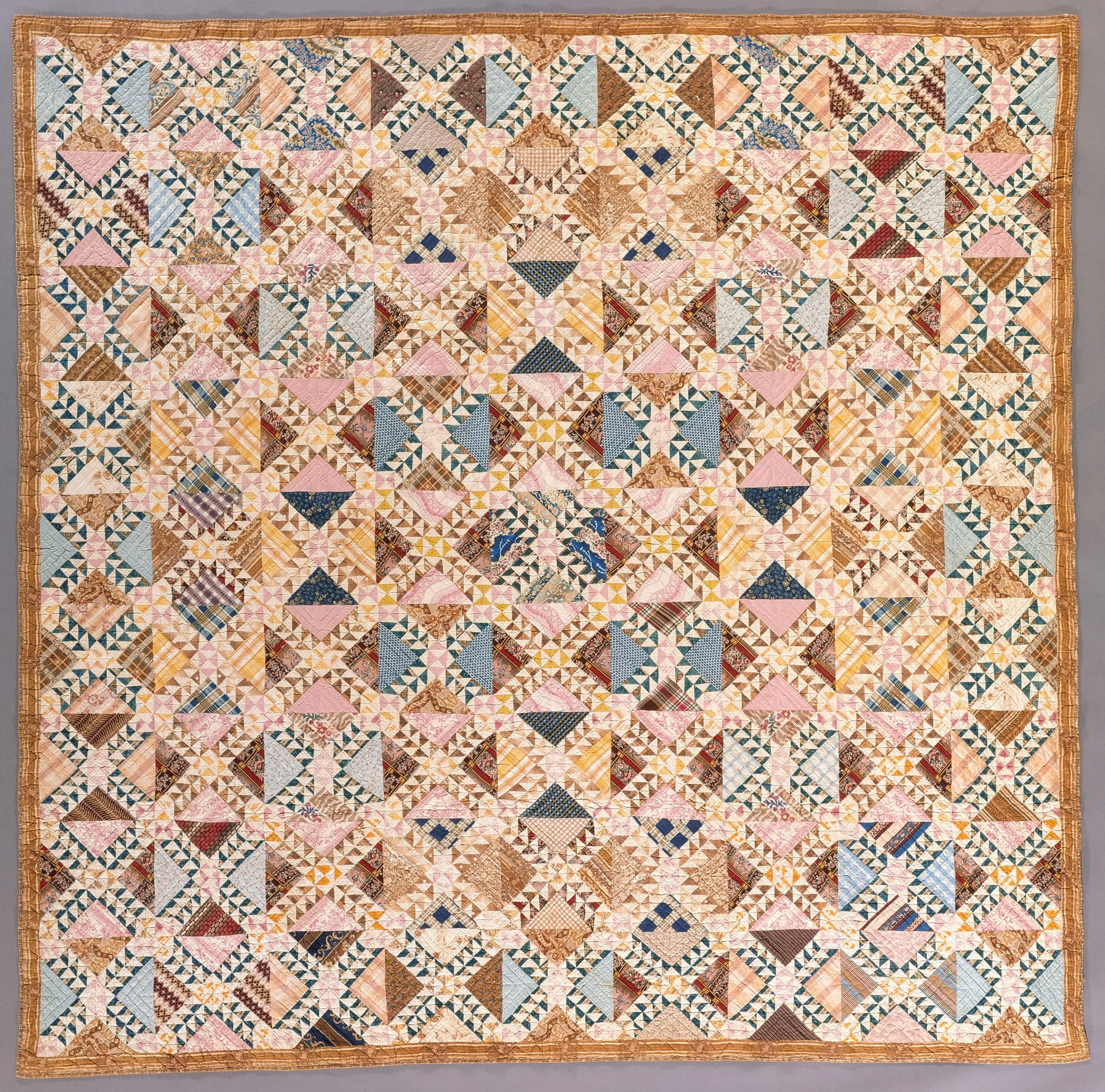
- Quilt, 'Lady of the Lake'
- Date Made
- circa 1840
- Medium
- Pieced and quilted cotton
- Dimensions
- 98 1/2 x 98 1/2 in. (250.2 x 250.2 cm)
- Accession Number
- M.87.226.2
- Curatorial Notes
Quilts embody profound yet conflicting truths about our nation’s past. On the one hand, they symbolize cherished values surrounding frugality, domesticity, and community that are still revered as being definitively “American.” On the other hand, the cotton fabrics typically used in quilt manufacture often serve as durable reminders of American systems of forced labor.
The Lady of the Lake pattern seen here—defined by pieced squares composed of two large central half-square triangles framed with smaller half-square triangles—originated around 1820 in Vermont, the first state to ban slavery in its constitution (1777). But in 1840, when this particular quilt was made in Virginia, Richmond was the largest market in the Upper South for selling enslaved people of African descent, and cotton produced on slave plantations was the state’s primary product. That same year, American cotton exports generated more revenue than all other national exports combined.
Nicole LaBouff
2024