LACMA

ShopMembershipMyLACMATickets
LACMA
Los Angeles County Museum of Art
5905 Wilshire Blvd.
Los Angeles, CA 90036
info@lacma.org
(323) 857-6000
Sign up to receive emails
Subscribe
© Museum Associates 2025

Museum Hours

Monday

11 am–6 pm

Tuesday

11 am–6 pm

Wednesday

Closed

Thursday

11 am–6 pm

Friday

11 am–8 pm

Saturday

10 am–7 pm

Sunday

10 am–7 pm


  • About LACMA
  • Jobs
  • Building LACMA
  • Host An Event
  • Unframed
  • Press
  • FAQs
  • Log in to MyLACMA
  • Privacy Policy
© Museum Associates 2025
Collections

Unknown
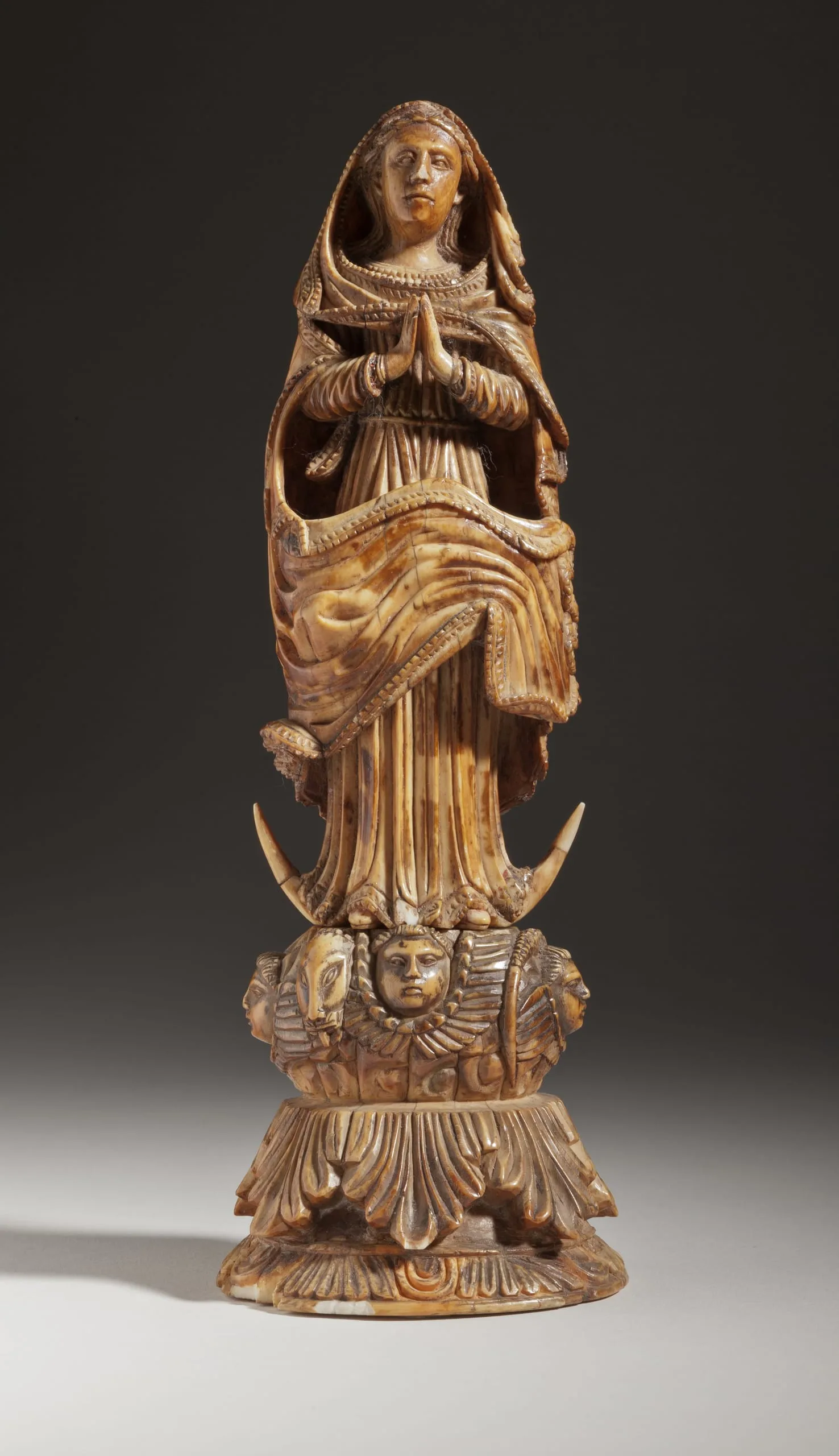
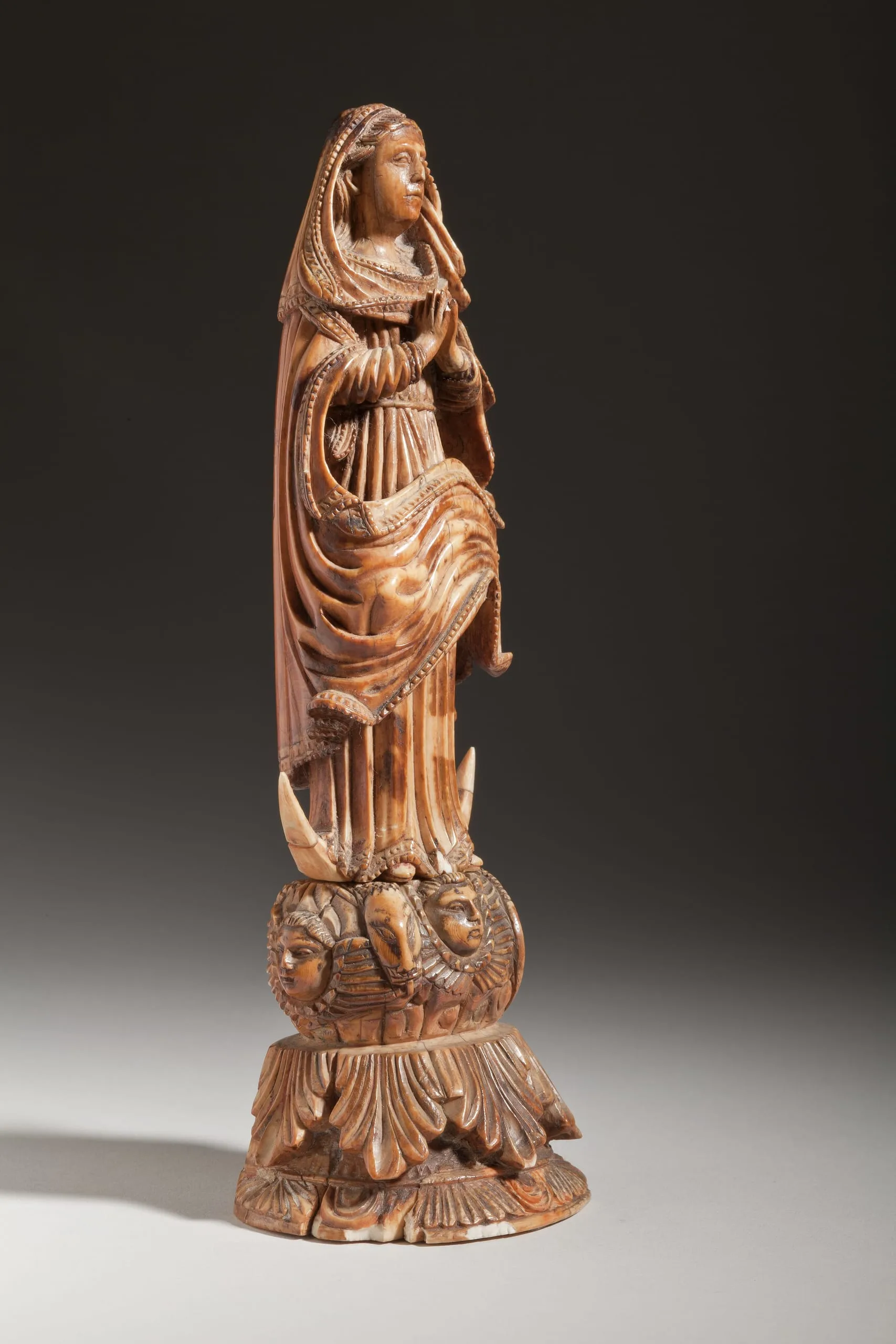
The Immaculate Conception18th century

Not on view
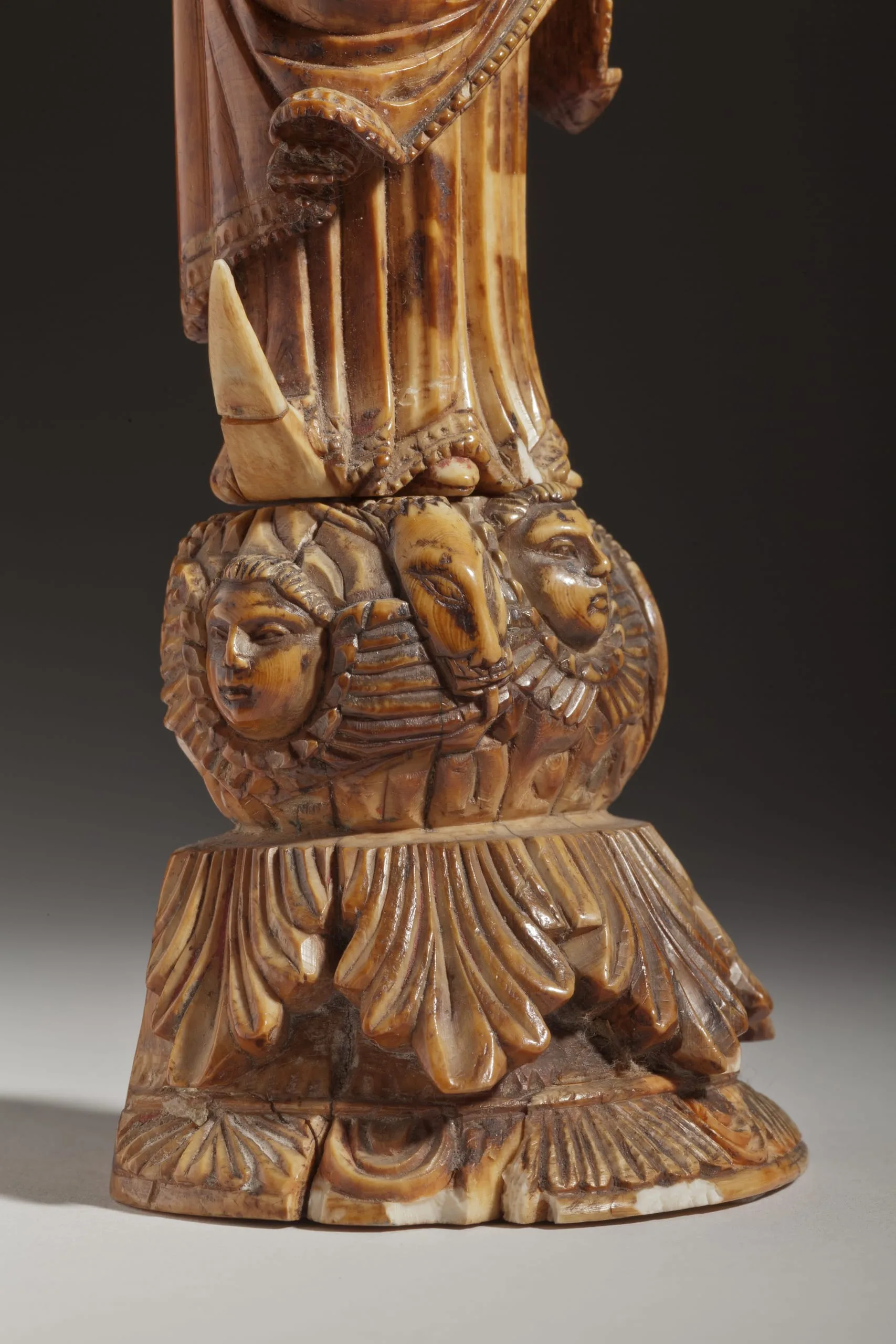
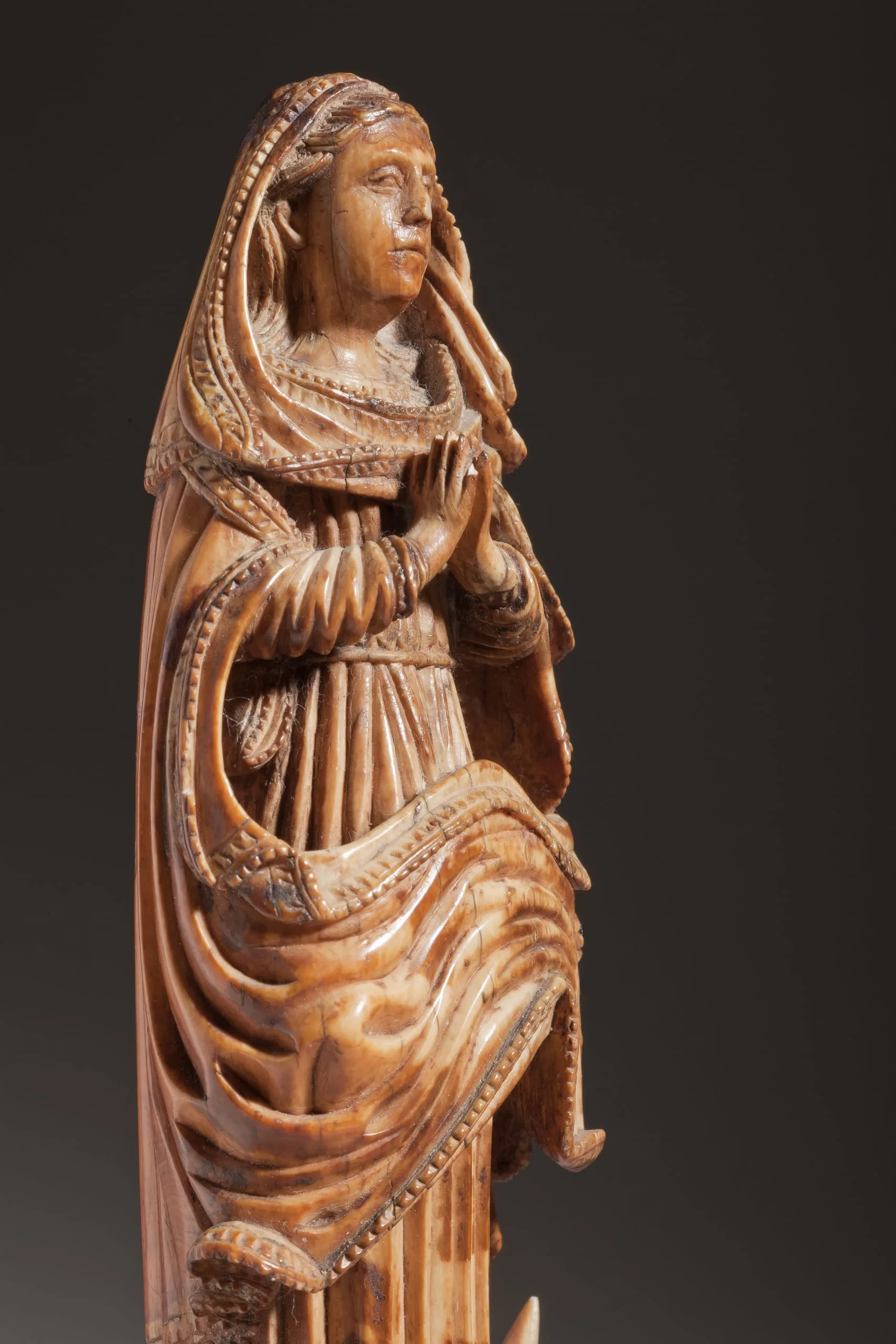
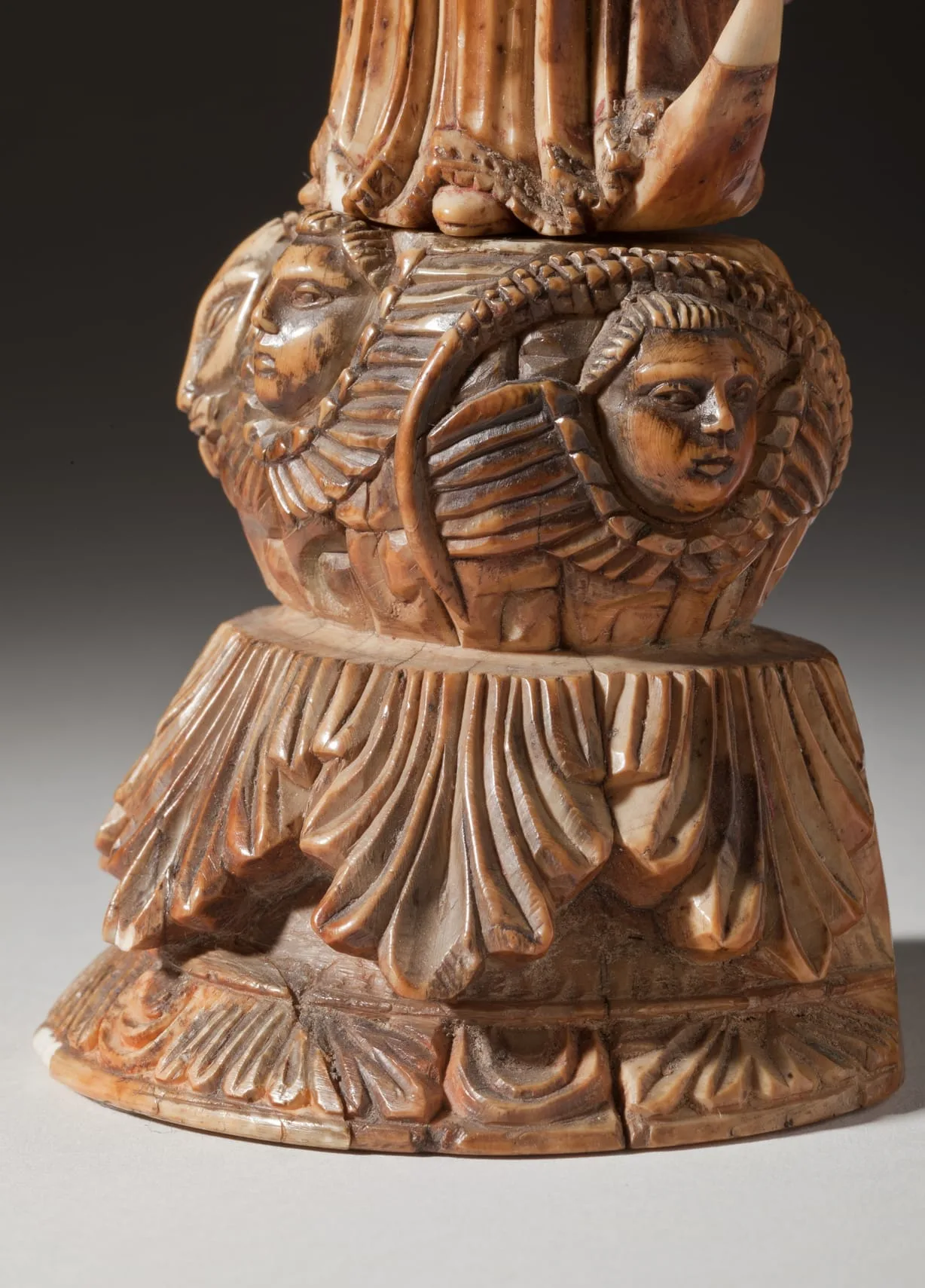
Carved ivory or bone sculpture of a praying robed female figure standing atop an ornate pedestal with crescent moons, a winged cherub face, and a leaf-carved base
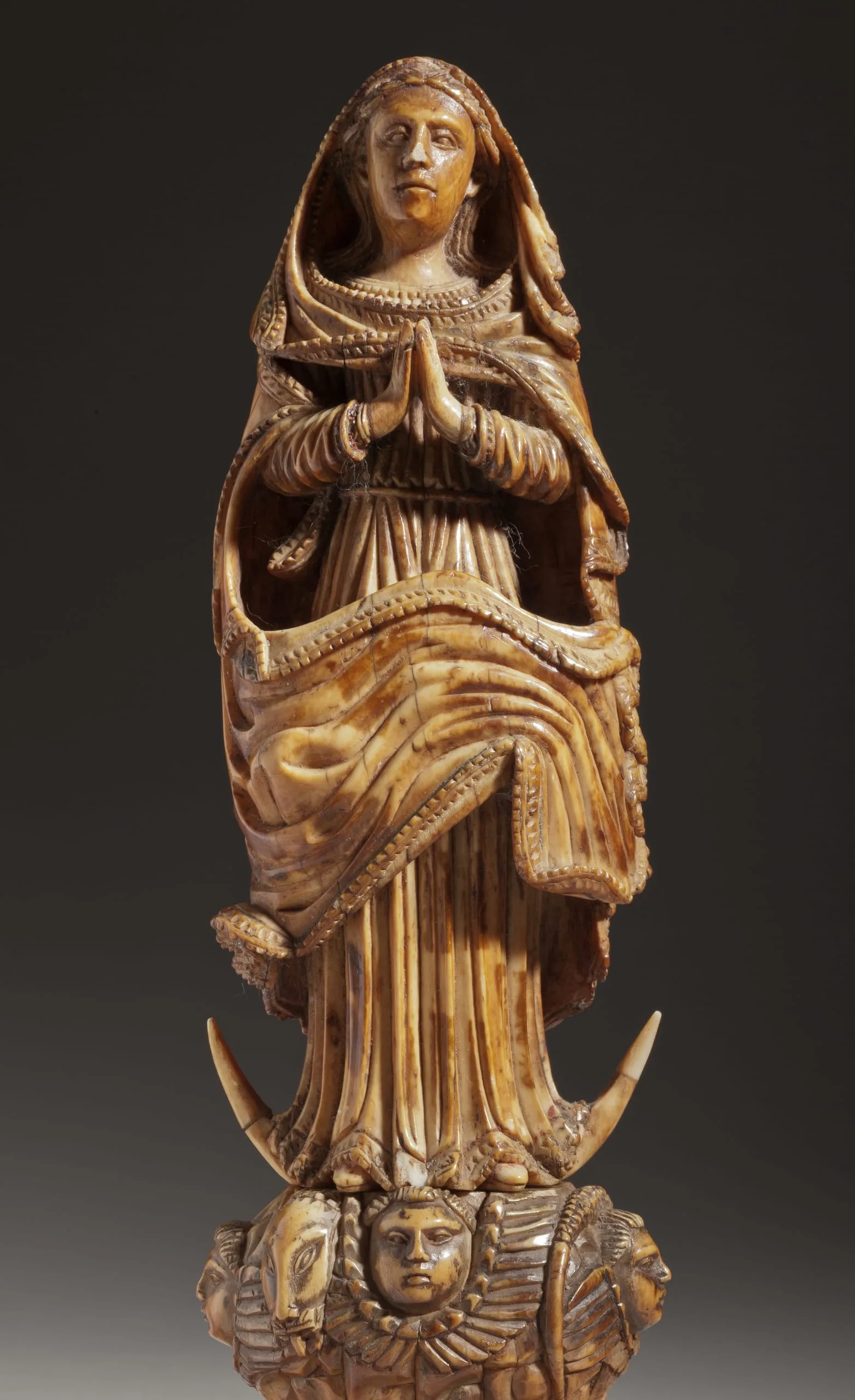
Ivory or bone sculpture of a standing crowned female figure in veiled robes with hands raised in prayer, standing atop a crescent moon and a base carved with three faces amid foliage, with finely detailed drapery and warm honey-brown patina.
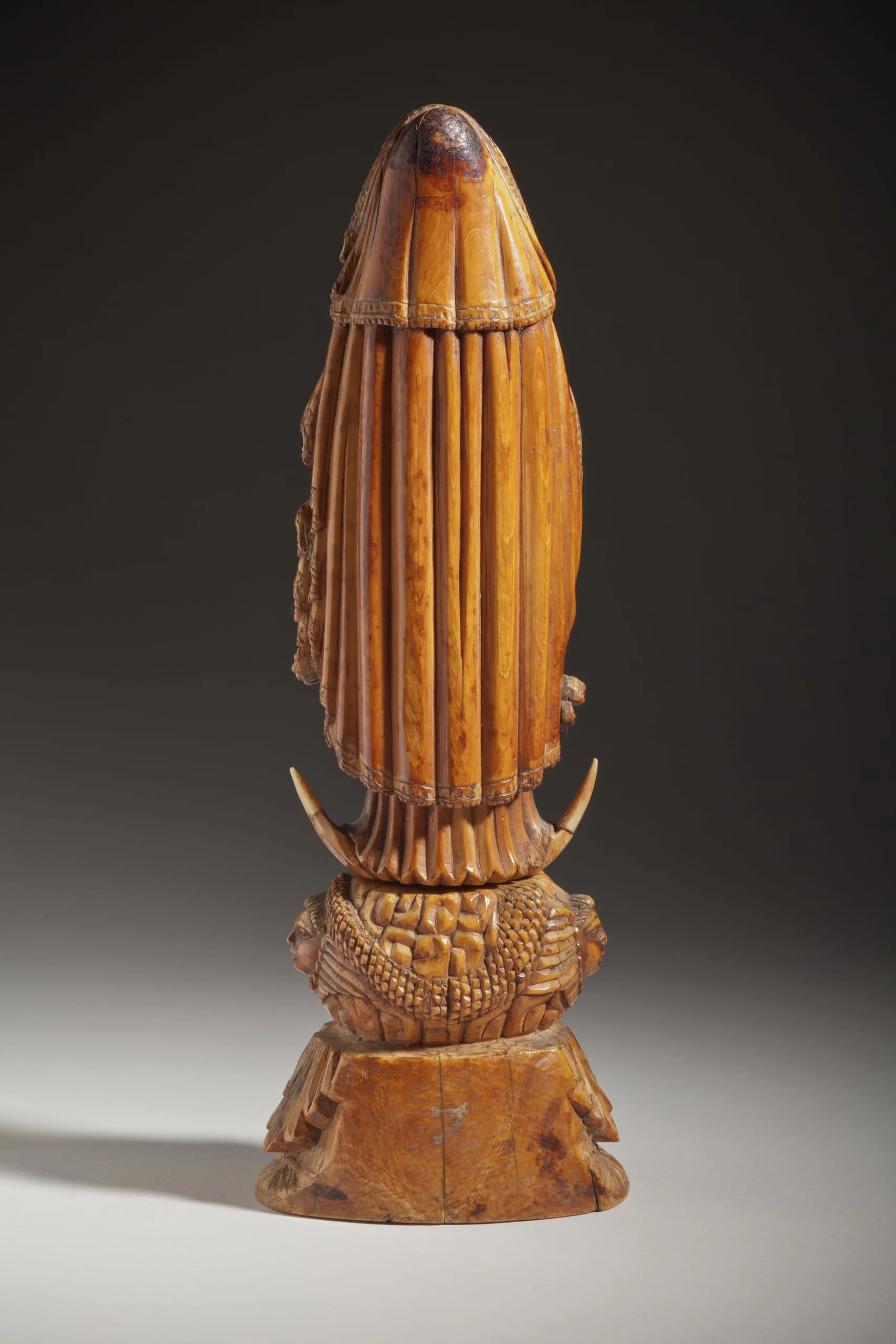
Carved ivory or bone sculpture, tall oval form with vertical ribbed striations rising to a rounded darkened tip, set atop an intricately carved base featuring scaled and foliate relief work with curved horn-like projections, warm amber and honey tones throughout.
Carved ivory or bone statuette of a standing robed woman in a veil with hands clasped, atop a rounded base decorated with carved faces and foliate forms; warm honey-toned surface with fine drapery detail.
Ivory sculpture of a standing, veiled female figure with hands pressed together in prayer, draped robes with beaded trim, standing atop a crescent moon above carved faces and animal heads, warm honey-toned ivory with fine detail work.
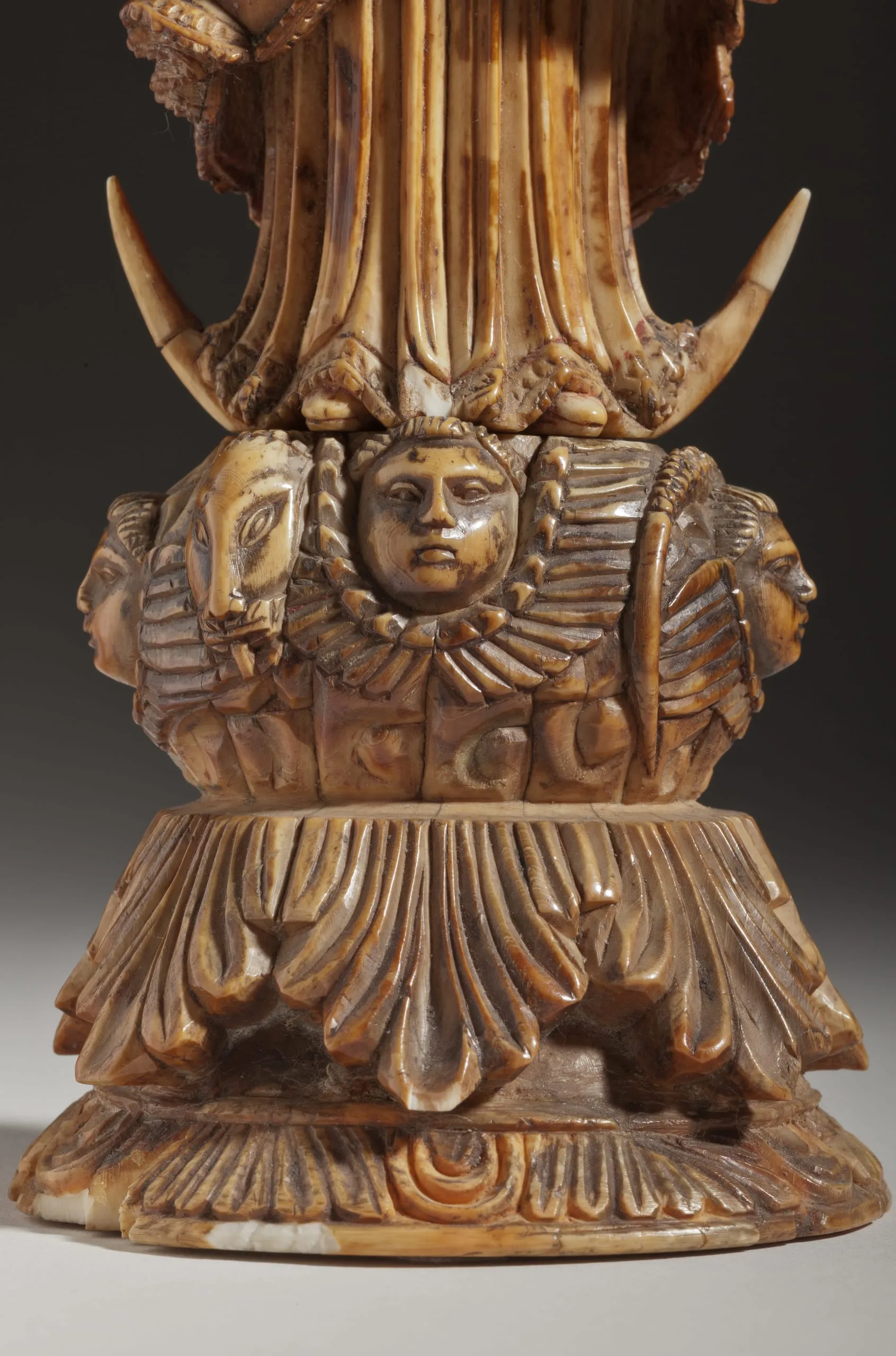
Carved ivory or bone sculpture base with multiple faces — a frontal human face flanked by animal heads with horns — above a lotus-petal pedestal with deeply incised foliate relief, warm honey and cream tones.
Carved ivory sculpture detail showing the base of a standing figure; the pedestal features three carved faces flanked by lion heads, above a fluted oval base with leaf-like relief carving; warm amber and cream tones with aged patina.
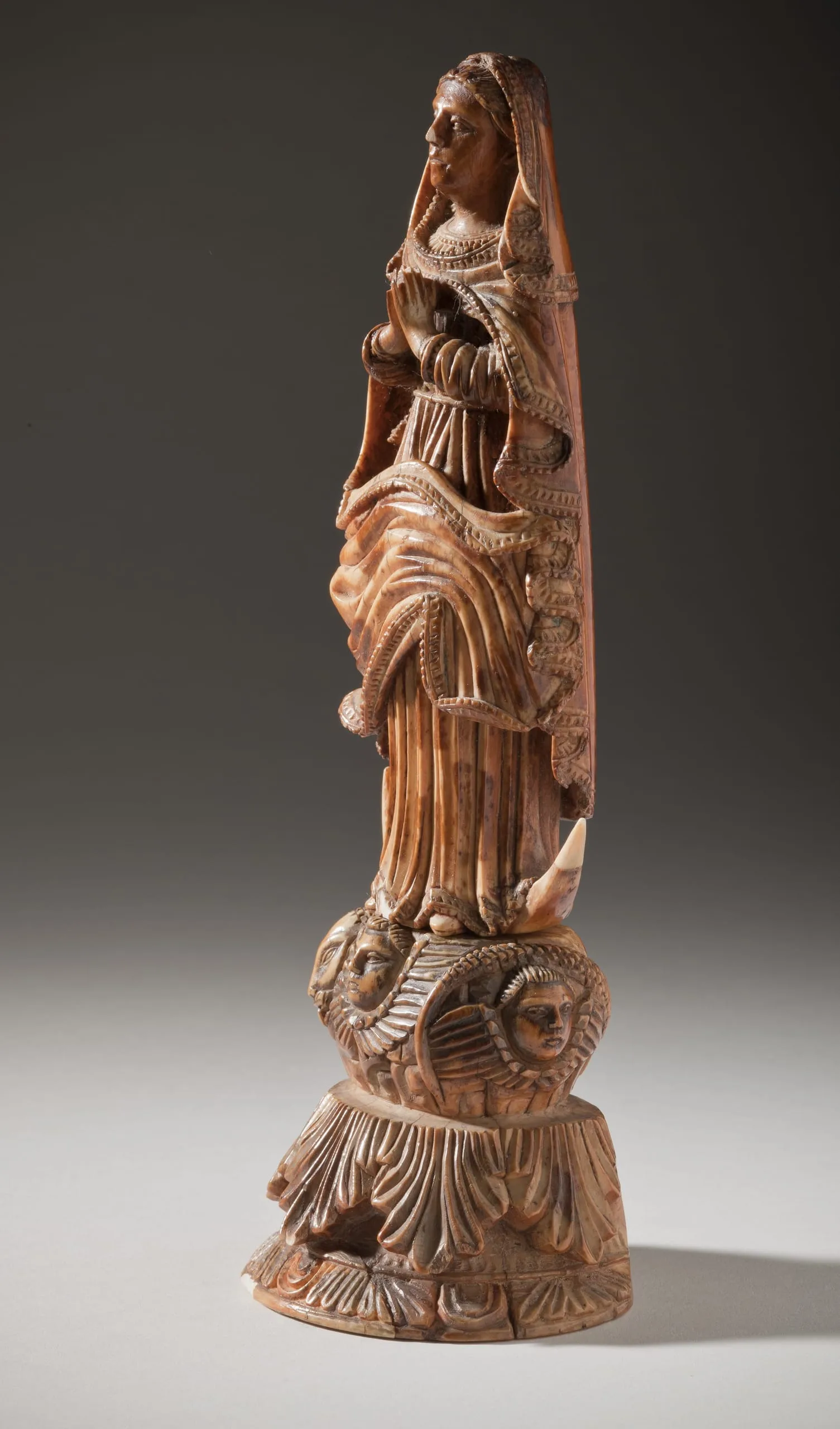
Carved ivory statuette of a standing female figure in a veil and robes, one hand raised to her face, the other held at chest height, with deeply incised drapery folds and beaded border details.
Carved ivory or bone pedestal base with intricate relief work, featuring two cherubic faces with ruffled collars emerging from foliate scrollwork on a tiered circular plinth with acanthus leaf carvings.
Artist or Maker
Unknown
Title
The Immaculate Conception
Place Made
India, Goa
Date Made
18th century
Medium
Patinated ivory
Dimensions
Overall: 8 x 2 3/4 x 2 5/16 in. (20.32 x 6.98 x 5.87 cm)
Credit Line
Gift of Paul F. Walter
Accession Number
M.87.227.1a-b
Classification
Sculpture
Collecting Area
South and Southeast Asian Art
Curatorial Notes

Among the various forms of the Virgin Mary, Our Lady of the Conception was indisputably the most popular in Goa, just as she was throughout the Iberian Peninsula. The image symbolizes her Immaculate Conception in the womb of her mother Anne and her identification with the Apocalyptic Woman (Book of Revelation, chapter 12). This divine description, and that of the 17th century Spanish painter and iconographer Francisco Pacheco (1564–1644), form the basis of her theological imagery. The Virgin is depicted standing on a mountainous globe with her hands in prayer and her robe billowing. The crescent moon beneath her feet is an ancient symbol of chastity. Symbolic of her ascription as "the Second Eve," a serpent under her feet is wrapped around the rocky mount. Heads of three winged cherubs adorn the upper base on the front and sides. Encircling the base are two bands of oversize acanthus leaves, a common decorative motif found on contemporaneous Mughal and Deccani art in multiple media.

In some Goan wooden images of the Immaculate Conception, the Virgin accords with the description in the Book of Revelation by being represented with a dragon symbolic of Satan. However, its form is akin to a makara, the mythical aquatic animal of ancient South and Southeast Asian mythology and art, and thus may represent a cross-cultural artistic assimilation.
Selected Bibliography
  • Pal, Pratapaditya. Indian Sculpture, vol.2. Los Angeles: Los Angeles County Museum of Art; University of California Press, 1988.