LACMA

ShopMembershipMyLACMATickets
LACMA
Los Angeles County Museum of Art
5905 Wilshire Blvd.
Los Angeles, CA 90036
info@lacma.org
(323) 857-6000
Sign up to receive emails
Subscribe
© Museum Associates 2025

Museum Hours

Monday

11 am–6 pm

Tuesday

11 am–6 pm

Wednesday

Closed

Thursday

11 am–6 pm

Friday

11 am–8 pm

Saturday

10 am–7 pm

Sunday

10 am–7 pm


  • About LACMA
  • Jobs
  • Building LACMA
  • Host An Event
  • Unframed
  • Press
  • FAQs
  • Log in to MyLACMA
  • Privacy Policy
© Museum Associates 2025
Collections

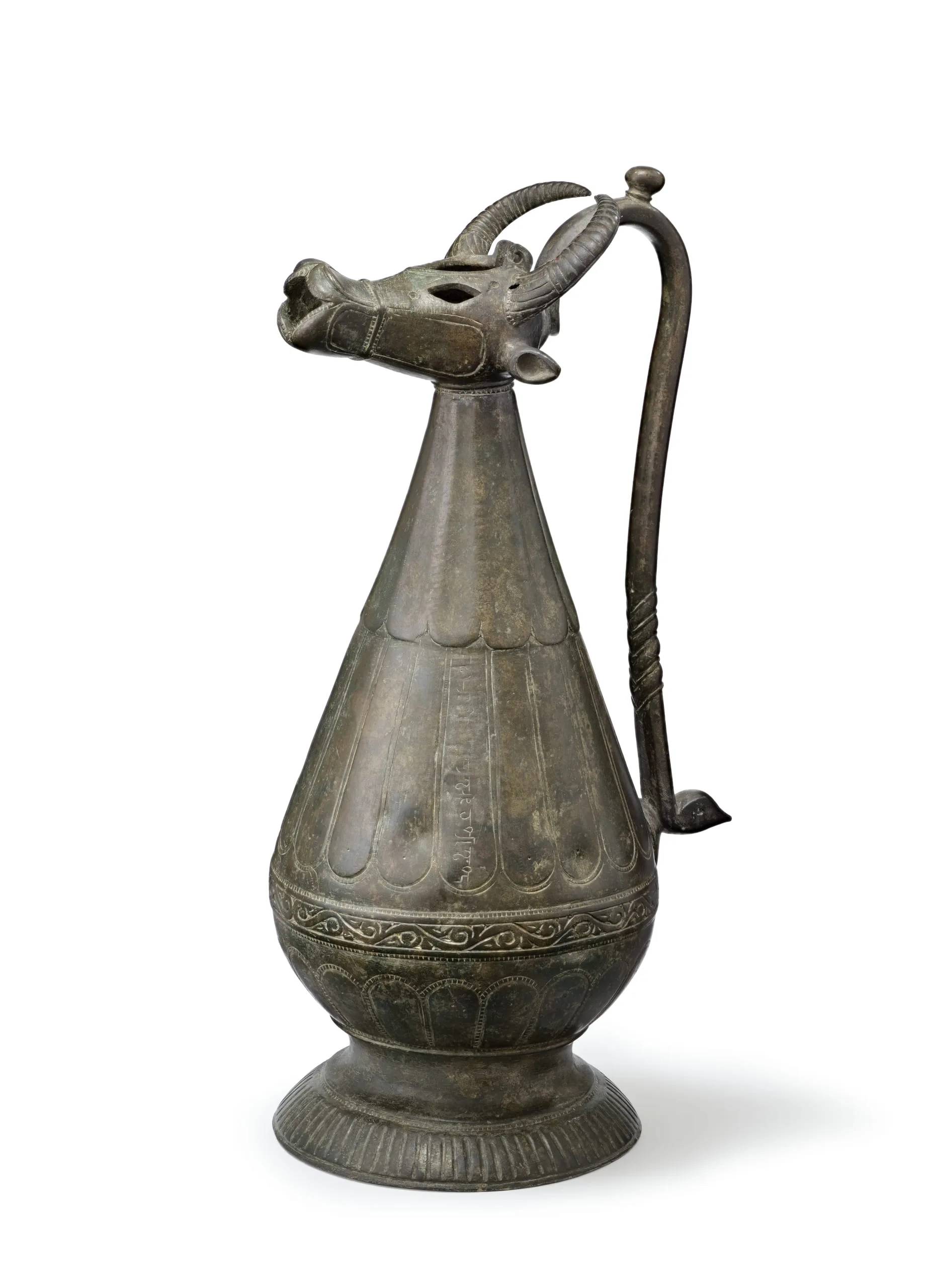
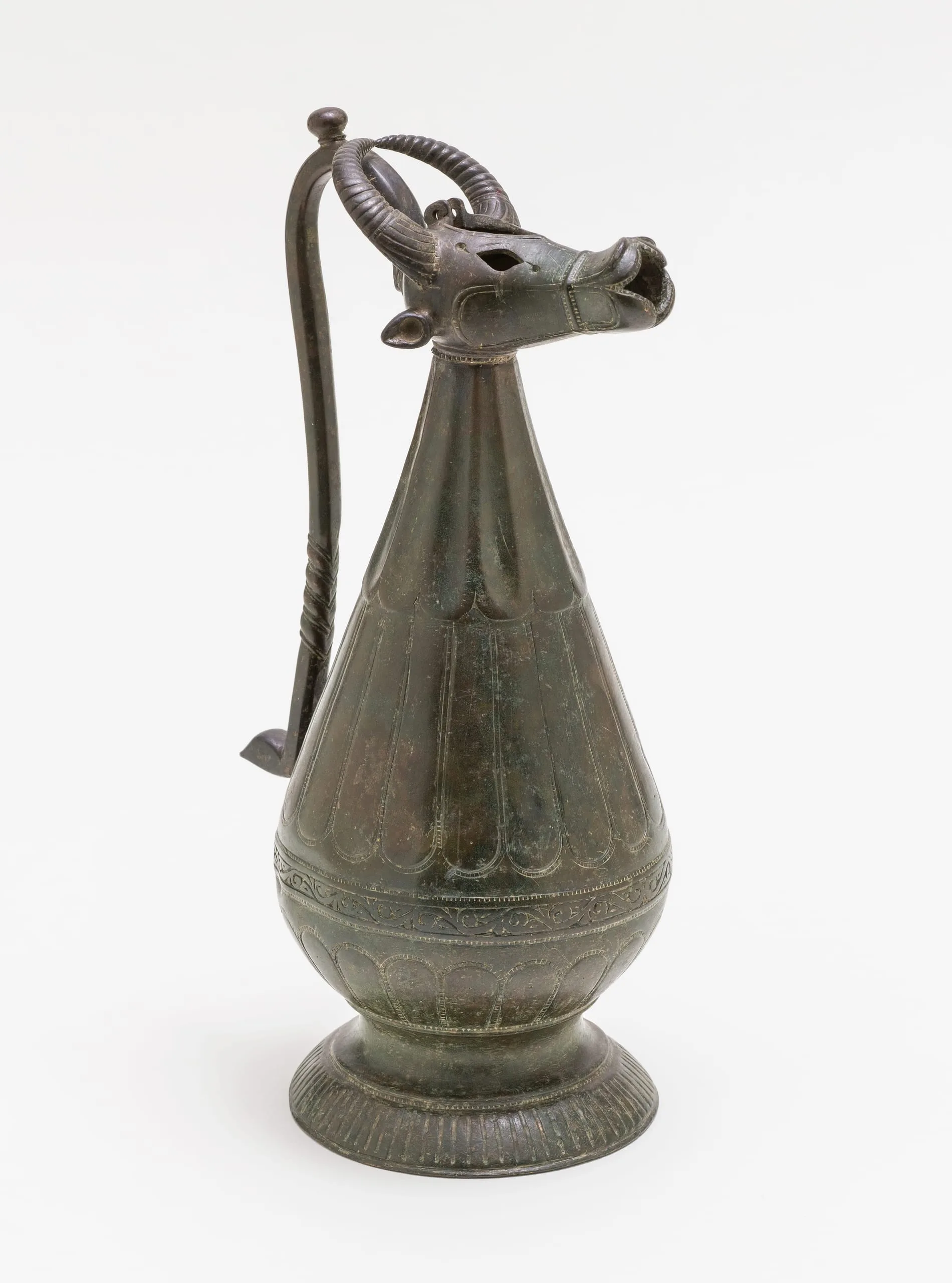
Ewer10th-11th century

On view:
Geffen Galleries, Islamic Art and Late Antiquity
Dark bronze ewer with pear-shaped lobed body, flared ribbed foot, and spout formed as a horned bull head with twisted arched handle
Cast bronze ewer with a pear-shaped body and zoomorphic spout in the form of a bovine head with curving horns; dark patina, engraved lobed and banded decoration on the body, tall curved handle with finial, and flared circular foot.
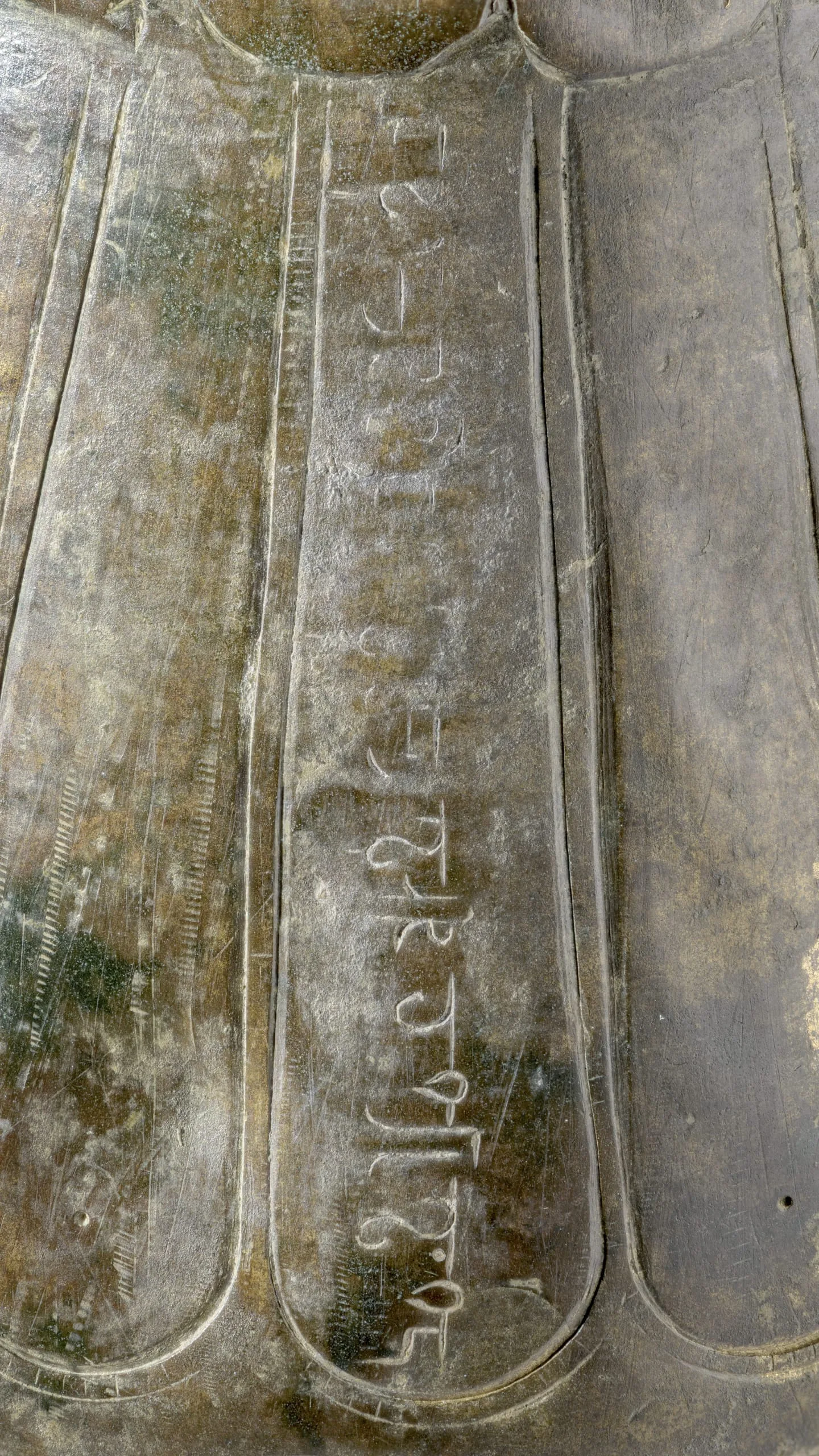
Close-up of a bronze sculpture surface showing three vertical rounded panels with raised borders; a vertical column of Indic script inscription is incised into the central panel, with weathered and patinated surface.
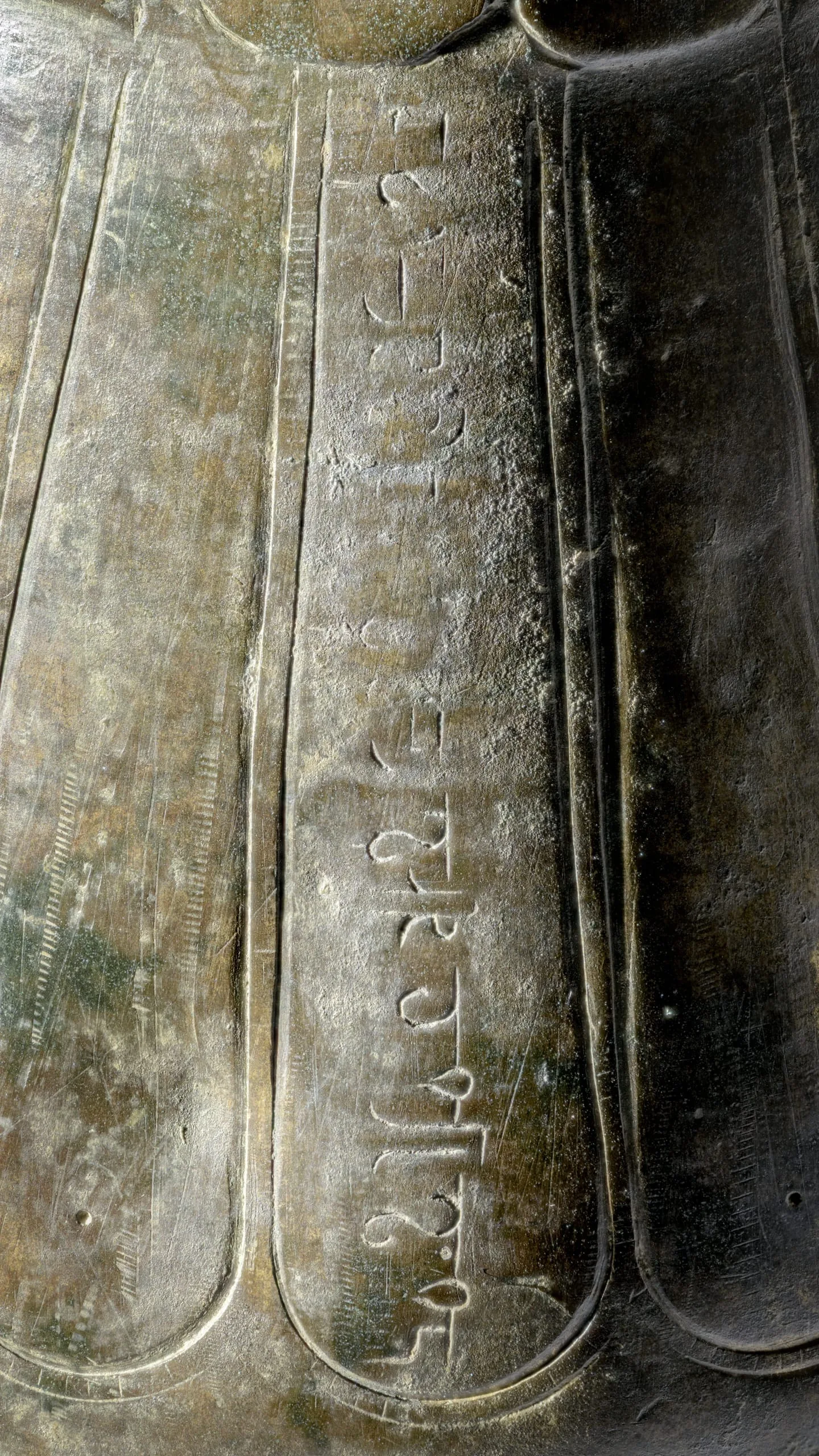
Close-up of a bronze surface with raised parallel ridges, likely depicting draped robes, with an inscribed vertical column of Indic script along the central panel; dark patina with greenish tones.
Title
Ewer
Place Made
Iran or Afghanistan
Date Made
10th-11th century
Medium
Bronze, cast and engraved
Dimensions
10 x 4 in. (25.4 x 10.16 cm)
Credit Line
Purchased with funds provided by the Nasli M. Heeramaneck Collection, gift of Joan Palevsky
Accession Number
M.87.57
Classification
Metal
Collecting Area
Art of the Middle East: Islamic
Curatorial Notes

Bronze vessels of this type attest to the high degree of skill and sophistication among early Islamic metalworkers and should probably be regarded as luxury wares. This example follows a long-standing practice in Iran of creating zoomorphic vessels. Here the metalworker has surmounted the body of the ewer with a bull-headed spout, which must have provoked delight and even mirth whenever liquid was poured from it. On one of the vertical flutes is an inscribed "signature" with the name Ahmad.

Selected Bibliography
  • Lo Terrenal y lo Divino: Arte Islámico siglos VII al XIX Colección del Museo de Arte del Condado de Los Ángeles. Santiago: Centro Cultural La Moneda, 2015.