- Title
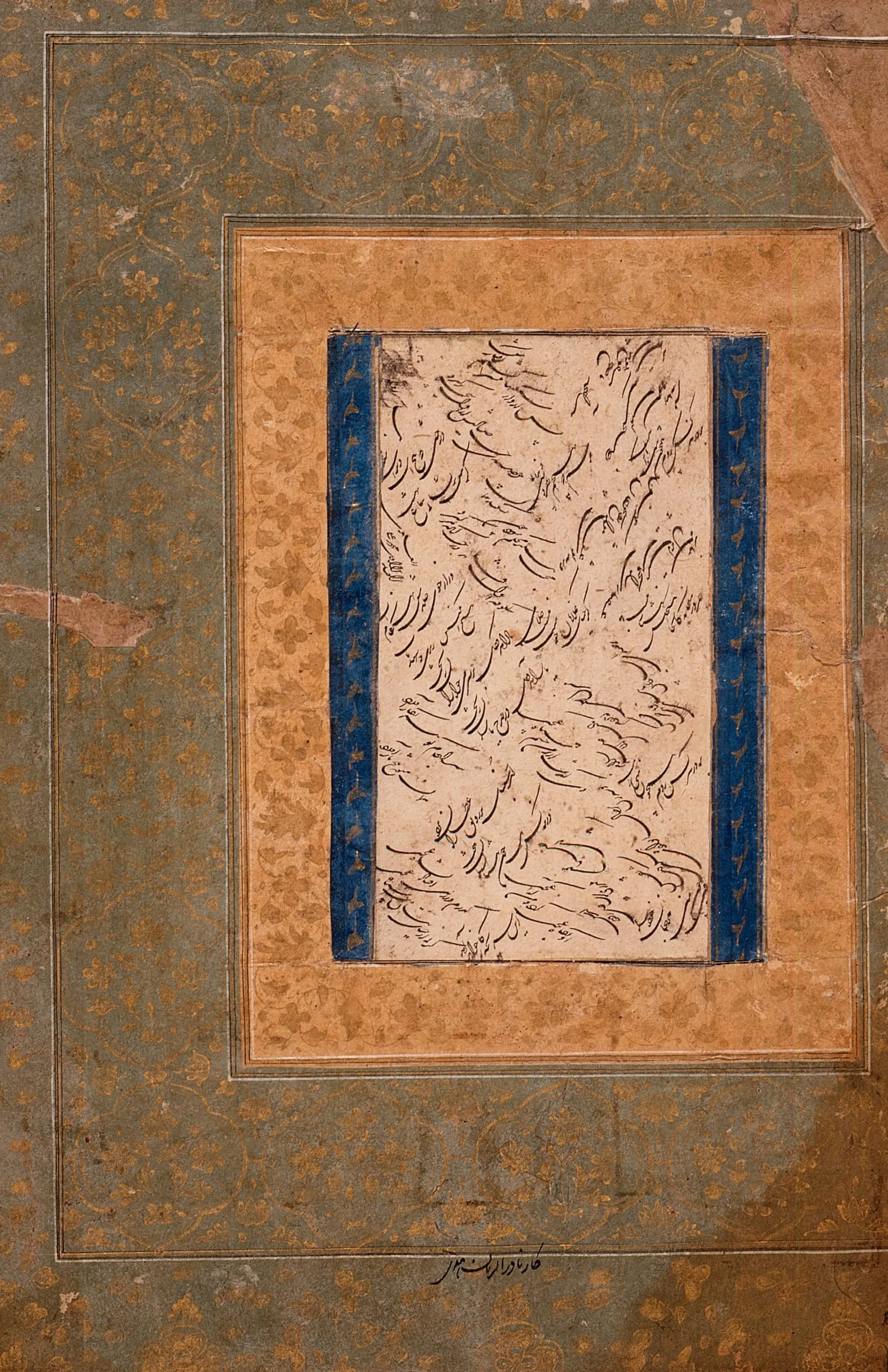
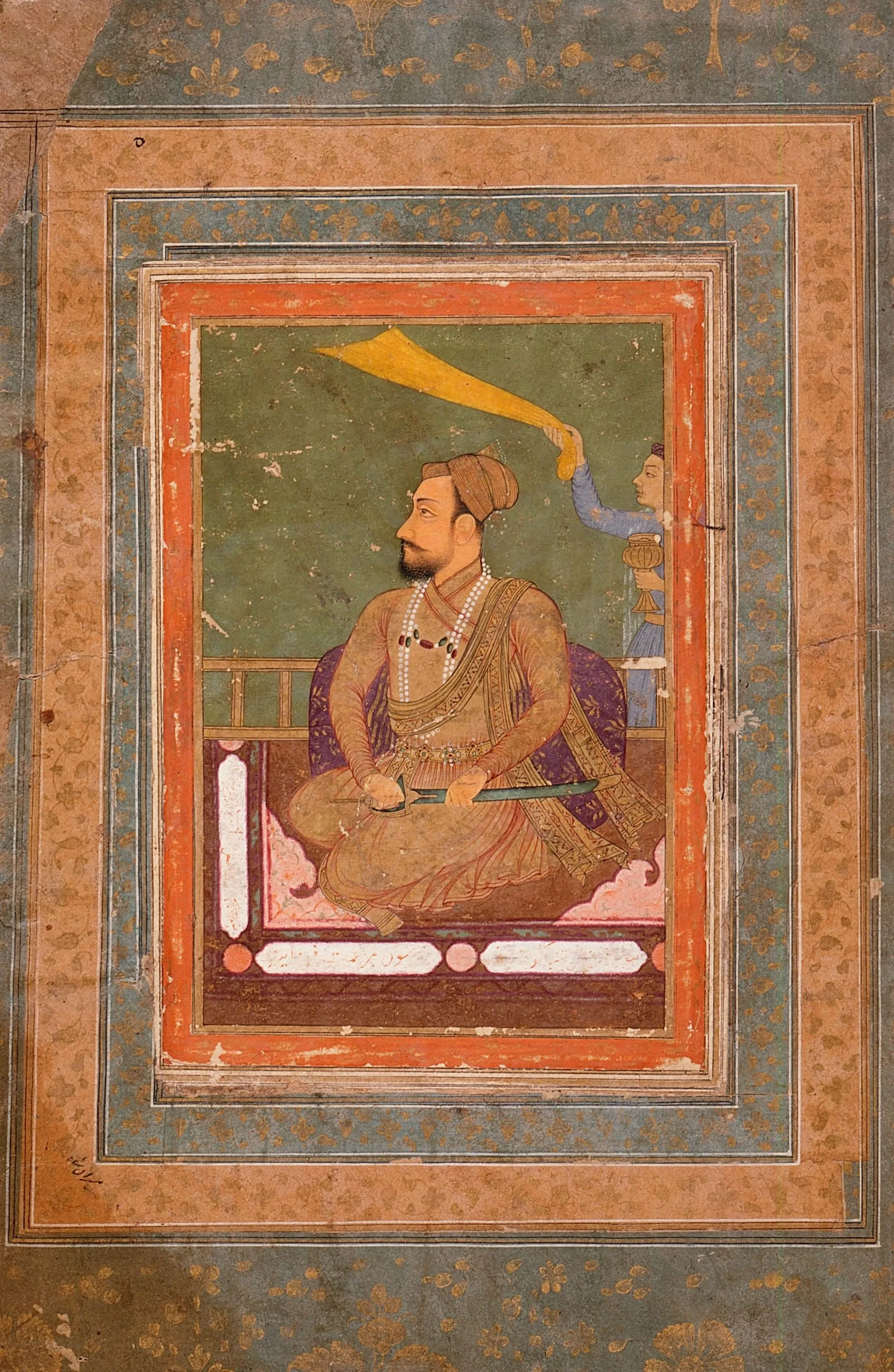
- Sultan Muhammad Adil Shah of Bijapur (r. 1627-1656) (verso), Calligraphy (recto)
- Date Made
- circa 1650-1675 (verso), 1717-1718 (recto)
- Medium
- Opaque watercolor, gold, and ink on paper
- Dimensions
- Image (recto): 5 3/8 x 2 7/8 in. (13.65 x 7.3 cm); Image (verso): 5 7/8 x 3 13/16 in. (14.92 x 9.68 cm); Sheet: 16 3/16 x 10 5/8 in. (41.12 x 26.99 cm)
- Accession Number
- M.87.61
- Curatorial Notes
Verso: Sultan Muhammad Adil Shah of Bijapur (r. 1627-1656) ascended the throne at age fifteen to become the seventh ruler of Bijapur in the Adil Shahi dynasty (1490-1686). He signed a peace treaty in 1636 with the Mughal Emperor Shah Jahan (r. 1627-1658) after joining the Mughals in their military campaigns against the Ahmednagar Sultanate (1490-1636). Muhammad Adil Shah expanded Bijapur’s dominions substantially and was a munificent patron of the arts and architecture. He is buried in the Gol Gumbaz mausoleum in Bijapur. Another portrait of Muhammad Adil Shah by Muhammad Khan is in the San Diego Museum of Art (1990.442). See also M.76.2.35. Below the margins in the center of the page (but not visible in the photograph) is an identifying inscription written in a Deccani or Gujarati variety of the Devanagari script that reads, “Chief King Mira Shah” (padshamirasha). Mira Shah was a title of Muhammad Adil Shah. The page is mounted with a blue green border with flowering plants in gold.
Recto: A page of unconnected Persian couplets and quatrains in the shikasta script. An inscription at the bottom of the page that reads, “the work of the wonder of the age, Mahdi(?)” (kar-i-nadir-al-zaman Mahdi(?)). The signature in the top left corner of the central panel may have been defaced and is illegible. However, there is a date of 1717-1718 (AH 1130). The page is mounted with a blue green border with flowering plants in gold set within cartouches.
- Selected Bibliography
- Pal, Pratapaditya. Indian Painting, vol.1. Los Angeles: Los Angeles County Museum of Art, 1993.