LACMA

ShopMembershipMyLACMATickets
LACMA
Los Angeles County Museum of Art
5905 Wilshire Blvd.
Los Angeles, CA 90036
info@lacma.org
(323) 857-6000
Sign up to receive emails
Subscribe
© Museum Associates 2026
  • About LACMA
  • Jobs
  • Host An Event
  • Unframed
  • Press
  • FAQs
  • Log in to MyLACMA
  • Privacy Policy
© Museum Associates 2026
Collections

Unknown
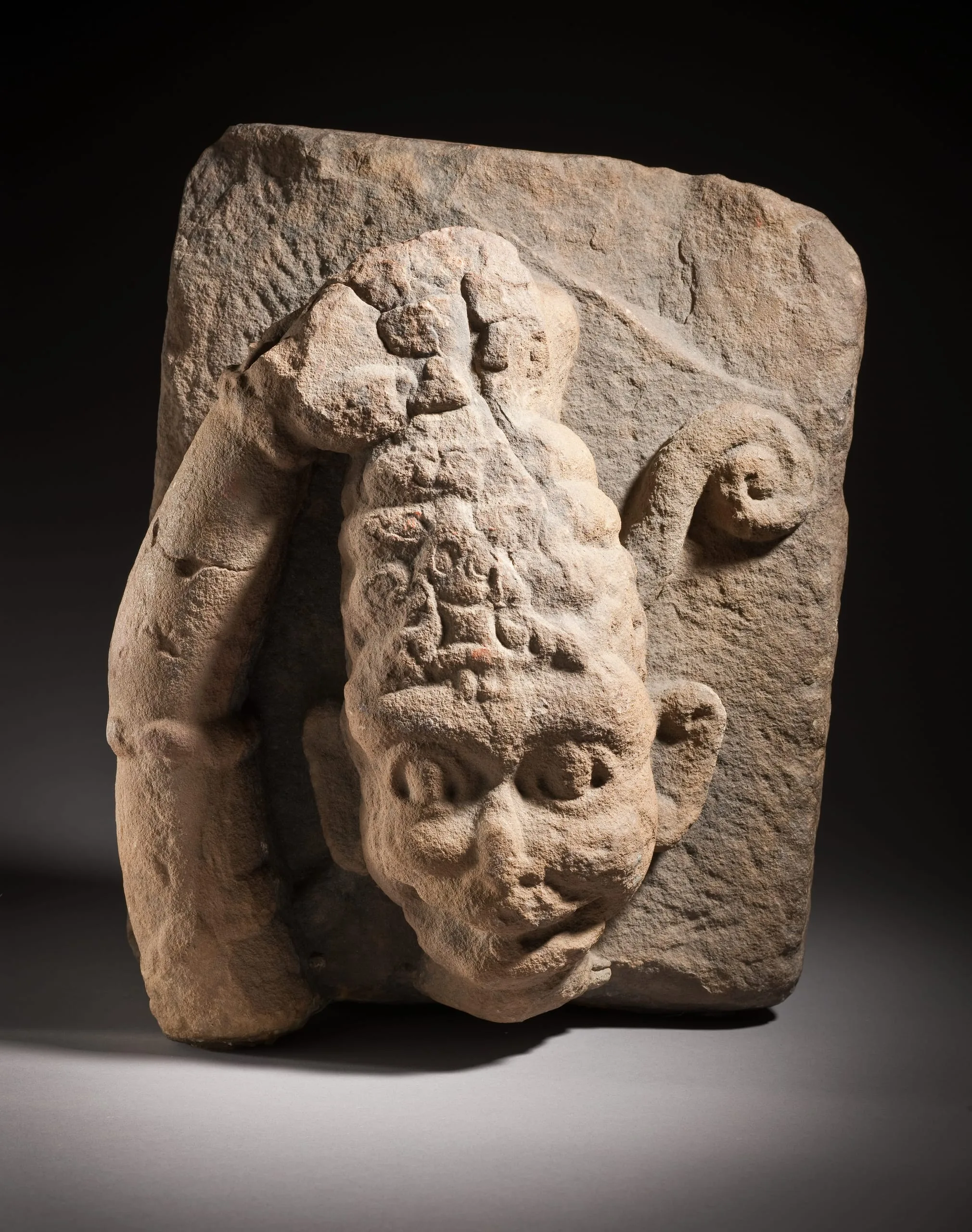
Head of Hanuman, The Divine Monkey12th-13th century

Not on view
Stone relief sculpture fragment, tan-gray sandstone block with a projecting human face surrounded by spiral scrolls and tightly curled hair or foliage, traces of red pigment visible
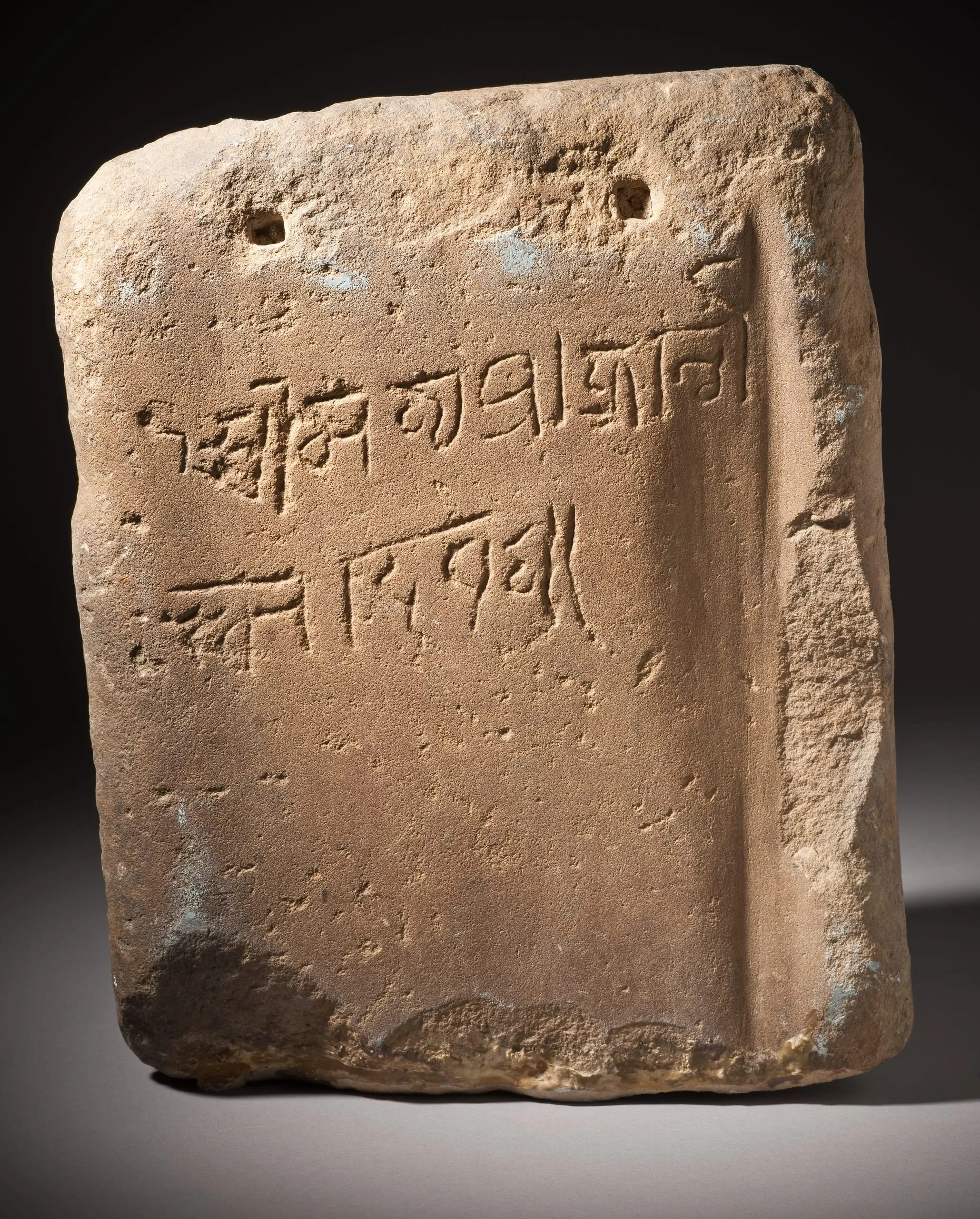
Rectangular stone tablet with incised Indic script in two horizontal lines, raised border along right edge, and two small holes near the top; worn sandy-colored surface with pitted texture.

Unknown, Head of Hanuman, The Divine Monkey, 12th-13th century, Los Angeles County Museum of Art, Gift of Neil Kreitman, photo © Museum Associates/LACMA

Artist or Maker
Unknown
Title
Head of Hanuman, The Divine Monkey
Place Made
India, Uttar Pradesh
Date Made
12th-13th century
Medium
Sandstone
Dimensions
15 x 12 x 7 1/2 in. (38.1 x 30.48 x 19.05 cm)
Credit Line
Gift of Neil Kreitman
Accession Number
M.86.338.8
Classification
Sculpture
Collecting Area
South and Southeast Asian Art
Curatorial Notes

Hanuman, The Divine Monkey (vanara), first appears in the great Indian epics, the Mahabharata ([War of the] Great Bharatas) and the Ramayana (Adventures of Rama). He served as the Monkey General who located and helped rescue Prince Rama’s wife, the kidnapped Princess Sita, from Ravana, the arrogant ten-headed demon-king of Lanka (probably modern Sri Lanka). Like Rama, Hanuman was also deified in later Indian culture. He is particularly honored for his staunch loyalty to Rama. See also M.85.291.1 and AC1996.169.1

Hanuman is represented making his idiosyncratic gesture of grasping his golden conical crown (kirita mukuta) to secure it before leaping into the air to fly over the ocean to Lanka. Although this gesture is not explicitly mentioned in Valmiki’s rendition of the Ramayana when Hanuman prepares to leap (5:1:35), it is implied in later commentaries, such as the 16th-century Govindaraja’s Ramayanabhushana or simply Bhushana (42).

A Brahmi inscription on the back of the relief sculpture, paleographically dated from the 13th–14th century, reads, Success! The respectful god, the lord of the universe. (Translation by Gouriswar Bhattacharya.)

A comparable sculpture of Hanuman grasping his crown, attributed to North India, 18th century, is in the National Museum, New Delhi (M.89.6).
Selected Bibliography
  • Pal, Pratapaditya. Indian Sculpture, vol.2. Los Angeles: Los Angeles County Museum of Art; University of California Press, 1988.