LACMA

ShopMembershipMyLACMATickets
LACMA
Los Angeles County Museum of Art
5905 Wilshire Blvd.
Los Angeles, CA 90036
info@lacma.org
(323) 857-6000
Sign up to receive emails
Subscribe
© Museum Associates 2025

Museum Hours

Monday

11 am–6 pm

Tuesday

11 am–6 pm

Wednesday

Closed

Thursday

11 am–6 pm

Friday

11 am–8 pm

Saturday

10 am–7 pm

Sunday

10 am–7 pm


  • About LACMA
  • Jobs
  • Building LACMA
  • Host An Event
  • Unframed
  • Press
  • FAQs
  • Log in to MyLACMA
  • Privacy Policy
© Museum Associates 2025
Collections

Unknown
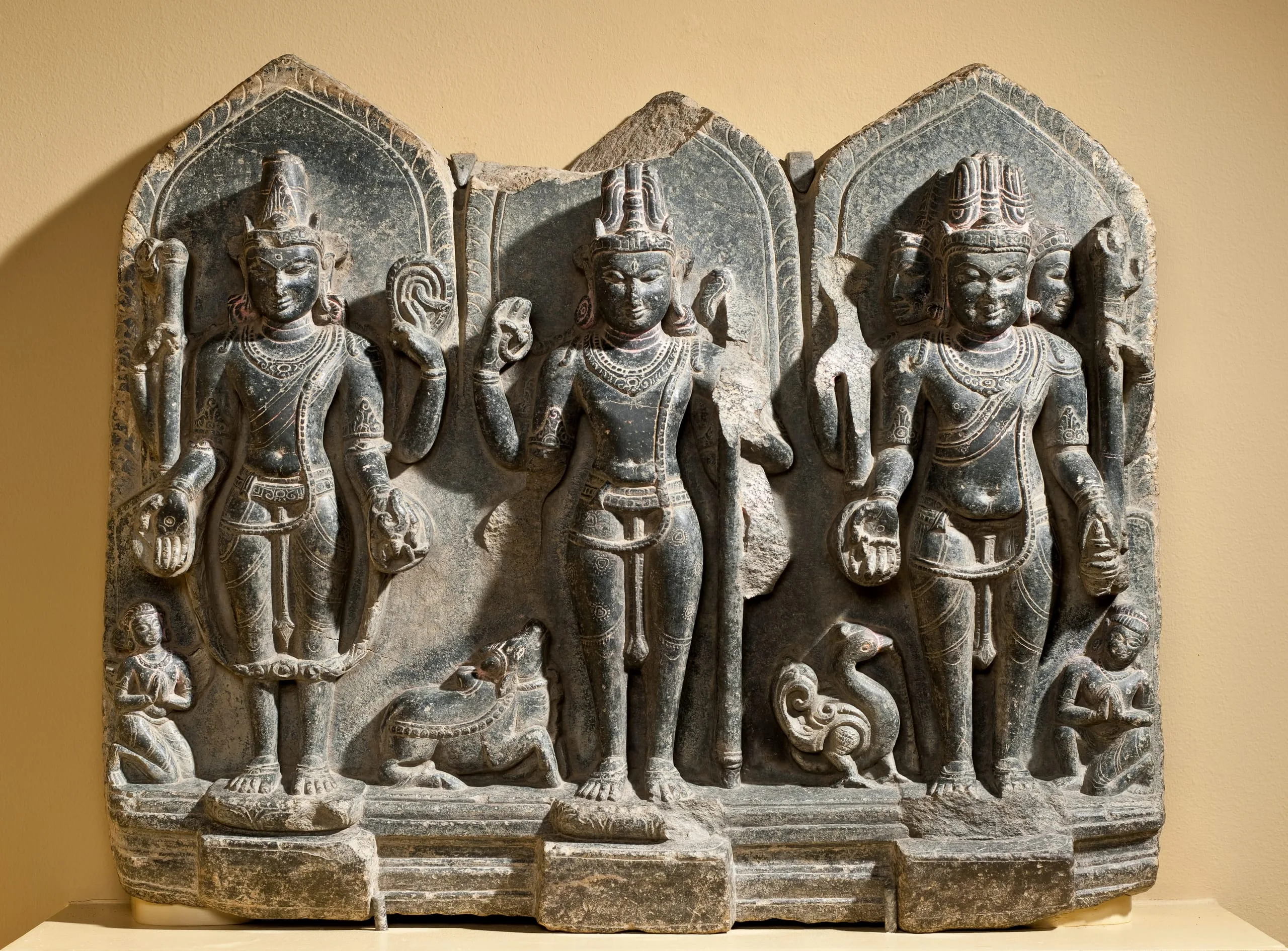
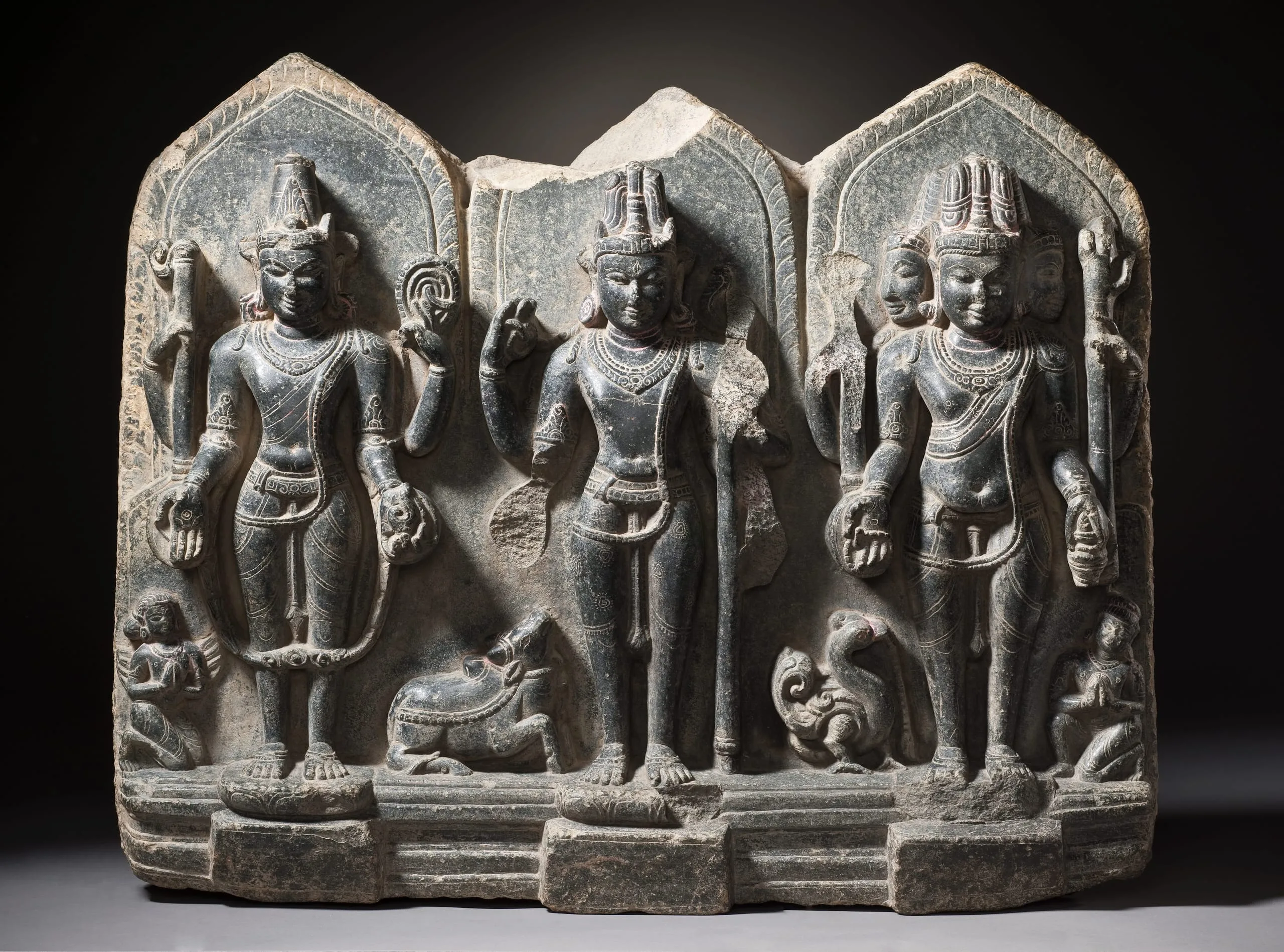
The Hindu Gods Vishnu, Shiva, and Brahma10th century

Not on view
Dark gray stone relief sculpture with three standing divine figures in arched niches, adorned with carved crowns, jewelry, and lower garments, with small attendant figures and animals at the base
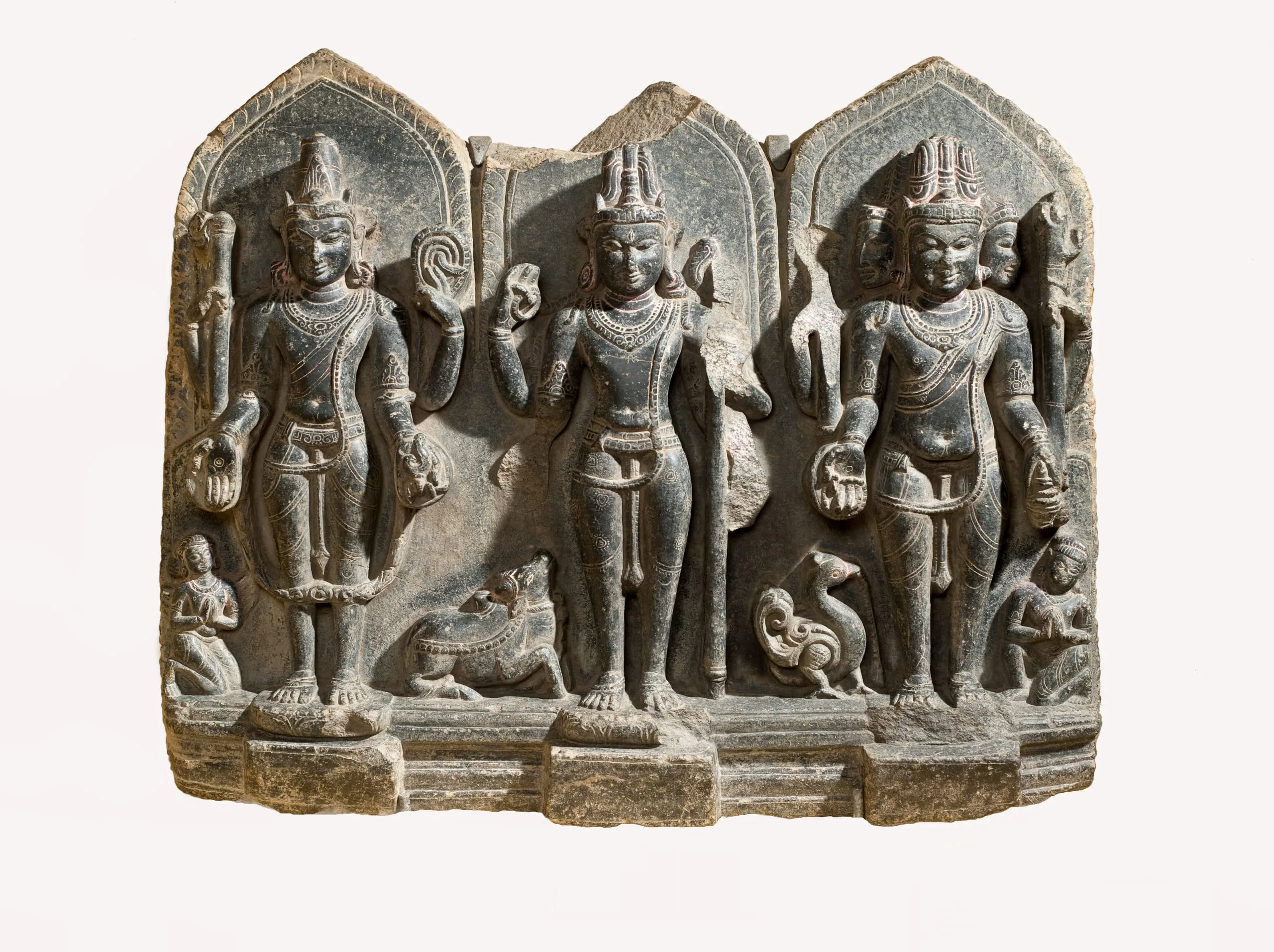
Gray stone relief panel with three standing deity figures in high relief, each framed by a pointed arch niche, adorned with elaborate jewelry, headdresses, and multiple arms holding attributes; small devotee and animal figures at their feet.
Dark gray stone relief panel with three standing deity figures in individual arched niches, each wearing elaborate crowns and jewelry, holding ritual attributes; smaller attendant figures and animals at their feet.
Stone relief sculpture with three standing figures in high relief, each set within an arched niche, wearing elaborate crowns, jewelry, and draped garments, with multiple arms holding ritual attributes; dark gray stone with fine carved detailing.
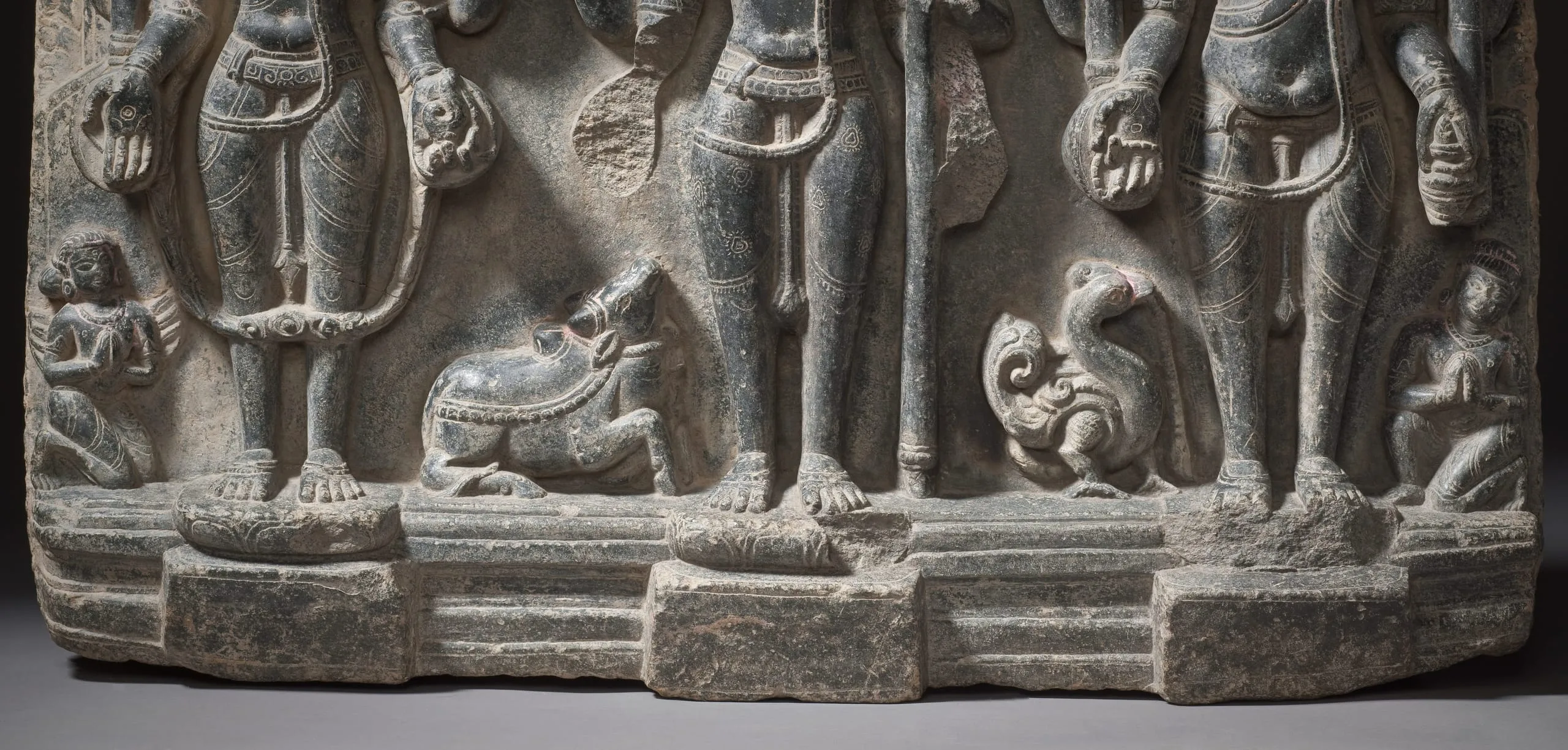
Stone relief panel with multiple standing figures wearing ornate jewelry and garments, their lower bodies and feet visible above a stepped base. A reclining animal and a crouching figure occupy the foreground between the standing figures; two smaller kneeling attendants appear at the far left and right. Fine incised detailing throughout.
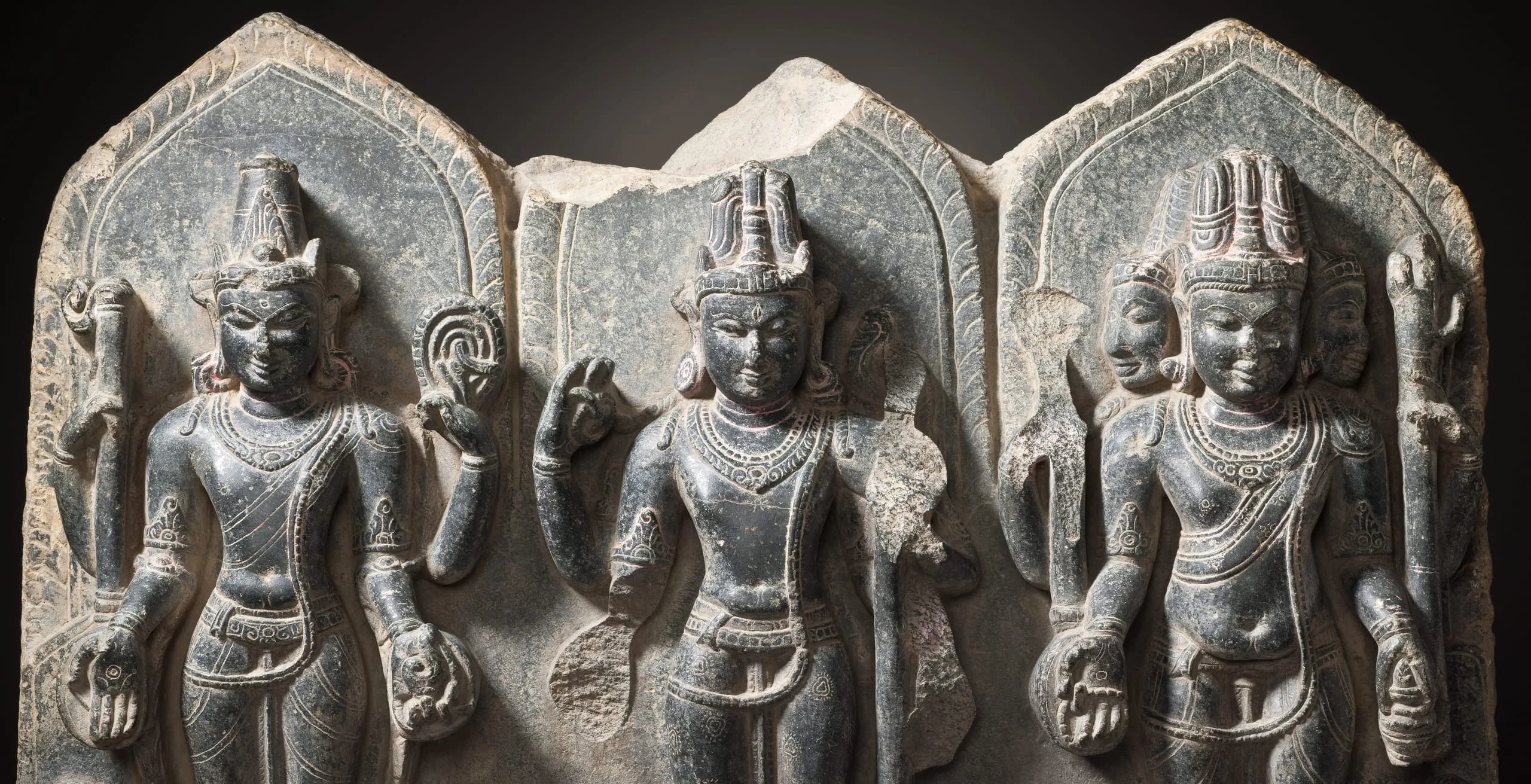
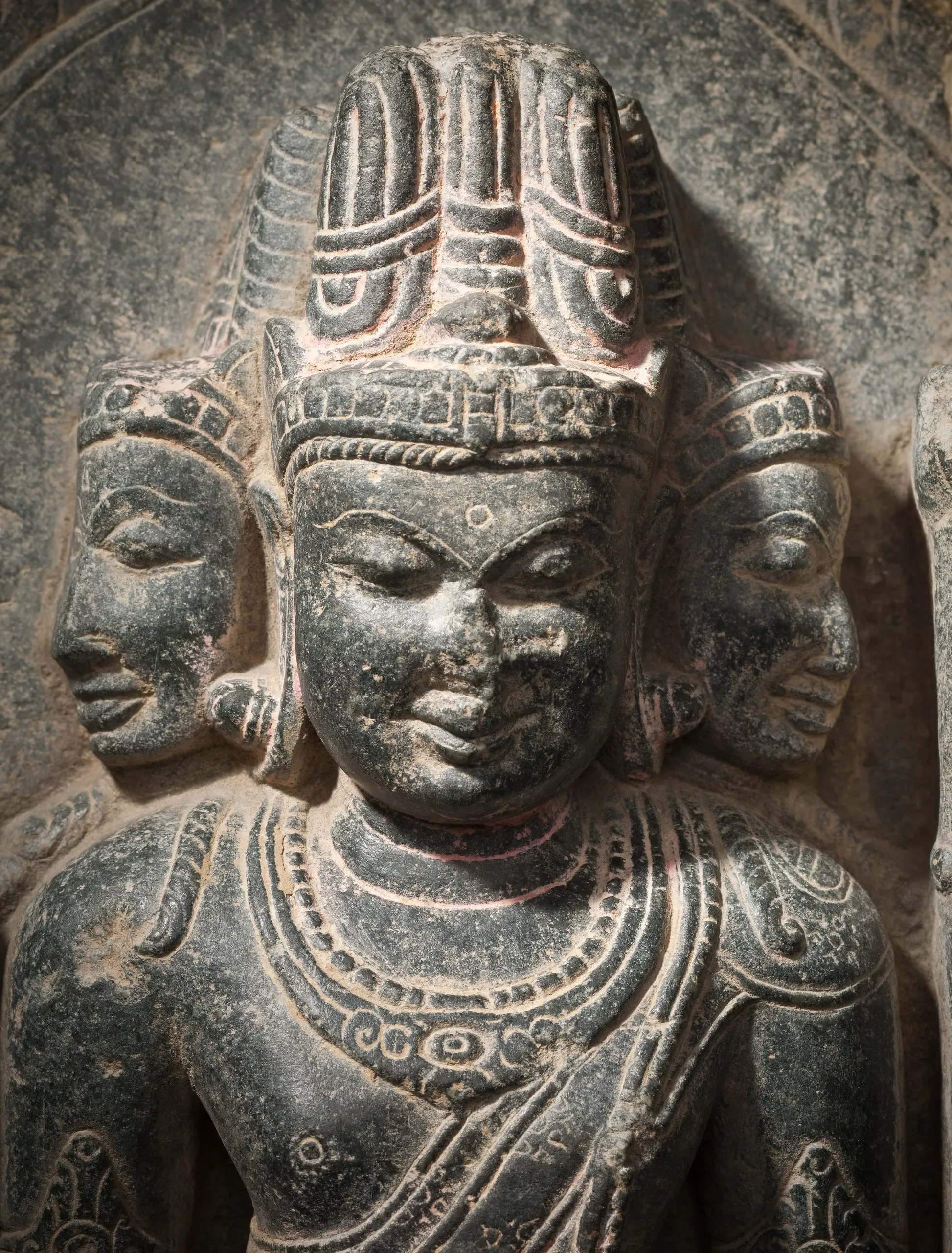
Stone sculpture of a three-headed deity in dark gray granite, the central face frontal with downcast eyes and a third-eye mark, flanked by two profile faces, all crowned with an elaborate ribbed headdress; carved necklaces and ornamental garments visible on the torso, set against a relief-carved aureole.
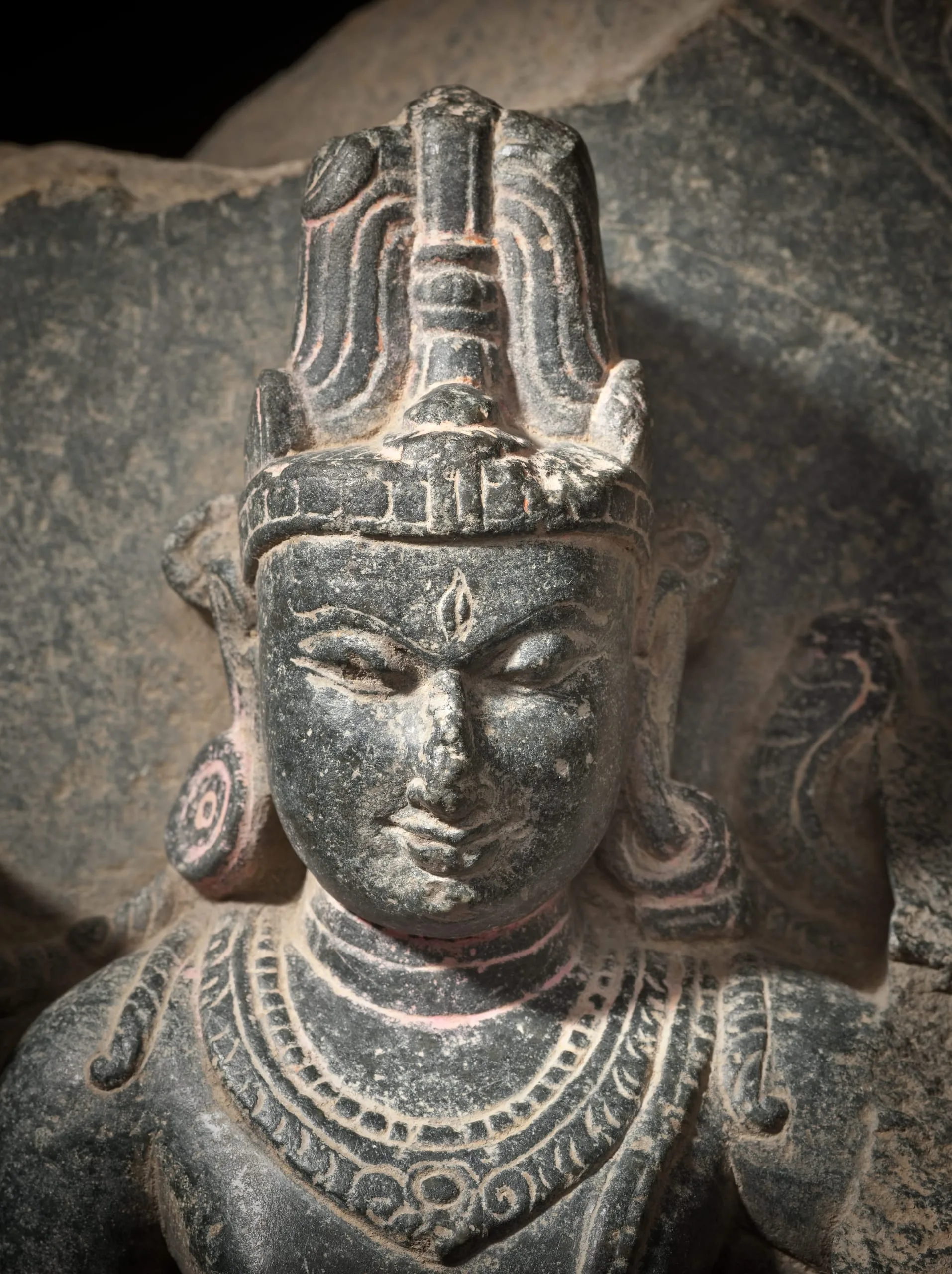
Stone sculpture, close-up of a deity figure with a tall cylindrical crown, third eye on forehead, circular earrings, and layered necklaces; weathered dark gray stone with traces of red pigment, finely carved surface detail.
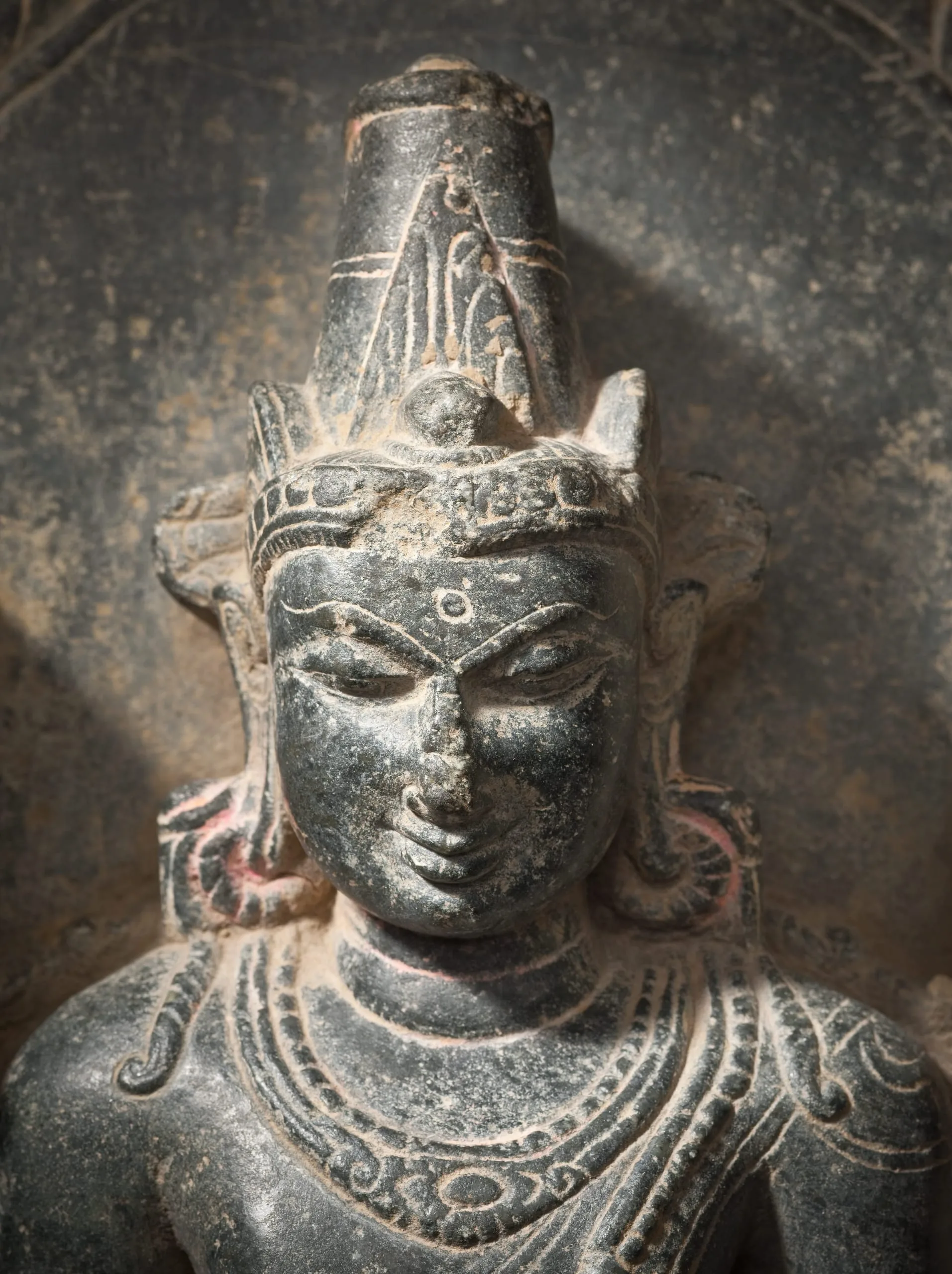
Dark stone sculpture, close-up of a deity figure with a tall cylindrical crown, third eye mark on forehead, ornate jewelry, and layered necklaces with carved scroll details, set within a shallow niche.
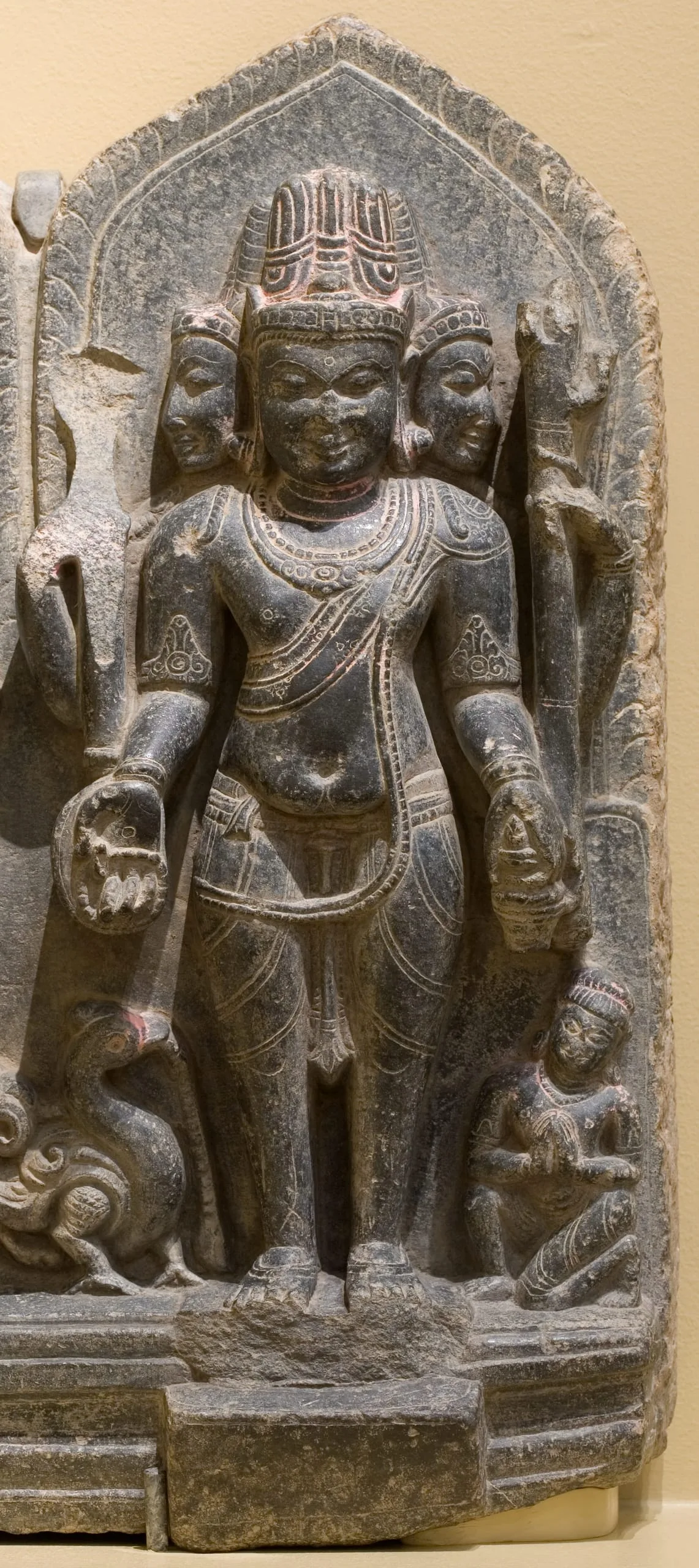
Dark gray stone stele of a standing multi-headed deity with four arms, adorned with carved jewelry, sash, and dhoti, set within an arched niche with attendant figures at the sides.
Artist or Maker
Unknown
Title
The Hindu Gods Vishnu, Shiva, and Brahma
Place Made
India, Bihar, Terai region
Date Made
10th century
Medium
Black schist
Dimensions
22 1/2 x 27 1/4 x 6 in. (57.15 x 69.21 x 15.24 cm)
Credit Line
Gift of Ramesh and Urmil Kapoor
Accession Number
M.86.337
Classification
Sculpture
Collecting Area
South and Southeast Asian Art
Curatorial Notes
This triad represents the three principal deities of Hinduism. In the center is Shiva, the god of destruction, whose central position indicates the sculpture’s sectarian emphasis. Shiva has an ascetic’s hairstyle and has four arms that hold his symbolic attributes. His upper right hand holds a rosary. His upper left hand holds a trident. His lower hands are now broken. Shiva’s mount, the bull Nandi, looks up at him in adoration. Shiva is flanked on his left by Brahma, the god of creation. Brahma has four heads, but the fourth is at the rear and not visible. He has four arms. His upper left holds a staff. He carries an ascetic’s water pot in his lower left hand. He holds a rosary in his lower right hand. His upper right hand is broken but may have held a ritual ladle. Brahma’s mount, the gander, is on his right. On his left is a kneeling figure representing the donor of the sculpture. To Shiva’s right is Vishnu. He is crowned and wears a long forest garland (vanamala) that hangs below his knees. He has four arms. In his upper left hand he holds a discus. He carries a conch in his lower left hand. He holds a mace in his upper right hand. His lower right hand is held with the palm open in the gesture of charity (varada mudra). Vishnu’s mount, the half-avian Garuda, kneels beside him with his hands joined in the gesture of devotion (anjali mudra). Each deity wears the Brahmanical sacred thread (yajnopavita), stands on a lotus and is backed by a flaming aureole.
Selected Bibliography
  • El Universo de la India: Obras Maestras del Museo de Arte del Condado de Los Angeles. Santiago: Centro Cultural Palacio La Moneda, 2012.