LACMA

ShopMembershipMyLACMATickets
LACMA
Los Angeles County Museum of Art
5905 Wilshire Blvd.
Los Angeles, CA 90036
info@lacma.org
(323) 857-6000
Sign up to receive emails
Subscribe
© Museum Associates 2026
  • About LACMA
  • Jobs
  • Building LACMA
  • Host An Event
  • Unframed
  • Press
  • FAQs
  • Log in to MyLACMA
  • Privacy Policy
© Museum Associates 2026
Collections

Man Seated on Bench200 BCE–400 CE

On view:
Geffen Galleries
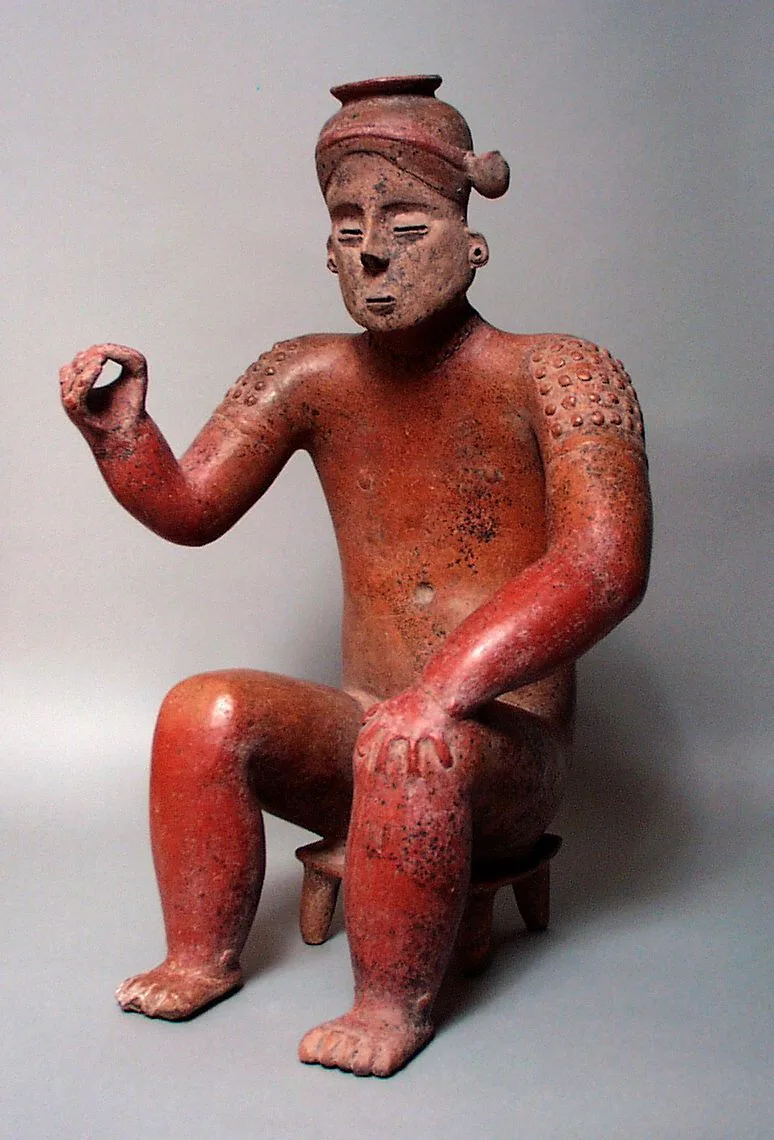
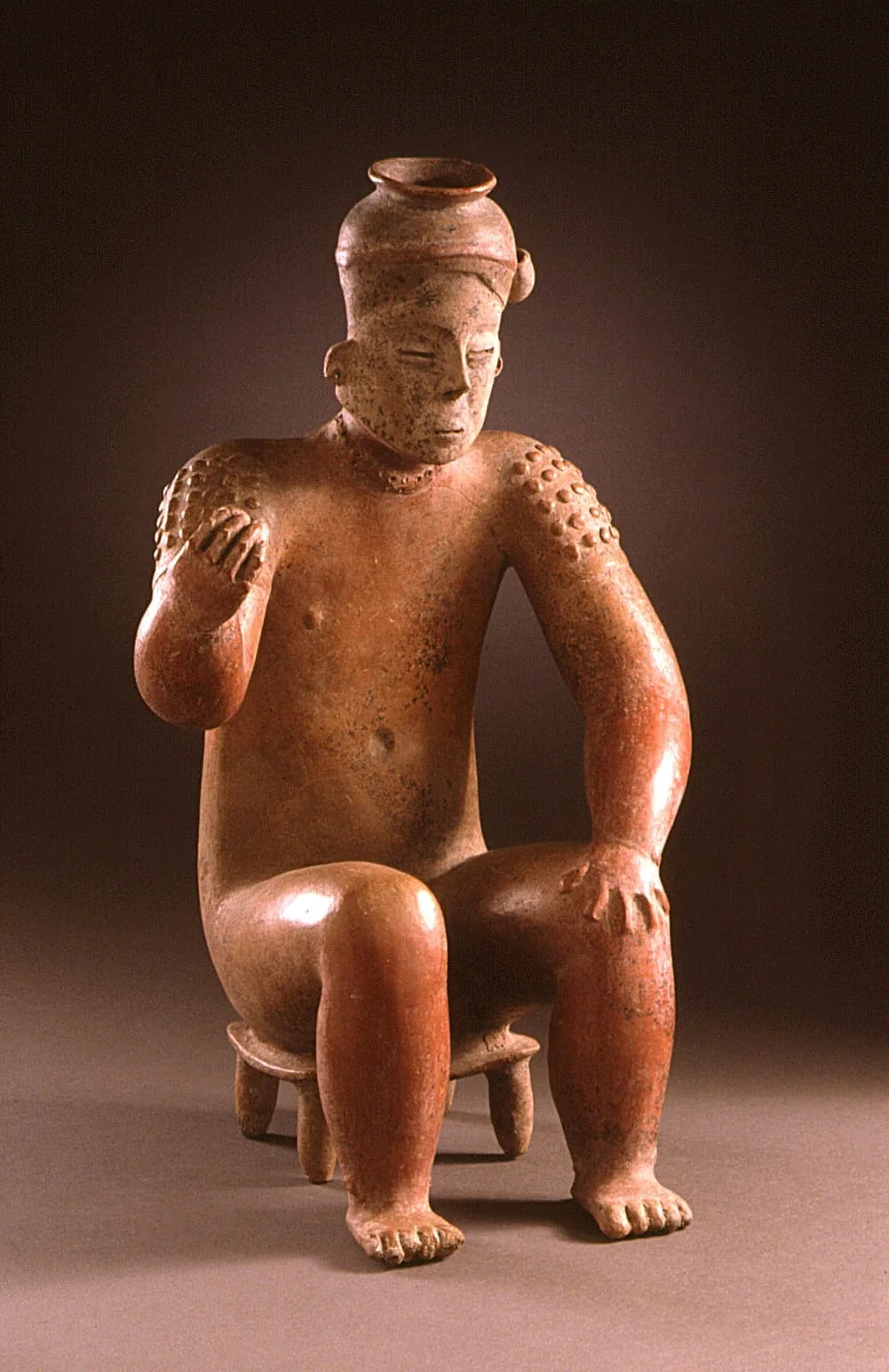
Burnished terracotta sculpture of a seated human figure with a small vessel on the head, arms raised and resting on knees, with raised dot patterns on the shoulders
Ceramic seated figure covered in red slip, with one arm raised and hand raised near chest, the other resting on a knee. Raised circular appliqués dot the shoulders and torso. The figure wears a headband with a small vessel atop the head, and has incised facial features including slit eyes and ear ornaments. Supported by small feet on a tripod base.
Title
Man Seated on Bench
Culture
Colima
Place Made
Mexico, Colima
Date Made
200 BCE–400 CE
Medium
Slip-painted earthenware
Dimensions
21 1/2 x 13 x 12 in. (54.61 x 33.02 x 30.48 cm)
Credit Line
The Proctor Stafford Collection, purchased with funds provided by Mr. and Mrs. Allan C. Balch
Accession Number
M.86.296.130
Classification
Ceramics
Collecting Area
Art of the Ancient Americas
Curatorial Notes

Seated on a bench with an expression of dignified repose, this figure commands attention with its striking presence and intricate details, including the scarification adorning the arms. Scarification (the deliberate and often ritualistic practice of creating patterns on the skin through cutting or branding) was and is a common form of body modification in many cultures, including those of ancient West Mexico. It is a deeply symbolic practice, imbued with cultural and spiritual significance. This figure’s markings may have signaled status, identity, lineage, bravery, or ritual affiliation, as well as beauty.

We will never know what he held in his right hand—perhaps a ceremonial staff, scepter, or weapon such as a spear or club. It may have been made of a perishable material, like wood, or else simply been lost. The ear- and nose-rings (probably made of metal) have also gone missing, with only the empty holes indicating their former presence.

The practice of sculpting figures seated on benches was widespread in Mesoamerica. The figures may represent deities or ancestral spirits, rulers, priests, or esteemed elders. In all cases, however, their elevated and/or stable, immutable position conveys authority.

Julia Burtenshaw

2024
Selected Bibliography
  • Kan, Michael, Meighan, Clement, Nicholson, H.B. and Rexford Stead. Sculpture of Ancient West Mexico: Nayarit, Jalisco, Colima. Los Angeles: Los Angeles County Museum of Art, 1970.
  • Von Winning, Hasso, and Alfred Stendahl. Pre-Columbian Art of Mexico and Central America. New York: Harry N. Abrams, Inc., 1968.