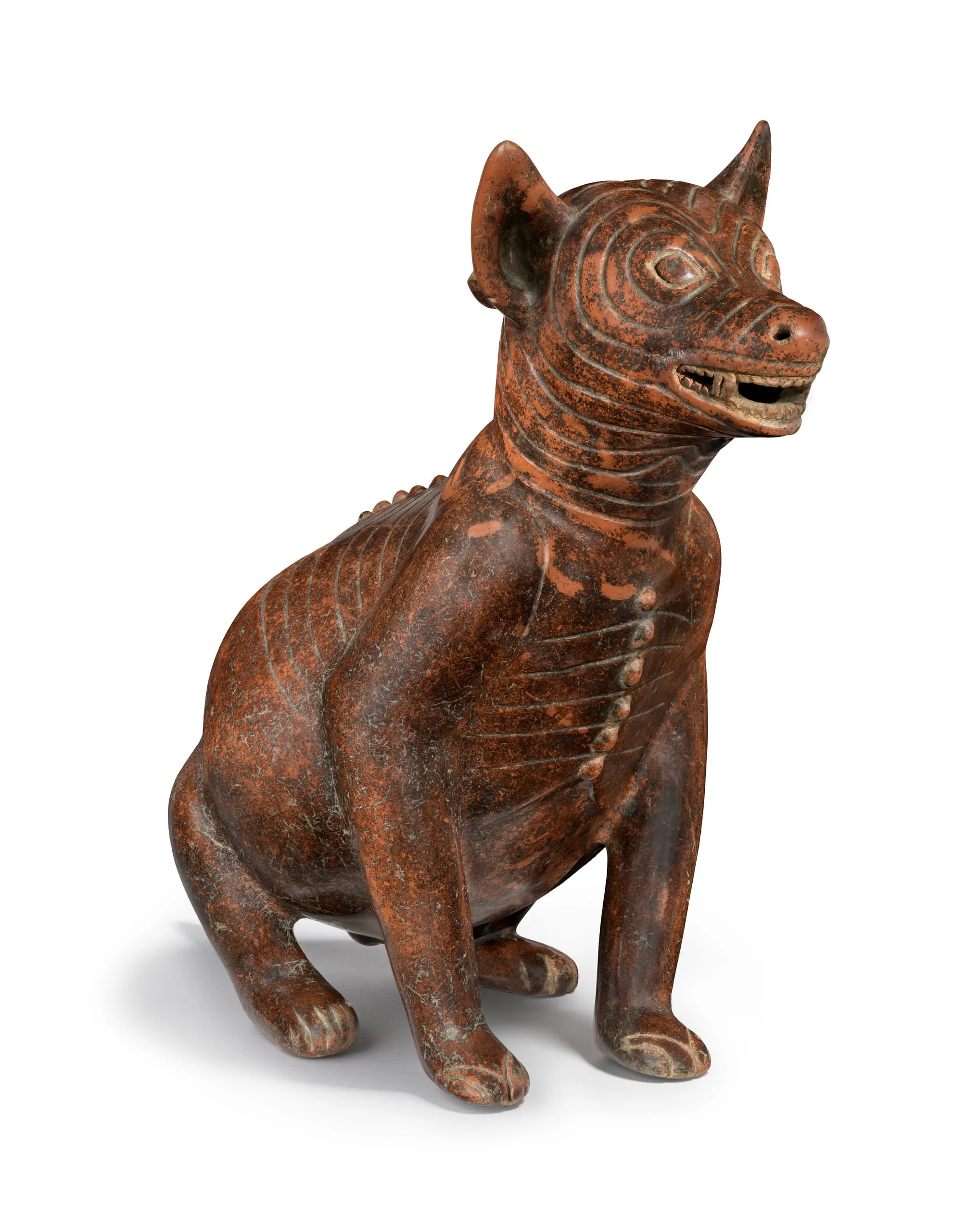
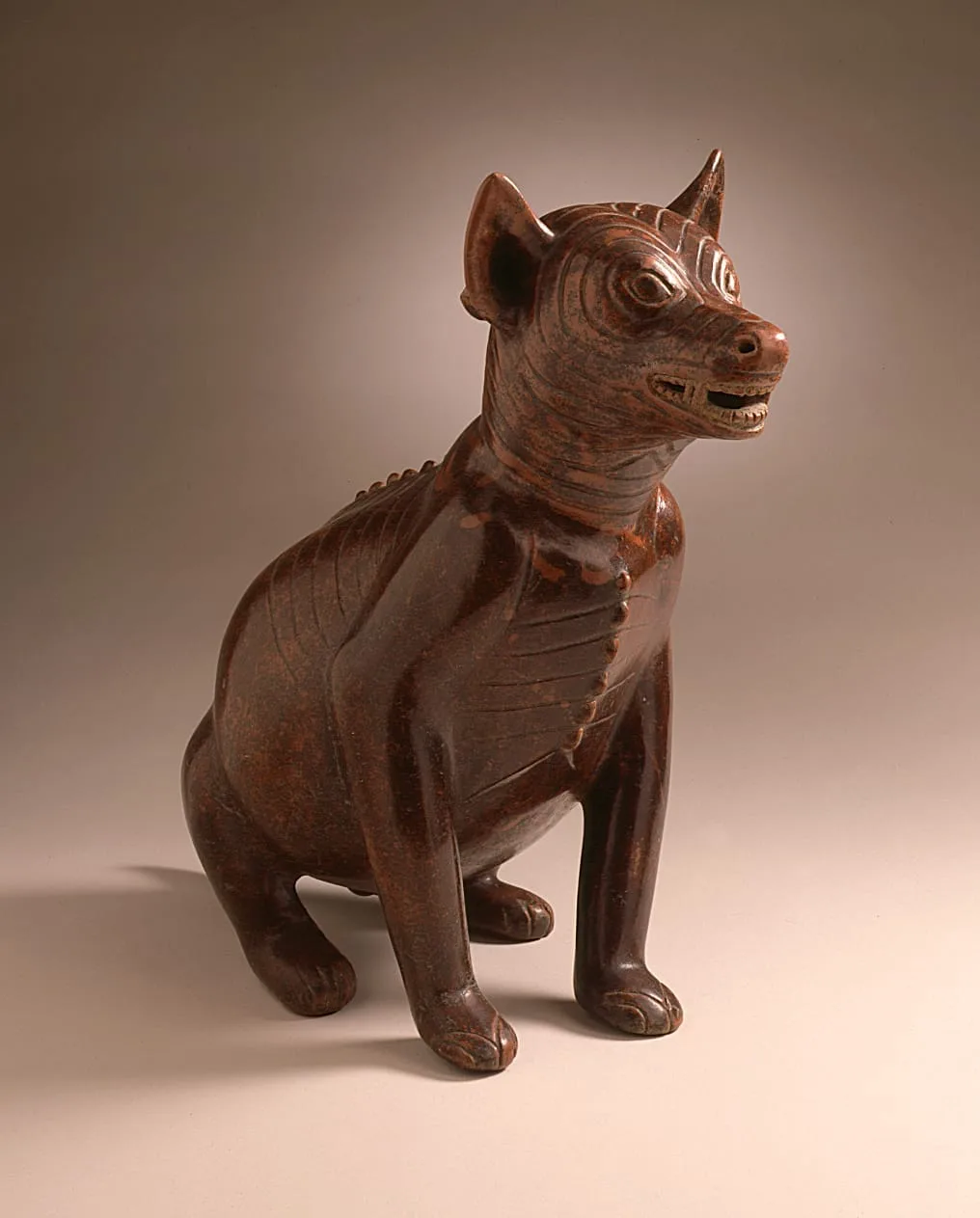
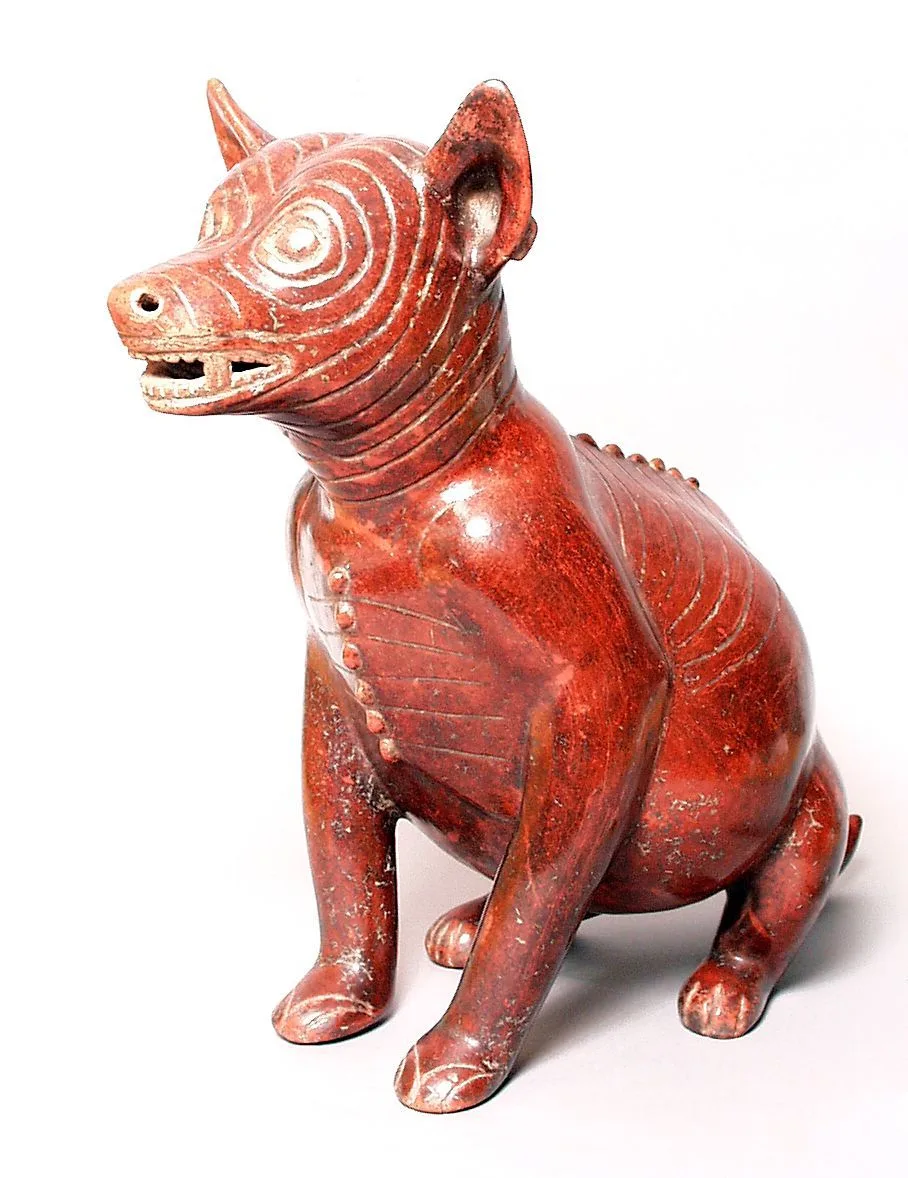
The alert posture of this dog suggests a vigilant presence, perhaps alluding to its role as a guardian, protector, or companion in both life and the afterlife. Sixteenth-century Spanish documents from Central Mexico (Florentine Codex, Book 3, fol. 26) describe dogs as companions or guides for the deceased across a river into the deepest tier of the realm of the dead. Dogs may have had similar significance in the Colima region of West Mexico, where they were frequently depicted in ceramic (see also M.2023.61.621). In a few rare cases, dogs were depicted wearing human masks (see M.86.296.154), which provides a telling glimpse into the spiritual landscape of the Colima people and the interconnectedness / symbiotic relationship of humans and their animal counterparts, where animals served as bridges between the human and divine worlds.
Rather than idealized or shown in the prime of life, the artist here rendered the protruding spine and sagging skin of an old dog, reflecting both keen observation of the canine form and a mastery of ceramic techniques. The ears, body shape, and wrinkled face identify this dog as a Xoloitzcuintli, a hairless breed still favored as a pet today. The specific DNA mutation that causes the hairlessness is also present in the Peruvian Hairless Dog, and is one line of evidence for contact between West Mexico and the South American Pacific coastline of Ecuador and northern Peru.
Julia Burtenshaw
2024