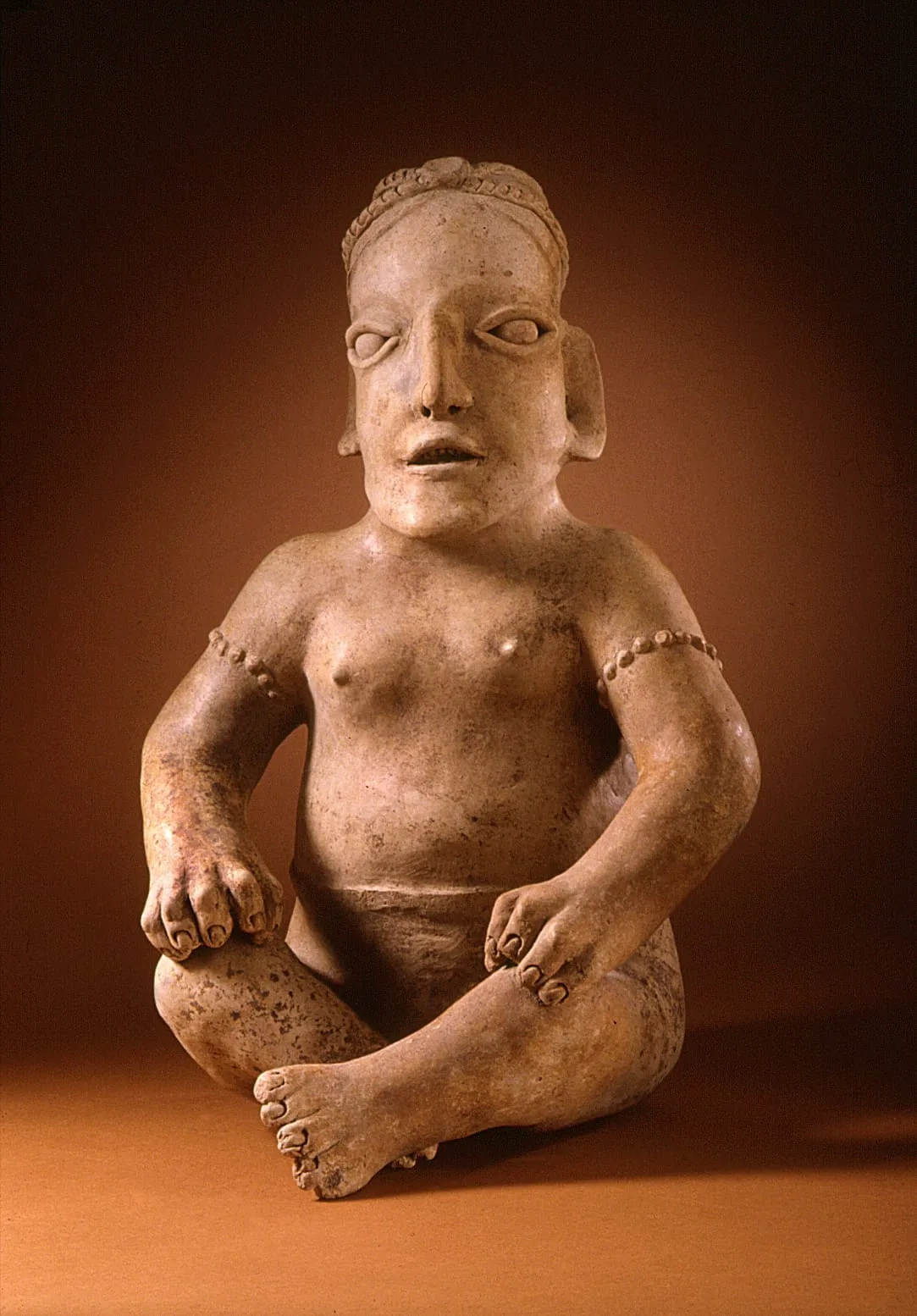
With body proportions approaching realism and a relaxed, cross-legged posture, every finger- and toenail carefully rendered, this is one of the more naturalistic examples of ancient West Mexican sculpture. Even her teeth are represented. Her shorts, banded head covering, and facial features are typical of figures of the Ameca-Etzatlán regional style in Jalisco.
As this piece came to LACMA via the private (and often illicit) market of collectors and dealers, the original use or findspot is unknown. She was probably one of a group of several figurative ceramic sculptures placed in a shaft tomb sometime around the turn of the first millennium CE. These were likely considered essential companions or aides for the deceased in the afterlife, providing them with company, protection, or assistance in reaching the next realm. The number and quality of objects in a tomb were likely indicative of the status or wealth of the deceased. However, it is worth remembering the human aspect of losing a loved one. The making and burying of important items would have been a way for the living to honor and provide for their loved ones in the next realm.
Julia Burtenshaw
2024