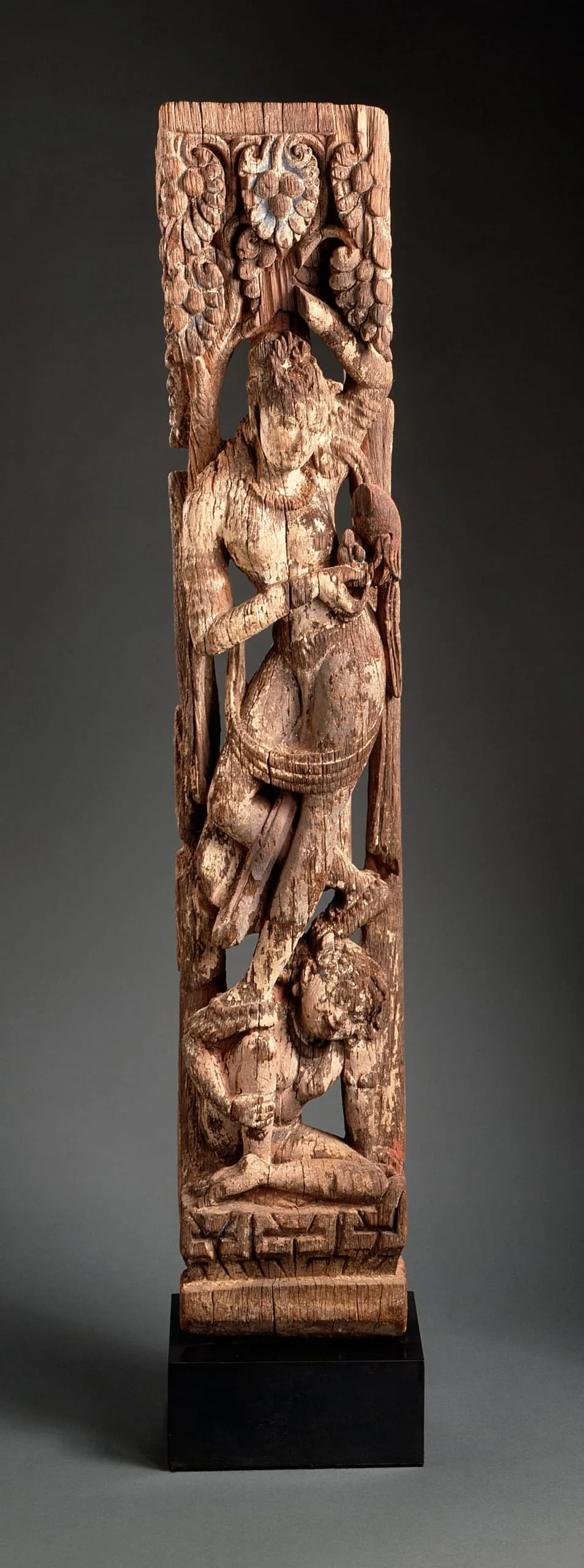
Nepal, especially the Kathmandu Valley, is renowned for its wooden temples with multitiered pagoda roofs supported by prominent angled figural brackets (tudal) similar to Greek caryatids. The brackets typically have three sections: Capital, in the form of a blossoming tree connecting the strut to the roof; Center, representation of a Hindu or Buddhist deity; Base, often with stylized rocks and/or a lotus base with the deity’s mount (vahana), a dwarf demigod, or a demon being subdued.
This bracket depicts an elegant celestial tree dryad (vriksha devata) holding the branch of a fruit-bearing or flowering tree. She represents a type of fertility tree nymph of Indian poetry called a shalabhanjika or ‘She who breaks a [branch of a] shala tree’ (Shorea robusta). She is a beautiful woman who can make trees or flowers bloom by a mere touch of her hand or foot. The demure nymph raises her now-missing left hand to touch the tree above her. In her right hand she holds a sprig of blossoms. She leans against the tree trunk in the ‘standing tree maiden’ posture (shalabhanjika sthanaka). Beneath her feet is a seated dwarf (gana) symbolic of spiritual ignorance and the base human instincts that are overcome by the divine damsel’s spiritual enlightenment and fecundity. See also M.84.39.2, M.85.2.1, M.86.248.1, and AC1992.281.1.