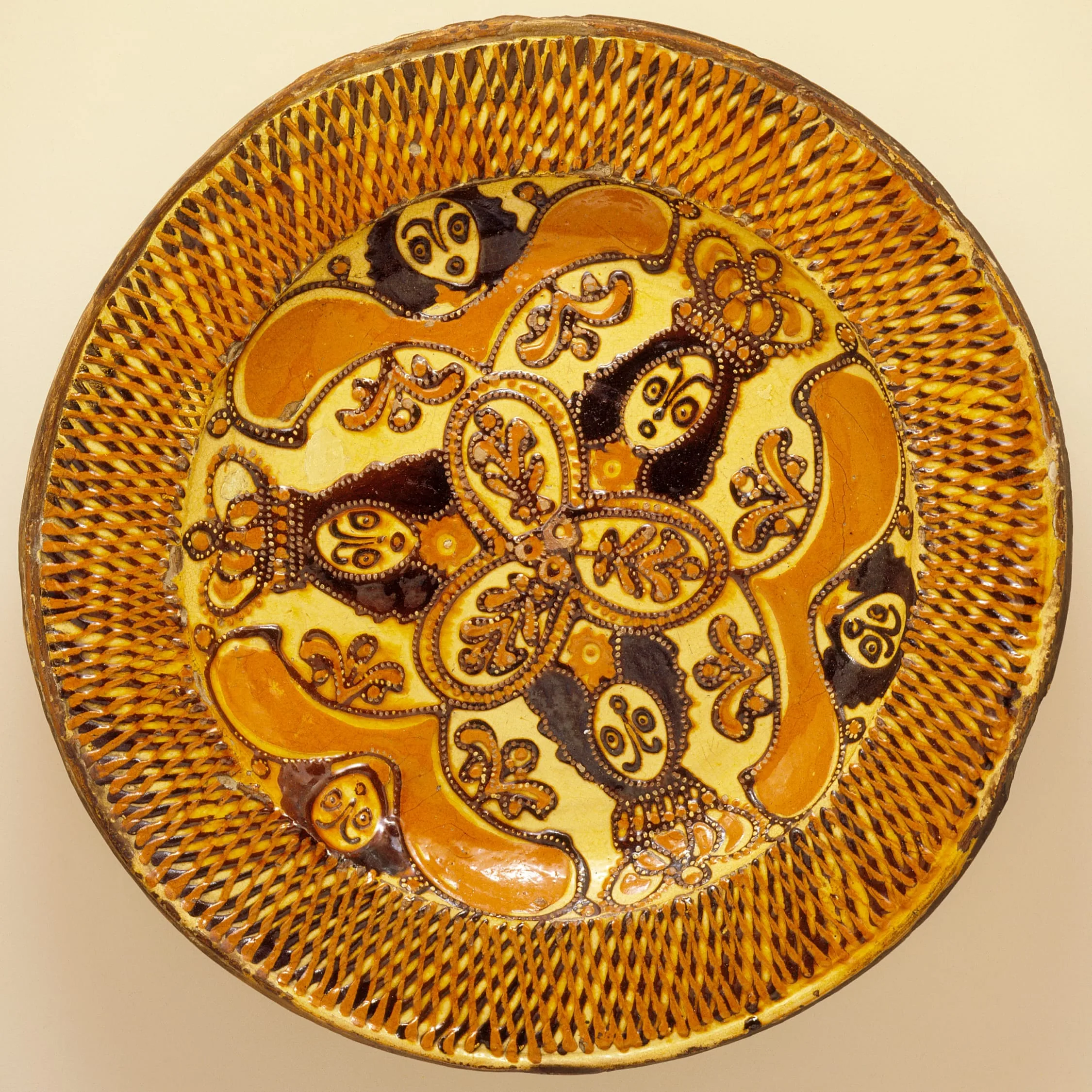
Slipware was produced in London by 1630, largely by Puritan potters inclined to decorate their work with lugubrious mottos such as Fast and Pray or Remember Thy End. The rare Staffordshire wares of Thomas Toft and William and George Taylor by contrast are notable for their trailed slip (liquid clay) decoration and dot-outline figures. A versatile medium, slip can be applied as paint or a dip, trailed, dripped, or applied with a knife and incised to expose the contrasting clay body.
Most Toft and Taylor presentation pieces carry a lively decoration of royalist themes, acknowledging lighter-hearted political times following Oliver Cromwell's fall. This charger (a large serving dish) depicts Charles II's famous escape when, having sheltered in a house near the great wood of Boscobel, he and a Major Careless were advised to hide in the trees to avoid capture by Cromwell's soldiers. Early next morning the prince and the officer climbed a dense oak and enjoyed a quiet day picnicking in its branches while observing the Roundheads vainly hunting for them below.