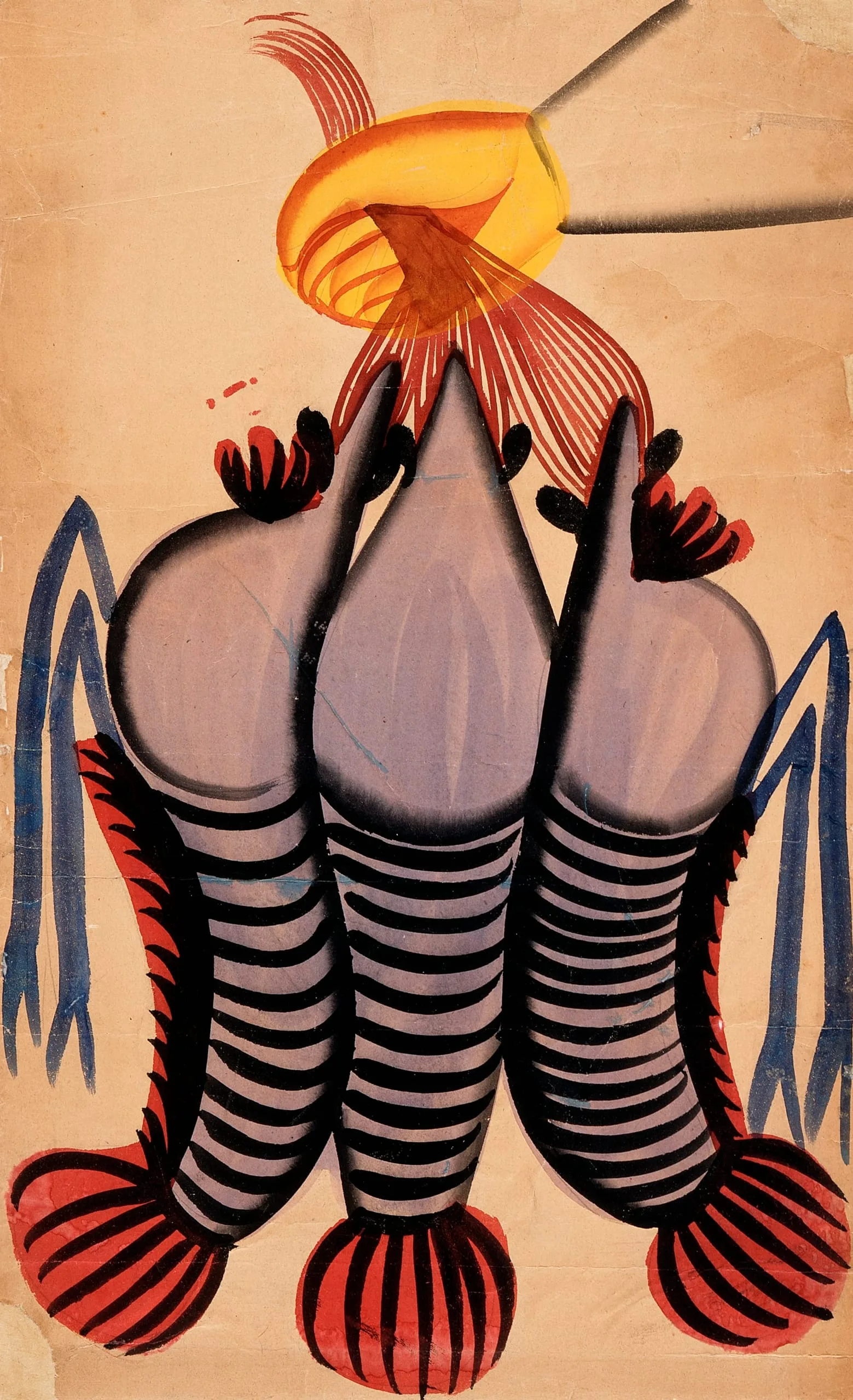
Dramatically and quickly rendered Kalighat paintings and ink drawings were sold in the bazaars near the revered temple of the goddess Kali in the Kalighat area of southern Kolkata (formerly Calcutta). Of all the painterly styles and techniques current in cosmopolitan 19th- and early 20th-century Calcutta, including Western oil paintings, graphics, and watercolors by British and Continental artists; Western-style works by classically trained Indian artists; and traditional Hindu and Indo-Islamic works of art, Kalighat paintings and drawings were the most innovative and had the strongest influence on later generations of early modern and contemporary South Asian artists.
Kalighat paintings of hands holding freshwater prawns were among the most popular still-life subjects sold at the Kalighat bazaar. They paralleled similar images created by the woodblock print artists of the contemporaneous Battala Press, were a corollary of similar painted clay figurines sold in the bazaar during festivals, and may have been inspired by European-stimulated natural history prints that were widely sold in Calcutta bazaars. They also reflect the Kalighat painters' interest beginning by the mid-19th century in depicting their local world, such as fish with prawns, a favorite food in Bengal. Portrayals of freshwater prawns were also one of the main Kalighat themes assimilated by later South Asian artists.
See also M.86.118.2 and AC1998.53.1.