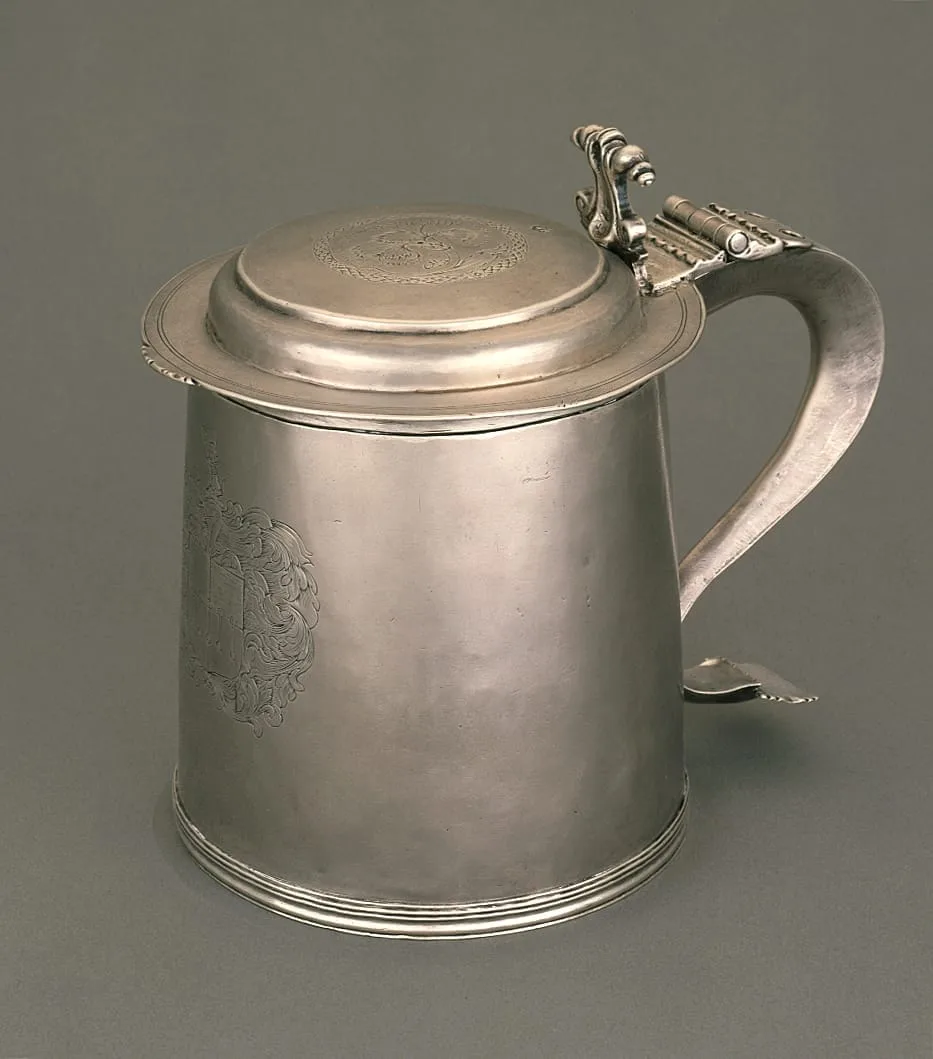
In colonial America, silver objects immediately conveyed their owner’s wealth and social aspirations. Few possessions were more conspicuous than a large silver tankard, whose value might be measured in artistic terms but was never far removed from monetary value, as silver objects could be easily melted down and converted to cash. The prominence of the elaborately engraved coat of arms on the front of this tankard also proclaimed family pride. The addition of the date 1692 and later initials suggest that silver objects like this one were often passed down as family heirlooms, even if subsequent generations were less likely to pass around a communal drinking vessel that holds a pint of beer or ale.
The maker, William Rouse, emigrated from the Netherlands to Boston in the 1660s. The city was growing rapidly, as was New England’s economy and the fortunes of many of its residents. By the 1690s, more than twenty silversmiths were working in Boston, including Rouse and other foreign-trained craftsmen who had come in search of economic opportunity. Only nine other pieces by Rouse are known today. Although this tankard’s original patron remains unidentified, its broad proportions, flat top, and fine engraving represent the skill of Boston’s early silversmiths and the cultural ambition of their patrons.