- Title
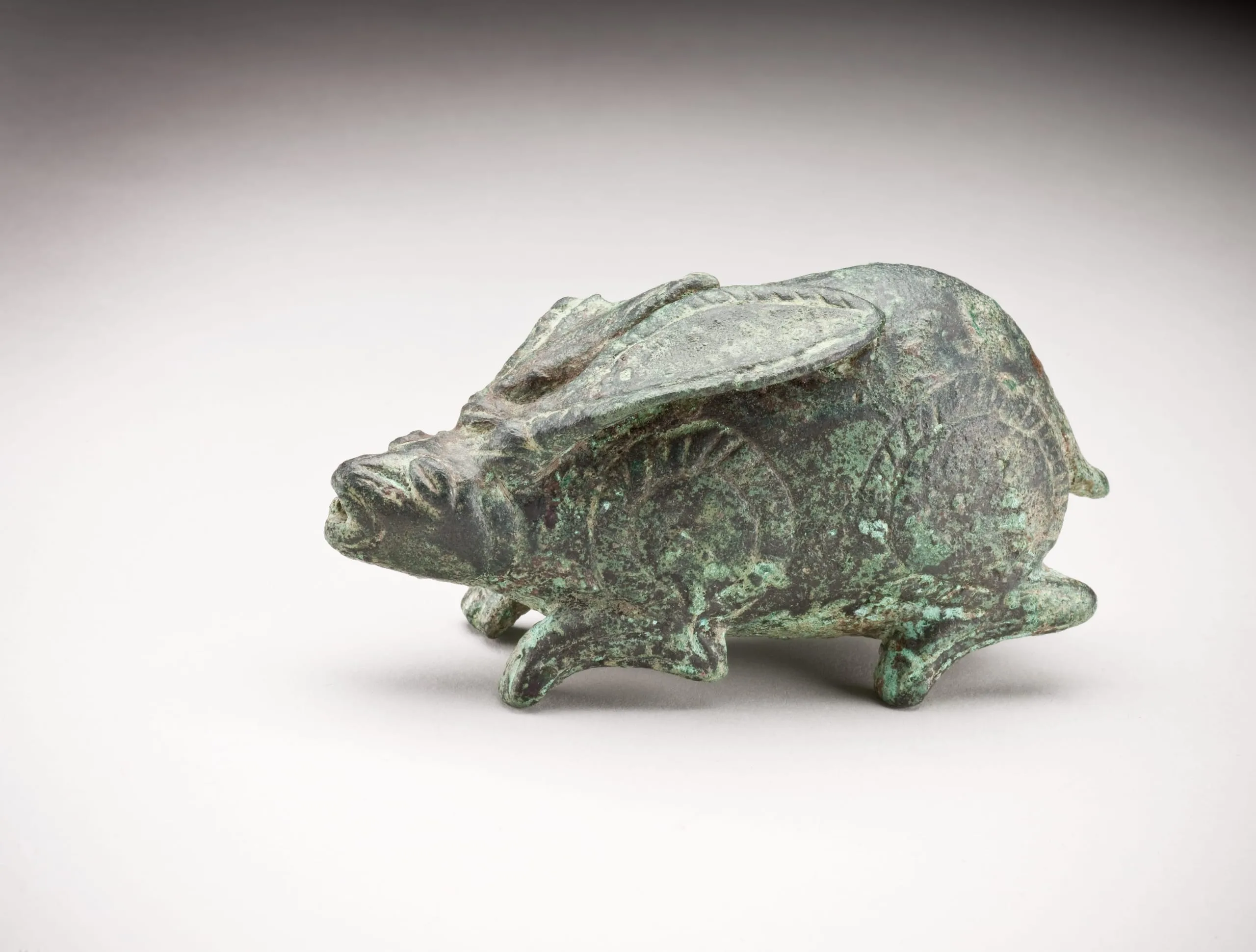
- Recumbent Hare
- Date Made
- 10th-11th century
- Medium
- Bronze, hollow cast
- Dimensions
- 1 3/4 x 3 1/2 in. (4.5 x 9 cm)
- Accession Number
- M.76.97.882
- Curatorial Notes
Similar to the use of a rabbit’s foot today, the hare was a symbol of good luck in the medieval Islamic world, particularly in Fatimid-controlled Egypt and Syria. The animal is depicted on many objects from the period, including this bronze fountain element, where its presence was meant to bring good fortune and perhaps protection to the object’s owner.
- Selected Bibliography
- Ancient Bronzes, Ceramics, and Seals: The Nasli M. Heeramaneck Collection of Ancient Near Eastern, Central Asiatic, and European Art. Los Angeles: Los Angeles County Museum of Art, 1981.
Lo Terrenal y lo Divino: Arte Islámico siglos VII al XIX Colección del Museo de Arte del Condado de Los Ángeles. Santiago: Centro Cultural La Moneda, 2015.
- Townsend, Jen and Renée Zettle-Sterling. Cast: Art and Objects Made Using Humanity's Most Transformational Process. Atglen, PA: Schiffer Publishing Ltd., 2017.
Blondet, José Luis. Six Scripts for Not I: Throwing Voices (1500 BCE-2020 CE). Los Angeles: Los Angeles County Museum of Art, 2020.