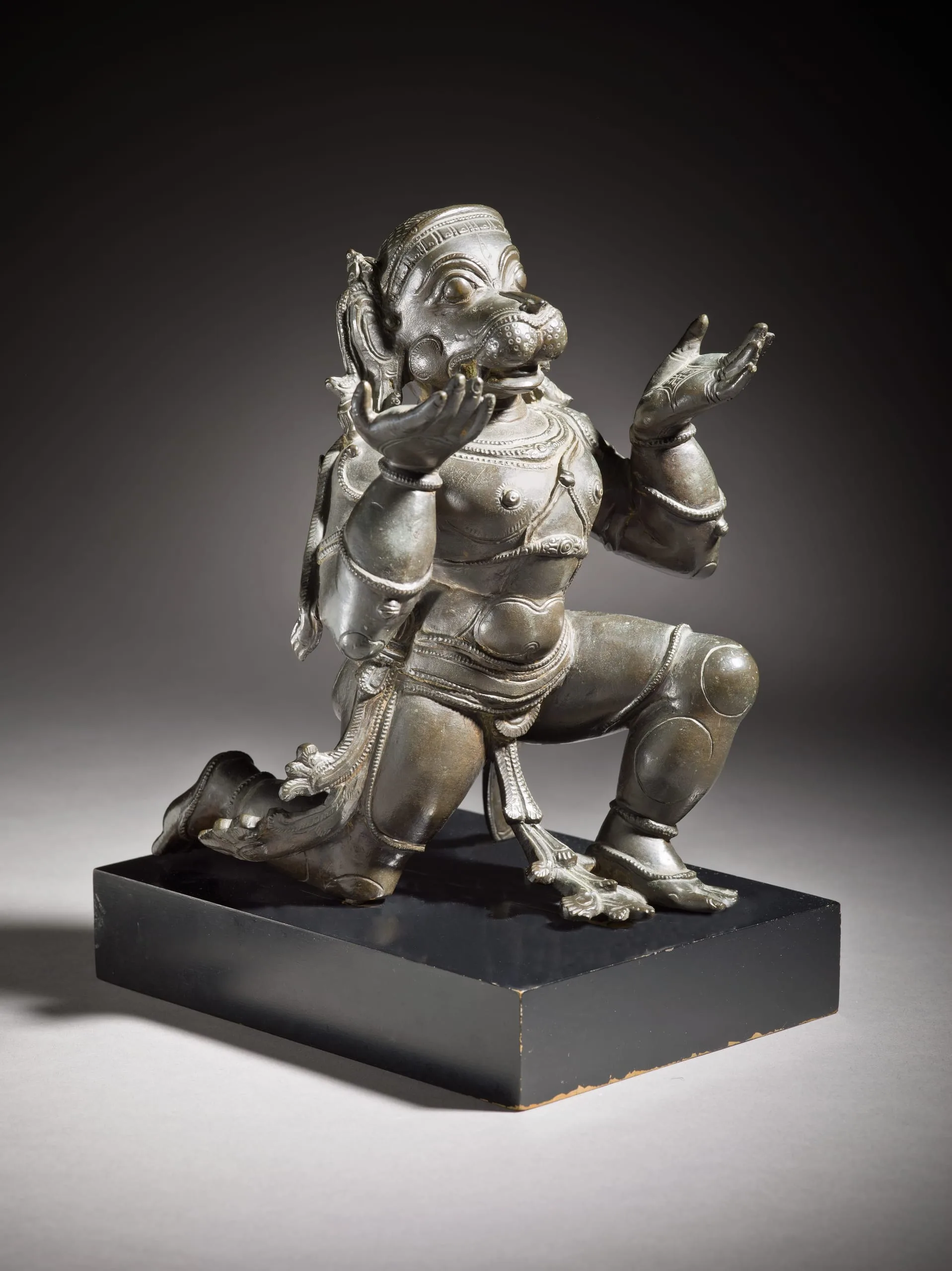
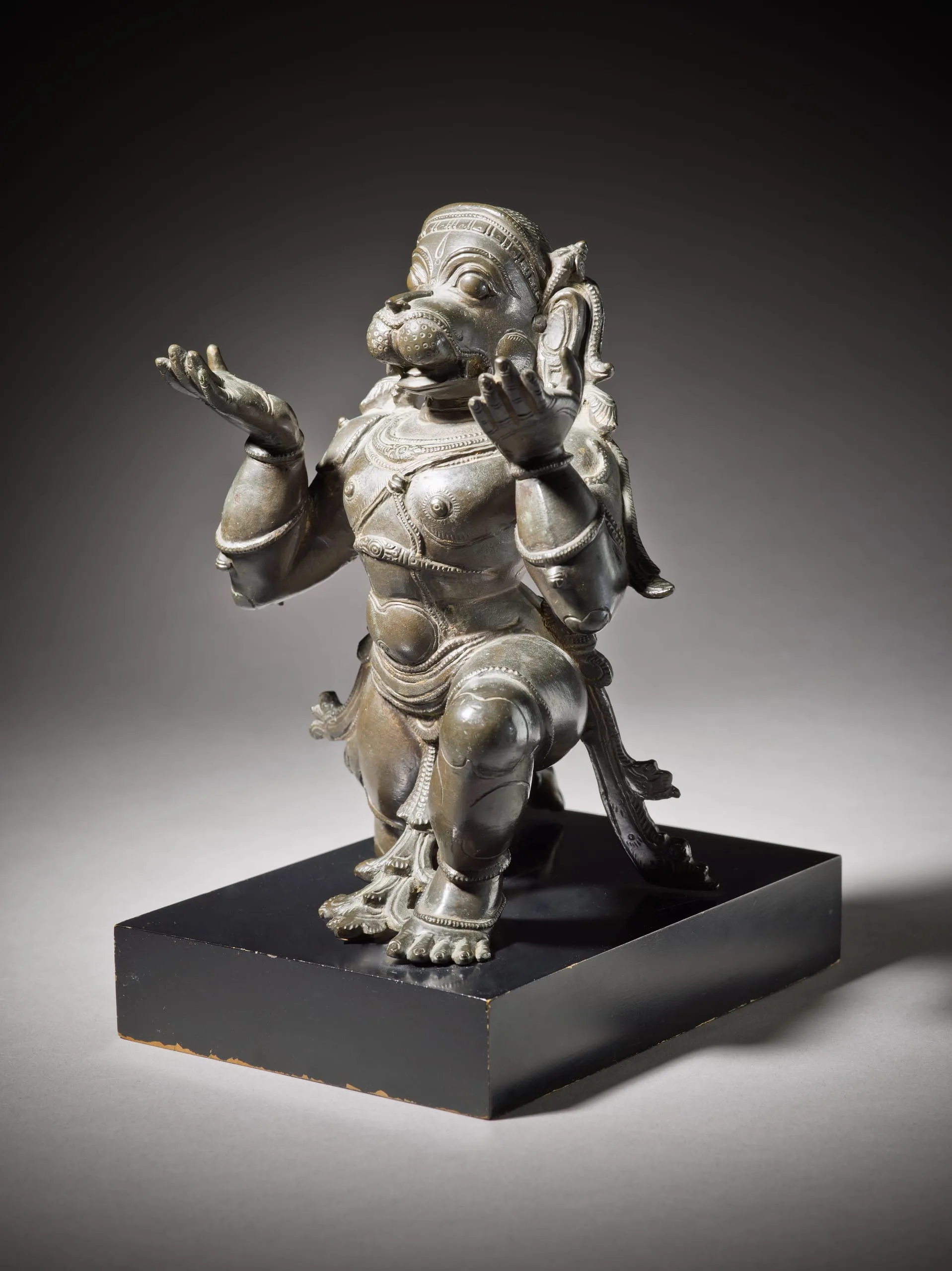
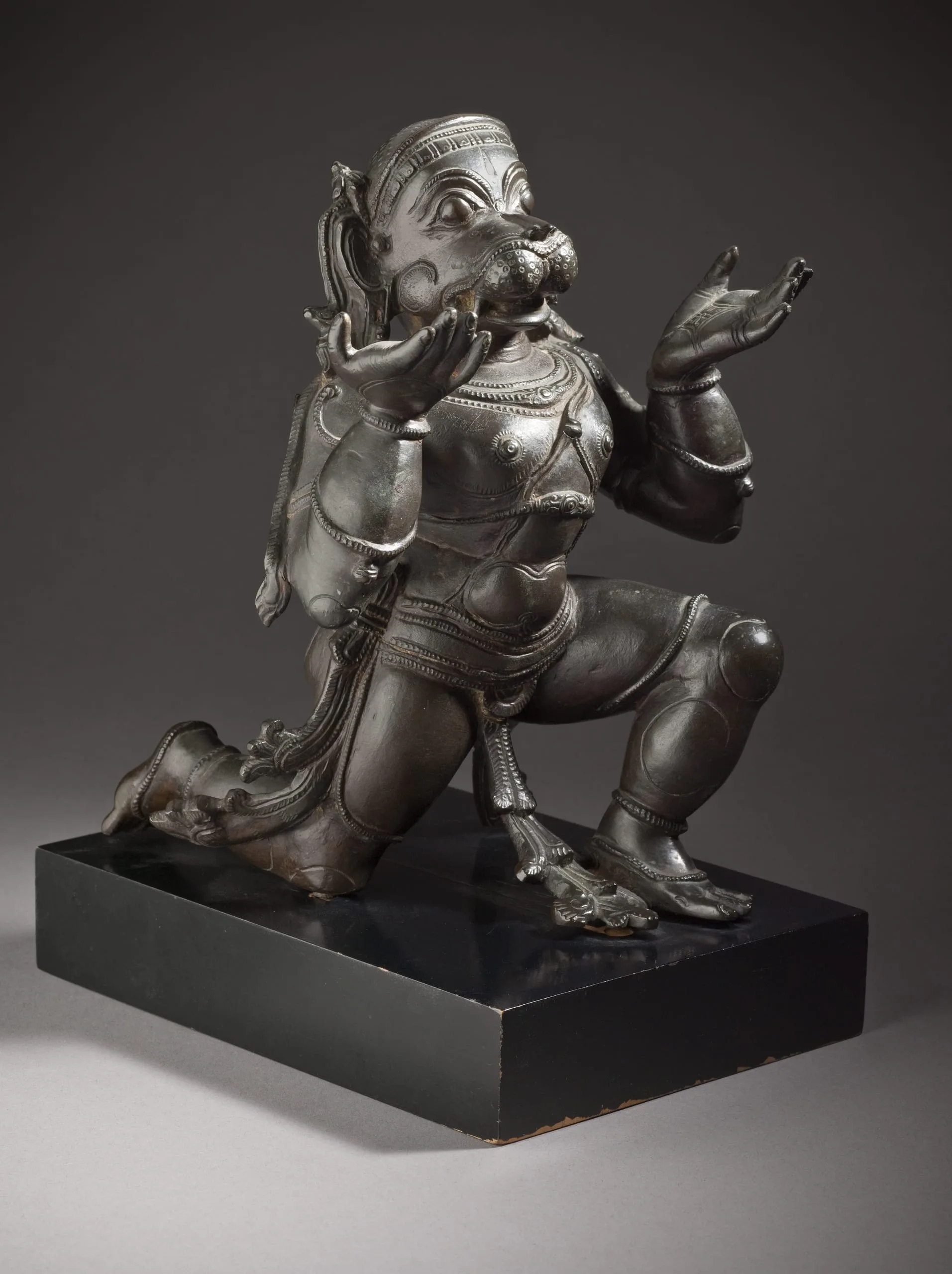
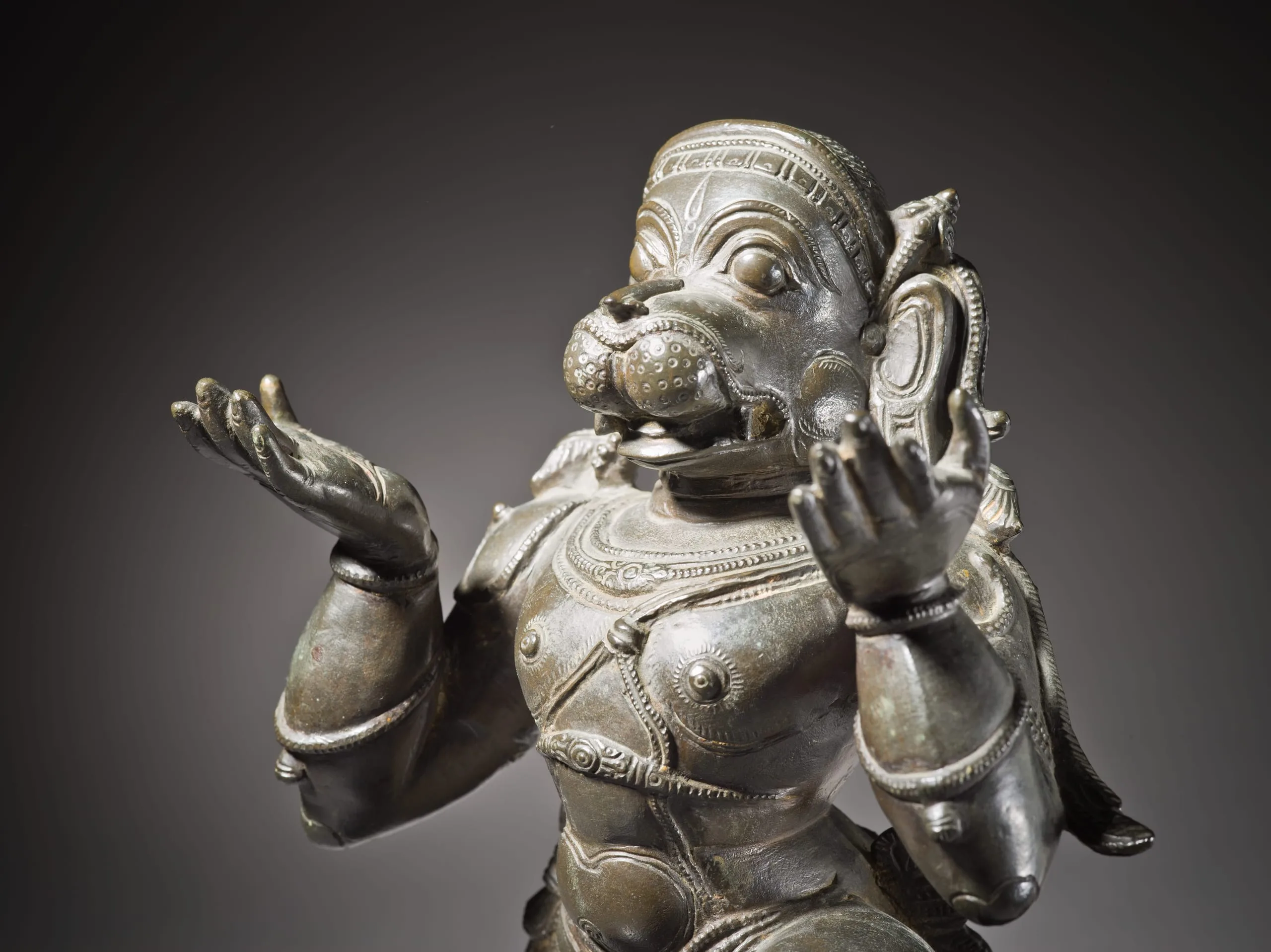
Hanuman, The Divine Monkey (vanara), first appears in the great Indian epics, the Mahabharata ([War of the] Great Bharatas) and the Ramayana (Adventures of Rama). He served as the Monkey General who located and helped rescue Prince Rama’s wife, the kidnapped Princess Sita, from Ravana, the arrogant ten-headed demon-king of Lanka (probably modern Sri Lanka). Subsequently, Hanuman was the protagonist of the long Hindi poem, the Ramacharitmanas (Holy Lake of the Deeds of Rama) by Tulsidas (1532-1623). The Ramacharitmanas differs primarily from the Ramayana in that it portrays Rama as divine rather than mortal and it gives considerably increased emphasis to the role and personality of Hanuman. The heroic monkey, who like Rama was also deified in later Indian culture, is honored with the most dramatic and largest number of depictions, particularly his fierce battles, staunch loyalty, and crucial acts that turned the tide of the war.
Hanuman is represented with a simian head and a human body sans tail. He is genuflecting on one knee and holds his hands in front of him with his palms upward, as if he is making an offering to his master Rama (see M.89.159.1). See also M.86.338.8, M.87.160.1, and AC1998.255.5.