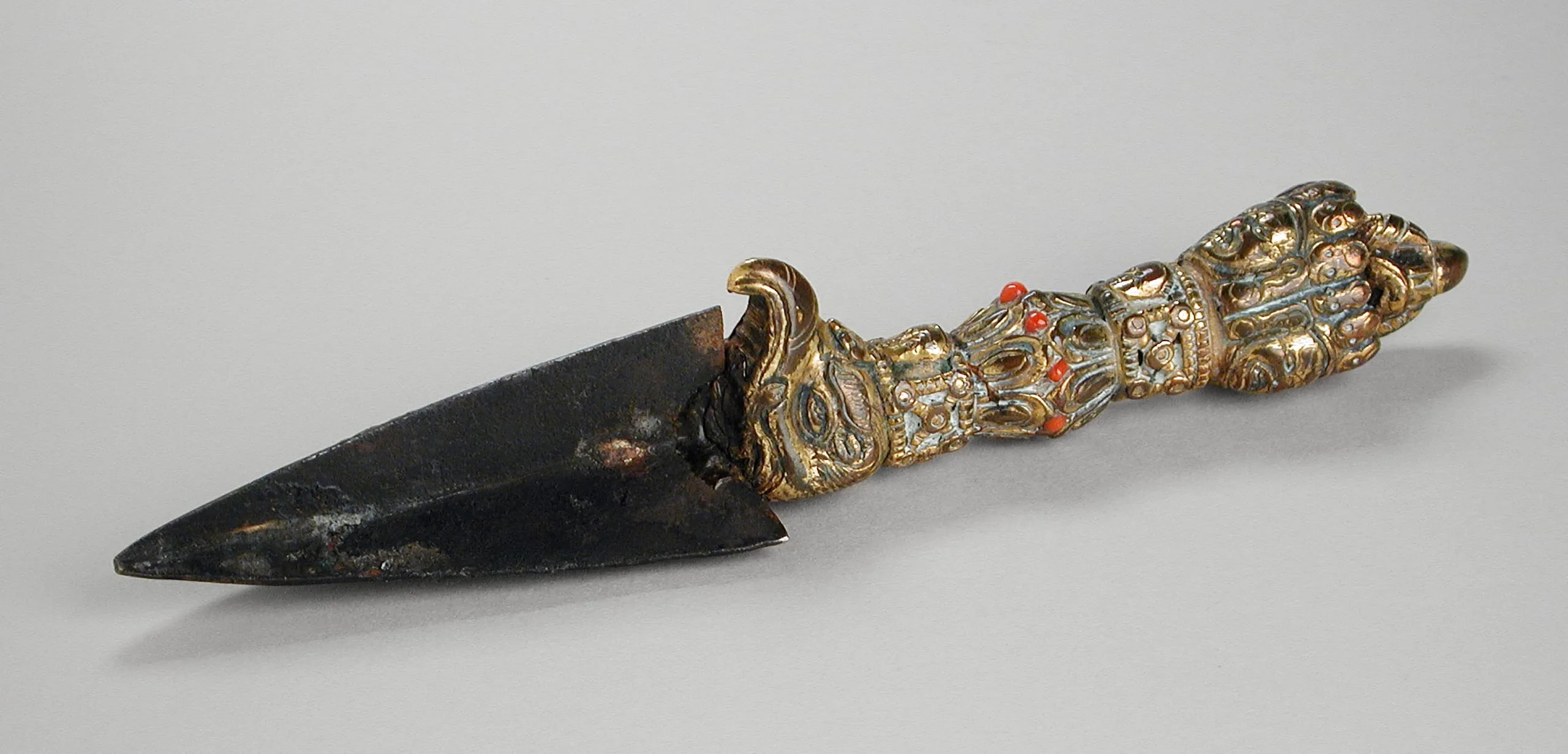
The Tibetan ritual dagger (phurpa or phurbu; Sanskrit: kila) is a three-sided peg-like implement that is used in diverse rites ranging from exorcism to meditation to blessings. Its primary association is with the Vajrayana meditational deity Dorje Phurpa, who is the personification of the phurpa. He is also known as Vajrakilaya (see M.70.1.6). Phurpas are distinguished by various terminals, often multi-headed deities or thunderbolts (vajra). They can be made of metal (especially meteoric iron), rock crystal, wood, bone, clay, and horn. Phurpas are typically made of three parts: a pommel, handle, and the triangular blade. The bladed end of the phurpa is used to destroy demonic powers through the killing of demons or exorcism. The pommel is used by practitioners to bless believers.See also M.78.45, M.79.243.3, M.82.27, and M.86.190.2.
This small phurpa was likely used for healing ceremonies, symbolic offerings, and personal recitation rites. The triangular blade issues from the mouth of a mythical aquatic creature (makara). The grip of abutting lotus pedals has twin borders in the form of the knot of immutability. The pommel has three horrific faces of Vajrakilaya. A lotus bud serves as the terminal.
See John C. Huntington, The Phur-Pa, Tibetan Ritual Daggers, Artibus Asiae. Supplementum 33 (1975); and Georgette Meredith, "The "Phurbu": The Use and Symbolism of the Tibetan Magic Dagger," History of Religions 6:3 (February 1967): 236-253.