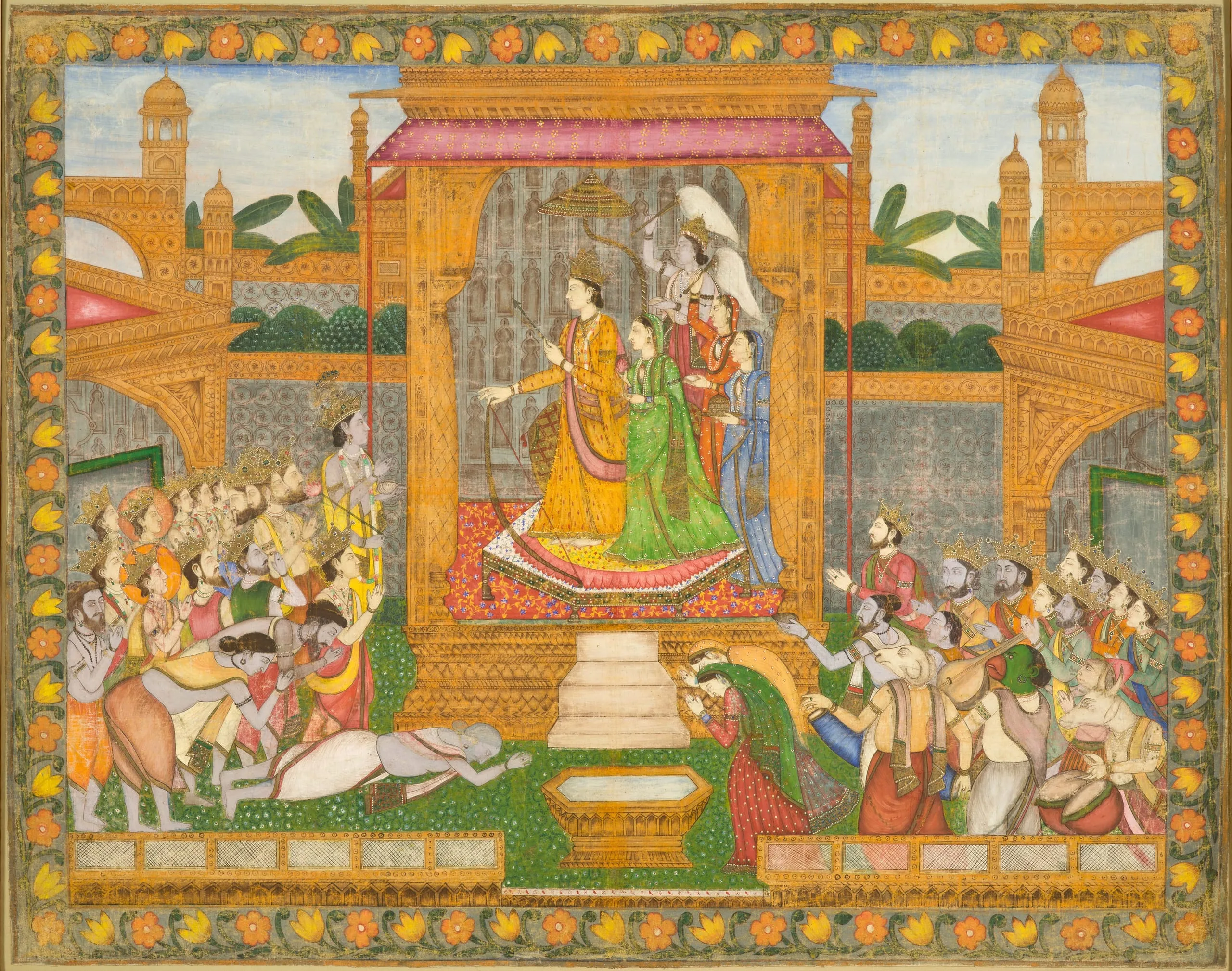
The Ramayana (Adventures of Rama) narrates the epic saga of the valiant Prince Rama and his dutiful wife, Princess Sita, who was abducted by Ravana, the arrogant ten-headed King of Lanka (probably modern Sri Lanka), during Rama's unjust fourteen-year forest exile.
This oversize painting on cloth appears to have been modeled on earlier paintings on paper depicting the same iconographic composition that are attributed to Mandi, style of Sajnu, circa 1810. See comparable works in the Cynthia Hazen Polsky Collection (8080-IP) and in Simon Ray Indian & Islamic Works (London, 2016, pp. 148-149, no. 61). Another related Mandi painting of the heavenly audience (durbar) of Vishnu’s avatar Parashurama is in the Ackland Art Museum, Chapel Hill (82.5.2).
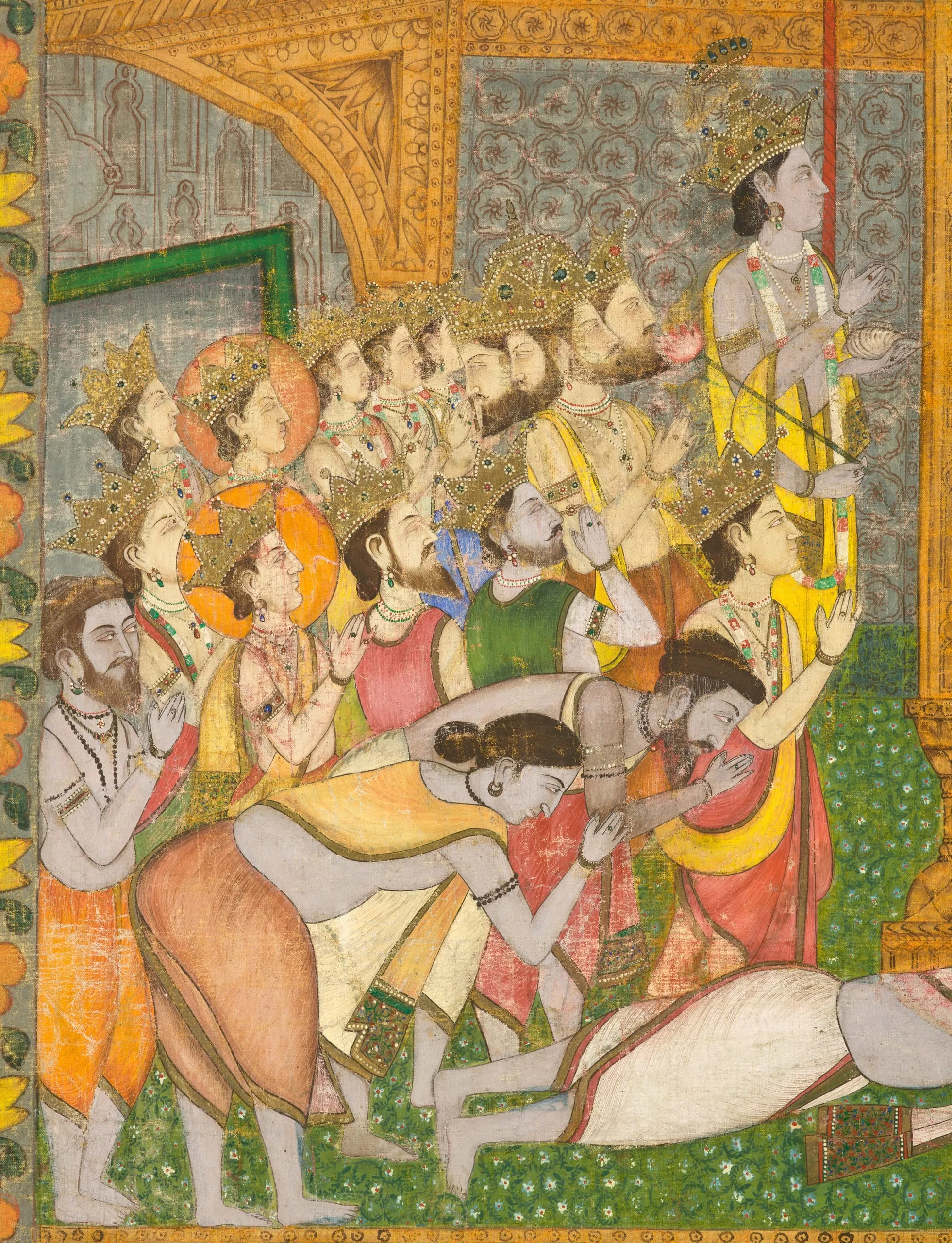
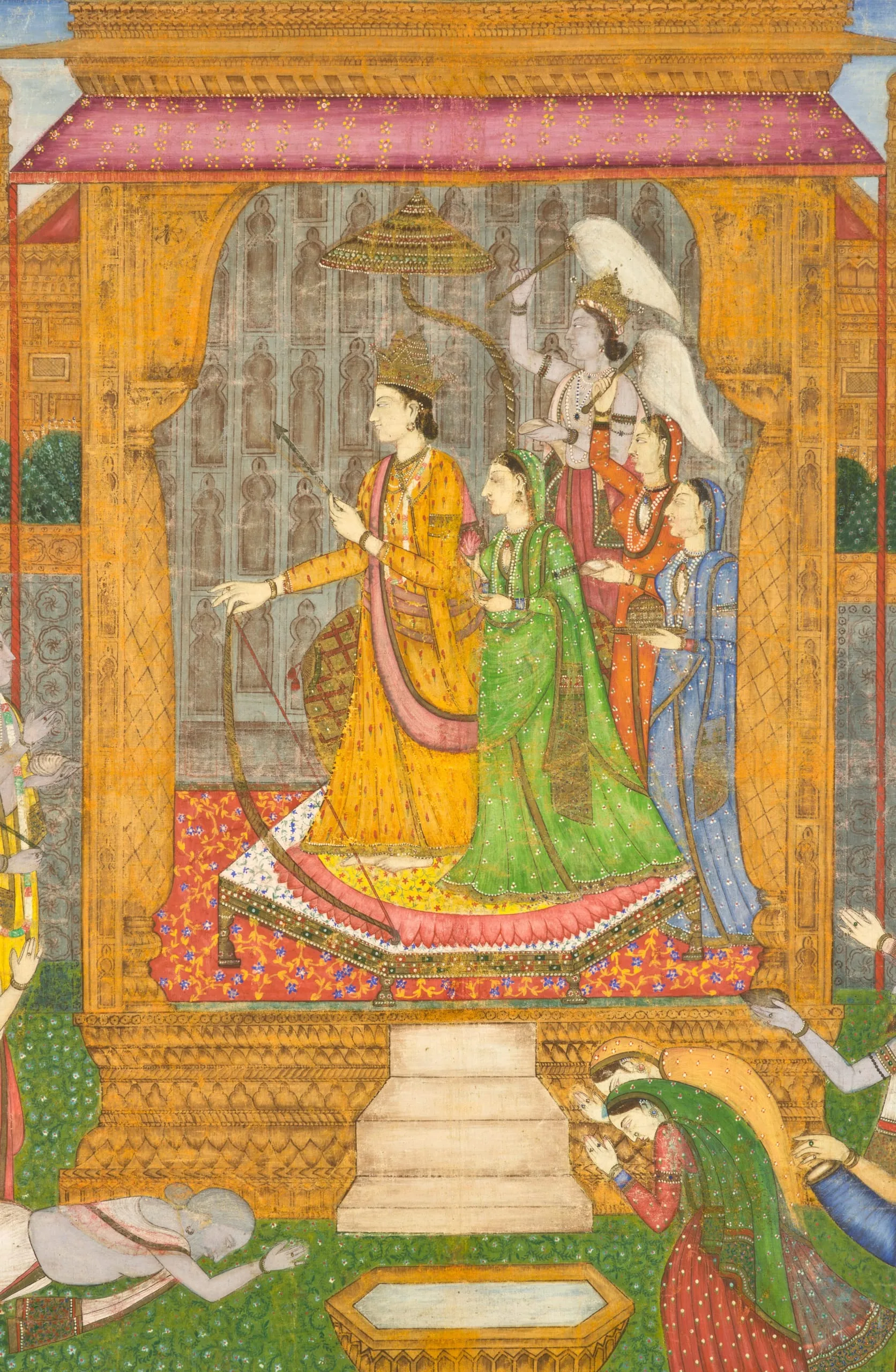
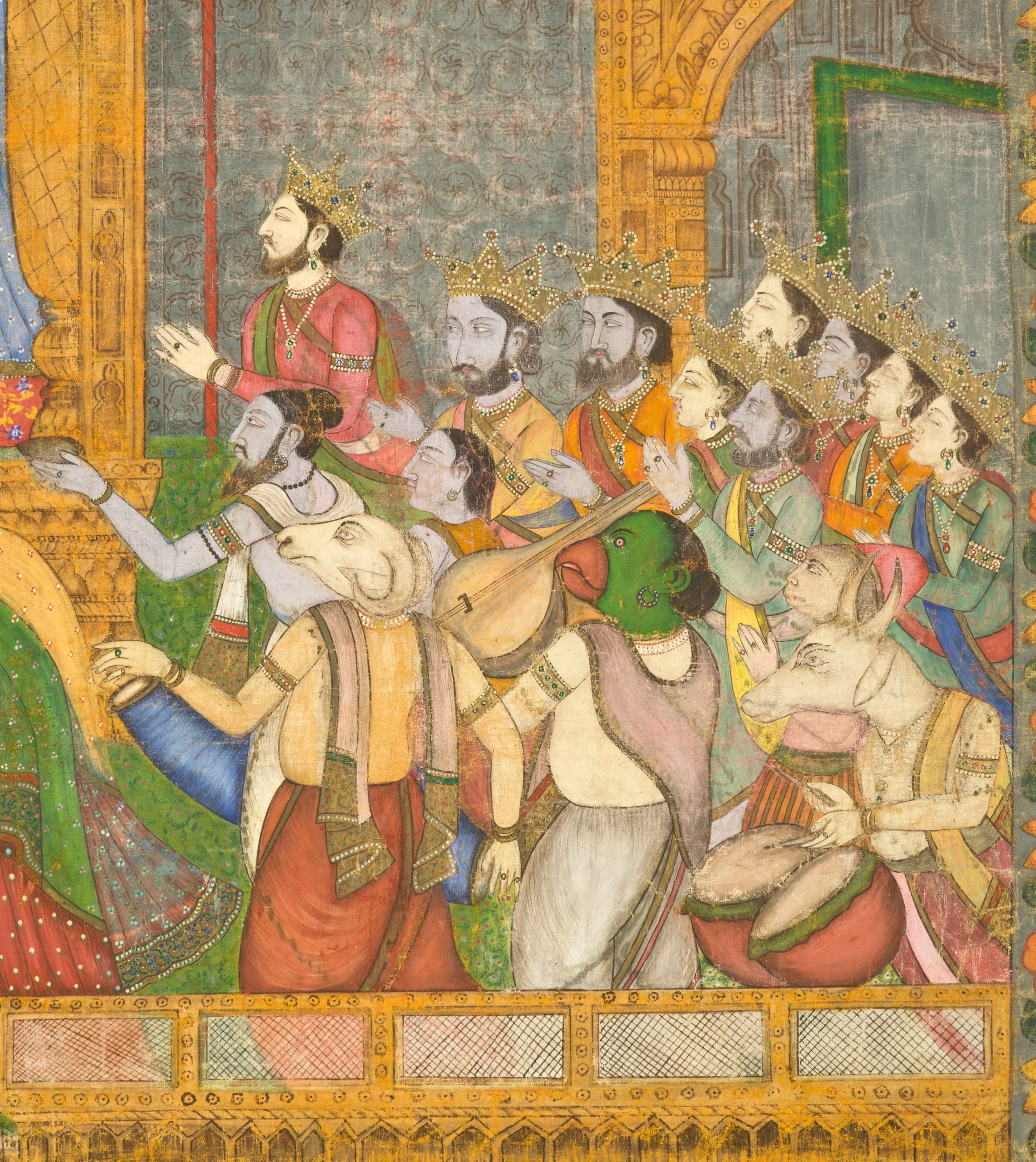
Here, Rama and Sita stand on a hexagonal dais under a bejeweled parasol inside a pavilion. The crowned Rama holds a bow and arrow and wears the customary Vaishnava yellow garb. Sita carries a lotus. Two attending figures wave honorific fly whisks made from the white tail-hairs of a yak (cauri or chowri). The crowned male attendant may represent Rama’s faithful brother Lakshmana. Two groups of worshippers comprise the audience. On the left are the four-armed Vishnu, the four-headed Brahma, the nimbate Sun-God Surya and Moon-God Chandra, other crowned deities, and ascetics. On the right are animal-headed celestial musicians (gandharvas), additional crowned figures and ascetics, and two women paying obeisance beside a large basin of water.