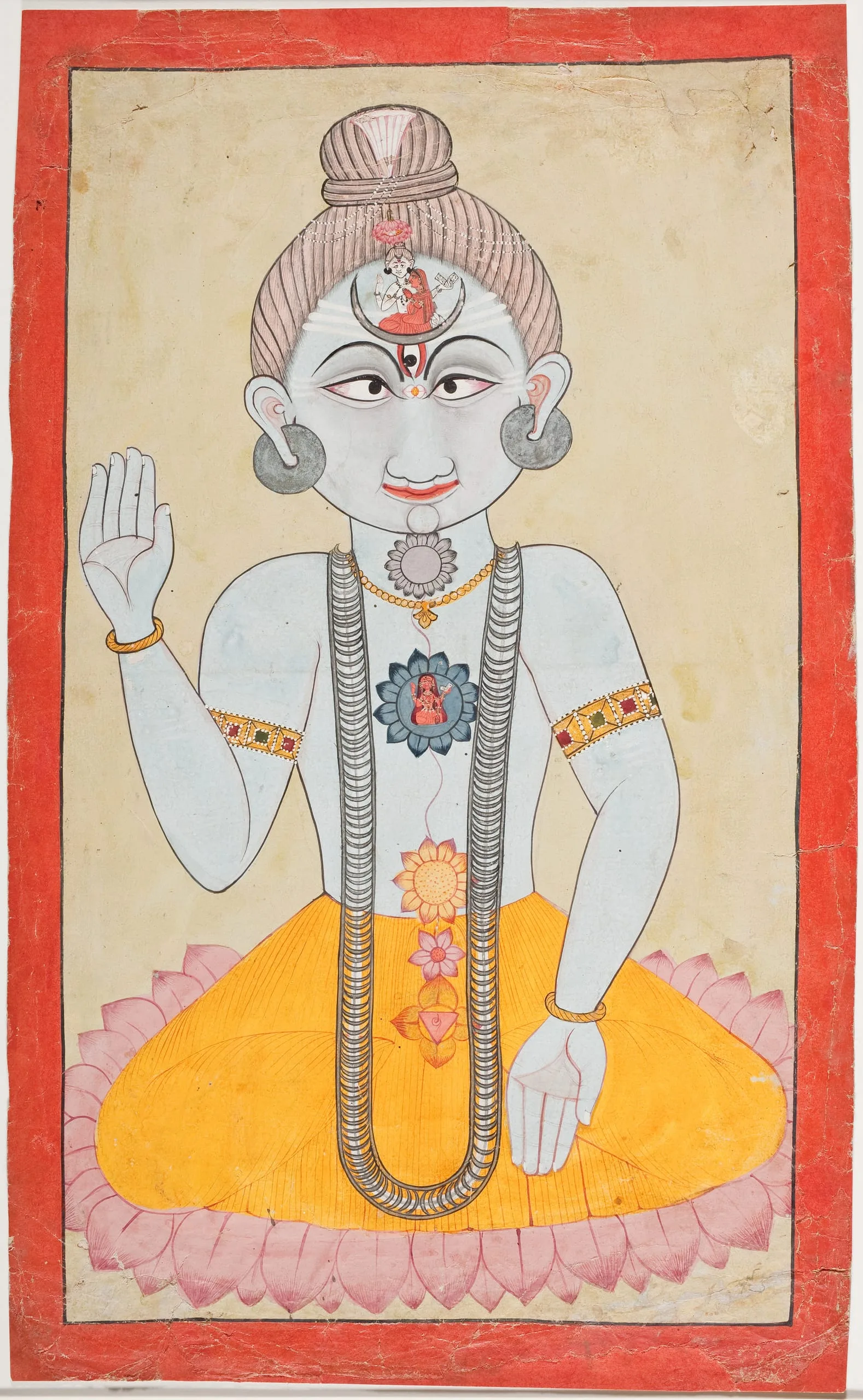
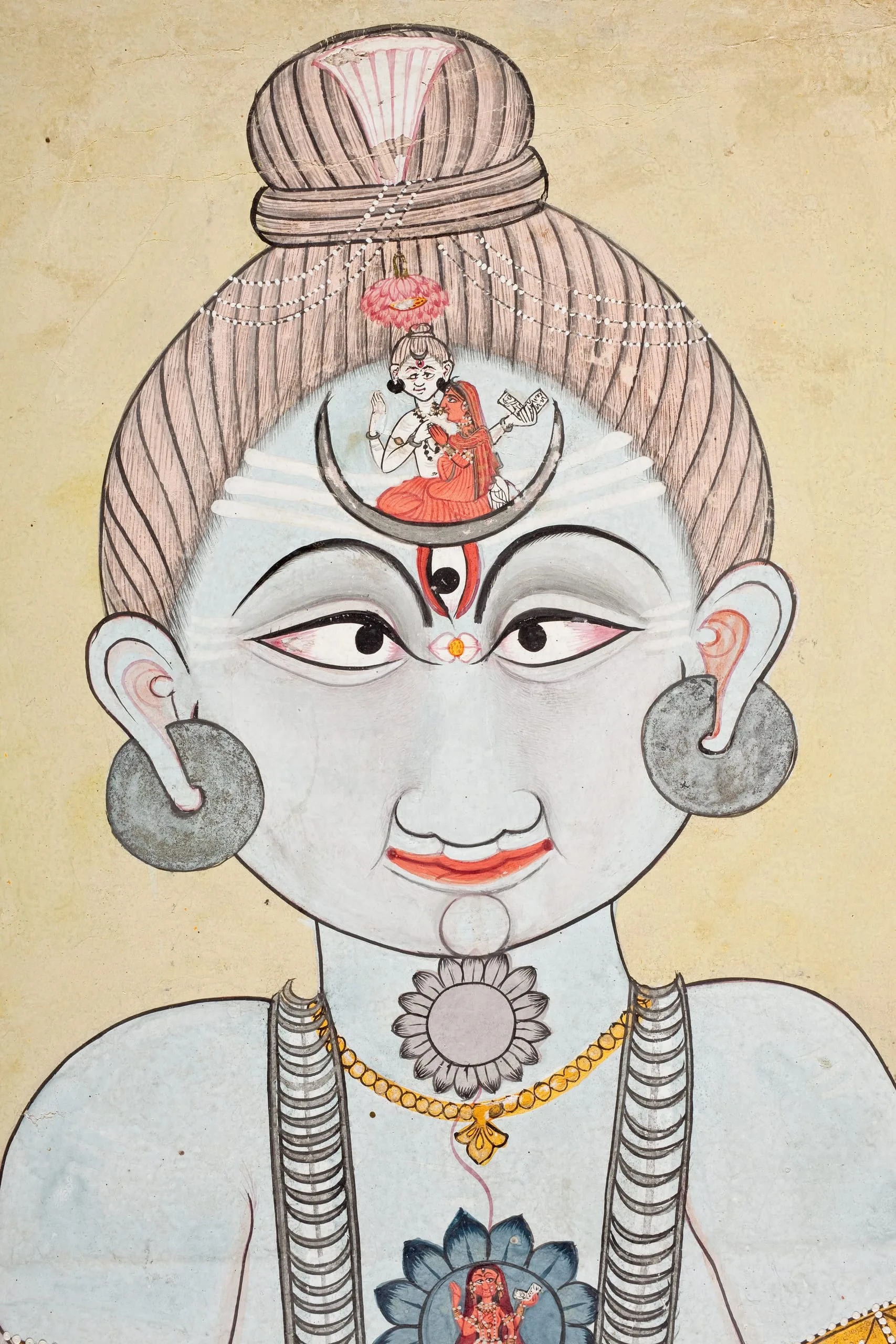
This is a representation of a Nath yogi seated in the “lotus posture” (padma asana) on a lotus base. His distinctive large round earrings are the special insignia of the kanphata [ear-split] ascetics, a tantric Shaiva sect founded by the great Hindu saint and teacher Gorakhnath who most likely lived in eastern Bengal in the early 11th century. His Shaiva sectarian affiliation is indicated by his three horizontal forehead markings (tiryakpundra). Along his vertical axis, there are seven chakras or energy centers of the subtle body (sukshma sharira). Each chakra represents a focal point for meditative visualizations intended to achieve a specific spiritual or physical attainment. Through Kundalini yoga, the energy that lies within the subtle body at the base of the spine is activated and channeled upward in a yogic process of transcendental perfection. In ascending order, the seven chakras illustrated here are the root chakra (muladhara), a coiled serpent personifying Kundalini energy within a triangular yantra; sacral chakra (svadhishthana), a six-petaled pink lotus; solar plexus chakra (manipura), a ten-petaled orange lotus; heart chakra (anahata), a twelve-petaled blue lotus with a four-armed goddess holding a sacred text; throat chakra (vishuddha), a sixteen-petaled gray lotus; third eye chakra (ajna), a four-armed Shiva and Parvati; and crown chakra (sahastrara), an upright white lotus. An image of a yogin with six chakras is in the National Museum, New Delhi (82.485).